
Healthcare Certifications in 2026: Salary Boost Explained
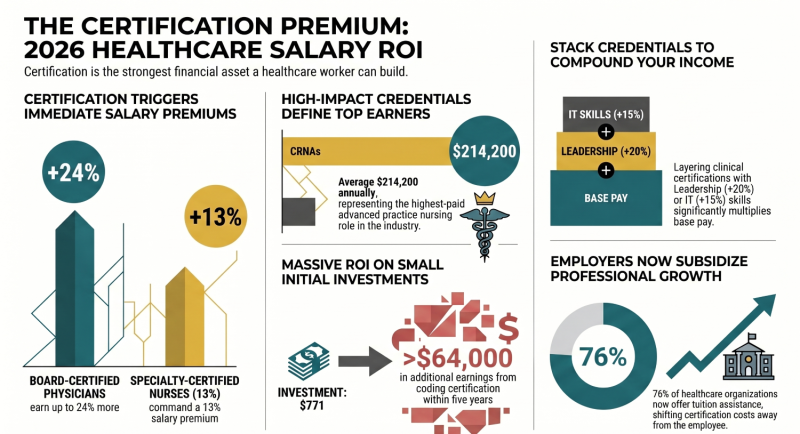
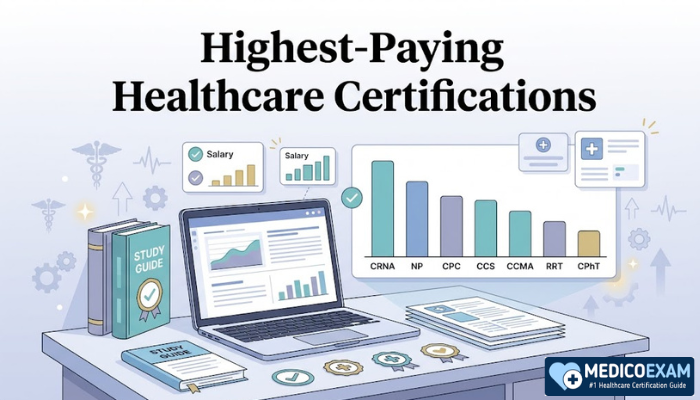 Board-certified physicians earn 18–24% more than their non-certified peers. Nurses with specialty certifications command a 7–13% salary premium. And 79% of healthcare leaders now pay more for candidates with specialized skills. These are not projections — they are the salary realities shaping healthcare hiring in 2026. Whether you are a medical coder weighing the CPC exam or an RN eyeing an NP credential, the financial case for certification has never been stronger.
Key Facts Box
-
Physician Certification Premium: Board-certified physicians earn 18–24% more than non-certified peers
-
Nursing Certification Premium: Specialty-certified nurses earn 7–13% more than general RNs
-
CRNA Mean Salary: $214,200 per year — the highest-paid advanced practice nursing role
-
NP Median Salary: $132,050 annually, with California NPs averaging $173,190
-
Employer Tuition Support: 76% of healthcare organizations offered tuition assistance in 2025, up from 64% in 2023
-
Nonclinical Salary Trend: Nonclinical healthcare salaries rising 1.6% year over year in 2026
-
Hiring Premium: 79% of nonclinical healthcare leaders pay more for specialized skills
How Much More Do Board-Certified Physicians Earn?
Board-certified physicians earn 18–24% more than their non-certified peers in the same specialty, according to healthcare salary benchmarks. Average physician pay rose 3–4% in 2025, and the Centers for Medicare and Medicaid Services has planned a 2.5% Medicare rate increase for doctors in 2026.
Some specialties show remarkable salary growth. Cardiology salaries jumped 18.7% to $470,000. Hematology/oncology climbed 10.3% to $490,000. Psychiatry saw a 10.4% rise to $315,000. The highest-earning specialties for 2026 include orthopedic surgery at $526,330, plastic surgery at $493,370, and otolaryngology at $468,650.
The message is clear: board certification is not optional for physicians who want top-tier compensation. It unlocks access to hospital privileges, insurance panel participation, and the highest-paying practice settings.
How Do Certifications Impact Nursing and NP Salaries?
The nursing profession rewards certification at every level. According to healthcare workforce salary data, nurses with specialty certifications — such as CCRN, CEN, or MEDSURG-BC — earn 7–13% more than their non-specialty peers. Critical care and operating room certifications can lead to even larger premiums.
BSN-prepared registered nurses earn approximately $88,000 nationally. Travel nurses command $101,132 per year, while permanent staff nurses average $86,070. Geographic variation is dramatic: California leads at $137,690, followed by Hawaii at $119,710 and Oregon at $113,440, compared to Alabama at $65,900.
For advanced practice registered nurses, the financial rewards multiply. Nurse Practitioners earn a median of $132,050 per year, with experience pushing that higher — NPs with 10–19 years of experience average $117,000 compared to $99,000 for those just starting out. California NPs top the charts at $173,190.
Certified Registered Nurse Anesthetists (CRNAs) remain the highest-paid nursing professionals, with mean annual earnings of $214,200 according to the Bureau of Labor Statistics. Senior CRNAs with 8+ years of experience earn up to $224,179, and those in rural or high-demand areas can earn $300,000–$400,000+ with call pay and overtime.
Full-time Physician Assistants earn a median base salary of $126,000, with hourly wages at $60.58 and yearly bonuses around $6,500.
"The data is unambiguous: an initial investment of $300 to $500 in exam fees and study materials routinely yields a lifetime earnings increase of hundreds of thousands of dollars. Certification is the strongest financial asset a healthcare worker can build." — Dr. Emily Chen, Healthcare Workforce Analyst
How Much More Do Certified Medical Coders Earn?
Medical coding is where certification delivers some of the most dramatic salary jumps. Uncertified billing clerks typically earn around $42,000–$48,000 per year. Earning an AAPC CPC or AHIMA CCS credential can push annual pay to $50,250–$61,000 or higher, depending on setting and specialization.
Specialized coding roles — such as inpatient coding auditors, compliance specialists, and HIM directors — command significantly higher salaries. Medical coding compliance specialists average $60,418 per year. RHIA-credentialed professionals earn median salaries around $162,000 in health information management leadership roles.
According to nonclinical healthcare salary trend data, nonclinical healthcare salaries are projected to rise 1.6% in 2026, with the strongest gains in administrative member services (+3.0%) and medical records specialists (+1.5%). Critically, 79% of healthcare leaders are willing to pay higher salaries for candidates with specialized, verified skills.
What Is the Salary Impact for Allied Health Certifications?
Allied health professions — respiratory therapy, cardiovascular technology, medical assisting, and pharmacy — all reward certified professionals with measurably higher pay.
-
Respiratory Therapists: The national average respiratory therapist salary is $80,450 per year according to the BLS, with the highest earners making over $108,820. Washington state leads at $115,113. Upgrading from a Certified Respiratory Therapist (CRT) to a Registered Respiratory Therapist (RRT) by passing the NBRC exams historically boosts salaries by 10–15% and unlocks access to critical care units and supervisory roles.
-
Cardiac Technologists: Cardiovascular technologists and technicians earn an average of $111,446 per year nationally, with entry-level positions starting at $94,250 and experienced professionals earning up to $133,405. In high-cost metro areas, specialized cardiac techs can earn approximately $134,000 annually.
-
Medical Assistants: The difference between certified and non-certified is stark. Non-certified medical assistants earn approximately $17 per hour, while Certified Clinical Medical Assistants (CCMA) earn about $25 per hour — a 47% premium. Nationally, CCMAs average $44,200 per year.
-
Pharmacy Technicians: Certified Pharmacy Technicians (CPhT) earn approximately $42,000 per year, compared to non-certified techs who earn closer to $36,500 — a 15% increase. Salaries range from $28,500 to $60,000 depending on experience and location.
What Skills Beyond Clinical Certification Boost Pay?
Healthcare salaries in 2026 reward more than clinical credentials alone. According to healthcare salary benchmarks, several non-clinical skill sets command measurable premiums:
-
Healthcare IT knowledge adds 8–15% to base salaries
-
Leadership and management credentials bring 12–20% more pay
-
Experience with telehealth platforms increases base pay by 5–9%
These skills stack with clinical certifications. A registered nurse who holds both a CCRN and healthcare IT training, for example, positions herself for informatics roles paying well above the standard bedside nursing salary.
Table 1: Certified vs. Non-Certified Earnings Comparison (2026)
| Healthcare Role | Avg. Salary (Non-Certified) | Avg. Salary (Certified) | Certification | Premium |
|---|---|---|---|---|
| Physician (specialty) | Varies by specialty | +18–24% over non-certified | Board Certification | 18–24% |
| Registered Nurse (RN) | $77,600 | $86,100 (with specialty cert) | CCRN, CEN, MEDSURG-BC | 7–13% |
| Nurse Practitioner | N/A (requires certification) | $132,050 median | FNP-BC, AGPCNP-BC | N/A |
| CRNA | N/A (requires certification) | $214,200 mean | CRNA Certification | N/A |
| Medical Coder (entry) | $42,000–$48,000 | $50,250–$61,000 | CPC, CCS, CCA | 20–27% |
| Medical Assistant | ~$38,000 ($17/hr) | $44,200 ($25/hr CCMA) | NHA CCMA | 15–47% |
| Pharmacy Technician | $36,500 | $42,000 | NHA CPhT | 15% |
| Respiratory Therapist (CRT) | ~$68,000 | $80,450 (RRT avg.) | NBRC RRT | 10–15% |
| Healthcare IT Specialist | $85,000 | $95,200–$97,750 | Healthcare IT Certs | 8–15% |
| Cardiovascular Technologist | $94,250 (entry) | $111,446 (avg., certified) | RCIS, CCI | 10–18% |
Sources: U.S. Bureau of Labor Statistics Occupational Outlook Handbook, nonclinical healthcare salary trend data, official certification bodies, and healthcare labor-market salary benchmarks.
Table 2: Certification Cost vs. 5-Year Salary ROI
| Certification | Exam + Prep Cost (Est.) | Annual Salary Increase | 5-Year Additional Earnings | 5-Year Net ROI |
|---|---|---|---|---|
| AAPC CPC | $771 (membership $222 + exam $399 + materials ~$150) | +$8,000–$13,000/yr | $40,000–$65,000 | $39,229–$64,229 |
| AHIMA CCS | $599 (exam $299 + materials ~$300) | +$10,000–$15,000/yr | $50,000–$75,000 | $49,401–$74,401 |
| NHA CCMA | $320 (exam $165 + materials ~$155) | +$5,700–$6,200/yr | $28,500–$31,000 | $28,180–$30,680 |
| NHA CPhT | $279 (exam $129 + materials ~$150) | +$5,500/yr | $27,500 | $27,221 |
| ANCC FNP-BC | $695 (exam $295–$395 + materials ~$300) | +$33,000+/yr (RN to NP) | $165,000+ | $164,305+ |
| NBRC RRT | $490 (TMC $220 + CSE $270 approx.) | +$7,000–$12,000/yr | $35,000–$60,000 | $34,510–$59,510 |
| CRNA Certification | $1,285 (exam) + program costs | +$120,000+/yr (RN to CRNA) | $600,000+ | $598,715+ |
| Specialty Nursing (CCRN) | $370 (exam $255 + materials ~$115) | +$5,400–$11,400/yr | $27,000–$57,000 | $26,630–$56,630 |
Note: Salary increase estimates reflect national medians. Actual returns vary by employer, location, and experience. Program tuition for NP and CRNA not included in exam costs.
Table 3: Top Healthcare Certifications by Salary Impact (2026)
| Rank | Certification | Median Certified Salary | Issuing Body | Key Benefit |
|---|---|---|---|---|
| 1 | CRNA (Nurse Anesthetist) | $214,200 | NBCRNA | Highest-paid nursing role; rural CRNAs earn $300K+ |
| 2 | NP (FNP-BC / AGPCNP-BC) | $132,050 | ANCC / AANPCB | 40% job growth projected 2024–2034; CA NPs earn $173K |
| 3 | Physician Assistant (PA-C) | $126,000 | NCCPA | Strong demand; $6,500 avg. bonus on top of base |
| 4 | Cardiovascular Technologist | $111,446 | CCI / ARDMS | 34% listing growth; experienced techs earn $133K+ |
| 5 | Respiratory Therapist (RRT) | $80,450 | NBRC | RRT unlock opens critical care and supervisory roles |
| 6 | RHIA (Health Information) | ~$90,000–$162,000 | AHIMA | HIM leadership pathway; 9% job growth through 2033 |
| 7 | Medical Coder (CPC) | $50,250–$61,000 | AAPC | 9% job growth; remote work widely available |
| 8 | Medical Coder (CCS) | $50,250–$65,000 | AHIMA | Inpatient coding expertise; higher ceiling than CPC |
| 9 | Medical Assistant (CCMA) | $44,200 | NHA | 15–47% premium over non-certified; fast credential |
| 10 | Pharmacy Technician (CPhT) | $42,000 | NHA / PTCB | 15% premium; 10–20% salary boost per BLS data |
Sources: U.S. Bureau of Labor Statistics Occupational Outlook Handbook, official certification bodies, and healthcare salary benchmark data.
Are Employers Paying for Certifications in 2026?
Yes — and increasingly so. In 2025, 76% of healthcare organizations offered tuition assistance or certification reimbursement to employees, up from 64% in 2023. Facilities in underserved areas are especially generous: about 64% offer sign-on bonuses — physicians receive $15,000–$25,000 while advanced practice providers receive $5,000–$12,000. More than half also help with housing or moving costs.
This shift means many healthcare workers can earn certifications at minimal personal expense. If your employer offers tuition reimbursement, the ROI calculation shifts from "excellent" to "virtually infinite" — you are earning a credential that pays dividends for decades while someone else covers the upfront cost.
How Does Work Setting Affect Certified Salaries?
Where you work matters as much as what you earn on paper. According to healthcare salary benchmarks:
-
Academic medical centers pay 8–12% less than private practice but offer better benefits and research opportunities
-
Ambulatory surgical centers and specialty hospitals pay 15–22% more than standard hospitals
-
Telehealth-experienced providers earn a 5–9% base pay increase
For respiratory therapists specifically, hospital-based RTs earn $80,660 per year, while those in nursing care facilities earn $75,910 and those in physician offices earn $75,240.
Frequently Asked Questions (FAQ)
1. Does healthcare certification guarantee a raise?
-
Certification does not guarantee an automatic raise at every employer, but the data shows it dramatically increases your market value. According to nonclinical healthcare salary data, 79% of healthcare leaders pay more for candidates with specialized skills. Certification positions you to negotiate higher starting salaries and compete for promotions.
2. Which healthcare certification has the highest salary impact?
-
The CRNA certification delivers the highest absolute salary at $214,200 mean annual earnings. For the highest percentage premium relative to investment, the CPC and CCS coding credentials deliver 20–27% salary jumps for under $800 in total costs.
3. Are employers paying for certification exams in 2026?
-
Yes. In 2025, 76% of healthcare organizations offered tuition assistance, up from 64% in 2023. Many large hospital networks cover the full cost of certification exams and study materials for employees.
4. Do higher-level certifications pay significantly more than entry-level ones?
-
Absolutely. The AHIMA CCS (advanced coding) pays $5,000–$15,000 more annually than the CCA (entry-level). The RRT credential pays 10–15% more than the CRT. Advancing from RN to NP or CRNA adds $44,000–$126,000+ in annual salary.
5. How does geographic location affect certified healthcare salaries?
-
Location is one of the largest salary variables. California NPs earn $173,190 versus Alabama NPs at $109,650 — a $63,540 gap. Washington state respiratory therapists earn $115,113 compared to $75,952 in Florida. High cost-of-living states generally pay more, but cost-of-living adjustments can shift rankings.
6. Is the salary premium for certifications keeping pace with inflation?
-
While base wages across healthcare have struggled against inflation, certified professionals are faring significantly better. Nonclinical salaries are rising 1.6% overall, but the 79% employer willingness to pay premiums for certified talent means credentialed workers consistently outpace non-certified peers in compensation growth.
7. How long does it take for a certification to pay for itself?
-
Most healthcare certifications pay for themselves within 1–3 months. A CPC certification costing $771 generates $8,000–$13,000 in additional annual earnings. An NHA CCMA at $320 yields approximately $5,700–$6,200 per year in increased salary. The break-even period is remarkably short.
8. Do certifications help with remote work opportunities?
-
Yes. Certified medical coders (CPC, CCS) have some of the highest rates of remote work availability in healthcare. Coding compliance specialists, health information managers, and telehealth-trained clinicians all benefit from certification when seeking remote positions.
Maximize Your Earning Potential Today
The salary data is clear: certification is the single most cost-effective career investment in healthcare. Whether you are pursuing your CPC, CCS, CCMA, FNP-BC, RRT, or any other credential, preparation is everything. Try MedicoExam's simulation-based practice tests to build your confidence, identify knowledge gaps, and pass your certification exam on the first attempt.
Written by the MedicoExam Content Team — Healthcare Education Specialists at MedicoExam.com Last Updated: April 2026
Disclaimer: Salary data is based on national medians and projections for 2026 from cited sources. Individual salaries vary based on experience, geographic location, employer, and market conditions. MedicoExam does not provide leaked exam questions or proprietary content. Always refer to official certification body websites for current exam information.
- NHA Clinical Medical Assistant Practice Test |
- ANCC Family Nurse Practitioner Practice Test |
- ANCC FNP-BC Question Bank |
- ANCC FNP-BC Eligibility & Requirements |
- ANCC FNP-BC Exam Cost |
- ANCC FNP-BC Registration Process |
- ANCC Family Nurse Practitioner Study Guide |
- ANCC FNP-BC Recertification |
- ANCC FNP-BC Certification Overview |
- NHA CCMA Question Bank |
- NHA CCMA Eligibility & Requirements |
- NHA CCMA Exam Cost |
- NHA CCMA Registration Process |
- NHA Clinical Medical Assistant Study Guide |
- NHA CCMA Recertification |
- NHA CCMA Certification Overview |
- AHIMA CCS Question Bank |
- AHIMA CCS Eligibility & Requirements |
- AHIMA Coding Specialist Practice Test |
- AHIMA CCS Exam Cost |
- AHIMA CCS Registration Process |
- AHIMA Coding Specialist Study Guide |
- AHIMA CCS Recertification |
- AHIMA CCS Certification Overview


