
Unlock Billing Power: The CPB AAPC Edge No One Tells You
 The AAPC Certified Professional Biller (CPB) certification is a pivotal credential for individuals aspiring to excel in medical billing. This specialized certification, identified by exam code CPB and offered by the AAPC, validates a professional's expertise in navigating the complex world of healthcare reimbursement. It confirms a candidate's comprehensive understanding of billing regulations, payer policies, and the entire claims submission and appeal process, equipping them to maximize revenue cycles and ensure compliance. This article delves into the unparalleled advantages of achieving the CPB certification, exploring its benefits for career advancement, practical application in the billing landscape, and crucial preparation strategies to secure your professional future. We will cover the exam structure, key syllabus areas, and insights into successful preparation, providing a clear roadmap to becoming a highly valued Certified Professional Biller.
Capturing the Core of Professional Billing
A Certified Professional Biller (CPB) stands at the forefront of healthcare revenue integrity. This crucial role involves translating complex medical services into billable claims, ensuring accuracy, compliance, and timely payment from insurance providers. They are the essential link between clinical services and financial health, meticulously managing patient accounts, verifying insurance eligibility, and meticulously preparing claims using CPT, ICD-10-CM, and HCPCS Level II codes. Beyond mere data entry, a CPB analyzes denied claims, drafts appeals, and communicates effectively with payers to resolve discrepancies. Their expertise in interpreting nuanced payer guidelines and government regulations (like HIPAA) directly impacts a healthcare organization's financial stability and operational efficiency. The demand for skilled CPBs is consistently high, as every healthcare facility relies on precise and compliant billing practices to thrive.
Diving into the CPB AAPC Exam Framework
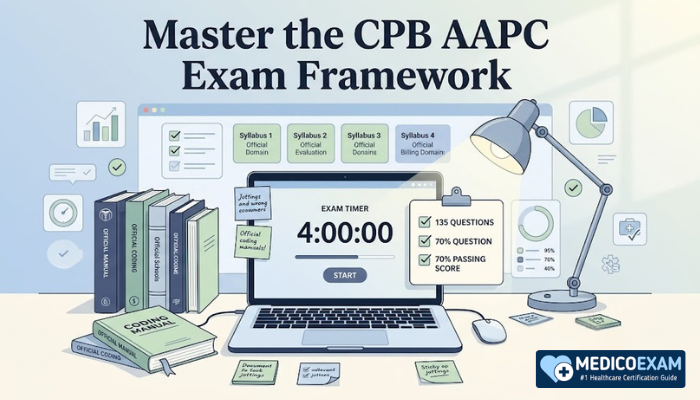
Grasping the structure of the CPB AAPC exam is the first strategic step towards success. The AAPC Certified Professional Biller examination, identified by exam code CPB, is designed to thoroughly assess a candidate's practical knowledge and proficiency in medical billing processes. This rigorous test aims to confirm that credential holders possess the necessary skills to manage billing operations effectively and ethically within a healthcare setting. Preparing for this assessment requires a clear understanding of its format and requirements.
The specific details of the CPB exam include:
|
Exam Detail |
CPB AAPC Exam Information |
|---|---|
|
Exam Price |
The cost is $425 for one attempt or $499 for two exam attempts, providing flexibility for candidates. |
|
Duration |
Candidates are allotted 240 minutes (4 hours) to complete the examination, allowing ample time for careful consideration of each question. |
|
Number of Questions |
The exam comprises 135 multiple-choice questions, covering a broad spectrum of billing topics. |
|
Passing Score |
A minimum score of 70% is required to pass the CPB exam, demonstrating a solid foundation in billing principles and practices. |
This structured format ensures a comprehensive evaluation of billing competencies. For further detailed resources on the exam, consider exploring detailed CPB resources.
Essential Domains: A CPB AAPC Syllabus Breakdown
The AAPC Certified Professional Biller (CPB) syllabus provides a comprehensive roadmap of the core competencies and knowledge areas essential for effective medical billing. Each section is critical for mastering the complexities of revenue cycle management and ensuring compliance in healthcare finance. Candidates should focus their study efforts across these domains to develop a holistic understanding of the billing landscape.
The key topics covered in the CPB exam syllabus include:
-
Types of insurance: Understanding different payer models, including commercial insurance, Medicare, Medicaid, and private payers, is fundamental for accurate claim submission.
-
Billing regulations: Familiarity with federal, state, and local billing guidelines, including the False Claims Act and Anti-Kickback Statute, is crucial for compliant practices.
-
HIPAA and compliance: Grasping the intricacies of the Health Insurance Portability and Accountability Act (HIPAA) ensures patient privacy and security, alongside other critical compliance standards.
-
Reimbursement and collections: Knowledge of various reimbursement methodologies, payment posting, managing patient balances, and ethical collection practices is vital for financial health.
-
Claims and billing: This domain covers the entire claims lifecycle, from initial claim creation and submission to tracking, denial management, and appeals processes.
-
Coding: While the CPB focuses on billing, a foundational understanding of CPT, ICD-10-CM, and HCPCS Level II coding is necessary to validate claim accuracy and prevent errors.
-
Case analysis: The ability to apply billing knowledge to real-world scenarios, identify issues, and determine appropriate actions is a key component of the exam.
Thorough preparation across these areas will equip aspiring CPBs with the versatility and depth of knowledge required in today’s dynamic healthcare environment.
The Unseen Advantage: Why CPB Certification Matters
Earning the CPB AAPC certification offers more than just a credential; it provides a tangible competitive edge in the healthcare job market. In an industry increasingly focused on compliance and financial efficiency, employers actively seek professionals who can demonstrate a proven understanding of complex billing regulations and processes. A CPB certification signals to potential employers that an individual has achieved a nationally recognized standard of excellence, possessing the specialized knowledge and skills to minimize billing errors, reduce claim denials, and accelerate revenue cycles. This translates into enhanced job security, increased earning potential, and a broader range of career opportunities within hospitals, clinics, and private practices. The certification also fosters a sense of professional pride and confidence, empowering billers to take on greater responsibilities and leadership roles.
Becoming certified demonstrates:
-
Enhanced Credibility: You establish yourself as a recognized expert in medical billing, building trust with employers and peers.
-
Career Advancement: CPB certification often opens doors to higher-level positions and management roles, distinguishing you from non-certified candidates.
-
Increased Earning Potential: Certified billers typically command higher salaries due to their specialized skills and proven competence.
-
Up-to-Date Knowledge: The certification process ensures you are current with the latest industry regulations, coding updates, and compliance standards.
For further information on the benefits and requirements, refer to the official AAPC certification page.
Building a Strategic CPB AAPC Study Plan
A well-structured study plan is paramount for anyone aiming to pass the Certified Professional Biller (CPB) exam. Given the breadth of the syllabus and the depth of knowledge required, a methodical approach is far more effective than last-minute cramming. Begin by thoroughly reviewing the official CPB syllabus to identify your strengths and weaknesses. Allocate more study time to areas where you feel less confident, ensuring a balanced understanding across all domains. Consider breaking down complex topics into smaller, manageable chunks and setting realistic daily or weekly study goals. Consistent review and active recall techniques, such as flashcards or self-quizzing, can significantly improve retention.
Many successful candidates advocate for a study period of 3-6 months, depending on their prior experience in medical billing. It's crucial not to rush the process, allowing time for concepts to solidify. Integrating regular practice questions into your routine is invaluable. This not only helps in familiarizing yourself with the exam format but also in identifying knowledge gaps under timed conditions. Forming a study group can also provide a collaborative environment for discussing challenging topics and sharing insights. Remember, the goal is not just to memorize but to truly understand the application of billing principles in various healthcare scenarios.
Mastering the Certified Professional Biller Exam
Success on the AAPC CPB exam hinges on more than just knowledge; it requires strategic test-taking skills and thorough preparation. One of the most critical tips for passing is extensive practice with exam-style questions. This helps you understand the types of scenarios presented, the nuances of multiple-choice answers, and how to manage your time effectively within the 240-minute limit. Focus on dissecting case studies and applying billing rules to practical situations, as many exam questions are scenario-based. Ensure you have the most current editions of your coding manuals (CPT, ICD-10-CM, and HCPCS Level II) as these are allowed during the exam and are indispensable references.
During the exam, practice effective time management. Don't dwell too long on a single question; make an educated guess, flag it, and return later if time permits. Read each question and all answer choices carefully before selecting the best fit. Sometimes, an answer might seem correct, but another option is more precise or comprehensive. Moreover, maintaining a calm and focused mindset can significantly impact your performance. Adequate rest the night before and a light, healthy meal on exam day can help optimize your concentration. Being familiar with the exam administration details will also reduce pre-exam anxiety. For more on taking the exam, check the AAPC exam administration details.
Beyond Certification: Real-World Impact of CPB
A Certified Professional Biller (CPB) plays a far-reaching role beyond merely processing claims; they are integral to a healthcare organization's financial ecosystem. In daily operations, a CPB’s responsibilities extend to ensuring the complete and accurate capture of services, verifying patient demographics and insurance information, and meticulously scrubbing claims for potential errors before submission. They become adept at interpreting Explanation of Benefits (EOBs) and Remittance Advices (RAs), reconciling payments, and promptly addressing denials or underpayments. This often involves detailed communication with insurance companies, tracking outstanding accounts, and implementing follow-up strategies for collections. The CPB also acts as a vital resource for clinicians and administrative staff, offering guidance on proper documentation to support medical necessity and maximize clean claim submission rates.
Moreover, the CPB actively contributes to a positive patient experience by handling billing inquiries with clarity and professionalism, demystifying complex charges, and helping patients understand their financial obligations. Their understanding of compliance safeguards the practice against audits and penalties, ensuring adherence to strict regulatory frameworks like HIPAA. By continually optimizing the revenue cycle, CPBs directly enhance the profitability and sustainability of healthcare providers, allowing them to focus more resources on patient care. To enhance your readiness for these real-world challenges, exploring comprehensive practice questions can be invaluable.
Driving Healthcare Efficiency Through Billing Compliance
Compliance is not merely a buzzword in medical billing; it is the bedrock upon which efficient and ethical healthcare finance is built. A Certified Professional Biller's deep understanding of billing regulations, particularly those concerning HIPAA, is critical to preventing costly errors and legal repercussions. HIPAA mandates strict rules for the privacy and security of patient health information, and a CPB ensures that all billing processes, from data entry to electronic transmission, adhere to these standards. Beyond HIPAA, CPBs must stay abreast of continuously evolving payer-specific rules, Medicare and Medicaid guidelines, and fraud and abuse laws such as the False Claims Act. Their role involves meticulous review of documentation to support billed services, ensuring medical necessity is clearly established before claims are sent.
Effective compliance also translates to a streamlined revenue cycle. When claims are submitted accurately and ethically the first time, the likelihood of denials significantly decreases, leading to faster reimbursement and reduced administrative overhead associated with appeals. CPBs serve as an internal auditing mechanism, flagging potential compliance risks and implementing best practices to mitigate them. This proactive approach protects the practice's reputation, maintains patient trust, and secures its financial future. Their expertise in this area makes them indispensable assets, driving efficiency and integrity across all billing operations.
Unlocking Career Pathways with CPB Expertise
The AAPC Certified Professional Biller (CPB) credential serves as a powerful accelerator for career growth in the dynamic healthcare industry. Possessing this certification opens up a multitude of advanced opportunities beyond traditional billing roles. Many CPBs transition into positions such as Billing Manager, Revenue Cycle Specialist, or Auditor, where their comprehensive understanding of compliance and financial optimization is highly valued. The skills honed through CPB certification – in-depth knowledge of insurance types, billing regulations, and the entire claims process – are directly transferable to roles in healthcare administration, financial analysis, and even consulting. Employers actively seek CPBs for their proven ability to navigate complex revenue cycles, reduce claim denials, and ensure regulatory adherence, making them essential contributors to a healthcare organization's economic health.
The CPB certification not only enhances job prospects but also equips professionals with the confidence and expertise to pursue specialized niches. This could include working with specific specialties like cardiology or oncology billing, or focusing on areas such as appeals and grievance resolution. Continuous professional development, often facilitated by the AAPC, ensures that CPBs remain at the forefront of industry changes, further solidifying their expert status. The investment in becoming a CPB yields significant returns, establishing a robust foundation for a long and prosperous career dedicated to the financial well-being of healthcare providers.
Navigating the Path to CPB Success Ethically
The journey to becoming a Certified Professional Biller (CPB) is an investment in professional integrity and expertise. It is crucial to approach this preparation ethically, focusing on genuine learning rather than shortcuts. Relying on "exam dumps" or unauthorized materials not only undermines the value of the certification but also compromises your foundational knowledge. True success on the AAPC CPB exam comes from a deep understanding of the principles, regulations, and practical applications of medical billing, which cannot be gained through rote memorization of leaked questions. Engaging with official study guides, accredited online courses, and legitimate practice exams is the only reliable path. These resources are designed to build a comprehensive skill set that serves you well throughout your career, not just for passing a single test.
Ethical preparation ensures you develop the critical thinking and problem-solving abilities necessary for real-world billing challenges. It reinforces the importance of compliance, accuracy, and patient privacy—values that are central to the CPB role. Choosing legitimate study methods reflects a commitment to professional standards and sets a precedent for your future conduct as a certified professional. Invest your time and effort in high-quality, authorized learning tools that prepare you not just for the exam, but for a distinguished and impactful career in medical billing.
Conclusion
The AAPC Certified Professional Biller (CPB) certification is a powerful credential that transcends mere validation of skills; it's a gateway to unlocking significant career potential in healthcare finance. From mastering intricate billing regulations and ensuring compliance to optimizing revenue cycles and minimizing claim denials, the CPB credential equips professionals with an unparalleled edge. It signifies a commitment to excellence, demonstrating to employers a profound understanding of the financial engine driving healthcare. This certification not only enhances credibility and opens doors to advanced roles but also ensures that billing professionals are prepared to tackle the dynamic challenges of the industry with confidence and expertise.
Embrace the opportunity to distinguish yourself in the competitive medical billing landscape. By investing in the CPB AAPC certification, you are not just earning a title; you are building a robust foundation for a future filled with growth, impact, and rewarding contributions to healthcare. Begin your journey today to transform your career and become an indispensable asset in the vital field of medical billing. Prepare effectively for your CPB exam and advance your billing career with comprehensive AAPC CPB certification practice exams.
Frequently Asked Questions
|
Question |
Answer |
|---|---|
|
What is the AAPC CPB certification? |
The AAPC CPB (Certified Professional Biller) certification validates an individual's expertise in medical billing, covering insurance types, billing regulations, compliance, claims processing, and reimbursement, ensuring professionals can manage the revenue cycle efficiently and ethically. |
|
Who should pursue the CPB certification? |
The CPB certification is ideal for medical billers, patient account representatives, and anyone involved in the financial aspects of healthcare seeking to formalize their expertise, advance their careers, or enhance their understanding of complex billing and compliance requirements. |
|
How long does it typically take to prepare for the CPB exam? |
Preparation time for the CPB exam varies based on prior experience and study intensity, but most candidates typically spend 3-6 months studying comprehensively to cover all syllabus topics and practice effectively. |
|
What are the career benefits of becoming a Certified Professional Biller? |
Benefits include increased job opportunities, higher earning potential, enhanced professional credibility, and the ability to specialize or advance into roles like Billing Manager or Revenue Cycle Specialist within various healthcare settings. |
|
Where can I find reliable study materials for the CPB exam? |
Reliable study materials include official AAPC study guides, approved online courses, legitimate practice exams from reputable providers, and current medical coding manuals (CPT, ICD-10-CM, HCPCS Level II). |
- AAPC CPB Question Bank |
- AAPC CPB Eligibility & Requirements |
- AAPC Professional Biller Practice Test |
- AAPC CPB Exam Cost |
- AAPC CPB Registration Process |
- AAPC Professional Biller Study Guide |
- AAPC CPB Recertification |
- AAPC CPB Certification Overview |
- AAPC Professional Biller Syllabus |
- AAPC CPB Preparation Time |
- AAPC CPB Passing Score |
- AAPC CPB Exam Format |
- AAPC Professional Biller Sample Questions |
- AAPC CPB Career Opportunities |
- AAPC CPB Exam Difficulty


