
Beyond PMHS Credentials: Discover True Expertise

The PNCB Pediatric Primary Care Mental Health Specialist (PMHS) certification provides a robust validation of expertise for pediatric nurse practitioners. This credential signifies a specialized skill set in promoting developmental, behavioral, and mental health in children and adolescents within a primary care setting. Professionals seeking to deepen their impact in pediatric mental health, offering comprehensive care beyond general practice, should consider pursuing the PNCB PMHS certification . This article delves into what this certification proves, who benefits from it, and essential preparation strategies to truly discover the expertise it represents.
Validating Specialized Mental Health Competence
The PNCB PMHS certification is specifically designed to recognize pediatric nurse practitioners who possess advanced knowledge and clinical skills in assessing, diagnosing, and managing common mental health concerns in pediatric populations. It moves beyond a general understanding of child development to focus on the nuanced complexities of mental health within primary care, ensuring practitioners are equipped to identify early signs, provide interventions, and collaborate effectively with mental health specialists. This specialization enhances a clinician's ability to offer timely and integrated care, crucial for improving outcomes for young patients.
The certification underscores a commitment to integrating mental health services directly into pediatric primary care. This approach addresses the growing need for accessible mental health support for children and adolescents, often identifying issues before they escalate. It equips the PMHS-certified professional to act as a frontline resource, reducing barriers to care and promoting holistic well-being.
The Role of a Certified PMHS Practitioner
A PNCB PMHS-certified professional takes on a critical role in addressing the mental health needs of children and adolescents. Their responsibilities span identification, evaluation, and management, working closely with families and other healthcare providers. This involves a comprehensive approach to patient care, moving beyond mere symptom management to a deeper understanding of underlying factors.
-
Early Detection: Systematically screening for developmental, behavioral, and mental health issues during routine check-ups.
-
Accurate Assessment: Conducting thorough evaluations, including history taking, behavioral observations, and developmental screenings.
-
Intervention Planning: Developing and implementing evidence-based care plans, which may include pharmacologic and non-pharmacologic interventions.
-
Collaborative Care: Facilitating referrals to specialists and coordinating care with schools, therapists, and other community resources.
-
Patient Education: Guiding parents and guardians on effective strategies for supporting their child's mental health.
This expanded scope of practice allows PMHS-certified NPs to significantly impact patient lives, providing a crucial bridge between general pediatric care and specialized mental health services.
Understanding the PNCB PMHS Exam Structure
The PNCB Pediatric Primary Care Mental Health Specialist (PMHS) exam assesses a candidate's readiness to perform at an advanced level in this specialized field. Understanding its structure is a foundational step in effective preparation. The exam is designed to be comprehensive, ensuring that certified professionals demonstrate proficiency across all critical areas of pediatric mental health.
The examination involves 150 questions, with 125 scored and 25 unscored items, allowing the PNCB to test new questions for future exams. Candidates are allotted 150 minutes to complete the exam, requiring efficient time management and a solid grasp of the subject matter. To achieve certification, a scaled score of 400 (on a scale of 200–800) is required. The exam cost is $309, which includes a non-refundable registration fee of $134. If re-applying to test in the next window, the non-refundable exam fee is $263, while a testing window extension incurs a non-refundable fee of $155.
Core Components of the PMHS Assessment
The PNCB PMHS exam meticulously evaluates a candidate's knowledge and skills across several key domains, reflecting the multifaceted nature of pediatric mental health. Each section contributes a specific percentage to the overall score, indicating the relative importance of these areas in practice. This breakdown helps candidates prioritize their study efforts, focusing on high-weightage topics while ensuring a broad understanding.
The examination’s content covers five main areas:
-
Health Promotion: Developmental, Behavioral, and Mental Health – 25%
-
Evaluation: 24%
-
Diagnostic Decision Making: 28%
-
Management: 23%
-
Professional Role: 7%
These percentages highlight the exam’s emphasis on diagnostic acumen and comprehensive management, alongside preventive health promotion and the ethical dimensions of the professional role. Preparing for this assessment means mastering not just isolated facts but the interconnectedness of these domains, reflecting real-world clinical practice.
Navigating the Path to PNCB PMHS Certification
Earning the PNCB PMHS certification requires meeting specific eligibility criteria and embarking on a focused preparation journey. This credential is for experienced pediatric nurse practitioners who are ready to specialize in mental health. Meeting the PNCB PMHS certification requirements is the first hurdle, ensuring candidates have the necessary educational background and clinical experience. These prerequisites typically include a current, active RN license, advanced practice registered nurse (APRN) licensure, and a master's or doctoral degree in nursing from an accredited program.
Beyond academic qualifications, candidates usually need substantial clinical hours in pediatric primary care, specifically involving the assessment and management of developmental, behavioral, and mental health issues. The exact number of hours and the nature of the experience are detailed by PNCB, reflecting the hands-on expertise expected of a PMHS professional. Confirming these requirements early in the process is vital to avoid delays.
Essential Steps for Aspiring PMHS Professionals
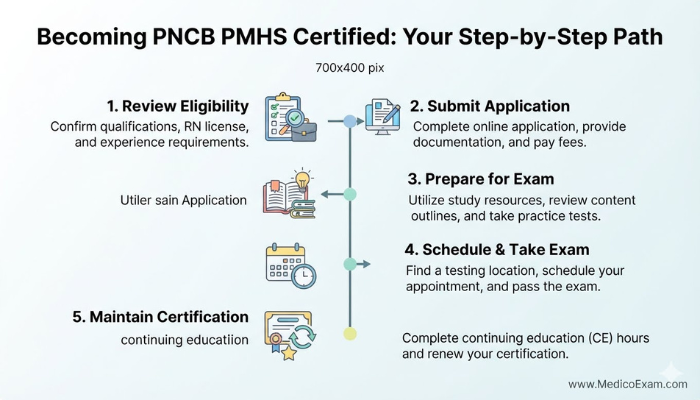
Becoming a PNCB PMHS-certified professional involves a structured application and examination process. Each step is designed to ensure candidates are thoroughly vetted and prepared to meet the demands of this specialized role. A clear understanding of these steps helps streamline the journey toward certification.
-
Review Eligibility: Carefully assess the current eligibility criteria on the official PNCB website, including educational background, licensure, and clinical experience requirements.
-
Submit Application: Complete and submit the application with all required documentation and fees, adhering to specified deadlines for testing windows.
-
Prepare for the Exam: Develop a comprehensive study plan that addresses all content outline domains, utilizing various resources like study guides and practice questions.
-
Schedule and Take the Exam: Once approved, schedule the exam at an authorized testing center and complete the 150-minute assessment.
-
Maintain Certification: After successful completion, adhere to the recertification process, which typically involves continuing education and clinical practice requirements to maintain the credential.
Each of these steps builds upon the last, guiding candidates from initial interest to certified professional status and ongoing competence.
Cultivating Readiness for the PNCB PMHS Examination
Effective preparation for the PNCB PMHS exam goes beyond simply memorizing facts; it involves a strategic approach to understanding and applying complex concepts. Candidates should prioritize a deep dive into the exam content outline, identifying areas where their knowledge needs strengthening. This includes not only theoretical understanding but also the practical application of diagnostic and management principles in varied clinical scenarios. Engaging with diverse study materials is key to building comprehensive knowledge.
Many successful candidates integrate multiple preparation methods, such as review courses, study groups, and self-assessment tools. It's crucial to seek out materials that align with the official exam blueprint to ensure relevant and current information. The goal is to develop both a broad foundational understanding and specialized insights into each domain.
Strategies for Optimal PNCB Pediatric Primary Care Mental Health Specialist Exam Prep
To maximize chances of success on the PNCB Pediatric Primary Care Mental Health Specialist exam, candidates should adopt a multi-faceted preparation strategy. This involves not only content review but also practical study habits and self-assessment. A structured approach helps manage the breadth of material and builds confidence.
-
Content Outline Mastery: Thoroughly review the PNCB Pediatric Primary Care Mental Health Specialist exam content outline . Allocate study time according to the percentage weight of each domain to ensure proportional coverage.
-
Utilize Diverse Resources: Incorporate official PNCB resources, reputable textbooks on pediatric mental health, peer-reviewed articles, and online educational modules.
-
Practice Question Engagement: Work through PNCB PMHS practice questions regularly. This helps familiarize candidates with the exam format, question types, and time constraints, while also highlighting areas needing further study. Consider resources like the comprehensive PNCB PMHS study guide available at MedicoExam for focused practice.
-
Clinical Experience Reflection: Connect study material to real-world clinical experiences. Reflect on cases involving developmental, behavioral, and mental health issues to reinforce learning and understand practical applications.
-
Time Management Skills: Practice answering questions under timed conditions to improve speed and accuracy. Develop a strategy for managing the 150-minute exam duration effectively.
By combining systematic study with practical test-taking strategies, candidates can build the expertise and confidence needed to pass the PNCB PMHS exam.
Advantages of PNCB PMHS Credentialing
Achieving PNCB PMHS certification offers significant advantages for pediatric nurse practitioners, both professionally and for the patients they serve. This credential elevates a practitioner’s standing, demonstrating a specialized commitment and advanced skill set in a rapidly growing and critically important area of healthcare. It signals to employers, colleagues, and families that the certified individual has met rigorous standards of competence in pediatric mental health.
Beyond individual professional growth, the certification addresses a crucial public health need. With increasing rates of mental health disorders in children and adolescents, PMHS-certified NPs are uniquely positioned to provide accessible, early intervention and ongoing management within the familiar primary care setting. This reduces the burden on overstretched specialty mental health services and ensures more children receive timely support.
Career Progression with PMHS Certification
The PNCB PMHS certification can unlock new career opportunities and enhance existing roles for pediatric nurse practitioners. It signifies a deeper level of expertise that is highly valued in various clinical settings. Professionals holding this credential may find themselves leading new initiatives, taking on more complex cases, or serving as mentors to their peers.
-
Expanded Clinical Scope: PMHS certification empowers practitioners to manage a wider array of mental health conditions independently or in collaboration with specialists, broadening their clinical responsibilities.
-
Increased Employability: Healthcare organizations increasingly seek NPs with specialized mental health training. The PMHS credential can make candidates more competitive for positions in pediatric clinics, integrated health systems, and specialized mental health programs.
-
Enhanced Professional Recognition: The certification provides formal recognition of advanced competence, fostering trust among patients and their families and respect among colleagues.
-
Potential for Higher Earnings: Specialized skills often correlate with increased earning potential. While a specific PNCB PMHS certification salary can vary, demonstrating advanced expertise generally positions professionals for better compensation.
-
Leadership and Advocacy: Certified PMHS professionals are well-suited to advocate for integrated mental health services and contribute to policy development aimed at improving pediatric mental health outcomes.
The PMHS credential is not just a certification; it is an investment in a career path that offers profound opportunities for impact and professional fulfillment.
Sustaining Expertise through PNCB PMHS Recertification
Maintaining the PNCB PMHS certification is crucial for ensuring ongoing competence and staying current with the evolving landscape of pediatric mental health. The recertification process is designed to encourage continuous professional development and the application of knowledge in practice. It ensures that certified individuals remain at the forefront of evidence-based care and best practices, reinforcing the value of their initial credential.
Typically, recertification involves a combination of continuing education units (CEUs), professional development activities, and clinical practice hours relevant to pediatric mental health. This framework supports lifelong learning and prevents knowledge decay, guaranteeing that PMHS-certified professionals consistently provide high-quality care. Adhering to the recertification schedule and requirements is paramount to retaining the credential and the specialized recognition it confers.
Navigating the PNCB PMHS Recertification Process
To successfully navigate the PNCB PMHS recertification process, practitioners need to be proactive in tracking their professional development activities and understanding the specific requirements set forth by the PNCB. This ensures that their efforts align with the standards necessary to maintain their specialized credential. The process emphasizes a blend of formal learning and continued practical application.
The core components of the PNCB PMHS recertification process generally include:
-
Professional Practice: Documenting active clinical practice in a role that utilizes PMHS competencies within the recertification cycle. This often requires a minimum number of clinical hours.
-
Continuing Education: Earning a specified number of continuing education credits or professional development units. These activities must be relevant to the PMHS content outline, ensuring ongoing learning in critical areas.
-
Knowledge Assessment: Some recertification pathways may include a professional development activity that assesses current knowledge, such as an online module or a focused practice exam.
-
Portfolio Documentation: Maintaining a detailed record of all professional activities, educational experiences, and clinical hours throughout the recertification period for submission.
By engaging in these activities, PMHS-certified individuals not only meet recertification standards but also continuously enhance their expertise, thereby reinforcing their value to patients and the healthcare community.
Conclusion
The PNCB Pediatric Primary Care Mental Health Specialist (PMHS) certification represents a profound commitment to improving mental health outcomes for children and adolescents. It validates advanced skills in crucial areas from health promotion to diagnostic decision-making and management, setting a high standard for specialized care within primary care settings. Pursuing this credential is an investment in professional growth, enhancing career opportunities, and making a tangible difference in the lives of young patients and their families.
For those dedicated to advancing their expertise in this vital field, thorough preparation and continuous learning are key. Embracing the challenge of the PMHS exam and committing to ongoing professional development ensures that credentials truly reflect a deep and enduring expertise. Begin your journey toward becoming a distinguished Pediatric Primary Care Mental Health Specialist by exploring comprehensive study resources and practice questions at MedicoExam.
FAQs
1. What does the PNCB PMHS certification validate?
The PNCB PMHS certification validates that a pediatric nurse practitioner possesses advanced knowledge and clinical skills in assessing, diagnosing, and managing developmental, behavioral, and mental health conditions in children and adolescents within a primary care context.
2. Who is eligible to take the PNCB PMHS exam?
Eligibility typically requires a current, active RN license, advanced practice registered nurse (APRN) licensure, a master's or doctoral degree in nursing from an accredited program, and specific clinical experience in pediatric primary care mental health.
3. How many questions are on the PNCB PMHS exam and what is its duration?
The PNCB PMHS exam consists of 150 questions (125 scored, 25 unscored) and candidates are allotted 150 minutes to complete it.
4. What is the passing score for the PNCB PMHS exam?
Candidates must achieve a scaled score of 400 on a scale of 200–800 to pass the PNCB PMHS exam.
5. How do I maintain my PNCB PMHS certification?
Maintaining PNCB PMHS certification typically involves a recertification process that includes documenting active clinical practice, earning continuing education units relevant to the content outline, and sometimes completing a knowledge assessment activity.
- PNCB PMHS Question Bank |
- PNCB PMHS Eligibility & Requirements |
- PNCB Primary Care Mental Health Specialist Practice Test |
- PNCB PMHS Exam Cost |
- PNCB PMHS Registration Process |
- PNCB Primary Care Mental Health Specialist Study Guide |
- PNCB PMHS Recertification |
- PNCB PMHS Certification Overview |
- PNCB Primary Care Mental Health Specialist Syllabus |
- PNCB PMHS Preparation Time |
- PNCB PMHS Passing Score |
- PNCB PMHS Exam Format |
- PNCB Primary Care Mental Health Specialist Sample Questions |
- PNCB PMHS Career Opportunities |
- PNCB PMHS Exam Difficulty


