
CDEI Certification: Ready for Healthcare's AI Revolution?
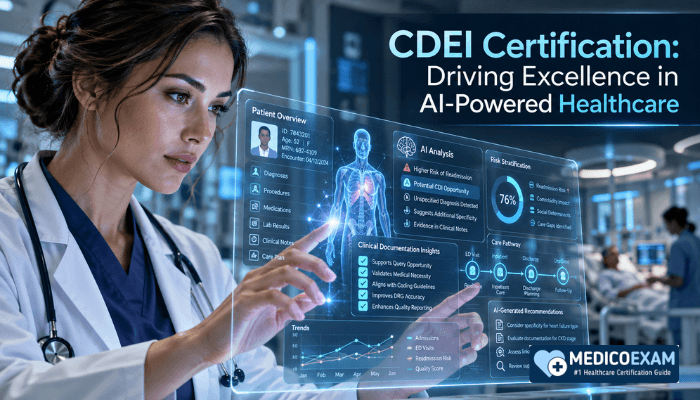
The AAPC Certified Documentation Expert – Inpatient (CDEI) certification stands as a vital credential for healthcare professionals aiming to lead in the evolving landscape of clinical documentation. This specialized certification, offered by AAPC, validates an individual's deep expertise in inpatient medical record review, compliance, and accurate coding practices. It is specifically designed for health information management (HIM) professionals, clinical documentation specialists (CDS), coders, and auditors who seek to optimize the integrity and quality of patient documentation within hospital settings. This comprehensive article delves into the strategic significance of the CDEI certification, its pivotal role amidst the rise of artificial intelligence in healthcare, and the preparation necessary to achieve this advanced credential.
Embracing Healthcare's Digital Evolution with CDEI Certification
Healthcare is undergoing significant transformation. Technological advancements and regulatory changes are reshaping the industry. The rapid integration of artificial intelligence (AI) is also driving this change. Accurate and complete clinical documentation is more important than ever. It supports patient care, medical research, and financial integrity. The CDEI certification prepares professionals to work in this changing environment. It helps ensure that clinical documentation accurately reflects current patient care and supports emerging technologies. CDEI-certified professionals help connect clinical data with accurate documentation. This skill is becoming increasingly valuable as AI tools are used for diagnostic support and predictive analytics.
Defining the AAPC Certified Documentation Expert – Inpatient Role
The AAPC Certified Documentation Expert – Inpatient (CDEI) plays a crucial role in enhancing the quality, completeness, and accuracy of clinical documentation in the inpatient setting. This expert reviews patient medical records to identify discrepancies, ambiguities, or omissions that could impact patient care, compliance, or appropriate reimbursement. By collaborating with physicians and other healthcare providers, a CDEI professional ensures that documentation accurately reflects the severity of illness, complexity of care, and overall patient story. Their work is foundational to achieving proper coding, which in turn influences hospital reimbursement, public health data, and quality metrics. Without precise documentation, even the most advanced AI algorithms may generate flawed insights, underscoring the CDEI's importance.
The Critical Intersection of AI and Clinical Documentation
Artificial intelligence is poised to revolutionize how clinical data is captured, analyzed, and utilized. AI-powered tools can assist with natural language processing (NLP) to extract information from free-text notes, identify coding opportunities, and even flag potential documentation errors. However, these tools are only as effective as the underlying data they process. A CDEI-certified professional is uniquely positioned to ensure the input data—the clinical documentation—is of the highest quality, thereby maximizing the benefits of AI. They understand the nuances that AI might miss, the clinical context, and the regulatory requirements that govern data integrity. This human oversight is indispensable for the ethical and effective deployment of AI in healthcare.
Why Expertise in Inpatient Documentation Matters Now
The inpatient environment presents unique challenges due to the complexity of cases, the volume of documentation, and the need for seamless coordination among multiple specialties. Errors or inconsistencies in inpatient documentation can lead to significant financial repercussions, including claim denials, audit failures, and reduced reimbursement. More importantly, poor documentation can compromise patient safety, lead to misdiagnoses, and hinder effective treatment planning. The CDEI certification validates an individual's ability to uphold the highest standards of documentation, directly impacting organizational compliance and financial health. Acquiring the CDEI certification signifies a commitment to excellence and positions professionals at the forefront of this critical healthcare function, as highlighted by AAPC’s official resources, which provide extensive details on the AAPC CDEI certification.
Forging the Inpatient Documentation Expertise
Developing expertise in inpatient documentation is a continuous journey that requires a blend of clinical knowledge, coding acumen, and regulatory understanding. The CDEI credential formally recognizes this specialized skill set, preparing professionals to be key advisors in clinical settings. Their role extends beyond mere review; it encompasses education, advocacy for accurate representation of care, and proactive identification of areas for improvement within the documentation process. This multifaceted expertise is indispensable for any healthcare organization striving for operational excellence and robust data integrity, especially as systems become more automated.
Core Responsibilities of a CDEI Professional
CDEI professionals undertake a wide array of responsibilities, each critical to the smooth functioning and compliance of an inpatient facility. Their daily tasks involve a meticulous review of patient records to ensure that all services rendered, diagnoses, and procedures are thoroughly and accurately documented. This includes verifying the specificity of diagnoses, the presence of appropriate clinical indicators, and the complete capture of patient severity of illness (SOI) and risk of mortality (ROM). They act as vital communicators between clinical staff and coding teams, translating complex medical information into precise documentation. Furthermore, CDEIs are often tasked with educating physicians and other providers on best practices for documentation, fostering a culture of accuracy and completeness.
Driving Clinical Documentation Improvement (CDI) with CDEI Skills
Clinical Documentation Improvement (CDI) is at the heart of the CDEI role. Professionals with this inpatient documentation specialist certification actively participate in CDI programs, which aim to improve the overall quality of clinical documentation. This involves retrospective and concurrent reviews of medical records, querying physicians for clarification or additional documentation when necessary. Their expertise ensures that documentation adequately reflects the patient's condition, the intensity of services provided, and the medical necessity of care. By driving CDI initiatives, CDEI-certified individuals contribute directly to accurate risk adjustment, quality reporting, and appropriate reimbursement, solidifying the need for robust clinical documentation improvement certification AAPC offers. They are the guardians of data accuracy, ensuring that the patient's journey is fully and correctly told through the medical record.
Impact on Patient Care and Revenue Cycle Integrity
The CDEI's contribution directly impacts both patient care outcomes and the financial health of the organization. Accurate documentation ensures that patient conditions are correctly identified, leading to appropriate treatment plans and continuity of care. It also supports meaningful data analysis for quality improvement initiatives and research. From a revenue cycle perspective, complete and compliant documentation minimizes audit risks, reduces claim denials, and optimizes reimbursement by accurately reflecting the resources consumed and the severity of the patient population. In an era where healthcare costs are under intense scrutiny, the CDEI professional's ability to protect revenue integrity through meticulous documentation is a significant asset. Their strategic positioning helps organizations maintain fiscal stability while upholding the highest standards of patient safety and quality.
AAPC CDEI Requirements and Pathway to Credentialing
Embarking on the journey to earn the AAPC CDEI certification involves meeting specific eligibility criteria and navigating a structured credentialing process. Candidates must possess a strong foundation in medical terminology, anatomy, and physiology, along with practical experience in health information management or clinical documentation. Understanding the requirements is the first critical step toward planning your certification path and ensuring you are well-prepared for the rigor of the examination. This commitment not only validates your expertise but also signals your dedication to the highest standards in clinical documentation.
Eligibility Criteria for the CDEI Examination
To be eligible for the AAPC CDEI exam, candidates typically need a combination of education and experience. AAPC recommends at least two years of experience in clinical documentation improvement (CDI) or a related field. Candidates should also have a strong understanding of medical coding guidelines, including ICD-10-CM/PCS. Holding another AAPC credential can also be beneficial. Examples include the CPC, COC, or CIC. These credentials demonstrate foundational knowledge of professional coding. A strong clinical background can provide an additional advantage. Examples include experience as a registered nurse (RN) or physician assistant. Such backgrounds can help candidates understand the medical knowledge required for the role. Candidates should review the official AAPC CDEI certification requirements before applying. Requirements can change over time. These requirements help ensure that candidates have a solid understanding of the inpatient clinical documentation environment.
Understanding the CDEI Certification Cost and Investment
The cost of CDEI certification involves several components, including the examination fee, study materials, and potentially preparation courses. While specific figures can vary and are subject to change by AAPC, the exam fee is a significant portion. Additional investments may include official AAPC study guides, online training programs, and practice exams, all of which are crucial for thorough preparation. Candidates should factor in these expenses when planning their certification journey. It's important to view the how much does CDEI certification cost question not just as an expense, but as a strategic investment in professional development. The long-term career benefits, enhanced earning potential, and increased marketability often far outweigh the initial outlay. Many employers also offer tuition reimbursement or professional development funds, making the investment more accessible for their staff. For detailed pricing and package options, prospective candidates should consult the official AAPC website or their preferred training partners.
Navigating the Application and Credentialing Process
Once eligibility requirements are met, candidates must formally apply to take the CDEI exam through AAPC's portal. This process typically involves registering online and scheduling the exam at an approved testing center. The CDEI exam itself is a rigorous test of knowledge and skills, designed to assess a candidate's proficiency across various domains of inpatient documentation. After successfully passing the exam, individuals officially earn their CDEI credential. Maintaining the certification requires ongoing continuing education units (CEUs) and annual membership with AAPC, ensuring that CDEI professionals stay current with industry changes and best practices. This continuous learning commitment reinforces the value and relevance of the certification over time. Information on preparing for the exam, including study tools and online training, is available directly from AAPC’s dedicated page on exam preparation resources.
Strategic Preparation for the CDEI Exam
Effective preparation is essential for success in the AAPC CDEI exam. The exam covers inpatient clinical documentation, coding, compliance, and clinical knowledge. A well-structured study strategy is therefore important. Candidates should understand the exam scope before starting their preparation. They should use reliable study resources and maintain consistent study habits. This approach can help candidates prepare effectively and develop a deeper understanding of the CDEI role.
Developing an Effective CDEI Study Plan
A robust AAPC CDEI exam prep plan begins with a thorough assessment of your current knowledge and identifying areas that require more focus. It’s advisable to create a realistic study schedule that allocates dedicated time each week for review. Breaking down the vast amount of information into manageable modules can prevent overwhelm.
Consider these key elements for your study plan:
-
Review Fundamentals: Strengthen your understanding of medical terminology, anatomy, pathophysiology, and pharmacology. These are foundational to interpreting clinical documentation.
-
Master Coding Guidelines: Develop a strong grasp of ICD-10-CM and ICD-10-PCS coding principles, as accurate documentation directly influences correct code assignment.
-
Understand Compliance: Familiarize yourself with healthcare regulations, official coding guidelines, and payer-specific requirements that impact documentation.
-
Focus on CDI Principles: Delve into the core concepts of Clinical Documentation Improvement, including querying physicians, documentation query templates, and best practices for concurrent and retrospective reviews.
Consistent review and self-assessment are key to solidifying knowledge and building confidence before the exam.
Leveraging Official AAPC CDEI Resources
The AAPC provides a wealth of official resources specifically designed to help candidates prepare for the CDEI exam. These resources are invaluable because they align directly with the exam's content and format.
Essential resources include:
-
Official AAPC CDEI Study Guide: This guide offers a structured approach to the exam content, covering key domains and providing practice questions. It serves as a comprehensive AAPC Certified Documentation Expert Inpatient study guide.
-
AAPC CDEI Online Training: For those who prefer structured learning, AAPC’s online training courses offer interactive modules, expert instruction, and often provide access to additional practice materials.
-
AAPC CDEI Practice Questions: Utilizing official practice questions helps candidates become familiar with the exam's question style and identify areas needing further review. Many candidates find that robust practice exams are crucial for learning how to pass AAPC CDEI exam efficiently.
Complementing these with other reputable educational materials, such as textbooks on CDI or medical coding, can further enhance your preparation. Explore comprehensive preparation resources and frequently asked questions for your CDEI journey here.
Mastering Key Content Areas for Exam Success
The AAPC CDEI exam typically covers several critical content areas. Success hinges on mastering these domains.
Key areas often include:
-
Clinical Knowledge: Understanding common medical conditions, disease processes, and treatment modalities.
-
Documentation Standards: Knowledge of legal, ethical, and regulatory requirements for clinical documentation.
-
Coding Principles: Application of ICD-10-CM/PCS guidelines for accurate code assignment based on documentation.
-
Querying Strategies: Effective communication techniques for querying physicians to obtain clearer, more specific documentation.
-
Compliance and Auditing: Awareness of compliance risks, audit processes, and methods for mitigating documentation-related issues.
Deep dives into each of these areas, coupled with real-world application examples, will significantly boost your readiness.
Maximizing Your Chances: Practice Questions and Mock Exams
One of the most effective strategies for success on any certification exam is extensive practice. Engaging with AAPC CDEI practice questions and full-length mock exams serves multiple purposes:
-
Familiarization: It helps you become comfortable with the exam format, question types (e.g., multiple choice, case studies), and time constraints.
-
Knowledge Reinforcement: Answering practice questions solidifies your understanding of concepts and highlights areas where you might need further study.
-
Time Management: Simulating the actual exam environment helps you develop effective time management strategies, ensuring you can complete all sections within the allotted time.
-
Stress Reduction: The more you practice, the more confident and less anxious you will feel on exam day.
Utilize resources that provide AAPC CDEI exam sample questions and detailed explanations for answers. Consistent practice is not just about memorization but about applying knowledge to realistic scenarios, which is essential for understanding how to pass AAPC CDEI exam.
Navigating the Future: CDEI Certification Benefits and Career Horizon
The CDEI certification is more than just a credential. It can support significant career advancement in the evolving healthcare industry. Healthcare organizations are placing greater emphasis on data quality and compliance. Advanced technologies like AI are also becoming increasingly important. As a result, CDEI-certified professionals can play an important role in maintaining accurate clinical documentation. The certification validates specialized skills in clinical documentation. It can also support higher earning potential and diverse career opportunities. For healthcare professionals planning for the future, CDEI can be a valuable career investment.
Unlocking Career Growth: CDEI Job Outlook and Opportunities
The job outlook for professionals with CDEI certification is exceptionally positive. As healthcare organizations face mounting pressure to improve documentation accuracy, reduce audit risks, and adapt to value-based care models, the demand for qualified Clinical Documentation Specialists continues to grow. CDEI-certified individuals are sought after in various roles, including:
-
Clinical Documentation Specialist (CDS): The primary role, focusing on concurrent review and physician queries.
-
CDI Manager/Director: Leading CDI teams and developing strategies for documentation improvement.
-
Health Information Management (HIM) Specialist: Contributing to overall HIM department functions with specialized CDI expertise.
-
Auditor/Compliance Analyst: Ensuring documentation adherence to regulations and identifying areas for improvement.
-
Educator/Consultant: Training healthcare providers on best documentation practices or offering expert advice to multiple facilities.
The AAPC CDEI job outlook reflects a robust and expanding field, making this credential a pathway to long-term career stability and growth. These professionals are critical in ensuring organizations remain compliant and financially healthy.
Enhancing Earning Potential: Understanding CDEI Salary Expectations
One of the most compelling benefits of earning the CDEI certification is the significant enhancement in earning potential. Professionals with specialized credentials like the CDEI typically command higher salaries compared to their non-certified counterparts. The AAPC Certified Documentation Expert Inpatient salary varies based on factors such as experience, geographic location, type of healthcare facility, and additional certifications held. However, CDEI certification positions individuals in a higher pay bracket due to their validated expertise in a high-demand area. This credential signifies a deep understanding of complex medical and coding principles, making them highly valuable assets to any healthcare organization. Investing in CDEI certification can lead to a substantial return on investment through increased income and improved job security over time.
Strategic Advantages of CDEI Certification in a Changing Landscape
Beyond immediate job opportunities and salary benefits, the CDEI certification offers strategic advantages crucial for navigating healthcare's future. In an environment increasingly shaped by AI and advanced analytics, CDEI professionals possess the unique ability to ensure the quality of data that feeds these systems. They are equipped to adapt to new technologies, understand the ethical implications of data use, and contribute to the development of smarter healthcare systems. The CDEI credential demonstrates a forward-thinking mindset and a commitment to professional excellence, making certified individuals invaluable contributors to healthcare innovation and patient outcomes. It validates a sophisticated understanding of how accurate documentation supports broader organizational goals, from improving patient safety to optimizing financial performance, thereby reinforcing the overall AAPC CDEI certification benefits. This credential also strengthens a professional’s standing and marketability, showcasing their advanced skills to prospective employers, as detailed on MedicoExam's CDEI resource page.
Sustaining Excellence in Clinical Documentation amidst AI Advancements
The journey of a CDEI professional does not conclude with certification; it’s an ongoing commitment to excellence and adaptation. As artificial intelligence continues to mature and integrate deeper into healthcare workflows, the CDEI role will evolve, demanding continuous learning and strategic foresight. Sustaining excellence in clinical documentation requires not only mastery of current best practices but also an agile approach to emerging technologies and changing regulatory landscapes. This forward-looking perspective ensures that CDEI professionals remain at the vanguard of accurate and compliant healthcare data.
Adapting to Evolving Documentation Technologies
The landscape of clinical documentation technology is constantly shifting. Electronic Health Records (EHRs) are becoming more sophisticated, incorporating features like voice recognition, structured templates, and AI-powered prompts. CDEI professionals must actively engage with these evolving tools, understanding their capabilities and limitations. Their expertise is crucial in optimizing the use of these technologies, ensuring they enhance rather than hinder documentation accuracy. This involves participating in the implementation and refinement of new EHR functionalities, providing feedback from a documentation integrity perspective, and training clinical staff on effective system utilization. Adaptability to technological advancements is a hallmark of a future-ready CDEI professional.
The CDEI Role in Data Integrity and Ethical AI Use
As AI becomes more integrated into healthcare, maintaining data integrity is increasingly important. CDEI professionals help protect the accuracy of clinical documentation. They provide human oversight against potential biases and inaccuracies in AI systems. They ensure that the clinical narrative accurately reflects the patient’s condition. This can help reduce misinterpretations by AI algorithms. Accurate documentation can also support appropriate diagnoses and treatment recommendations. CDEI professionals also contribute to the ethical use of AI in healthcare. They provide essential human context and oversight. Their ability to review and validate source data makes them valuable partners in responsible AI implementation.
Continuous Professional Development for Long-Term Relevance
To maintain long-term relevance and effectiveness, CDEI professionals must commit to continuous professional development. This includes staying abreast of the latest coding guidelines (e.g., ICD-10-CM/PCS updates), healthcare regulations, and advancements in clinical practice. Furthermore, understanding new AI applications in documentation, such as advanced NLP or machine learning for anomaly detection, will be crucial. Participation in workshops, conferences, and ongoing education programs helps CDEIs evolve their skill sets. This proactive approach ensures they can continually contribute strategic value to their organizations, adapt to future challenges, and uphold the high standards of the AAPC Certified Documentation Expert – Inpatient credential in a rapidly changing healthcare environment.
The AAPC CDEI certification represents more than just a professional achievement; it signifies readiness for the future of healthcare. In an era where artificial intelligence is reshaping clinical practice and documentation workflows, the CDEI credential equips professionals with the specialized knowledge and skills to ensure data integrity, compliance, and optimal patient outcomes. By mastering the intricacies of inpatient documentation and understanding its intersection with advanced technology, certified individuals become invaluable assets to healthcare organizations striving for excellence and innovation.
Embrace the future of healthcare documentation. Invest in your professional journey by pursuing the AAPC CDEI certification and position yourself as a leader in this critical field. To learn more about exam specifics, preparation strategies, and frequently asked questions, visit our comprehensive guide on CDEI exam details.
Frequently Asked Questions
1. What does the AAPC CDEI certification validate?
The AAPC CDEI certification validates expertise in inpatient medical record review. It also demonstrates knowledge of clinical documentation improvement (CDI) practices. The certification confirms compliance with coding guidelines. It helps ensure that documentation accurately reflects patient severity and the complexity of care.
2. Who should consider obtaining the CDEI certification?
The CDEI certification is ideal for health information management (HIM) professionals. It is also suitable for clinical documentation specialists (CDS) and medical coders. Auditors and nurses with inpatient experience can also benefit from it. The certification helps professionals advance their careers and strengthen their specialized knowledge of clinical documentation.
3. How does the CDEI certification relate to artificial intelligence in healthcare?
CDEI certification is crucial in the AI era by ensuring the high quality and integrity of clinical data, which is the foundation for effective AI applications. CDEI professionals provide essential human oversight and context, making AI tools more accurate and reliable.
4. What are the career benefits of becoming CDEI certified?
Benefits include enhanced job opportunities in CDI, HIM, and compliance roles, increased earning potential, improved marketability, and the ability to contribute strategically to healthcare organizations by ensuring documentation excellence and compliance.
5. What kind of preparation is recommended for the AAPC CDEI exam?
Recommended preparation includes using official AAPC study guides and online training. Practice extensively with sample questions and mock exams. Build a strong foundation in medical terminology, anatomy, pathophysiology, and coding guidelines.
- AAPC CDEI Question Bank |
- AAPC CDEI Eligibility & Requirements |
- AAPC Documentation Expert Inpatient Practice Test |
- AAPC CDEI Exam Cost |
- AAPC CDEI Registration Process |
- AAPC Documentation Expert Inpatient Study Guide |
- AAPC CDEI Recertification |
- AAPC CDEI Certification Overview |
- AAPC Documentation Expert Inpatient Syllabus |
- AAPC CDEI Preparation Time |
- AAPC CDEI Passing Score |
- AAPC CDEI Exam Format |
- AAPC Documentation Expert Inpatient Sample Questions |
- AAPC CDEI Career Opportunities |
- AAPC CDEI Exam Difficulty


