
Decoding CCVTC: The Definitive Guide for Aspiring Coders
 The AAPC Certified Cardiovascular and Thoracic Surgery Coder (CCVTC) certification validates a medical coder's specialized expertise in the intricate coding practices for cardiovascular and thoracic surgical procedures. This credential is designed for professionals who manage the complex documentation and billing of heart, blood vessel, and chest cavity surgeries. Aspiring coders looking to specialize in high-demand, high-acuity surgical areas will find this guide invaluable. It covers the essential aspects of the CCVTC exam, its benefits, and how to effectively prepare to earn this esteemed certification.
Navigating the AAPC CCVTC Credential
The AAPC Certified Cardiovascular and Thoracic Surgery Coder (CCVTC) credential from the AAPC signifies a mastery of medical coding principles specifically applied to cardiovascular and thoracic surgery. Professionals holding this certification are proficient in assigning accurate CPT®, ICD-10-CM, and HCPCS Level II codes for a wide range of cardiac, vascular, and pulmonary surgical interventions, ensuring compliance and proper reimbursement. This specialization is critical for maintaining robust financial health within healthcare organizations and for accurately reflecting patient care.
Who Benefits from CCVTC Certification?
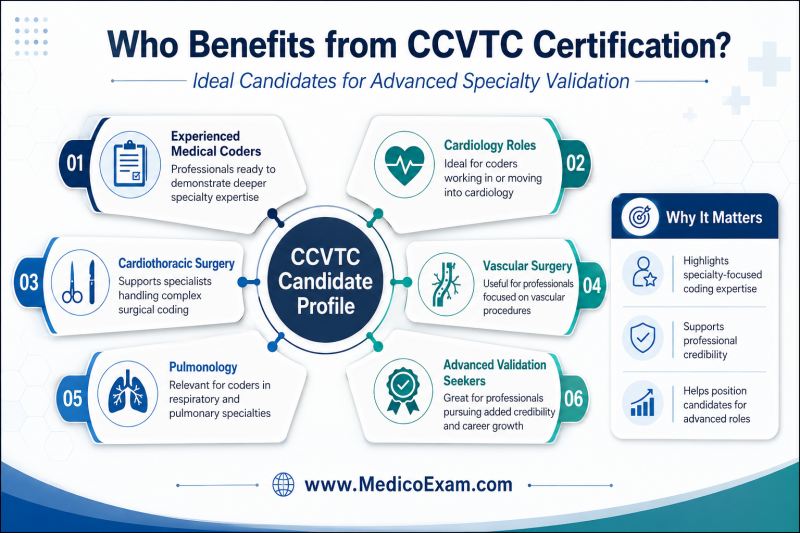
This certification is ideally suited for medical coders who already possess a foundational understanding of medical terminology, anatomy, and standard coding guidelines (e.g., CPC® or COC® certified). It provides advanced validation for those working in or seeking roles within cardiology, cardiothoracic surgery, vascular surgery, or pulmonology practices and hospitals. Achieving the CCVTC designation can unlock new career opportunities and command higher earning potential within these highly specialized medical fields.
Unpacking the CCVTC Exam Structure
Understanding the examination format is a crucial first step for any candidate pursuing the AAPC Certified Cardiovascular and Thoracic Surgery Coder certification. The AAPC structures its specialty exams to rigorously test practical application of coding guidelines rather than rote memorization. Candidates must demonstrate not only knowledge but also the ability to navigate coding manuals and apply rules to real-world clinical scenarios.
The CCVTC exam is designed to assess a candidate's proficiency in cardiovascular and thoracic surgery coding. Here are the key details:
|
Exam Detail |
Information |
|---|---|
|
Exam Name |
AAPC Certified Cardiovascular and Thoracic Surgery Coder |
|
Exam Code |
CCVTC |
|
Exam Price |
$325 for one attempt, or $399 for two exam attempts |
|
Duration |
Candidates are allotted 240 minutes (4 hours) to complete the exam. |
|
Number of Questions |
The exam consists of 100 multiple-choice questions. |
|
Passing Score |
A minimum score of 70% is required to pass the certification exam. |
This format emphasizes critical thinking and efficient use of coding resources, mirroring the demands of a professional coding environment. Adequate preparation ensures familiarity with both the content and the pressure of a timed, comprehensive assessment.
Mastering Cardiovascular and Thoracic Surgical Coding Guidelines
A comprehensive understanding of the syllabus for the CCVTC exam is paramount for effective preparation. The AAPC outlines specific knowledge areas that certified coders must master to accurately code complex cardiovascular and thoracic procedures. This includes detailed anatomy, physiology, surgical techniques, and the nuances of coding each procedure with precision and compliance. Candidates must be prepared to delve into the complexities of the circulatory and respiratory systems, applying a range of CPT codes and modifiers.
The core syllabus topics for the CCVTC certification include:
-
Core knowledge areas: This foundational component covers general coding principles, medical terminology, anatomy relevant to cardiovascular and thoracic systems, and an understanding of documentation requirements. It also includes compliance guidelines and regulatory mandates affecting specialty coding.
-
Cardiovascular surgical procedures: A deep dive into coding for a wide array of heart and vascular surgeries. This encompasses procedures like coronary artery bypass grafting (CABG), valve replacements, pacemaker and defibrillator insertions, arterial and venous repairs, and diagnostic cardiac catheterizations.
-
Thoracic and pulmonary surgeries: Focuses on coding procedures involving the lungs, pleura, mediastinum, and chest wall. This includes lobectomies, pneumonectomies, thoracotomies, pleurodesis, and tracheal procedures.
-
Endovascular and minimally invasive procedures: Covers advanced techniques in vascular and cardiac interventions that utilize catheters and imaging guidance, such as angioplasty, stenting, atherectomy, and endovascular aneurysm repair (EVAR). Mastery of modifier usage and proper sequencing for these complex procedures is essential.
Effective study for these topics requires access to current coding manuals and official AAPC guidelines, which provide the authoritative source for coding rules and updates. Staying abreast of the latest coding changes is crucial for success.
Advancing Your Career with CCVTC Expertise
Achieving the AAPC Certified Cardiovascular and Thoracic Surgery Coder certification opens doors to significant professional advancement. In a healthcare landscape increasingly focused on specialty-specific coding, the CCVTC credential signals a high level of expertise that is valued by employers. It demonstrates a commitment to professional development and a capability to handle complex coding scenarios with accuracy.
Financial and Professional Benefits of Certification
Holding a specialized certification like the CCVTC can directly impact a coder's earning potential and job security. Professionals with niche skills are often in higher demand and can command more competitive salaries compared to generalist coders. Furthermore, the certification enhances credibility and recognition within the medical coding community.
-
Increased Earning Potential: Specialty coders often see higher salary ranges due to their specialized knowledge and the complexity of the procedures they code. Data suggests that certified specialty coders, particularly in high-acuity areas like cardiovascular and thoracic surgery, earn significantly more than their non-certified counterparts.
-
Enhanced Job Security: The demand for skilled medical coders remains strong, and those with advanced certifications are particularly sought after by hospitals, surgical centers, and specialty clinics. The niche skill set makes certified individuals indispensable.
-
Professional Credibility: The AAPC is a reputable organization, and its certifications are widely recognized as benchmarks of excellence. The CCVTC credential affirms a coder’s expertise, leading to greater trust from employers and colleagues.
-
Career Advancement: Certification can lead to opportunities in auditing, consulting, education, or management roles. It provides a pathway for coders to take on more challenging and rewarding responsibilities, moving beyond entry-level positions.
Exploring career pathways and salary expectations is vital for aspiring coders. Information on AAPC cardiovascular coding salary expectations and thoracic surgery medical coding jobs outlook consistently highlights the value of specialized credentials.
Cultivating an Effective CCVTC Exam Preparation Strategy
Successful preparation for the CCVTC exam involves more than just studying the syllabus; it requires a structured approach that integrates various learning methods. Candidates should prioritize understanding complex coding concepts, practicing with real-world scenarios, and becoming adept at navigating coding manuals efficiently under timed conditions. A well-rounded strategy ensures that all aspects of the exam are addressed, leading to strong coding proficiency.
Building Your Study Regimen
To maximize your chances of success, consider incorporating the following elements into your preparation:
-
Review Core Concepts: Start with a thorough review of cardiovascular and thoracic anatomy, medical terminology, and physiology. This foundational knowledge is critical for understanding the procedures and their corresponding codes.
-
Utilize Official Resources: The AAPC provides comprehensive manuals and study guides that are invaluable. Familiarize yourself with CPT, ICD-10-CM, and HCPCS Level II code books, practicing how to quickly locate information and apply rules.
-
Practice with Sample Questions: Regularly engage with AAPC Cardiovascular and Thoracic Surgery Coder practice questions. This helps in understanding the exam's question style, identifying areas of weakness, and improving speed and accuracy. Many platforms, including practice questions, offer resources for this.
-
Enroll in a Prep Course: Consider enrolling in a dedicated best AAPC CCVTC exam prep course. These courses often provide structured learning, expert guidance, and access to additional resources and mock exams that simulate the actual test environment.
-
Focus on Documentation: Pay close attention to thoracic surgical coding documentation tips and cardiovascular procedure notes. Understanding how physician documentation impacts code selection is paramount for accurate and compliant coding.
-
Time Management Skills: Practice taking timed exams to build stamina and improve your ability to complete the 100 questions within the 240-minute limit. Efficiency in manual navigation is key.
Adopting a disciplined and comprehensive study plan will significantly boost your confidence and readiness for the exam.
Sustaining Your CCVTC Credential: Renewal and Continuing Education
Earning the AAPC Certified Cardiovascular and Thoracic Surgery Coder certification is a significant accomplishment, but maintaining it requires ongoing commitment to professional development. The medical coding landscape is constantly evolving with new codes, guidelines, and technological advancements. Therefore, AAPC certifications, including the CCVTC, mandate continuing education to ensure coders remain current and proficient.
The AAPC CCVTC credential renewal process involves accumulating a specific number of Continuing Education Units (CEUs) within a designated renewal cycle. Typically, AAPC requires 36 CEUs every two years for specialty certifications. These CEUs can be earned through various approved activities such as:
-
Attending coding workshops, seminars, or webinars.
-
Participating in online coding courses or advanced training programs.
-
Reading coding-related publications and passing associated quizzes.
-
Volunteering for coding-related projects or serving on relevant committees.
-
Retaking relevant certification exams for CEU credit.
Staying informed about the latest cardiovascular and thoracic surgery coding guidelines is not only essential for renewal but also for upholding ethical coding practices and ensuring accurate reimbursement. Continuous learning is a hallmark of a dedicated and successful medical coding professional.
Evaluating the Worth of AAPC CCVTC Certification
For many aspiring coders, the question "is the AAPC CCVTC certification worth it?" is a critical consideration. The value of any professional certification often boils down to its return on investment in terms of career opportunities, salary growth, and professional recognition. The CCVTC certification stands out in the specialized field of cardiovascular and thoracic surgery coding due to its rigorous standards and the high demand for experts in this area.
This certification is more than just a piece of paper; it represents a validated skill set that directly addresses the complex needs of modern healthcare. Employers seek coders who can navigate the intricacies of cardiac and pulmonary procedures, ensuring that medical services are accurately documented and reimbursed. The CCVTC credential directly signals this capability. Furthermore, for coders passionate about critical care and advanced surgical specialties, this certification offers a path to engage with challenging and impactful work, contributing directly to patient care by ensuring proper resource allocation. It solidifies one's position as a subject matter expert and opens doors to a fulfilling career path.
Conclusion
The AAPC Certified Cardiovascular and Thoracic Surgery Coder (CCVTC) certification is a powerful credential for medical coding professionals aiming for specialized roles in cardiovascular and thoracic surgery. It not only validates essential coding skills but also significantly enhances career prospects and earning potential in a highly sought-after medical specialty. By understanding the exam structure, mastering the comprehensive syllabus, and implementing a robust preparation strategy, aspiring coders can confidently pursue this certification. The continuous learning required for renewal further ensures that CCVTC holders remain at the forefront of medical coding expertise.
Embark on your journey to becoming a certified expert in cardiovascular and thoracic surgery coding. For comprehensive study materials and expert exam resources to guide your preparation, explore the extensive offerings at expert exam resources. Achieve your coding career goals with reliable support and preparation.
Frequently Asked Questions
1. What is the primary focus of the AAPC CCVTC certification?
The primary focus of the AAPC CCVTC certification is to validate a medical coder's specialized expertise in assigning accurate CPT, ICD-10-CM, and HCPCS Level II codes for cardiovascular and thoracic surgical procedures, including endovascular and minimally invasive interventions.
2. What are the eligibility requirements for the AAPC CCVTC exam?
While the AAPC does not list specific prerequisites for taking the CCVTC exam, candidates typically have foundational medical coding knowledge, often holding a CPC or COC certification, and possess strong understanding of medical terminology and anatomy related to the cardiovascular and thoracic systems.
3. How long is the AAPC CCVTC certification valid, and what is the renewal process?
The AAPC CCVTC certification is typically valid for two years. To renew, certified professionals must complete a certain number of Continuing Education Units (CEUs), usually 36, and pay a renewal fee to the AAPC within the two-year cycle.
4. What career opportunities can the CCVTC certification open?
The CCVTC certification can lead to specialized coding roles in hospitals, surgical centers, and cardiology or cardiothoracic surgery practices. It can also open doors to positions in auditing, compliance, and coding education within these highly specialized medical fields, often with higher salary potential.
5. Is the AAPC CCVTC exam challenging, and how should one prepare?
The AAPC CCVTC exam is considered challenging due to the complexity of cardiovascular and thoracic procedures. Preparation should involve thorough study of anatomy, medical terminology, coding guidelines, extensive practice with sample questions, and potentially enrolling in a specialized exam preparation course.
- AAPC CCVTC Question Bank |
- AAPC CCVTC Eligibility & Requirements |
- AAPC Cardiovascular and Thoracic Surgery Coder Practice Test |
- AAPC CCVTC Exam Cost |
- AAPC CCVTC Registration Process |
- AAPC Cardiovascular and Thoracic Surgery Coder Study Guide |
- AAPC CCVTC Recertification |
- AAPC CCVTC Certification Overview |
- AAPC Cardiovascular and Thoracic Surgery Coder Syllabus |
- AAPC CCVTC Preparation Time |
- AAPC CCVTC Passing Score |
- AAPC CCVTC Exam Format |
- AAPC Cardiovascular and Thoracic Surgery Coder Sample Questions |
- AAPC CCVTC Career Opportunities |
- AAPC CCVTC Exam Difficulty


