ANCC PMGT-BC Career Opportunities

Explore 3 resources related to ANCC PMGT-BC Career Opportunities on MedicoExam. These resources help certification candidates understand key aspects of exam preparation, including exam structure, study strategies, and expectations for scenario-based or applied assessments. Reviewing these materials can help improve readiness and confidence before attempting the certification exam.

ANCC PMGT-BC Exam: Complete Guide & Study Plan

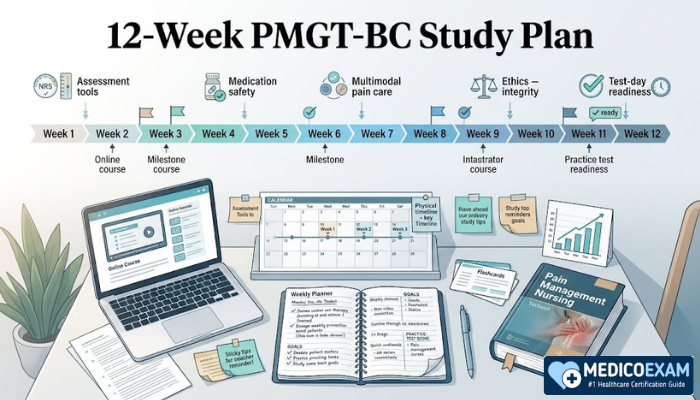
12-week PMGT-BC study plan with laptop, calendar, nursing study notes, flashcards, and practice test graphThe ANCC Pain Management Nursing certification (PMGT-BC) validates that a registered nurse possesses entry-level clinical knowledge and skills in pain assessment, multimodal interventions, and professional practice. The computer-based exam consists of 150 questions — 125 scored and 25 unscored pretest items — and candidates have 3 hours to complete it at a Prometric testing center.

With the ongoing opioid crisis reshaping clinical expectations and demand for nurses who can deliver evidence-based, multimodal pain care, the PMGT-BC credential signals specialized competence to employers and patients alike. This guide covers everything you need to know: eligibility requirements, exam content domains, pricing, a 12-week study plan, and frequently asked questions.

ANCC PMGT-BC Certification Sample Questions

ANCC PMGT-BC sample questions for ANCC Pain Management Nurse-Board Certified (PMGT-BC) preparation

The ANCC Pain Management Nursing Certification Certification Sample Question Set on this page is designed to familiarize you with the actual ANCC PMGT-BC exam format and question types. These sample questions help you understand how questions are structured and what to expect on test day. While they provide a useful starting point, they represent only a limited preview of the real exam experience.

These sample questions are intended for evaluation and familiarization only. To understand exam style, pacing, and reasoning patterns more clearly, we recommend trying our online sample practice environment. If you are preparing for the ANCC Pain Management Nurse-Board Certified (PMGT-BC) and want to assess your readiness more rigorously, structured, timed, scenario-based practice is recommended. This approach aligns with the cognitive demands and professional expectations typically associated with Registered nurses, Pain management nurses, Advanced practice nurses and related roles working in settings such as Hospitals, Outpatient clinics, Specialty pain management centers and related settings.

Try Sample Exam »    |    Access Full ANCC PMGT-BC Practice Exam »

ANCC PMGT-BC Exam FAQs & Preparation Guide

ANCC PMGT-BC exam frequently asked questions (FAQs) for ANCC Pain Management Nurse-Board Certified (PMGT-BC) preparation

The Pain Management Nursing Certification (PMGT-BC) is a specialty credential offered by the American Nurses Credentialing Center (ANCC) that evaluates competencies related to pain physiology, pharmacologic and nonpharmacologic therapies, and ethical and legal considerations. It is typically pursued by registered nurses, pain management nurses, and advanced practice nurses working in hospitals, outpatient clinics, and specialty pain management centers.

The exam includes 150 questions delivered over 180 minutes and uses a scaled passing standard of 350 (on a scale of 0-500). This FAQ explains exam structure, difficulty, preparation strategies, and expectations, helping candidates understand how applied skills such as pain assessment, care planning, and intervention management are evaluated through clinical judgment and decision-making.

ANCC PMGT-BC — Frequently Asked Questions (FAQs)

This FAQ section summarizes key aspects of the ANCC PMGT-BC exam, including format, difficulty, and preparation. For official eligibility, policies, and updates, visit the ANCC’s official exam page.

SECTION A: ANCC PMGT-BC Exam Overview & Legitimacy

This section explains what the certification represents, who it is intended for, and how it is recognized within healthcare environments.

Syndicate content