To help you prepare effectively for the ANCC PMGT-BC, MedicoExam provides a structured, simulation-based Practice Exam aligned with the ANCC Pain Management Nurse-Board Certified (PMGT-BC) credential offered by American Nurses Credentialing Center (ANCC). Our practice exams follow the official exam framework and emphasize applied skills such as Pain assessment, Pharmacologic and nonpharmacologic management, Patient-centered care, helping you build familiarity, confidence, and stronger readiness through realistic, scenario-based practice rather than relying on rote memorization. You can review the detailed ANCC PMGT-BC syllabus to understand the scope of this certification.
Experience our exam interface and question style with an online demo practice exam. The demo includes introductory-level questions to help you first understand how the ANCC PMGT-BC exam is structured, and then how MedicoExam simulations support your preparation.
Try Sample Exam »
The demo introduces core concepts, while full-length premium simulations provide deeper, scenario-based coverage that more closely reflects the actual cognitive demands of the ANCC Pain Management Nursing Certification exam. You can also review sample questions for the ANCC PMGT-BC exam to see how scenarios, answer choices, and clinical reasoning are presented.

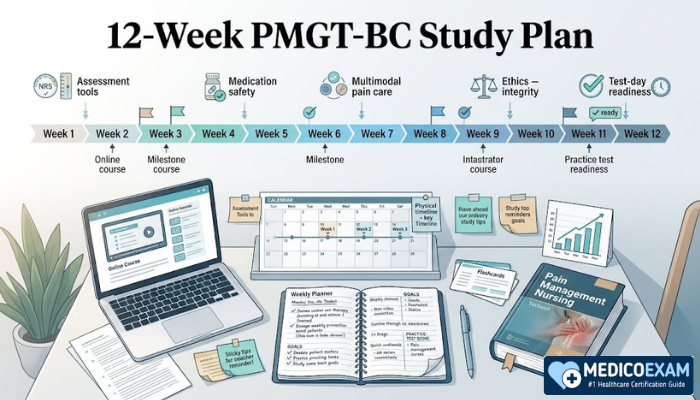 The ANCC Pain Management Nursing certification (PMGT-BC) validates that a registered nurse possesses entry-level clinical knowledge and skills in pain assessment, multimodal interventions, and professional practice. The computer-based exam consists of 150 questions — 125 scored and 25 unscored pretest items — and candidates have 3 hours to complete it at a Prometric testing center.