
ANCC Certification Exam: Your NP Career Crossroads
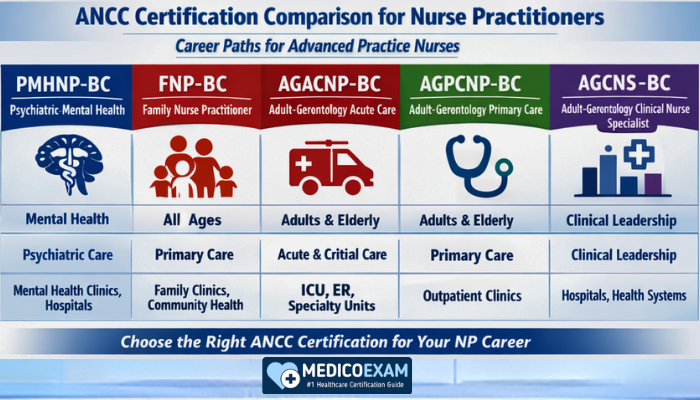 The ANCC Certification Exam represents a pivotal milestone for nurse practitioners (NPs) aiming to validate their specialized knowledge and advance their careers. This critical assessment, administered by the American Nurses Credentialing Center (ANCC), confirms a candidate's competency in their chosen population focus. For aspiring and practicing nurse practitioners, selecting the appropriate ANCC certification exam, such as the PMHNP-BC, AGACNP-BC, FNP-BC, AGPCNP-BC, or AGCNS-BC, marks a significant crossroads in their professional journey. This article provides an objective, data-backed exploration of these certifications, offering insights into preparation, eligibility, and the profound impact on an NP's career trajectory.
Navigating the ANCC NP Certification Landscape
Achieving ANCC certification signifies a commitment to excellence and a recognized standard of advanced nursing practice. The ANCC offers a diverse portfolio of certifications tailored to various nurse practitioner specialties, each designed to ensure that certified individuals possess the essential knowledge and skills to provide high-quality, patient-centered care within their respective domains. Understanding these distinct pathways is crucial for any NP at a career crossroads, as each certification validates expertise in a specific area of practice. These credentials elevate professional standing and often expand career opportunities.
Specialized ANCC Certifications for Nurse Practitioners
The ANCC provides comprehensive examinations for a range of nurse practitioner roles, reflecting the varied and evolving needs of healthcare. Each certification targets a specific patient population and care context, requiring distinct educational backgrounds and clinical experiences. Making an informed decision about which ANCC certification exam aligns with one's career aspirations and clinical interests is paramount for long-term professional satisfaction and impact.
The following outlines key ANCC NP certifications:
✔ PMHNP-BC (Psychiatric-Mental Health Nurse Practitioner, Board Certified):
This certification is for NPs who specialize in providing comprehensive psychiatric-mental health care to individuals, families, and groups across the lifespan. PMHNP-BCs assess, diagnose, and treat mental health conditions, often working in diverse settings from outpatient clinics to inpatient facilities.
✔ AGACNP-BC (Adult-Gerontology Acute Care Nurse Practitioner, Board Certified):
Designed for NPs focusing on acutely ill adult and gerontology patients, this credential validates expertise in managing complex, critical, and unstable health conditions. AGACNP-BCs typically work in settings like intensive care units, emergency departments, and specialty care units.
✔ FNP-BC (Family Nurse Practitioner, Board Certified):
The FNP-BC certification is for NPs providing primary care to individuals and families across the lifespan, from infancy to older adulthood. FNPs offer holistic care, including health promotion, disease prevention, and management of acute and chronic conditions in outpatient settings.
✔ AGPCNP-BC (Adult-Gerontology Primary Care Nurse Practitioner, Board Certified):
This certification targets NPs who deliver primary care to adult and gerontology populations (adolescence through older adulthood). AGPCNP-BCs focus on health maintenance, disease prevention, and managing common acute and chronic illnesses in primary care settings.
✔AGCNS-BC (Adult-Gerontology Clinical Nurse Specialist, Board Certified):
While not strictly an NP, the AGCNS-BC focuses on improving outcomes for adult and gerontology populations through advanced nursing practice that influences patients, nurses, and healthcare systems. CNSs are experts in a specific clinical area, focusing on patient care, nursing practice, and organizational systems.
ANCC Certification Comparison for Nurse Practitioners
|
Certification
|
Patient Focus
|
Care Type
|
Typical Work Setting
|
|---|---|---|---|
|
PMHNP-BC
|
Mental health across lifespan
|
Psychiatric care
|
Mental health clinics, hospitals
|
|
FNP-BC
|
All ages
|
Primary care
|
Family clinics, community health
|
|
AGACNP-BC
|
Adults & elderly
|
Acute/critical care
|
ICU, emergency, specialty units
|
|
AGPCNP-BC
|
Adults & elderly
|
Primary care
|
Outpatient clinics
|
|
AGCNS-BC
|
Adults & elderly
|
Advanced clinical leadership
|
Hospitals, healthcare systems
|
Structuring Your ANCC Certification Exam Preparation
Successful preparation for an ANCC certification exam requires a structured approach that encompasses thorough content review, strategic study methods, and consistent practice. Given the depth and breadth of knowledge assessed, candidates benefit significantly from a well-organized study plan. Developing a robust strategy ensures all essential domains are covered, enhancing confidence and readiness. Effective preparation is key to passing the ANCC Psychiatric-Mental Health Nurse Practitioner certification or any other ANCC specialty exam.
Developing a Comprehensive Study Plan Guide
A tailored study plan is the cornerstone of effective preparation for the ANCC certification exam. It should account for individual learning styles, current knowledge gaps, and the specific exam content outline. Starting early and maintaining a consistent schedule are crucial for retaining vast amounts of information. Candidates often find success by breaking down the overall study period into manageable phases, focusing on different content areas in sequence.
1. Assess Your Knowledge Base:
Begin with a diagnostic test or self-assessment to identify areas of strength and weakness. This initial step helps in prioritizing study efforts and allocating time efficiently.
2. Review the Exam Content Outline:
Thoroughly familiarize yourself with the official ANCC exam content outline for your specific certification (e.g., ANCC AGPCNP-BC exam content outline). This document details the domains, subdomains, and approximate weightings of topics on the exam, guiding your study focus.
3. Gather Essential Resources:
Collect high-quality study materials, including reputable textbooks, official ANCC review manuals, peer-reviewed journals, and recommended ANCC exam prep courses for nurse practitioners. Ensure your resources are current and align with evidence-based practice.
4. Create a Realistic Schedule:
Allocate dedicated study time each day or week, ensuring it's sustainable. Integrate breaks to prevent burnout and allow for knowledge consolidation. Factor in time for practice questions and comprehensive review sessions.
5. Prioritize and Pace:
Based on your self-assessment and the exam content outline, prioritize areas requiring more attention. Pace your learning to avoid cramming, allowing concepts to be absorbed over time.
Leveraging Diverse Study Resources and Strategies
To optimize preparation for the ANCC certification exam, candidates should engage with a variety of study resources and employ effective learning strategies. Relying on a single resource can limit exposure to different perspectives and question styles. A multi-faceted approach builds a more comprehensive understanding and enhances critical thinking skills. This strategic use of materials helps candidates prepare for the ANCC Adult-Gerontology ACUTE Care Nurse Practitioner certification test prep and other exams.
• Official ANCC Review Materials:
Utilize ANCC-published study guides and resources, as they directly reflect the exam's focus and format. These are often the most accurate representation of what to expect.
• Reputable Textbooks:
Refer to standard nursing and advanced practice textbooks relevant to your specialty. These provide foundational and in-depth knowledge necessary for a strong understanding of clinical concepts.
• Online Review Courses:
Enroll in recommended ANCC exam prep courses for nurse practitioners. Many programs offer structured learning, expert instruction, and practice exams designed to simulate the actual test environment.
• Study Groups and Peer Learning:
Collaborating with peers can provide different insights, clarify complex topics, and offer a supportive environment. Teaching others is an excellent way to reinforce your own understanding.
• Flashcards and Mnemonics:
These tools are particularly useful for memorizing key facts, formulas, and clinical guidelines. Create your own based on difficult concepts.
Mastering Practice Questions for Exam Readiness
Engaging with practice questions is an indispensable component of ANCC certification exam preparation. This strategy not only tests knowledge recall but also familiarizes candidates with the exam format, question types, and time management. Consistent practice helps identify weak areas, refine critical thinking, and build confidence before the actual ANCC certification exam. It's especially vital for candidates pursuing the ANCC FNP-BC practice questions and answers or ANCC PMHNP-BC study guide and practice questions.
Utilizing ANCC Practice Questions Effectively
Practice questions are more than just a means to check answers; they are powerful learning tools. Approaching them strategically can significantly enhance study outcomes. Candidates should aim to understand the rationale behind both correct and incorrect answers, thereby deepening their comprehension of the subject matter. This systematic engagement with practice questions is crucial for how to prepare for ANCC Adult-Gerontology Clinical Nurse Specialist certification.
1. Simulate Exam Conditions:
Whenever possible, take practice tests under timed conditions to simulate the actual exam environment. This helps develop pacing strategies and reduces test-day anxiety.
2. Analyze Performance:
After completing a set of questions, thoroughly review all answers, regardless of whether they were correct. Understand why the correct answer is correct and why the distractors are incorrect.
3. Identify Knowledge Gaps:
Pay close attention to topics where you consistently answer questions incorrectly. These indicate areas requiring further study and focused review.
4. Familiarize with Question Structure:
ANCC questions often involve complex clinical scenarios. Practice dissecting these scenarios, identifying key information, and eliminating plausible but incorrect options.
5. Integrate Practice Regularly:
Don't relegate practice questions to the end of your study period. Integrate them regularly into your routine to reinforce learning and track progress over time.
Optimizing Your Approach to Practice Assessments
The quality and quantity of practice questions can significantly influence preparedness. Candidates should seek out comprehensive question banks that mirror the complexity and content distribution of the actual ANCC exam. Beyond mere memorization, the goal is to develop the clinical reasoning skills essential for applying knowledge to varied patient situations. Websites like MedicoExam's ANCC practice tests can provide valuable resources for this type of focused preparation.
-
Seek Diverse Question Banks: Utilize practice questions from multiple reputable sources to gain exposure to different question styles and levels of difficulty.
-
Focus on Rationale: Prioritize practice questions that come with detailed explanations for each answer choice. This is where the most significant learning occurs, reinforcing theoretical knowledge with practical application.
-
Review Repeatedly: Revisit previously answered questions, especially those you struggled with. This spaced repetition helps solidify challenging concepts.
-
Contextualize Learning: For each question, consider the clinical implications of the correct answer. How does this apply to patient care? This contextualization makes the learning more meaningful and memorable.
-
Avoid Memorizing Questions: The objective is not to memorize specific questions and answers but to understand the underlying principles. The actual exam will feature unique scenarios requiring applied knowledge.
Avoiding Common Pitfalls on ANCC Certification Exams
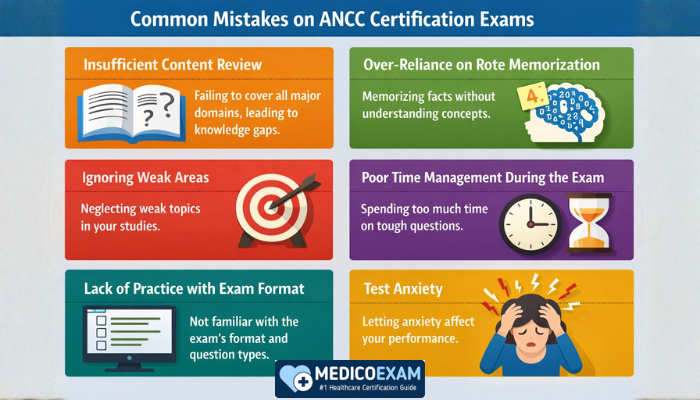
Many candidates face challenges on the ANCC certification exam, often due to preventable mistakes in their preparation or test-taking approach. Recognizing and actively working to mitigate these common errors can significantly improve the likelihood of success. From inadequate preparation to poor time management, understanding these pitfalls is a crucial part of how to pass ANCC Psychiatric-Mental Health Nurse Practitioner certification and other specialty exams.
Common Mistakes on ANCC Certification Exams
Successful candidates often learn from the experiences of others, identifying potential traps before they encounter them. The ANCC certification exam tests not just knowledge, but also the ability to apply that knowledge under pressure. Awareness of typical missteps allows for proactive adjustments to study and test-taking strategies.
-
Insufficient Content Review: Failing to cover all major domains outlined in the exam blueprint, leading to significant knowledge gaps in certain areas.
-
Over-Reliance on Rote Memorization: Focusing solely on memorizing facts without understanding underlying concepts and clinical reasoning, which is essential for scenario-based questions.
-
Ignoring Weak Areas: Spending too much time on comfortable topics and neglecting areas identified as weak during practice, leading to an unbalanced knowledge base.
-
Poor Time Management During the Exam: Spending excessive time on difficult questions, leaving insufficient time to adequately address easier ones, or rushing through the entire exam.
-
Lack of Practice with Exam Format: Not familiarizing oneself with the computer-based testing interface or the specific types of questions (e.g., multiple-choice, multiple-response, drag-and-drop) used by ANCC.
-
Test Anxiety: Allowing anxiety to overwhelm performance, leading to blanking out on answers or misinterpreting questions.
Strategic Approaches to Overcome Exam Challenges
Overcoming common exam challenges requires a combination of disciplined preparation and effective test-taking strategies. A proactive mindset, coupled with targeted interventions, can transform potential pitfalls into opportunities for improvement. These strategies are vital for ensuring you meet the ANCC FNP-BC passing score requirements and for overall success.
-
Holistic Content Mastery: Ensure a deep understanding of pathophysiology, pharmacology, assessment, and management principles relevant to your specialty. Connect theoretical knowledge to clinical application.
-
Active Learning Techniques: Instead of passive reading, engage in active recall, concept mapping, and teaching others. These methods promote deeper learning and better retention.
-
Targeted Review: Systematically address weak areas identified through practice exams and focused study. Dedicate extra time to these topics until confidence is built.
-
Practice Pacing: During practice exams, consciously monitor your time per question. Develop a strategy to move through questions efficiently, flagging difficult ones for review if time permits.
-
Familiarization with Interface: If possible, utilize any available tutorials or demo exams to become comfortable with the testing platform before exam day.
-
Stress Management: Implement relaxation techniques, mindfulness, and healthy lifestyle habits to manage test anxiety. A calm mind performs better.
Eligibility and Application for ANCC Certification
Before embarking on the rigorous preparation for the ANCC certification exam, prospective candidates must ensure they meet the specific eligibility criteria established by the ANCC. These requirements are in place to ensure that only qualified and adequately prepared advanced practice nurses are deemed eligible to sit for the examination. Understanding these prerequisites is the first critical step at the ANCC certification exam crossroads, ensuring a smooth application process.
General ANCC Eligibility Criteria for Nurse Practitioners
While specific requirements can vary slightly between certifications, the ANCC maintains a foundational set of criteria that all nurse practitioner candidates must fulfill. These typically include educational attainment, clinical hours, and current licensure. Adherence to these guidelines is non-negotiable for successful application and examination. The official ANCC website, NursingWorld.org, provides the most up-to-date and comprehensive details for all certifications.
-
Graduate Degree: Candidates must hold a master's, post-graduate certificate, or doctoral degree (e.g., DNP) from an accredited nurse practitioner program. The program must be in the specialty area for which certification is sought.
-
Accreditation: The nurse practitioner program must be accredited by either the Accreditation Commission for Education in Nursing (ACEN) or the Commission on Collegiate Nursing Education (CCNE).
-
Clinical Hours: Completion of a specified number of supervised clinical hours (e.g., 500 hours) within the nurse practitioner program is generally required, focusing on the specific population relevant to the certification.
-
Registered Nurse (RN) Licensure: Applicants must possess a current, active, unrestricted registered nurse (RN) license in the United States or its territories.
-
Role and Population Focus: The educational program must have prepared the applicant for the specific NP role and population focus (e.g., FNP, PMHNP, AGACNP) for which they are applying for certification.
Streamlining Your ANCC Application Process
The application process for the ANCC certification exam requires meticulous attention to detail to avoid delays or rejections. Gathering all necessary documentation, verifying program details, and submitting accurate information are vital steps. Candidates should review the application instructions carefully on the ANCC official website to ensure full compliance. This proactive approach supports candidates applying for ANCC PMHNP-BC eligibility criteria and other ANCC exams.
-
Review Application Handbook: Download and thoroughly read the specific certification application handbook from the ANCC website. It provides detailed instructions, checklists, and forms.
-
Verify Program Information: Ensure your graduate nursing program's accreditation status and curriculum align with ANCC requirements. You may need to request official transcripts.
-
Compile Documentation: Gather all required supporting documents, such as official transcripts, verification of clinical hours, and proof of RN licensure.
-
Online Application Submission: Complete the application online through the ANCC certification portal. Double-check all entered information for accuracy before submission.
-
Pay Application Fees: Submit the required application fee. Be aware of payment deadlines and potential fees for late submissions or re-applications.
-
Monitor Application Status: After submission, regularly check your application status through the ANCC portal for any updates or requests for additional information.
Advancing Your Career with ANCC Certification
Achieving ANCC certification is more than just passing an exam; it is a profound investment in professional growth and career advancement. The credential signifies expertise, commitment, and a high standard of practice that is recognized across the healthcare industry. For nurse practitioners, the benefits extend beyond personal satisfaction, influencing employment opportunities, earning potential, and the quality of patient care. This certification truly validates the knowledge and skills necessary for the role.
Enhancing Professional Recognition and Credibility
In a competitive healthcare landscape, ANCC certification distinguishes nurse practitioners as leaders in their field. The "Board Certified" (BC) designation is a testament to validated knowledge and clinical competency, fostering trust among patients, employers, and colleagues. This heightened recognition can open doors to new roles and responsibilities.
-
Employer Preference: Many healthcare institutions prefer or even require ANCC certification for NP positions, viewing it as a benchmark for quality and expertise.
-
Peer Respect: Certified NPs often command greater respect among their peers, who recognize the rigor and dedication required to earn the credential.
-
Public Trust: Patients often seek out certified providers, trusting that they possess the highest level of validated knowledge and skill in their specialty.
-
Credentialing and Privileging: ANCC certification can streamline the process of hospital privileging and other credentialing requirements, facilitating entry into various practice settings.
Expanding Career Opportunities and Earning Potential
The strategic decision to pursue an ANCC certification exam can significantly impact an NP's career trajectory and financial well-being. Certified NPs often have access to a broader range of job opportunities and may command higher salaries compared to their non-certified counterparts. The specialization demonstrated through certification aligns with specific market demands.
For instance, an ANCC-certified nurse practitioner might find themselves qualified for leadership roles, specialty clinics, or academic positions that require advanced credentials. The investment in certification typically yields substantial returns over a career. This is a crucial consideration for any NP weighing their career options.
-
Increased Marketability: Certification enhances an NP's resume, making them more attractive to potential employers seeking specialized expertise.
-
Access to Advanced Roles: Many advanced practice roles, particularly in sub-specialties or leadership, require ANCC board certification.
-
Higher Salaries: Studies often indicate that certified nurses and NPs earn a higher average salary than those without certification, reflecting the value employers place on these credentials.
-
Autonomy in Practice: In some jurisdictions, certification may be linked to greater practice autonomy or prescriptive authority for nurse practitioners.
-
Pathway to Leadership: Certification demonstrates a commitment to professional growth, which can be a stepping stone to management, education, or policy-making roles within nursing.
Maintaining Your ANCC Certification: Renewal Requirements
Earning an ANCC certification is a significant achievement, but maintaining it is equally crucial for sustained professional credibility and continued practice. The ANCC requires certificants to adhere to specific renewal requirements, ensuring that their knowledge and skills remain current and relevant to evolving healthcare standards. Understanding the ANCC certification renewal requirements is vital for long-term career planning and upholding the integrity of the credential.
Understanding the Renewal Process and Criteria
ANCC certifications typically have a five-year renewal cycle, during which certificants must demonstrate ongoing professional development and practice. The renewal process is designed to ensure that certified NPs remain competent in their specialty and continue to engage in activities that enhance their clinical knowledge and expertise. This ongoing commitment reflects the dynamic nature of advanced practice nursing.
-
Continuing Education (CE): A specified number of continuing education hours are typically required, often including pharmacotherapeutics. These hours must be relevant to the certificant's specialty.
-
Practice Hours: Certificants must accrue a certain number of hours in clinical practice within their specialty during the five-year renewal period. This ensures continued clinical engagement.
-
Professional Development Activities: The ANCC recognizes various activities beyond direct CE, such as academic coursework, presentations, publications, preceptorship, and professional organizational involvement, contributing to renewal points.
-
Attestation to Adherence to Nursing Standards: Certificants must attest to adhering to the ANCC Code of Ethics for Nurses and maintaining an active, unrestricted RN license.
-
Application and Fees: Timely submission of the renewal application and associated fees is necessary to prevent certification lapse.
Strategies for Ongoing Professional Development
Proactive engagement in professional development activities is key to seamlessly meeting ANCC certification renewal requirements. By integrating learning and professional growth into their regular practice, nurse practitioners can ensure they are well-prepared for renewal while continuously enhancing their clinical capabilities. This commitment to lifelong learning is a hallmark of advanced practice nursing.
-
Track CE Hours Systematically: Maintain a detailed log of all continuing education activities, including certificates of completion, dates, and topics. Many professional organizations offer platforms for tracking CE.
-
Engage in Diverse Learning: Seek out CEs that cover new advancements, evidence-based practices, and challenging areas within your specialty. Don't limit yourself to familiar topics.
-
Participate in Professional Organizations: Active involvement in nursing organizations provides opportunities for networking, leadership, and earning professional development points.
-
Precept or Mentor Others: Serving as a preceptor for nursing students or new graduates not only contributes to renewal but also reinforces your own knowledge and skills.
-
Stay Current with Guidelines: Regularly review updated clinical guidelines, practice standards, and research in your specialty area to ensure your practice remains evidence-based.
-
Plan for Renewal Early: Begin planning for your renewal well in advance of the deadline, allowing ample time to complete any outstanding requirements and submit the application.
Frequently Asked Questions
1. What is the ANCC Certification Exam?
-
The ANCC Certification Exam is a standardized test administered by the American Nurses Credentialing Center to validate the knowledge and skills of advanced practice registered nurses (APRNs) in a specific specialty and population focus. Passing the exam leads to board certification, such as FNP-BC or PMHNP-BC.
2. Which ANCC NP certifications are available?
-
The ANCC offers several NP certifications, including Family Nurse Practitioner (FNP-BC), Adult-Gerontology Primary Care Nurse Practitioner (AGPCNP-BC), Adult-Gerontology Acute Care Nurse Practitioner (AGACNP-BC), Psychiatric-Mental Health Nurse Practitioner (PMHNP-BC), and Adult-Gerontology Clinical Nurse Specialist (AGCNS-BC), among others.
3. How long is ANCC certification valid, and what are the renewal requirements?
-
ANCC certifications are typically valid for five years. Renewal requirements vary by certification but generally include a combination of continuing education hours, practice hours in the specialty, and professional development activities, along with maintaining an active RN license.
4. What resources are recommended for ANCC certification exam preparation?
-
Recommended resources often include official ANCC study guides, comprehensive review textbooks, reputable online prep courses, and practice question banks. Utilizing a variety of these materials can help cover all essential content domains and familiarize candidates with the exam format.
5. What is the significance of ANCC certification for a nurse practitioner's career?
-
ANCC certification enhances a nurse practitioner's professional recognition, credibility, and marketability. It can lead to increased career opportunities, higher earning potential, and often fulfills requirements for hospital privileging and insurance paneling, signifying a high standard of advanced nursing practice.
Conclusion
The ANCC certification exam stands as a defining moment for nurse practitioners, offering a pathway to specialized expertise and enhanced career opportunities. Whether pursuing the PMHNP-BC, AGACNP-BC, FNP-BC, AGPCNP-BC, or AGCNS-BC, the commitment to earning and maintaining these credentials speaks volumes about an NP’s dedication to their profession and patient care. By understanding the pathways, meticulously preparing, and embracing continuous learning, NPs can confidently navigate their career crossroads and unlock a future of advanced practice excellence.
Embrace this critical journey with informed decisions and thorough preparation. For comprehensive resources and to deepen your understanding of the ANCC certification process, including detailed FAQs, visit the official ANCC resources and explore reliable study aids. Your future as a board-certified nurse practitioner begins with a well-prepared step.
- ANCC Psychiatric-Mental Health Nurse Practitioner Practice Test |
- ANCC Adult-Gerontology ACUTE Care Nurse Practitioner Practice Test |
- ANCC Family Nurse Practitioner Practice Test |
- ANCC PMHNP-BC Question Bank |
- ANCC Psychiatric-Mental Health Nurse Practitioner Study Guide |
- ANCC AGACNP-BC Question Bank |
- ANCC Adult-Gerontology ACUTE Care Nurse Practitioner Study Guide |
- ANCC FNP-BC Question Bank |
- ANCC Family Nurse Practitioner Study Guide |
- ANCC AGPCNP-BC Question Bank |
- ANCC Adult-Gerontology PRIMARY Care Nurse Practitioner Practice Test |
- ANCC Adult-Gerontology PRIMARY Care Nurse Practitioner Study Guide |
- ANCC AGCNS-BC Question Bank |
- ANCC Adult-Gerontology Clinical Nurse Specialist Practice Test |
- ANCC Adult-Gerontology Clinical Nurse Specialist Study Guide


