
What Is ANCC Certification? A Beginner’s Guide to FNP-BC Certification
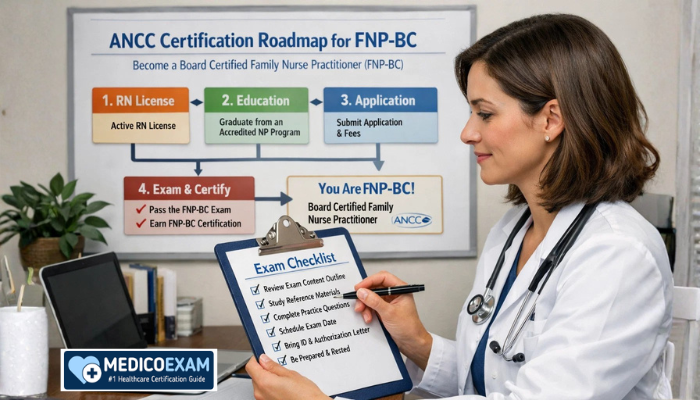 Earning professional credibility is no longer optional in high-responsibility healthcare roles it’s expected. For nurse practitioners aiming to validate clinical competence and advance globally, ANCC Certification stands as a defining credential. Among its most sought-after credentials is the FNP-BC, a certification that formally recognizes advanced clinical expertise in family-focused primary care.
This guide breaks down what ANCC Certification is, how the ANCC Family Nurse Practitioner Certification (FNP-BC) works, who qualifies, what the exam looks like, and how it impacts long-term career growth. Whether you’re a student, career changer, or experienced practitioner seeking advancement, this article provides clear, exam-aligned, and career-oriented insight.
For a broader perspective beyond fundamentals, visit study guide on the ANCC certification exam and career crossroads explains what comes next after certification.
What Is ANCC Certification and How Does It Work?
ANCC Certification is a professional credential awarded by the American Nurses Credentialing Center to validate advanced nursing knowledge, clinical judgment, and ethical practice in specialized nursing roles.
Understanding ANCC Certification
The ANCC Certification program is administered by the American Nurses Credentialing Center, a globally respected credentialing authority affiliated with the American Nurses Association. ANCC certifications are designed to:
-
Validate advanced clinical knowledge
-
Standardize nurse practitioner competencies
-
Support licensure, credentialing, and employment requirements
-
Enhance professional mobility across regions
Unlike basic licensure, ANCC credentials reflect role-specific expertise, assessed through rigorous examinations and renewal requirements.
How the ANCC Certification Process Works
-
Eligibility Verification – Education, licensure, and clinical training are reviewed
-
Application Submission – Online application through ANCC
-
Computer-Based Examination – Proctored, standardized exam
-
Certification Awarded – Valid for five years
-
Renewal – Continuing education and practice requirements
For those preparing seriously, structured exam practice through platforms like MedicoExam’s ANCC practice resources helps bridge the gap between theory and real-world exam expectations.
What Is FNP-BC? ANCC Family Nurse Practitioner Certification Explained
FNP-BC is the ANCC Family Nurse Practitioner Certification that validates a nurse practitioner’s ability to deliver comprehensive primary care across the lifespan.
What Does FNP-BC Mean?
FNP-BC stands for Family Nurse Practitioner – Board Certified. It confirms that a nurse practitioner possesses advanced competencies in:
-
Health promotion and disease prevention
-
Acute and chronic condition management
-
Family-centered care across age groups
Professionals often ask, “what is FNP-BC?” Simply put, it is one of the most recognized nurse practitioner credentials worldwide.
Why FNP-BC Matters in Practice
From credentialing committees to employers and insurers, FNP-BC certification is often a non-negotiable requirement. It supports:
-
Independent or collaborative practice authority
-
Hospital privileges and payer enrollment
-
Leadership and supervisory roles
Official certification scope details are available through ANCC’s certification portal.
Who Is Eligible for the ANCC FNP-BC Certification Exam?
Eligibility for the ANCC FNP-BC exam requires an active RN license, a graduate degree from an accredited FNP program, and completion of supervised clinical hours.
Eligibility Criteria Breakdown
To apply for the ANCC Family Nurse Practitioner Certification, candidates typically must meet the following:
-
Active, unrestricted RN license
-
Master’s or doctoral degree in nursing
-
Completion of an accredited FNP program
-
Supervised clinical training in family practice
Eligibility requirements may vary slightly by region and regulatory updates, so referencing ANCC’s official eligibility documentation is essential.
Common Application Mistakes to Avoid
-
Submitting incomplete clinical documentation
-
Applying before degree conferral
-
Misclassifying specialty coursework
Experienced candidates often emphasize early documentation review and mock testing before final submission.
ANCC FNP-BC Exam Overview: Format, Cost, and Sample Questions
The ANCC FNP-BC exam includes 175 questions, lasts 3.5 hours, and assesses clinical decision-making across five practice domains.
Exam Structure at a Glance
-
Total Questions: 175
-
Scored Questions: 150
-
Pretest Questions: 25 (unscored)
-
Time Limit: 3.5 hours
-
Question Types: Multiple-choice and multi-select
ANCC Certification Cost
-
$295 – ANA Members
-
$395 – Non-Members
Fee details and policy updates should always be verified through ANCC’s official cost documentation.
Content Domains and Weightage
|
Content Domain
|
Weightage
|
|---|---|
|
Assessment
|
19%
|
|
Diagnosis
|
17%
|
|
Planning
|
19%
|
|
Implementation
|
29%
|
|
Evaluation
|
15%
|
ANCC Certification Sample Questions
Official ANCC certification exam sample questions emphasize:
-
Scenario-based clinical reasoning
-
Evidence-based practice decisions
-
Ethical and professional judgment
Prepare with confidence FNP sample test questions give you insight into exam format and question types.
ANCC FNP-BC Salary, Career Scope, and Job Opportunities
FNP-BC certified nurse practitioners typically earn higher salaries and qualify for expanded clinical, leadership, and autonomous practice roles.
FNP-BC Salary Insights
While FNP-BC salary varies globally, certification is consistently linked to:
-
Higher earning potential
-
Expanded job eligibility
-
Increased professional trust
According to workforce data from the U.S. Bureau of Labor Statistics, nurse practitioner roles are among the fastest-growing healthcare professions.
Career Opportunities with FNP-BC

Professionals transitioning from bedside nursing often describe FNP-BC as a career multiplier, not just a credential.
Frequently Asked Questions (FAQs)
Q1. Is the ANCC FNP-BC exam difficult?
The exam is considered moderately challenging, focusing on applied clinical judgment rather than memorization. Candidates with structured preparation and scenario-based practice typically perform better than those relying solely on textbooks.
Q2. How long does it take to prepare for the FNP-BC exam?
Preparation time varies, but most candidates study consistently for 3–4 months. This includes content review, practice questions, and full-length mock exams aligned with the ANCC exam blueprint.
Q3. Can you retake the ANCC FNP-BC exam?
Yes. Candidates who do not pass may retake the exam after a waiting period. Retake policies and limits can change, so it’s important to confirm current rules on ANCC’s official website.
Q4. Is ANCC certification recognized internationally?
ANCC certification is globally respected, though practice authority depends on local regulatory bodies. Many international employers recognize ANCC credentials as evidence of advanced clinical competence.
Q5. Does FNP-BC certification increase salary?
Certification does not guarantee a specific salary increase, but employers typically prefer board-certified nurse practitioners, which often leads to better compensation and role flexibility.
Q6. How useful are practice tests for ANCC FNP-BC?
Practice tests are highly useful when they reflect the real exam structure. They help identify weak domains, improve time management, and reduce exam anxiety through familiarity.
Q7. What happens if my certification expires?
Expired certifications usually require reinstatement steps or re-examination. Renewal requirements typically include continuing education and practice hours every five years.
Q8. Is FNP-BC different from other NP certifications?
Yes. FNP-BC specifically focuses on family-centered primary care across the lifespan, while other NP certifications target narrower specialties.
Conclusion
ANCC Certification, particularly the FNP-BC, is more than a professional milestone—it’s a long-term investment in credibility, clinical authority, and career resilience. For nurse practitioners navigating competitive healthcare environments, this credential signals verified competence and commitment to excellence.
By understanding eligibility, exam structure, preparation strategies, and career outcomes, candidates can approach the ANCC FNP-BC journey with clarity and confidence. With structured preparation, realistic practice, and adherence to official guidance, success is both achievable and sustainable.
To sharpen time management skills, try real-world practice exams designed to mirror actual certification pacing.
- ANCC Family Nurse Practitioner Practice Test |
- ANCC FNP-BC Question Bank |
- ANCC FNP-BC Eligibility & Requirements |
- ANCC FNP-BC Exam Cost |
- ANCC FNP-BC Registration Process |
- ANCC Family Nurse Practitioner Study Guide |
- ANCC FNP-BC Recertification |
- ANCC FNP-BC Certification Overview |
- ANCC Family Nurse Practitioner Syllabus |
- ANCC FNP-BC Preparation Time |
- ANCC FNP-BC Passing Score |
- ANCC FNP-BC Exam Format |
- ANCC Family Nurse Practitioner Sample Questions |
- ANCC FNP-BC Career Opportunities |
- ANCC FNP-BC Exam Difficulty


