
Considering AGACNP-BC? Your First Steps to Certification
 The ANCC Adult-Gerontology Acute Care Nurse Practitioner (AGACNP-BC) certification demonstrates a nurse practitioner’s expertise in caring for acutely ill adults and older patients. Specifically, this credential is awarded by the American Nurses Credentialing Center (ANCC). It confirms the clinical knowledge and skills needed to manage complex conditions in acute care settings. Moreover, earning the AGACNP-BC certification strengthens professional credibility. It also opens new career opportunities. Therefore, for registered nurses seeking advanced practice roles, this certification is an important step. In this guide, you will learn about the eligibility requirements, exam structure, and key benefits of the AGACNP-BC credential.
Still unsure whether ANCC is the right move? This breakdown of the ANCC certification exam and NP career crossroads offers clarity.
Charting Your Path to Acute Care Excellence
Becoming an Adult-Gerontology Acute Care Nurse Practitioner means entering a demanding yet highly rewarding specialty. In fact, these advanced practice registered nurses (APRNs) play a vital role in managing critically ill patients in settings such as intensive care units, emergency departments, and specialized acute care units. Moreover, the journey to earning the AGACNP-BC credential reflects a strong commitment to delivering evidence-based, high-quality care. As a result, it distinguishes you as a skilled professional and leader in acute patient management.
Understanding the ANCC AGACNP-BC Certification Purpose
The ANCC AGACNP-BC certification validates a nurse practitioner’s ability to diagnose and treat common acute and chronic conditions. Specifically, it confirms skills in performing advanced procedures and coordinating care for adult and gerontological patients with acute illnesses. Moreover, it demonstrates the ability to manage patients experiencing worsening chronic conditions.
In addition, the certification highlights a professional’s capability to work effectively in fast-paced and high-pressure healthcare environments. As a result, certified practitioners are prepared to make critical decisions that directly affect patient outcomes. Therefore, earning the AGACNP-BC credential shows strong readiness for the challenges of acute care practice.
Exploring the AGACNP-BC Exam Structure
 The AGACNP-BC exam serves as the gateway to this advanced practice credential, as it rigorously evaluates your clinical knowledge and decision-making skills. Administered by the ANCC, this comprehensive examination covers a wide range of topics essential to acute care practice. Therefore, understanding the exam format is crucial for effective preparation. Additionally, it helps reduce pre-exam anxiety and improves your confidence on test day.
Exam Content and Operational Details
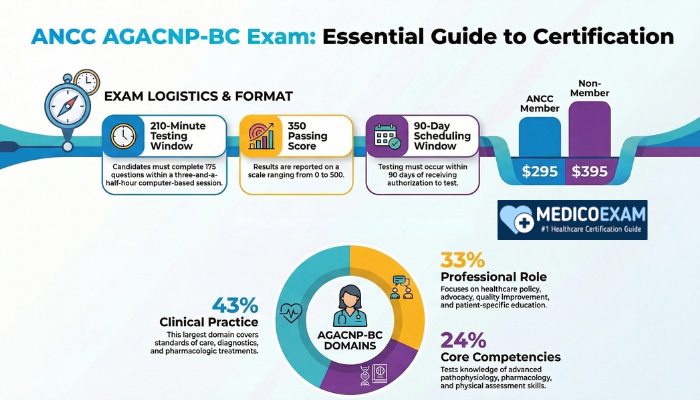
The ANCC Adult-Gerontology Acute Care Nurse Practitioner Certification exam is a robust assessment lasting 210 minutes. During this time, candidates will answer 175 questions designed to evaluate their clinical acumen and understanding of the role. A passing score of 350 on a scale of 0-500 is required to achieve certification. The exam costs $395 for non-members and $295 for members of the ANCC, reflecting the value of professional affiliation. For further information regarding exam procedures and testing center details, candidates can visit the Prometric website, the testing partner for ANCC.
Decoding the AGACNP-BC Exam Content Outline
Successful navigation of the AGACNP-BC exam requires a clear understanding of its content domains. The ANCC structures the exam around key areas of practice, assigning specific weight percentages to each. This outline provides a roadmap for your study efforts, ensuring you focus on the most critical components of the Adult-Gerontology Acute Care Nurse Practitioner role.
Key Syllabus Domains and Their Weighting
The ANCC AGACNP-BC exam is divided into three primary domains, each contributing a specific percentage to the overall score. These percentages reflect the importance and frequency of these areas in acute care practice:
-
Core Competencies: This domain accounts for 24% of the exam, covering fundamental knowledge and skills applicable across various acute care scenarios. It often includes topics such as advanced pathophysiology, pharmacology, and health assessment.
-
Clinical Practice: The largest section, making up 43% of the exam, focuses on the direct application of knowledge in patient care scenarios. This includes diagnosis, treatment planning, intervention, and evaluation for a wide array of acute and critical conditions.
-
Professional Role: Representing 33% of the exam, this domain assesses your understanding of ethical, legal, and professional responsibilities inherent to the AGACNP role. It covers aspects like leadership, collaboration, advocacy, and quality improvement initiatives.
A detailed content outline can be an invaluable resource, guiding your study plan effectively. Accessing the official ANCC blueprint, such as the AGACNP-BC Test Content Outline, can provide granular insights into each domain.
Achieving AGACNP-BC Certification Benefits
Earning the ANCC Adult-Gerontology Acute Care Nurse Practitioner Certification offers far more than simply adding credentials to your name. In fact, it provides numerous professional and personal benefits that strengthen your role in the healthcare community. Moreover, this certification can significantly enhance your career growth and opportunities. Most importantly, it validates your specialized skills and dedication to providing high-quality care for acute care patients.
Professional Growth and Expanded Opportunities
Certification significantly boosts your professional credibility. It signals to employers, colleagues, and patients that you possess a verified level of expertise in acute care. This can lead to:
-
Enhanced Career Opportunities: Certified AGACNPs are in high demand across healthcare settings. As a result, they often qualify for advanced roles in specialized units, leadership positions, and academic environments.
-
Increased Earning Potential: Certification can lead to higher salaries and stronger compensation packages. This is because it reflects specialized knowledge and greater clinical responsibility.
-
Professional Recognition: The AGACNP-BC credential is widely respected in the nursing field. Moreover, it demonstrates a strong commitment to lifelong learning and high standards of patient care.
-
Improved Patient Outcomes: Research shows that certified nurses often contribute to better patient outcomes. Therefore, the certification highlights strong clinical knowledge and sound decision-making skills.
This credential opens doors to practicing in diverse and challenging acute care environments. For a broader overview of the certification's impact, review resources like the AGACNP-BC certification overview.
Meeting ANCC Adult-Gerontology Acute Care Nurse Practitioner Exam Eligibility
Before starting your AGACNP-BC exam journey, it is important to confirm that you meet the eligibility requirements set by the ANCC. These criteria ensure that candidates have the proper education and clinical experience needed for safe practice. Moreover, they verify readiness to work effectively as an Acute Care Nurse Practitioner. Therefore, meeting these requirements is the first key step in the certification process.
Key Requirements for Certification Application
Eligibility for the ANCC AGACNP-BC certification generally involves several core components. While specific details should always be verified on the official ANCC website, typical requirements include:
-
Current RN Licensure: Holding an active, unrestricted registered nurse (RN) license in your state or territory is a foundational requirement.
-
Graduate-Level Education: Completion of an accredited graduate-level education program (Master's, DNP, or post-graduate certificate) in the Adult-Gerontology Acute Care Nurse Practitioner specialty is mandatory.
-
Clinical Hours: Documentation of supervised clinical hours, as mandated by your graduate program and national standards for ANCC certification, must be provided.
-
Content Areas: Your graduate program must include specific content in advanced physical assessment, advanced pharmacology, and advanced pathophysiology.
Carefully review the complete and most current eligibility criteria directly on the official ANCC certification page to ensure you meet all necessary qualifications before applying for the AGACNP-BC exam.
Strategic Preparation for the AGACNP-BC Exam
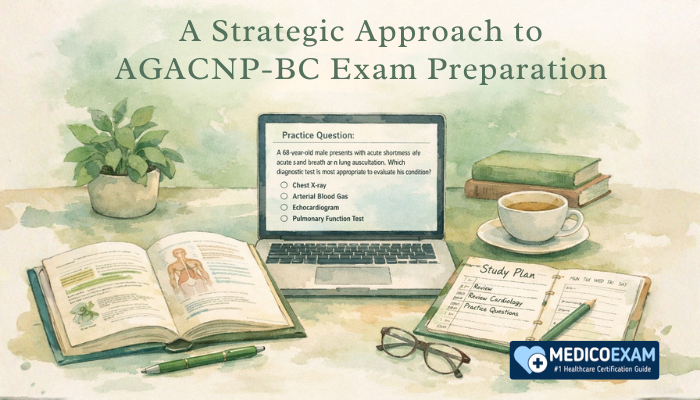
Preparing for the ANCC Adult-Gerontology Acute Care Nurse Practitioner certification requires focused and consistent effort. Therefore, creating a strong study plan is essential to manage the wide range of exam topics. Additionally, a well-structured approach helps improve both understanding and confidence. With the right resources and dedicated practice, you can significantly strengthen your readiness for the AGACNP-BC exam.
Crafting an Effective Study Plan
A well-structured study guide for the AGACNP-BC exam is your best asset. Consider these strategies to optimize your preparation:
-
Review the Content Outline: Begin by thoroughly examining the official AGACNP-BC exam content outline. This document breaks down the specific topics and their weighting, allowing you to prioritize your study efforts.
-
Utilize Quality Resources: Invest in reputable textbooks, review courses, and study guides tailored to the AGACNP-BC curriculum. Seek out materials that offer comprehensive coverage and are updated regularly.
-
Practice Questions are Key: Regularly engage with AGACNP-BC practice questions. This not only reinforces your knowledge but also familiarizes you with the exam's question format and helps you identify areas needing further review. Many candidates find that consistent practice with varied question types is crucial for success.
-
Form a Study Group: Collaborating with peers can provide different perspectives, clarify complex concepts, and offer mutual support throughout your study journey.
-
Set a Schedule: Allocate specific times for studying each week and stick to your schedule. Break down large topics into smaller, manageable chunks to avoid burnout.
MedicoExam offers specialized resources to support your preparation, providing high-quality practice materials designed to help you succeed in the ANCC AGACNP-BC exam. Additionally, these resources focus on strengthening your understanding of key concepts and exam topics. However, effective preparation also means maintaining ethical study habits. Therefore, it is important to avoid unethical practices such as using exam “dumps,” as they are unreliable and can risk your professional credibility.
Mastering Acute Care: Avenues for Effective Study
Successful candidates for the AGACNP-BC exam often employ a variety of study materials and approaches to ensure thorough coverage of the vast curriculum. Identifying the best AGACNP-BC study materials and incorporating diverse learning techniques can significantly enhance your understanding and retention of complex acute care concepts.
Leveraging Diverse Study Resources
To truly grasp the breadth of the ANCC AGACNP-BC exam review, consider a multi-faceted approach to your learning:
-
Comprehensive Review Books: Many publishers offer dedicated AGACNP-BC certification prep books that condense essential information, often including practice questions and test-taking strategies.
-
Online Courses and Webinars: Interactive online platforms can provide structured learning environments, often featuring video lectures, quizzes, and live Q&A sessions with expert instructors.
-
Flashcards and Mnemonics: For memorizing key facts, pharmacology, or diagnostic criteria, creating or using pre-made flashcards can be highly effective. Mnemonics can also help with recall during the exam.
-
Clinical Experience Integration: Actively connect your study material to your clinical experiences. Reflecting on patient cases helps solidify theoretical knowledge and improves critical thinking skills for the exam's scenario-based questions.
A blend of these resources will provide a well-rounded preparation, covering all aspects of the AGACNP-BC exam content outline.
Navigating the AGACNP-BC Exam Day
The day of your AGACNP-BC exam is a culmination of months of hard work and dedication. Knowing what to expect regarding the Adult-Gerontology Acute Care Nurse Practitioner exam format and environment can help reduce anxiety and allow you to perform at your best.
What to Expect on Test Day
The AGACNP-BC exam is a computer-based test administered at Prometric testing centers. Here are a few key considerations:
-
Arrival: Plan to arrive at the testing center well in advance of your scheduled appointment to allow for check-in procedures and security protocols.
-
Identification: You will need to present valid, unexpired identification as per ANCC and Prometric guidelines. Ensure your name matches exactly on your ID and application.
-
Testing Environment: The testing center provides a quiet, proctored environment. You will be given a computer and, typically, a scratchpad for notes.
-
Breaks: Understand the policy on breaks. Some exams offer optional unscheduled breaks, but the timer usually continues to run.
-
Question Format: The ANCC AGACNP-BC test questions are primarily multiple-choice, often presenting clinical scenarios that require critical thinking to select the best answer.
Familiarizing yourself with these practical aspects will ensure a smoother experience.
Understanding AGACNP-BC Exam Outcomes
After completing the AGACNP-BC exam, anticipation for the results is natural. Understanding how results are communicated and the implications of your performance is an important part of the certification journey. This section addresses common questions about exam difficulty and pass rates.
Deciphering Your Score and Certification
The AGACNP-BC exam pass rate and overall AGACNP-BC exam difficulty can vary, but generally, the ANCC aims for a consistent standard of competency. While specific pass rates are often dynamic and not always publicly disclosed in detail, the exam is designed to be challenging yet fair, ensuring that only those with comprehensive knowledge and clinical judgment earn the credential.
-
Preliminary Results: In many cases, candidates receive a preliminary pass/fail result immediately after completing the exam.
-
Official Score Reports: A detailed official score report, including feedback on performance in each domain, is usually sent within a few weeks.
-
Certification Issuance: Upon successful completion, your ANCC Adult-Gerontology Acute Care Nurse Practitioner certification will be processed, and you will receive your official certificate.
Regardless of the outcome, this experience offers valuable insights into your strengths and areas for growth in acute care practice.
Sustaining Your AGACNP-BC Credential
Earning your AGACNP-BC certification is a significant accomplishment, but the journey doesn't end there. Maintaining your credential through ongoing professional development and timely renewal is essential for continued practice and demonstrating your commitment to the highest standards of acute care. The ANCC Adult-Gerontology Acute Care Nurse Practitioner credential renewal process is designed to ensure practitioners remain current with evolving healthcare knowledge and practices.
The Importance of Continuous Professional Development
The healthcare landscape is constantly changing, making continuous learning vital for all nurse practitioners. The ANCC emphasizes this through its renewal requirements:
-
Regular Renewal Cycles: ANCC certifications typically require renewal every five years.
-
Continuing Education: A specified number of continuing education (CE) hours, often focused on advanced practice and acute care topics, are generally required.
-
Professional Activities: Involvement in professional organizations, scholarly activities, precepting students, or other forms of professional contribution can also count towards renewal requirements.
Staying informed about the specific ANCC AGACNP-BC credential renewal guidelines is paramount to ensuring your certification remains current and active. This commitment reflects the dynamic nature of acute care and your dedication to excellence.
Frequently Asked Questions
1. What does AGACNP-BC stand for?
-
AGACNP-BC stands for Adult-Gerontology Acute Care Nurse Practitioner-Board Certified. It signifies a nurse practitioner's specialized expertise in managing the care of acutely ill adults and older adults, certified by the American Nurses Credentialing Center (ANCC).
2. How long is the ANCC AGACNP-BC exam?
-
The ANCC AGACNP-BC certification exam has a duration of 210 minutes, allowing candidates ample time to complete the 175 questions.
3. What is the passing score for the AGACNP-BC exam?
-
Candidates must achieve a scaled score of 350 out of 500 to pass the AGACNP-BC exam and earn their certification.
4. How often must I renew my ANCC AGACNP-BC certification?
-
The ANCC AGACNP-BC certification typically requires renewal every five years, necessitating ongoing professional development and fulfillment of continuing education requirements to maintain active status.
5. What kind of patients do AGACNPs typically care for?
-
Adult-Gerontology Acute Care Nurse Practitioners (AGACNPs) primarily care for adult and older adult patients experiencing acute, critical, or complex chronic illnesses. They work in settings like intensive care units, emergency departments, trauma centers, and specialty acute care units.
Conclusion
Embarking on the path to AGACNP-BC certification is a testament to your dedication to advanced nursing practice in acute care. It demands rigorous preparation, a deep understanding of complex patient needs, and an unwavering commitment to professional growth. As you navigate this journey, remember that each step taken, from reviewing the syllabus to practicing with ANCC AGACNP-BC test questions, builds toward a highly rewarding professional future.
Ready to confidently prepare for your ANCC AGACNP-BC exam? Dive into comprehensive study resources and realistic practice questions to solidify your knowledge and sharpen your test-taking skills. Explore our specialized AGACNP-BC exam questions to ensure you are fully equipped to excel on exam day.
- ANCC Adult-Gerontology ACUTE Care Nurse Practitioner Practice Test |
- ANCC AGACNP-BC Question Bank |
- ANCC AGACNP-BC Eligibility & Requirements |
- ANCC AGACNP-BC Exam Cost |
- ANCC AGACNP-BC Registration Process |
- ANCC Adult-Gerontology ACUTE Care Nurse Practitioner Study Guide |
- ANCC AGACNP-BC Recertification |
- ANCC AGACNP-BC Certification Overview |
- ANCC Adult-Gerontology ACUTE Care Nurse Practitioner Syllabus |
- ANCC AGACNP-BC Preparation Time |
- ANCC AGACNP-BC Passing Score |
- ANCC AGACNP-BC Exam Format |
- ANCC Adult-Gerontology ACUTE Care Nurse Practitioner Sample Questions |
- ANCC AGACNP-BC Career Opportunities |
- ANCC AGACNP-BC Exam Difficulty


