
Beyond Textbooks: AAPC COC Exam Success Secrets
The AAPC Certified Outpatient Coder (COC) credential signifies a professional's specialized expertise in outpatient medical coding. This certification, offered by AAPC, validates the skills required to accurately assign CPT®, HCPCS Level II, and ICD-10-CM codes for various outpatient settings, including hospital outpatient departments, ambulatory surgical centers, and emergency departments. Professionals seeking to demonstrate their proficiency in these critical areas, ensuring proper reimbursement and compliance, will find the COC exam a pivotal step. This comprehensive article delves into effective strategies, core knowledge areas, and practical tips essential for mastering the AAPC COC Exam and excelling in the outpatient coding field.
Validating Outpatient Coding Expertise with AAPC COC
Achieving the AAPC COC certification is a testament to a coder's specialized knowledge in the complex world of outpatient coding. This credential confirms a professional’s ability to navigate the intricate coding guidelines specific to various outpatient services, which are distinct from inpatient settings. Holding the COC demonstrates a commitment to accuracy, compliance, and efficiency in a rapidly evolving healthcare landscape. It is designed for individuals who possess a strong understanding of medical terminology, anatomy, and coding principles, aiming to apply these skills in real-world outpatient scenarios.
Understanding the AAPC COC Exam Profile
The AAPC COC exam, identified by its exam code COC, is structured to rigorously assess a candidate's comprehensive knowledge. It is a challenging test, requiring not just theoretical understanding but also practical application of coding rules and regulations. This focus ensures that certified professionals are well-equipped to handle the demands of a busy outpatient coding environment.
-
Exam Name: AAPC Certified Outpatient Coder
-
Exam Code: COC
-
Exam Price: The cost is $425 for one attempt, or $499 for two exam attempts, providing flexibility for candidates.
-
Duration: Candidates are allotted 240 minutes (4 hours) to complete the examination.
-
Number of Questions: The exam comprises 100 multiple-choice questions, designed to cover a broad spectrum of outpatient coding scenarios and principles.
-
Passing Score: A minimum score of 70% is required to pass the AAPC COC Exam and earn the certification.
Key Competencies Validated by the COC Exam
The AAPC COC certification targets professionals who are directly involved in, or aspiring to be involved in, the outpatient medical coding process. This includes medical coders, billers, auditors, and healthcare administrators who require a deep understanding of outpatient coding regulations. The exam validates a candidate's proficiency in applying coding guidelines to complex outpatient encounters, ensuring that healthcare providers receive appropriate reimbursement while adhering to compliance standards. It's a crucial credential for anyone looking to solidify their career in outpatient coding and contribute significantly to their organization's financial health and regulatory adherence.
AAPC Certified Outpatient Coder Exam Structure
Navigating the format of the AAPC COC Exam requires a clear understanding of its composition and the type of questions presented. The exam's 100 multiple-choice questions are not merely theoretical; they often involve case studies and scenario-based questions that test a coder's ability to apply guidelines in practical situations. This structure ensures that candidates are not just memorizing facts but are capable of critical thinking and problem-solving under exam conditions. Familiarity with the exam's design is the first step toward building a successful preparation strategy.
The exam is carefully crafted to assess a broad range of skills necessary for outpatient coding, from fundamental medical knowledge to advanced coding application. Candidates must demonstrate proficiency across several categories, ensuring they possess the versatility required for various outpatient settings. The multiple-choice format, while standard, often includes complex scenarios that necessitate careful code selection and modifier application.
Understanding the question types is also critical. Many questions will present a clinical scenario, requiring the coder to identify the correct CPT, HCPCS Level II, or ICD-10-CM codes, often with appropriate modifiers. Other questions may test knowledge of coding guidelines, compliance regulations, or payment methodologies. Strategic preparation involves not only studying the content but also practicing how to break down these complex questions effectively to arrive at the correct answer.
Core Knowledge Domains for the COC Exam
The AAPC COC Exam covers a comprehensive range of topics essential for any competent outpatient coder. These domains reflect the daily responsibilities and challenges faced by professionals in hospital outpatient departments, ambulatory surgery centers, and other outpatient settings. A solid grasp of each subject area is fundamental to not only passing the exam but also excelling in the coding profession. Candidates must focus their study efforts across these diverse topics to build a robust knowledge base.
-
Medical Terminology: A foundational understanding of medical terms is crucial for accurately interpreting documentation and assigning codes. This includes knowledge of prefixes, suffixes, root words, and their application to various body systems, diseases, and procedures.
-
Anatomy: Proficiency in human anatomy and physiology is necessary to comprehend the location and nature of services provided. Coders must understand organ systems, directional terms, and anatomical landmarks to ensure precise coding.
-
Coding Guidelines: Mastery of official coding guidelines from organizations like CMS and AMA is paramount. This includes general rules, chapter-specific guidelines for ICD-10-CM, and proper usage for CPT® and HCPCS Level II.
-
Payment Methodologies: Knowledge of different payment systems, such as Outpatient Prospective Payment System (OPPS) and Ambulatory Payment Classification (APCs), is vital for understanding the financial impact of coding decisions in outpatient settings.
-
Compliance: An understanding of healthcare compliance regulations, including HIPAA, OIG work plans, and medical necessity rules, is essential to ethical and legal coding practices.
-
ICD-10-CM: Expertise in diagnosing coding using the International Classification of Diseases, 10th Revision, Clinical Modification, is a core component. This includes understanding coding conventions, sequencing rules, and specific disease categories.
-
HCPCS Level II: Familiarity with the Healthcare Common Procedure Coding System Level II, used for services, supplies, drugs, and equipment not covered by CPT, is required. This involves correct code assignment and modifier usage.
-
CPT®: Comprehensive knowledge of Current Procedural Terminology codes, which describe medical procedures and services, is fundamental. This covers correct code selection for office visits, procedures, surgeries, and other services.
-
Surgery and Modifiers: A detailed understanding of surgical coding, including global periods, distinct procedural services, and appropriate application of CPT modifiers, is critical for outpatient surgery coding.
-
Cases: The ability to apply all coding knowledge to real-world outpatient scenarios, often presented as clinical case studies, is heavily tested. This integrates all other knowledge domains into practical application.
Why Pursue AAPC COC Certification?
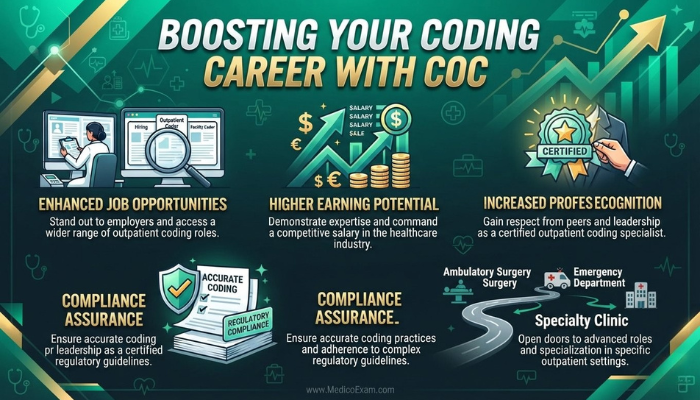
Earning the AAPC COC certification opens doors to numerous career opportunities and professional advantages within the healthcare industry. Beyond demonstrating a high level of coding competency, it signals to employers a commitment to professional development and adherence to industry best practices. This credential can significantly enhance a coder's marketability, leading to improved job prospects, higher earning potential, and greater career satisfaction. The investment in becoming a Certified Outpatient Coder yields substantial returns in professional growth and recognition.
Enhanced Career Opportunities and Job Roles
The demand for skilled outpatient coders continues to grow as healthcare services increasingly shift to outpatient settings. An AAPC COC certification makes professionals highly sought after for a variety of roles. Certified individuals are qualified for positions such as Outpatient Coder, Hospital Coder, Ambulatory Surgery Center Coder, and Coding Auditor. These roles are critical for ensuring the accurate and compliant billing for millions of outpatient encounters annually. The COC credential signifies that an individual possesses the specialized skills required to excel in these vital positions, contributing directly to the financial health and regulatory compliance of healthcare organizations. The ability to accurately code complex cases across various outpatient departments is a key differentiator in a competitive job market.
Increased Earning Potential and Professional Recognition
One of the most compelling benefits of obtaining your AAPC COC certification is the potential for a significant increase in salary. Certified coders typically command higher wages than their non-certified counterparts, reflecting their specialized expertise and value to employers. Beyond salary, the COC credential brings a level of professional recognition that can lead to leadership roles, opportunities for advancement, and a stronger voice in coding discussions. Being COC-certified demonstrates a commitment to excellence and ongoing education, elevating a professional's standing within the medical coding community and healthcare industry at large.
Ensuring Compliance and Reducing Risk
Outpatient coding is governed by a complex web of regulations and guidelines. Incorrect coding can lead to denied claims, audits, and significant financial penalties for healthcare providers. The AAPC COC certification instills the knowledge and skills necessary to ensure coding accuracy and compliance with federal and state regulations, including those from Medicare, Medicaid, and private payers. Certified coders are equipped to identify and mitigate compliance risks, thereby protecting their organizations from potential legal and financial repercussions. Their expertise is invaluable in maintaining ethical billing practices and safeguarding the integrity of healthcare data. To dive deeper into compliance and preparation, consider exploring a detailed preparation guidance that covers these crucial aspects.
Crafting Your AAPC COC Exam Study Plan
A successful journey to AAPC COC certification requires a structured and well-executed study plan. Approaching the vast amount of material without a clear strategy can be overwhelming and inefficient. A robust plan should account for all syllabus topics, personal learning styles, and available study resources. It's about optimizing your time and effort to build both comprehensive knowledge and the practical skills necessary for the exam. This tailored approach is key to transforming textbook knowledge into actionable coding expertise.
Building a Foundational Knowledge Base
Before diving into complex coding scenarios, it is imperative to solidify your understanding of the basic building blocks. This includes a thorough review of medical terminology and anatomy. These subjects are foundational, enabling you to accurately interpret physician documentation, which is the cornerstone of correct coding. Invest time in understanding the human body systems, common medical conditions, and procedural language. Utilizing flashcards, anatomy atlases, and medical dictionaries can be highly effective during this phase. Without a strong foundation here, the more advanced coding guidelines will be challenging to grasp and apply correctly.
Mastering Coding Guidelines and Methodologies
The heart of the AAPC COC Exam lies in the application of coding guidelines for ICD-10-CM, CPT®, and HCPCS Level II. This section demands meticulous study of the official coding manuals. Focus on understanding the introductory guidelines for each code set, chapter-specific rules for ICD-10-CM, and the proper use of modifiers in CPT. Pay close attention to scenario-based examples provided in official resources and practice how different coding methodologies (e.g., medical necessity, bundling rules) impact code selection. It's not enough to just read the guidelines; you must practice applying them to diverse outpatient cases. This often involves cross-referencing between different manuals and guidelines to ensure holistic accuracy.
Strategic Practice Exam Utilization
Practice exams are invaluable tools for COC exam preparation. They not only familiarize you with the exam format and time constraints but also help identify areas of weakness that require further study. Seek out high-quality AAPC COC practice questions that mimic the complexity and style of the actual test. When taking practice exams, simulate real exam conditions: time yourself, use only approved coding manuals, and avoid distractions. After each practice session, thoroughly review your answers—both correct and incorrect—to understand the rationale behind each coding decision. This iterative process of testing, reviewing, and re-studying is crucial for solidifying knowledge and building confidence.
Essential Resources for COC Exam Preparation
Choosing the right study materials can significantly impact your AAPC COC Exam success. While textbooks provide foundational knowledge, a multi-faceted approach leveraging various resources will yield the best results. Effective preparation extends beyond passive reading to active engagement with coding manuals, official guidelines, and interactive learning tools. The strategic selection and consistent use of these resources are critical for developing the depth of understanding required to pass the demanding COC exam. This section outlines key resources to integrate into your study regimen.
Official AAPC Resources
The AAPC itself provides a wealth of official resources specifically designed to aid COC exam candidates. This includes the official AAPC COC study guide, which often mirrors the exam content outline, offering targeted information. Additionally, AAPC offers online prep courses, workshops, and webinars led by experienced coders. These resources are invaluable as they come directly from the certifying body, ensuring accuracy and relevance to the current exam blueprint. Utilizing these official materials should be a cornerstone of your preparation, as they provide the most reliable insights into what to expect on test day. Accessing these resources can often be done directly through the official AAPC certification page.
Approved Coding Manuals
For the AAPC COC Exam, having the most current editions of the ICD-10-CM, CPT®, and HCPCS Level II code books is non-negotiable. These are the primary tools you will use during the exam, and proficiency in navigating them is crucial. Familiarize yourself with their layout, indices, appendices, and specific guidelines. Practice tabbing important sections and highlighting key rules to save time during the exam. The exam is open-book, meaning your ability to quickly locate information within these manuals is as important as your foundational knowledge. Regularly updating your manuals to the latest versions is also critical, as coding changes occur annually.
Supplemental Study Materials and Courses
Beyond official and manual-based resources, consider supplementing your study with high-quality third-party materials. This might include medical coding textbooks, online courses from reputable providers, or flashcards for medical terminology and anatomy. Review courses often provide structured lessons, practice questions, and expert instructors who can clarify complex topics. While self-study is possible, a well-regarded prep course can offer a more organized approach and provide valuable insights that might be missed in individual study. When choosing supplemental materials, ensure they are current, accurate, and aligned with AAPC guidelines and the COC exam's focus.
Overcoming Common Hurdles in COC Exam Readiness
The AAPC COC Exam, like any rigorous professional certification, presents its unique set of challenges. Many candidates face difficulties ranging from managing complex coding scenarios to navigating time constraints. Recognizing these common hurdles upfront is the first step toward developing strategies to overcome them effectively. Proactive problem-solving and a resilient mindset are crucial for transforming potential obstacles into stepping stones towards success. This section addresses typical difficulties and provides actionable advice to surmount them.
Tackling Complex Outpatient Cases
One of the most significant challenges in outpatient coding is the complexity of clinical documentation and the resulting coding scenarios. Outpatient cases often involve multiple diagnoses, procedures, and services within a single encounter, requiring precise code sequencing and modifier application. Many candidates struggle with integrating all the information from a case study to select the single best set of codes. To overcome this, focus on systematic case analysis: identify the primary reason for the visit, meticulously read the physician's notes, pinpoint all services rendered, and then apply guidelines in a step-by-step fashion. Regular practice with diverse case studies, including those that involve minor procedures, injections, E/M services, and diagnostic tests, will build your confidence and accuracy.
Managing Time Effectively During the Exam
The 240-minute duration for 100 questions translates to approximately 2.4 minutes per question. This tight timeline can be a major source of stress for many candidates. Effective time management is not just about speed, but about strategic pacing. Develop a system for quickly identifying complex questions that might require more time versus simpler ones that can be answered rapidly. Avoid getting bogged down on a single difficult question; mark it for review and move on. Practice navigating your coding manuals efficiently by tabbing frequently used sections. During your practice exams, simulate the actual time constraints to build stamina and improve your pacing. This discipline will prevent you from running out of time on exam day, ensuring you have the opportunity to answer all questions.
Maintaining Coding Accuracy and Compliance
The outpatient coding landscape is constantly evolving, with annual updates to ICD-10-CM, CPT®, and HCPCS Level II, alongside changes in payer policies and compliance regulations. Staying current with these changes is a continuous challenge for coders. For the exam, it means ensuring your study materials and coding manuals are the most recent editions. Beyond the exam, maintaining accuracy requires ongoing education, participation in coding forums, and subscription to industry updates. Understanding the "why" behind coding rules, rather than just memorizing them, helps in applying principles correctly even to novel scenarios. Regular self-assessment and mock audits can also reinforce accurate and compliant coding practices, which is crucial for both exam success and long-term career growth.
Maximizing Your Exam Day Performance
The culmination of your extensive preparation is exam day itself. While thorough study is paramount, your performance on the day is equally influenced by how well you manage your nerves, utilize your resources, and navigate the testing environment. Strategic exam-taking techniques can make a significant difference in converting your knowledge into a passing score. Approaching the AAPC COC Exam with a clear mind and a tactical plan will help you confidently demonstrate your expertise and achieve your certification goal.
Pre-Exam Preparation and Mindset
The day before your exam should be dedicated to light review, not intense cramming. Focus on getting adequate rest, eating nutritious meals, and avoiding stress. Double-check your allowed materials—coding manuals, pencils, erasers—and ensure they are organized and ready to go. Familiarize yourself with the testing center location and plan your route to avoid any last-minute delays. Cultivate a positive and confident mindset, reminding yourself of the hard work you've put in. A calm and prepared mind is your best asset for optimal performance on the AAPC COC Exam.
Effective Strategies During the Exam
Once the exam begins, take a moment to breathe and mentally prepare. Scan the entire exam briefly to get a sense of its length and identify any particularly complex case studies. Prioritize questions you know well, answering them quickly to build momentum and save time for more challenging ones. When approaching case studies, read the entire scenario carefully, highlight key details, and then refer to your coding manuals. Pay close attention to keywords, documentation details, and any conflicting information. Use the process of elimination for multiple-choice questions, and if unsure, make your best educated guess before moving on. Do not leave any questions unanswered, as there is no penalty for guessing.
Post-Exam Review and Confidence
If time permits, perform a quick review of your answers, especially those you flagged for reconsideration. However, avoid second-guessing yourself too much unless you find a clear error. Trust your initial instincts and your preparation. Once you submit your exam, let go of any worries. You've done your best, and the outcome will reflect your diligent efforts. Regardless of the immediate result, the knowledge and skills you've gained throughout your AAPC COC Exam preparation journey are invaluable and will serve you well in your professional career. Celebrate the completion of this challenging endeavor and await your results with confidence.
Career Trajectories After Earning Your AAPC COC Credential
Earning your AAPC COC certification is not merely the end of an exam; it's the beginning of an expanded career trajectory in medical coding. This credential acts as a catalyst, opening doors to advanced roles, specialized areas, and greater leadership opportunities within the healthcare industry. Professionals with the COC are equipped to handle complex outpatient coding challenges, making them indispensable assets to hospitals, clinics, and billing services. The certification empowers coders to take on more responsibility, contribute to financial integrity, and become recognized experts in their field.
Advanced Roles and Specializations
With the AAPC COC credential, coders can advance into more specialized and senior roles. This might include becoming a lead outpatient coder, where you guide junior coders and manage complex coding queues. Opportunities also arise in coding auditing, ensuring compliance and accuracy across coding departments. Some COC-certified professionals transition into coding education, training the next generation of coders. Furthermore, the COC serves as a strong foundation for pursuing additional specialty certifications within AAPC, such as cardiology, surgery, or evaluation and management (E/M) coding, allowing for even deeper specialization and increased earning potential.
Contribution to Healthcare Financial Health
Accurate outpatient coding is directly tied to a healthcare organization's financial health. The AAPC COC-certified professional plays a critical role in ensuring correct reimbursement for services rendered, minimizing claim denials, and optimizing revenue cycles. Their expertise helps prevent costly audits and identifies areas for process improvement. By maintaining high standards of coding accuracy and compliance, COC-certified individuals directly contribute to the financial stability and sustainability of healthcare providers. This makes them highly valued team members whose skills have a tangible impact on the bottom line.
Networking and Professional Growth
Certification by AAPC immediately connects you to a vast network of coding professionals. AAPC membership provides access to local chapters, national conferences, online forums, and continuing education resources. This network is invaluable for professional growth, offering opportunities to share best practices, stay abreast of industry changes, and build mentorship relationships. Engaging with the AAPC community can lead to new career opportunities, collaborative projects, and a deeper sense of belonging within the medical coding profession. The COC credential is a badge of honor that facilitates entry into this supportive and dynamic professional community.
Sustaining Professional Excellence as a Certified Outpatient Coder
Earning the AAPC COC certification is a significant achievement, but it marks the beginning of a journey of continuous professional development. The healthcare industry, and specifically medical coding, is characterized by constant change—new codes, updated guidelines, and evolving regulations. To maintain professional excellence and the validity of your COC credential, ongoing education and active engagement with the coding community are absolutely essential. Sustaining your expertise ensures that you remain a valuable and current asset in any outpatient coding environment.
Continuing Education Requirements
AAPC certifications, including the COC, require ongoing continuing education units (CEUs) to maintain validity. This requirement ensures that certified professionals stay current with the latest coding updates, compliance regulations, and industry trends. Accumulating CEUs can be achieved through various avenues, such as attending AAPC webinars, participating in workshops, reading industry journals, or completing accredited online courses. Planning your CEU acquisition throughout the year prevents last-minute scrambling and ensures you remain engaged with new knowledge areas relevant to outpatient coding. This continuous learning process reinforces your expertise and adaptability.
Staying Abreast of Industry Changes
The world of medical coding is dynamic, with annual updates to CPT®, ICD-10-CM, and HCPCS Level II codes, as well as frequent changes to payer policies and government regulations. A successful COC professional must actively monitor these changes to maintain accuracy and compliance. Subscribing to industry newsletters, following official AAPC and CMS publications, and participating in professional coding forums are excellent ways to stay informed. Proactively understanding how changes impact outpatient coding practices allows you to adapt quickly and maintain your effectiveness as a coder. This vigilance is a hallmark of true professional excellence in the field.
Ethical Considerations and Professional Conduct
Beyond technical skills, the AAPC COC certification underscores the importance of ethical conduct in medical coding. Certified coders are expected to adhere to AAPC's Code of Ethics, which emphasizes integrity, confidentiality, and compliance with all laws and regulations. Maintaining professional excellence involves making ethical decisions, accurately representing services, and protecting patient information. Engaging in ongoing professional development not only updates your technical knowledge but also reinforces your commitment to ethical coding practices, which are paramount in ensuring trust and integrity within the healthcare system.
FAQs
1. What is the AAPC COC certification?
The AAPC Certified Outpatient Coder (COC) certification validates a professional's expertise in medical coding for outpatient settings, including hospital outpatient departments and ambulatory surgical centers, using CPT®, HCPCS Level II, and ICD-10-CM codes.
2. How long is the AAPC COC Exam?
The AAPC COC Exam has a duration of 240 minutes, which is equivalent to four hours, giving candidates ample time to answer 100 multiple-choice questions.
3. What topics are covered in the AAPC COC Exam syllabus?
The exam syllabus includes medical terminology, anatomy, coding guidelines, payment methodologies, compliance, ICD-10-CM, HCPCS Level II, CPT®, surgery and modifiers, and various coding cases.
4. What are the benefits of obtaining AAPC COC certification?
Benefits include enhanced career opportunities, increased earning potential, professional recognition, and a demonstrated ability to ensure coding accuracy and compliance in outpatient settings.
5. Are practice exams helpful for the AAPC COC certification?
Yes, practice exams are highly beneficial as they familiarize candidates with the exam format, time constraints, and question types, while also helping to identify areas for further study and reinforce knowledge.
- AAPC COC Question Bank |
- AAPC COC Eligibility & Requirements |
- AAPC Outpatient Coder Practice Test |
- AAPC COC Exam Cost |
- AAPC COC Registration Process |
- AAPC Outpatient Coder Study Guide |
- AAPC COC Recertification |
- AAPC COC Certification Overview |
- AAPC Outpatient Coder Syllabus |
- AAPC COC Preparation Time |
- AAPC COC Passing Score |
- AAPC COC Exam Format |
- AAPC Outpatient Coder Sample Questions |
- AAPC COC Career Opportunities |
- AAPC COC Exam Difficulty


