
AHIMA CCS-P Exam Blueprint: Physician-Based Coding Certification Guide
 The AHIMA Certified Coding Specialist – Physician-based (CCS-P) credential signifies an advanced level of proficiency in medical coding for physician services. This certification is designed for health information management professionals who demonstrate expertise in assigning accurate codes for diagnoses and procedures performed in physician offices, group practices, and clinics. Achieving the CCS-P validates your ability to apply official coding guidelines and industry standards, directly impacting accurate data capture, reimbursement, and compliance within the healthcare revenue cycle. This article outlines a strategic blueprint for mastering the CCS-P exam, detailing its structure, core syllabus, and effective preparation pathways to help you command your future in physician-based coding.
Validating Expertise: The AHIMA CCS-P Credential
Earning the AHIMA CCS-P certification is a testament to a coder's specialized skill in physician-based settings. Professionals holding this credential play a critical role in ensuring the financial health and regulatory compliance of medical practices by accurately translating complex medical documentation into standardized codes. The CCS-P not only enhances individual career prospects but also assures employers of a high standard of coding accuracy, which is essential for proper billing, data analysis, and patient care management. This certification is particularly valuable for those seeking to specialize in the intricacies of CPT, HCPCS Level II, and ICD-10-CM coding as applied to outpatient services.
Dissecting the CCS-P Examination Framework
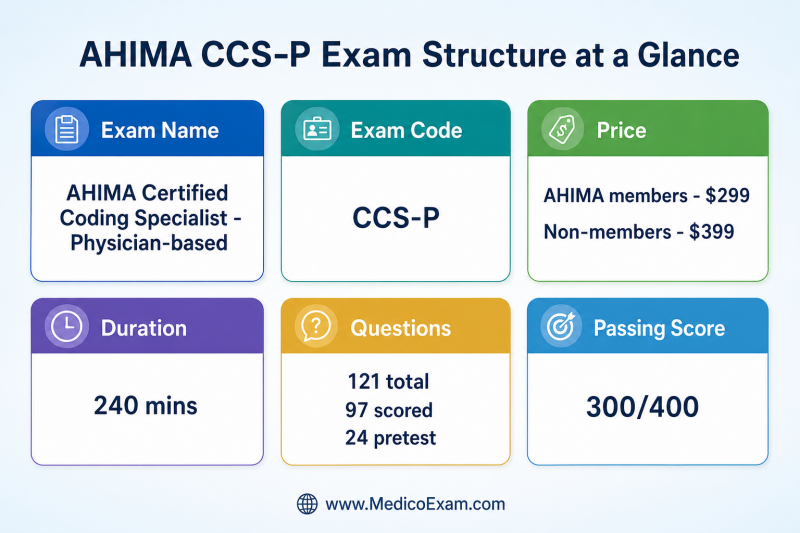
The AHIMA CCS-P exam assesses a candidate's comprehensive knowledge across various coding disciplines specific to physician-based environments. Understanding its structure is a fundamental step in building an effective study plan. This rigorous examination evaluates your ability to apply coding principles in practical scenarios, ensuring you possess the hands-on skills required in the field.
The examination details are as follows:
| Exam Name | AHIMA Certified Coding Specialist - Physician-based |
| Exam Code | CCS-P |
| Exam Price | AHIMA members - $299 (USD), AHIMA non-members - $399 (USD) |
| Duration | 240 mins |
| Number of Questions | 121 (97 Scored Items / 24 Pretest Items) |
| Passing Score | 300 (on a scale of 100-400) |
Candidates should be prepared for a combination of multiple-choice and scenario-based questions that test both theoretical knowledge and practical application. The structure emphasizes not just recall, but the critical thinking needed to navigate complex coding dilemmas, often presented in real-world medical scenarios. For additional resources and preparation, you may consider exploring the official AHIMA CCS-P certification page.
Decoding the Scoring and Question Types
The CCS-P exam employs a scaled scoring system, indicating that raw scores are converted to a standardized scale to ensure fairness across different exam versions. A passing score of 300 out of 400 reflects a robust understanding of the required competencies. The inclusion of pretest items means not all questions contribute to your final score, but they are indistinguishable from scored items, requiring consistent effort across the entire exam. Focus on understanding the question's intent and applying coding guidelines meticulously.
Key Competencies: Exploring the CCS-P Content Outline
A successful AHIMA CCS-P candidate must demonstrate mastery across several critical domains, each carrying a specific weight in the examination. The syllabus topics are meticulously designed to cover the breadth of knowledge required for physician-based coding, from fundamental diagnosis and procedure assignment to the complexities of compliance and revenue cycle management.
The core syllabus topics include:
-
Diagnosis Coding: This section typically covers the application of ICD-10-CM guidelines to assign codes for diseases, injuries, and other health conditions in outpatient settings. Expect questions on primary diagnoses, co-morbidities, and appropriate sequencing.
-
Procedure Coding: Focusing on CPT and HCPCS Level II, this domain assesses your ability to assign codes for medical, surgical, and diagnostic procedures performed by physicians. This often involves understanding modifiers, bundled services, and correct code selection based on physician documentation.
-
Research: This component evaluates your skill in utilizing coding references, official guidelines, and other resources to resolve complex coding scenarios or clarify ambiguities. It's about knowing where to find authoritative answers.
-
Compliance: Covering regulatory requirements, ethical coding practices, and fraud prevention, this section ensures coders understand the legal and ethical implications of their work. Topics may include HIPAA, OIG work plans, and payer-specific guidelines.
-
Revenue Cycle: This domain relates to the impact of coding on the entire revenue cycle, from documentation capture to claims submission and reimbursement. Understanding medical necessity, billing edits, and denial management is key.
-
Medical Scenarios: This integrative section presents realistic patient cases, requiring you to apply knowledge from all other domains to accurately code diagnoses and procedures based on comprehensive clinical documentation.
Each domain builds upon the others, highlighting the interconnected nature of physician-based coding responsibilities. A balanced approach to studying all areas is vital for comprehensive preparation. For a detailed breakdown of these sections and their subtopics, refer to the CCS-P Exam Content Outline provided by AHIMA.
Crafting Your AHIMA CCS-P Study Strategy
Effective preparation for the AHIMA CCS-P exam requires more than just memorization; it demands a strategic approach to understanding and applying complex coding rules. Given the depth and breadth of the syllabus, a well-structured study plan is indispensable for success. Your strategy should integrate theoretical learning with practical application, simulating real-world coding challenges.
Structured Learning Paths
Begin by reviewing the official exam content outline thoroughly, identifying your strengths and weaknesses. Allocate study time proportionally to the weight of each domain and your personal proficiency.
-
Foundation Building: Start with a comprehensive review of anatomy, physiology, and medical terminology, as these form the bedrock of accurate coding.
-
Official Guidelines Mastery: Dedicate significant time to mastering the ICD-10-CM Official Guidelines for Coding and Reporting, as well as the CPT coding guidelines. These are non-negotiable for correct code assignment.
-
Resource Utilization: Familiarize yourself with authorized coding manuals (ICD-10-CM, CPT, HCPCS Level II) and other official resources. Learn how to efficiently navigate these books under timed conditions.
-
Case Study Practice: Work through numerous medical scenarios from various physician specialties. This is crucial for developing the critical thinking skills needed to interpret documentation and apply codes.
Leveraging Practice Examinations
Integrating practice tests into your study routine is a critical component of strategic preparation. Practice exams help you identify areas needing further review, improve time management, and build confidence under simulated exam conditions.
-
Timed Practice: Take full-length practice exams under timed conditions to acclimate yourself to the 240-minute limit. This helps develop stamina and efficient decision-making.
-
Performance Analysis: After each practice test, thoroughly review both correct and incorrect answers. Understand the rationale behind each correct code and identify why your incorrect choices were wrong. This feedback loop is essential for learning.
-
Knowledge Gaps: Use practice test results to pinpoint specific knowledge gaps. If you consistently miss questions in a particular area, revisit that syllabus domain with targeted study.
MedicoExam provides a valuable opportunity to test your knowledge with AHIMA CCS-P certification sample questions, offering insights into the exam format and question types. Avoid relying on unofficial "dumps" as they often contain outdated or incorrect information and promote unethical practices. Focus on understanding the guidelines and developing robust coding logic.
Unlocking Career Growth with CCS-P Certification
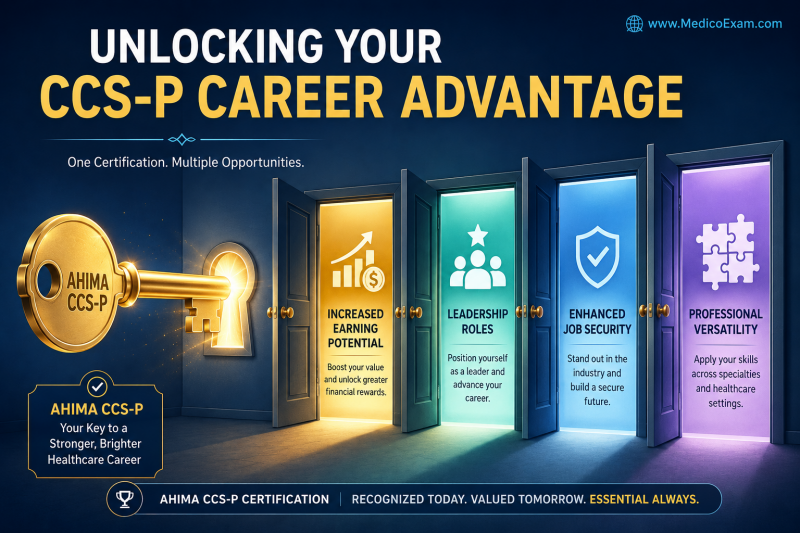
The AHIMA CCS-P certification is more than just a credential; it's a strategic asset for career advancement in the dynamic field of health information management. Holding this specialization signals to employers a profound understanding of physician-based coding, opening doors to diverse and rewarding opportunities. Professionals with the CCS-P are highly sought after for their ability to ensure financial accuracy and regulatory compliance.
Enhanced Professional Recognition
Achieving the CCS-P differentiates you in a competitive job market. It demonstrates a commitment to excellence and a mastery of complex coding principles specific to outpatient settings. This recognition can lead to:
-
Increased earning potential and eligibility for higher-level positions.
-
Opportunities for leadership roles, such as coding auditor, educator, or supervisor.
-
Improved job security and versatility across various healthcare settings like physician offices, clinics, and outpatient hospital departments.
The certification also positions you as a valuable resource for other healthcare professionals, fostering collaboration and contributing to improved patient outcomes through accurate data.
Upholding Integrity in Professional Coding
The role of a certified coding specialist extends beyond accurate code assignment to encompass a steadfast commitment to ethical conduct and compliance. In the physician-based setting, the AHIMA CCS-P credential underscores the importance of maintaining the highest standards of integrity to protect patient privacy, ensure fair reimbursement, and prevent fraudulent activities. Adherence to official coding guidelines and professional ethics is not merely a recommendation but a foundational pillar of the profession.
Every coding decision has financial and legal implications, making an ethical framework indispensable. Certified professionals are expected to stay updated with evolving regulations, payer policies, and official coding updates. They serve as guardians of data integrity, contributing significantly to the trustworthiness of healthcare information systems.
Conclusion
The AHIMA CCS-P certification offers a clear pathway to establishing yourself as an expert in physician-based medical coding. By providing a strategic blueprint encompassing exam details, a focused syllabus, and robust preparation strategies, this article aims to equip you with the knowledge to approach your certification journey with confidence. Commanding your future in this specialized field hinges on your dedication to mastering coding principles, embracing ethical practices, and committing to continuous professional development.
Embark on your journey to becoming a Certified Coding Specialist – Physician-based with a structured mindset and the right resources. Utilize practice questions and comprehensive study materials to solidify your understanding and ensure exam readiness. To further enhance your preparation, explore comprehensive resources and practice scenarios that mirror the exam experience on MedicoExam. Your strategic blueprint starts here, empowering you to achieve the distinction and career opportunities the AHIMA CCS-P credential provides.
Frequently Asked Questions
1. What is the primary focus of the AHIMA CCS-P certification?
The AHIMA CCS-P certification primarily focuses on accurate medical coding for physician services in outpatient settings, including physician offices, group practices, and clinics, using CPT, HCPCS Level II, and ICD-10-CM.
2. Who should consider pursuing the AHIMA CCS-P credential?
Health information management professionals, medical coders, and auditors who specialize in or aspire to specialize in physician-based coding should consider the CCS-P to validate and advance their expertise.
3. How does the CCS-P differ from other AHIMA coding certifications?
The CCS-P is specifically tailored for physician-based coding, in contrast to the CCS, which focuses on facility-based (inpatient and outpatient hospital) coding. Both require advanced expertise but in different settings.
4. What are the typical career benefits of holding an AHIMA CCS-P?
Holding a CCS-P typically leads to enhanced professional recognition, increased earning potential, opportunities for advanced roles like coding auditor or educator, and improved job security within physician practices and outpatient facilities.
5. What kind of preparation is recommended for the CCS-P exam?
Recommended preparation includes comprehensive study of official coding guidelines (ICD-10-CM, CPT, HCPCS Level II), extensive practice with medical scenarios, utilizing reputable study guides, and taking timed practice examinations.
- AHIMA CCS-P Question Bank |
- AHIMA CCS-P Eligibility & Requirements |
- AHIMA Coding Specialist - Physician-based Practice Test |
- AHIMA CCS-P Exam Cost |
- AHIMA CCS-P Registration Process |
- AHIMA Coding Specialist - Physician-based Study Guide |
- AHIMA CCS-P Recertification |
- AHIMA CCS-P Certification Overview |
- AHIMA Coding Specialist - Physician-based Syllabus |
- AHIMA CCS-P Preparation Time |
- AHIMA CCS-P Passing Score |
- AHIMA CCS-P Exam Format |
- AHIMA Coding Specialist - Physician-based Sample Questions |
- AHIMA CCS-P Career Opportunities |
- AHIMA CCS-P Exam Difficulty


