
What Most Nurses Miss About the PNCB CPN
The PNCB Certified Pediatric Nurse (CPN) credential signifies a profound commitment to excellence in pediatric care, distinguishing nurses who possess specialized knowledge and clinical expertise in this vital field. This certification, awarded by the Pediatric Nursing Certification Board (PNCB), validates a nurse's comprehensive understanding of pediatric health promotion, assessment, planning, management, and professional responsibilities across various settings. For many, pursuing this designation is a strategic move to enhance their professional profile and deliver the highest standard of care to children and their families. This article clarifies the CPN certification's core value, outlines its examination specifics, and provides a robust framework for nurses to successfully prepare for and achieve this esteemed credential.
Validating Specialized Pediatric Expertise with the CPN Credential
Achieving the CPN certification extends beyond personal professional growth; it serves as a public declaration of a nurse's dedication to pediatric health. This credential is an essential benchmark for registered nurses (RNs) who seek to formalize their specialized knowledge and advanced skills in caring for pediatric populations. It not only boosts individual career trajectories but also significantly contributes to improved patient outcomes by ensuring a standardized level of expert care within pediatric nursing. Nurses holding the PNCB CPN demonstrate an advanced capability in navigating the unique physiological and psychological needs of infants, children, and adolescents, addressing both acute and chronic conditions with evidence-based practice.
The certification's value is multifaceted, influencing clinical practice, career advancement, and professional recognition. Certified pediatric nurses often become leaders and mentors within their units, guiding colleagues and advocating for best practices in pediatric care. The continuous learning and recertification requirements associated with the CPN ensure that credentialed nurses remain at the forefront of evolving healthcare standards and advancements in pediatric medicine. This ongoing commitment to learning is what truly sets CPN-certified nurses apart, allowing them to provide nuanced, age-appropriate care that considers the developmental stages and family dynamics specific to pediatric patients. It empowers nurses to take on more complex cases and contribute to policy development within pediatric health systems, solidifying their role as indispensable members of the healthcare team.
Distinguishing Professional Acumen
The CPN certification offers a clear marker of professional acumen, signifying that a nurse has met rigorous national standards for pediatric nursing practice. This distinction is increasingly recognized by healthcare employers, who often prioritize certified nurses for leadership roles, specialized units, and advanced practice positions. It communicates a proactive approach to professional development and a deep-seated desire to master the complexities of pediatric care. This professional recognition not only enhances a nurse's credibility among peers and physicians but also instills greater confidence in the families entrusting their children to their care, knowing they are under the supervision of a certified expert.
Impact on Patient Outcomes
Perhaps the most critical benefit of the PNCB CPN certification is its direct positive impact on patient outcomes. Nurses who invest in specialized certification are typically more proficient in early detection, intervention, and management of pediatric health issues. Their comprehensive knowledge base, tested through a stringent examination process, equips them to make critical, informed decisions that can improve recovery times, prevent complications, and enhance the overall well-being of young patients. This expertise is particularly crucial in high-stress environments such as pediatric intensive care units or emergency departments, where rapid, accurate clinical judgment can significantly alter health trajectories. By elevating the standard of care, CPN nurses contribute to a safer, more effective healthcare environment for children.
Understanding the PNCB CPN Exam Design
Preparing for the PNCB CPN exam requires a clear understanding of its structure, duration, question format, and scoring methodology. The exam is meticulously designed by the Pediatric Nursing Certification Board (PNCB) to assess a candidate's competency across critical domains of pediatric nursing practice. Candidates embark on a rigorous evaluation journey, ensuring that those who pass demonstrate a comprehensive grasp of the essential knowledge required for effective pediatric care. Familiarizing oneself with these specifics is the initial and most vital step towards successful certification, demystifying the process and enabling a focused study approach.
The examination for the PNCB Certified Pediatric Nurse credential is a computer-based test that presents a challenging yet fair assessment of a nurse's capabilities. It evaluates a wide array of competencies crucial for pediatric nursing. The exam's design emphasizes both theoretical knowledge and its practical application in diverse clinical scenarios, ensuring that certified nurses are well-equipped for real-world challenges. This structured approach helps ensure a consistent standard of proficiency among all CPN-certified professionals, reinforcing the credibility and value of the certification.
Key Metrics for the CPN Exam
The CPN exam has specific parameters that all candidates must be aware of to manage their time and expectations effectively during the test.
-
Exam Name: PNCB Certified Pediatric Nurse
-
Exam Code: CPN
-
Exam Price: The cost to sit for the CPN exam is $309, which includes a non-refundable registration fee of $103.
-
Duration: Candidates are allotted 180 minutes (3 hours) to complete the examination.
-
Number of Questions: The exam comprises 175 questions in total. Of these, 150 questions are scored, and 25 are unscored pretest questions used for future exam development.
-
Passing Score: To achieve CPN certification, candidates must obtain a scaled score of 400 on a scale ranging from 200 to 800.
Understanding these logistical details is paramount for any aspiring CPN. Knowing the time limit helps in practicing pacing strategies, while awareness of the question count and scoring mechanism allows candidates to focus on maximizing their performance across all sections. The inclusion of unscored questions means candidates should answer every question to the best of their ability, as they cannot differentiate between scored and unscored items. This reinforces the need for broad and thorough preparation across all the delineated content areas, ensuring no aspect of pediatric nursing knowledge is overlooked. For a comprehensive overview of the examination process, nurses can visit the official certification steps page on the PNCB website.
Core Domains: PNCB Certified Pediatric Nurse Syllabus Breakdown
The PNCB CPN exam syllabus is structured into four primary content domains, each representing a crucial aspect of pediatric nursing practice. These domains, along with their respective weightages, define the breadth and depth of knowledge required for certification. A thorough grasp of each area is essential, as the exam questions are distributed proportionally according to these percentages. Nurses preparing for the PNCB Certified Pediatric Nurse exam topics must allocate their study time strategically, aligning their focus with the emphasis placed on each domain.
The content outline serves as the definitive blueprint for the examination, guiding candidates on what to expect and where to concentrate their learning efforts. It ensures a comprehensive assessment of the competencies deemed critical for a certified pediatric nurse. Understanding this detailed syllabus is not merely about memorizing facts; it's about integrating knowledge across these domains to apply critical thinking in various pediatric care scenarios.
Health Promotion and Prevention (23%)
This domain emphasizes the nurse's role in promoting optimal health and preventing illness in children from infancy through adolescence. It covers a wide range of topics, including immunizations, growth and development milestones, nutrition, safety education, and anticipatory guidance for parents and caregivers. Questions in this section often assess a nurse's ability to provide age-appropriate health teaching, identify risk factors for common pediatric conditions, and implement preventive interventions within diverse community and clinical settings. A strong understanding of developmental stages is key, as nursing interventions must be tailored to the child's cognitive and physical capabilities.
Comprehensive Assessment Skills (35%)
The assessment domain carries the highest weightage, underscoring the critical importance of accurate and holistic evaluation in pediatric nursing. This section tests a nurse's proficiency in conducting comprehensive health assessments, interpreting diagnostic tests, recognizing subtle signs of illness or injury, and utilizing appropriate assessment tools for various age groups. It includes physical assessment techniques, psychosocial assessments, pain assessment in children, and understanding common pediatric conditions. Competence here means not only knowing *what* to assess but also *how* to interpret findings within the context of pediatric physiology and pathology. Nurses must demonstrate an ability to differentiate normal from abnormal findings quickly and accurately, forming the basis for subsequent care planning.
Effective Planning and Management (33%)
This domain focuses on the nurse's ability to develop and implement effective care plans for pediatric patients. It encompasses medication administration, wound care, managing chronic illnesses, acute care interventions, fluid and electrolyte balance, infection control, and emergency care. A significant portion involves understanding pharmacological principles specific to pediatric patients, including dosage calculations and adverse reaction monitoring. Nurses are also tested on their skills in patient and family education, discharge planning, and coordinating care with multidisciplinary teams. This domain requires integrating knowledge from assessment to formulate goal-oriented interventions that lead to positive patient outcomes. For a more detailed look at the PNCB CPN exam blueprint and content distribution, refer to the official content outline from the PNCB.
Ethical and Professional Conduct (9%)
Although the lowest weighted domain, professional responsibilities are fundamental to pediatric nursing practice. This section addresses ethical decision-making, legal issues in pediatric care, advocacy for children and families, interprofessional collaboration, and quality improvement initiatives. It evaluates a nurse's understanding of patient rights, confidentiality, cultural competency, and their role as a patient advocate. Questions may explore scenarios involving ethical dilemmas, informed consent in minors, and the nurse's accountability within the healthcare system. Demonstrating a solid ethical foundation is crucial for maintaining trust and upholding the integrity of the nursing profession, especially when caring for vulnerable pediatric populations.
Advantages of Achieving PNCB CPN Certification
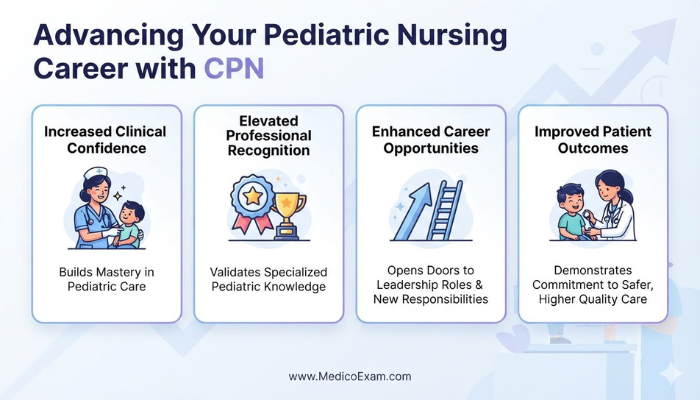
Earning the PNCB CPN certification offers a multitude of advantages that profoundly impact a pediatric nurse's career trajectory, clinical practice, and overall professional satisfaction. This prestigious credential is a testament to specialized expertise, opening doors to advanced opportunities and solidifying a nurse's role as a leader in pediatric healthcare. The benefits of PNCB CPN certification extend beyond personal recognition, contributing significantly to enhanced patient care and a stronger healthcare system. Investing in this certification is an investment in a distinguished and impactful nursing future.
The CPN certification signifies a heightened level of clinical competency and a deeper commitment to the unique needs of children. This often translates into greater confidence in clinical decision-making, especially in complex or critical situations. Nurses find themselves better equipped to articulate their expertise, advocate for their patients, and contribute meaningfully to interdisciplinary teams. The professional validation that accompanies the CPN helps to create a sense of accomplishment and empowers nurses to seek out new challenges and leadership roles within their organizations.
-
Elevated Professional Recognition: The CPN credential is a nationally recognized symbol of advanced competence in pediatric nursing. It demonstrates to colleagues, employers, and patients' families that a nurse has met rigorous standards and possesses specialized knowledge.
-
Enhanced Career Opportunities: Certified pediatric nurses are often preferred candidates for promotions, specialized units (e.g., PICU, NICU), educational roles, and leadership positions. Many healthcare institutions incentivize certification and offer higher pay scales for certified staff, impacting the CPN certification salary at PNCB.
-
Increased Clinical Confidence: The process of preparing for and passing the CPN exam reinforces a nurse's knowledge base and clinical judgment, leading to greater self-assurance in patient care settings. This confidence empowers nurses to take on more complex cases and contribute effectively to critical care situations.
-
Improved Patient Outcomes: Studies often link nursing certification to better patient outcomes due to the advanced knowledge and adherence to best practices that certified nurses embody. CPNs are better equipped to identify subtle changes in pediatric patients, implement appropriate interventions, and educate families effectively.
-
Professional Credibility and Respect: Holding a CPN certification garners respect from peers, physicians, and other healthcare professionals. It establishes a nurse as a subject matter expert, fostering collaborative relationships and enhancing their influence within the healthcare team.
-
Commitment to Lifelong Learning: The recertification requirements for the CPN encourage continuous professional development, ensuring that nurses stay current with the latest advancements in pediatric nursing practice, research, and technology.
These advantages collectively underscore the immense value of pursuing the PNCB CPN certification. It is not merely an accolade but a pathway to profound professional growth and a more impactful contribution to the health and well-being of children. Nurses committed to delivering exceptional pediatric care will find the CPN certification an invaluable asset, validating their expertise and opening doors to a rewarding career.
Eligibility for the CPN Exam
Before embarking on the rigorous journey of PNCB CPN exam preparation, it is imperative for prospective candidates to thoroughly understand the PNCB CPN certification requirements and PNCB Certified Pediatric Nurse eligibility criteria. Meeting these prerequisites is a non-negotiable first step, as it ensures that only qualified and experienced registered nurses are eligible to sit for the examination. The PNCB has established clear guidelines to uphold the integrity and high standards of the CPN credential, guaranteeing that certified nurses possess a foundational level of education and practical experience in pediatric care.
The eligibility criteria are designed to ensure that candidates possess a solid educational background and sufficient clinical exposure, which are critical for applying advanced pediatric nursing concepts. This rigorous vetting process protects the public by ensuring that CPN-certified nurses have demonstrated foundational competency through both academic training and real-world experience. Understanding these requirements from the outset prevents unnecessary delays or disappointments in the pursuit of certification.
To be eligible for the CPN exam, candidates must fulfill the following criteria:
-
Current, Unrestricted RN License: Applicants must hold a current, active, and unencumbered registered nurse (RN) license in the United States, its territories, or Canada. The license must be valid at the time of application and examination.
-
Clinical Experience in Pediatric Nursing: Candidates must demonstrate specific clinical experience in pediatric nursing. The PNCB offers two pathways to meet this requirement:
-
Option 1 (Direct Care): A minimum of 1,800 hours of clinical experience as a registered nurse in pediatric nursing within the past 24 months. This experience must be in a direct patient care role.
-
Option 2 (General Pediatric Nursing): A minimum of five years of experience as a registered nurse in pediatric nursing, with at least 1,000 hours accrued within the past 24 months. This option is suitable for nurses who may have taken a break from direct patient care or work in non-direct care roles (e.g., teaching, management) but maintain significant pediatric experience.
-
Education: Candidates must possess a diploma, associate's, or bachelor's degree in nursing.
It is crucial for potential candidates to meticulously review these requirements on the official PNCB website to ensure full compliance. Any discrepancies or incomplete documentation can lead to a rejection of the application. Nurses should also be aware that eligibility requirements can be updated periodically by the PNCB, making it essential to consult the most current guidelines. Meeting these foundational criteria is not just a formality; it confirms that a nurse has achieved the baseline level of experience and knowledge necessary to perform effectively in pediatric settings and is ready to pursue this advanced certification.
Crafting a Successful CPN Exam Preparation Plan
A well-structured and disciplined PNCB CPN exam preparation plan is the cornerstone of success for any aspiring Certified Pediatric Nurse. Given the breadth of the PNCB Certified Pediatric Nurse exam topics and the depth of knowledge required, a comprehensive strategy that integrates diverse learning resources is essential. Nurses often underestimate the commitment needed, focusing solely on rote memorization rather than understanding and applying complex pediatric concepts. This section provides a strategic framework for how to pass the PNCB CPN exam, emphasizing effective study techniques and optimal resource utilization.
Effective preparation extends beyond simply reviewing textbooks; it involves active engagement with the material, self-assessment, and strategic time management. A holistic approach ensures that all content domains are adequately covered, and areas of weakness are identified and strengthened. An early start and steady effort are necessary to take in all the facts covered here.
Utilizing a Comprehensive Study Guide
A high-quality PNCB Certified Pediatric Nurse study guide serves as your primary roadmap through the exam content. Look for guides that align closely with the official PNCB CPN exam blueprint and content outline. These guides should break down complex topics into manageable sections, provide clear explanations, and offer review questions at the end of each chapter. A good study guide will not only cover the factual information but also provide clinical correlations, helping you connect theoretical knowledge to real-world pediatric scenarios. It's often beneficial to choose a study guide that includes practice scenarios to test your critical thinking and application skills. When selecting a guide, consider reviews from other CPN candidates and ensure it is up-to-date with the latest evidence-based practices in pediatric nursing.
Incorporating Practice Questions
Engaging with CPN exam practice questions, PNCB is arguably one of the most effective preparation methods. Practice questions help you familiarize yourself with the exam format, question style, and pacing requirements. They also serve as an invaluable diagnostic tool, highlighting areas where your knowledge is strong and identifying domains that require further study. Aim for a substantial number of practice questions from reliable sources, ideally those designed to mimic the actual CPN exam. After answering practice questions, always review the rationales for both correct and incorrect answers. Understanding *why* an answer is correct or incorrect reinforces learning and prevents repeated mistakes. Websites like pediatric nursing resources offer specialized practice questions designed to help gauge readiness.
Review Courses for Deeper Understanding
For many, enrolling in a CPN certification review course, such as PNCB, can provide structured learning and expert guidance. These courses, whether in-person or online, typically offer comprehensive content reviews, test-taking strategies, and opportunities for interaction with instructors and peers. A good review course can help consolidate fragmented knowledge, clarify complex concepts, and provide a holistic overview of the PNCB CPN exam topics. The interactive nature of review courses often includes discussions and case studies, which can deepen understanding and improve critical thinking skills essential for the exam. Evaluate different review courses based on their curriculum, instructor qualifications, and participant testimonials to find one that best suits your learning style and schedule.
Strategic Study Material Selection
Choosing the best study material for PNCB CPN goes beyond just a study guide and practice questions. Consider incorporating a variety of resources to reinforce learning and address different learning styles. This might include:
-
Textbooks: Reference core pediatric nursing textbooks for in-depth information on specific topics or to clarify areas where your study guide feels insufficient.
-
Journal Articles: Stay updated with recent research and evidence-based practices by reading relevant pediatric nursing journal articles.
-
Flashcards: Create your own or use pre-made flashcards for quick recall of key terms, definitions, dosages, and developmental milestones.
-
Online Resources: Utilize reputable online platforms, educational videos, and apps that offer supplemental information or interactive learning tools related to pediatric nursing.
-
Study Groups: Collaborate with peers to discuss challenging topics, share insights, and quiz each other. This can provide different perspectives and reinforce understanding.
Diversifying your study materials helps to build a more robust knowledge base and enhances retention. Map these assets into a realistic learning schedule, allocating dedicated blocks for review and practice tests to ensure total exam readiness.
Financial Considerations and Recertification
Understanding the financial investment required for the PNCB CPN certification and the ongoing commitment to PNCB CPN recertification is crucial for nurses planning their professional development. The journey to becoming a Certified Pediatric Nurse involves initial costs and a dedication to maintaining the credential over time. Nurses often overlook the long-term implications, focusing solely on the upfront exam fee. A comprehensive perspective on these aspects ensures that candidates are fully prepared for both the initial and ongoing demands of holding this valuable certification.
The financial aspect is a significant consideration, as the exam fee is just one component. Other potential costs include study materials, review courses, and travel expenses if the exam center is distant. Beyond the initial certification, recertification ensures that CPNs remain current in their practice, which also incurs periodic fees and requires consistent professional engagement.
Examining the CPN Exam Cost
As previously noted, the PNCB CPN exam cost is $309, which includes a non-refundable registration fee of $103. This fee covers the administrative costs of processing applications, developing and administering the exam, and maintaining the certification program. Candidates should budget for this expense and factor in any additional costs for the best study material for PNCB CPN, such as textbooks, online question banks, or review courses. These supplementary resources can range from a few dozen to several hundred dollars, depending on their comprehensiveness and format. It's advisable to research and compare options to find the most cost-effective yet high-quality CPN certification review course, PNCB, or study guides available. Some employers may offer reimbursement for exam fees or study materials, so it is always worth inquiring about potential financial support.
Maintaining Your CPN Credential
PNCB CPN recertification is a mandatory process that ensures Certified Pediatric Nurses continually update their knowledge and skills, maintaining a high standard of practice. Recertification cycles typically occur every five years, and during this period, CPNs must accumulate a certain number of professional development hours (PDUs). These PDUs can be earned through various activities, including continuing education courses, academic coursework, presentations, publications, or professional service.
The recertification process also involves a fee, which is generally lower than the initial exam cost but still requires budgeting. The PNCB provides detailed guidelines on eligible activities and the required number of hours, accessible through their official portal. Failing to recertify within the specified timeframe can result in the lapse of the CPN credential, requiring the nurse to retake the full certification exam to regain the title. This ongoing commitment to professional development underscores the value and currency of the CPN certification, distinguishing it as a dynamic and relevant credential in the field of pediatric nursing.
Advancing Career Paths with PNCB CPN
For registered nurses dedicated to pediatric care, the PNCB CPN certification is more than just an accolade; it's a strategic catalyst for advancing career paths with PNCB CPN and unlocking new professional opportunities. This credential provides a competitive edge in a dynamic healthcare landscape, validating specialized knowledge and commitment to the unique needs of children. Nurses often find that the certification directly impacts their role and responsibilities, opening doors to more challenging and rewarding positions while potentially influencing their CPN certification salary with PNCB.
The CPN certification can serve as a powerful differentiator in a competitive job market. Healthcare organizations are increasingly seeking certified professionals who can demonstrate a proven level of expertise, particularly in specialized fields like pediatric nursing. This can lead to increased job security and a wider array of employment options, from direct patient care in specialized units to roles in education, administration, or policy development.
Enhanced Professional Standing
Achieving the CPN certification significantly enhances a nurse's professional standing within their organization and the broader nursing community. Certified nurses are often viewed as subject matter experts, leading to opportunities for mentorship, preceptorship, and participation in quality improvement initiatives. This elevated status can lead to leadership roles, where CPNs contribute to developing best practices, educating new staff, and shaping the future of pediatric nursing. The recognition often translates into greater autonomy in practice and a stronger voice in clinical decision-making, allowing nurses to advocate more effectively for their young patients and their families. Furthermore, the CPN credential signifies a commitment to continuous learning and professional growth, making a nurse a more valuable asset to any healthcare team.
Potential for Salary Growth
While individual salaries vary widely based on location, experience, and employer, the CPN certification salary, PNCB data often indicates a positive correlation between certification and increased earning potential. Many healthcare institutions offer salary differentials or bonuses to certified nurses, recognizing the added value they bring to patient care and organizational quality metrics. The specialized expertise validated by the CPN credential makes nurses more marketable for higher-paying positions in critical care units, specialty clinics, or advanced practice roles. Beyond direct salary increases, CPNs may also qualify for higher-level positions with greater responsibilities and benefits, further enhancing their overall compensation package. This financial benefit is a tangible reward for the dedication and expertise demonstrated through the certification process.
Overcoming Common CPN Exam Challenges
Successfully navigating the PNCB CPN exam demands more than just rote memorization; it requires a strategic approach to how to pass PNCB CPN exam and an awareness of common pitfalls. Many nurses, despite extensive clinical experience, find the certification exam challenging due to its comprehensive nature and the need to synthesize information across multiple domains. Recognizing and addressing these hurdles proactively is key to achieving the CPN credential. This section explores typical challenges faced by candidates and offers practical strategies for overcoming them, ensuring a more focused and effective preparation journey.
The primary challenge often stems from the sheer volume of content and the need to recall specific details while also applying critical thinking to clinical scenarios. Time management during the exam is another significant hurdle, as 175 questions in 180 minutes allows for just over a minute per question. Effective preparation, therefore, needs to address both content mastery and test-taking efficiency.
-
Information Overload: The PNCB CPN exam syllabus covers a vast array of topics from health promotion to professional responsibilities. To counter information overload, break down the syllabus into smaller, manageable chunks. Focus on one or two domains at a time, and use study techniques like concept mapping or flashcards to consolidate information. Prioritize understanding key concepts rather than attempting to memorize every detail.
-
Test Anxiety: Exam anxiety can significantly impair performance. Develop stress-reduction techniques such as deep breathing exercises, mindfulness, or visualization. During practice sessions, simulate actual exam conditions to build comfort and confidence. Acknowledge that some level of anxiety is normal, but develop strategies to manage it effectively.
-
Time Management: With 175 questions in 180 minutes, pacing is crucial. Practice answering questions under timed conditions to improve your speed and efficiency. Learn to quickly identify question types and eliminate obviously incorrect answer choices. If a question is particularly difficult, make an educated guess and move on, flagging it for review if time permits at the end.
-
Application vs. Recall: The CPN exam often tests your ability to apply knowledge to clinical scenarios, not just recall facts. Focus your study on understanding the "why" behind interventions and treatments. Work through case studies and CPN exam practice questions,
,that present real-life situations, forcing you to use critical thinking skills to arrive at the best nursing action. -
Identifying Weaknesses: Many candidates struggle because they don't accurately identify their weak areas. Utilize diagnostic tools from the CPN certification review course,
,or detailed feedback from practice exams. Once identified, dedicate extra study time to these specific topics. Don't shy away from challenging areas; conquering them is key to comprehensive preparation. -
Burnout: Long study periods can lead to burnout. Schedule regular breaks, incorporate physical activity, and ensure adequate sleep. Maintain a healthy work-life balance to sustain motivation and prevent mental fatigue throughout your PNCB CPN exam preparation.
By proactively addressing these common challenges, nurses can develop a more robust and effective study plan, significantly increasing their chances of success in passing the PNCB CPN exam. It requires self-awareness, discipline, and a willingness to adapt study strategies as needed.
The PNCB CPN certification is a profound testament to a nurse's specialized knowledge and unwavering dedication to pediatric healthcare. It goes beyond a mere credential, symbolizing a commitment to elevating the standard of care for children and their families. For nurses aspiring to distinguish themselves and contribute meaningfully to this vital field, understanding the exam's structure, mastering its comprehensive syllabus, and engaging in focused preparation are indispensable steps.
The journey to becoming a Certified Pediatric Nurse is challenging but immensely rewarding, offering significant career advancement, enhanced professional recognition, and the deep satisfaction of providing expert care to the most vulnerable patient population. By embracing the preparation process with diligence and leveraging available resources, nurses can confidently pursue this invaluable certification. Take the proactive step to solidify your expertise and elevate your contribution to pediatric nursing. Begin your structured CPN exam preparation today and explore comprehensive study resources to start your CPN journey with confidence.
FAQs
1. What is the primary purpose of the PNCB CPN certification?
The primary purpose of the PNCB CPN certification is to validate a registered nurse's specialized knowledge and clinical expertise in pediatric nursing, demonstrating a commitment to delivering high-quality care to children and their families.
2. How long is the PNCB CPN exam, and how many questions does it have?
The PNCB CPN exam has a duration of 180 minutes (3 hours) and consists of 175 questions, with 150 being scored and 25 being unscored pretest questions.
3. What are the main content areas covered in the CPN exam syllabus?
The main content areas covered in the CPN exam syllabus are Health Promotion (23%), Assessment (35%), Planning and Management (33%), and Professional Responsibilities (9%).
4. What are the eligibility requirements for the CPN certification exam?
Eligibility for the CPN exam typically requires a current, unrestricted RN license, a diploma, associate's, or bachelor's degree in nursing, and a minimum of 1,800 hours of pediatric nursing experience within the last 24 months (or 5 years with 1,000 hours in the last 24 months).
5. How often do CPNs need to recertify, and what does it involve?
CPNs typically need to recertify every five years. This involves accumulating a specified number of professional development hours (PDUs) through continuing education, professional activities, or academic coursework, along with paying a recertification fee.
- PNCB CPN Question Bank |
- PNCB CPN Eligibility & Requirements |
- PNCB Pediatric Nurse Practice Test |
- PNCB CPN Exam Cost |
- PNCB CPN Registration Process |
- PNCB Pediatric Nurse Study Guide |
- PNCB CPN Recertification |
- PNCB CPN Certification Overview |
- PNCB Pediatric Nurse Syllabus |
- PNCB CPN Preparation Time |
- PNCB CPN Passing Score |
- PNCB CPN Exam Format |
- PNCB Pediatric Nurse Sample Questions |
- PNCB CPN Career Opportunities |
- PNCB CPN Exam Difficulty


