AMT DAR Fundamentals: What Every Beginner Needs
The AMT Dental Assisting Radiography (DAR) certification signifies a dental assistant's specialized competency in performing dental radiographic procedures, a critical skill for modern dental practices. This credential, offered by American Medical Technologists (AMT), validates the essential knowledge and practical capabilities required for safely and accurately capturing dental X-rays. Aspiring dental professionals looking to enhance their career prospects and demonstrate a commitment to patient safety and quality care will find this certification particularly valuable. This comprehensive guide will explore the intricacies of the AMT DAR exam, its core curriculum, eligibility requirements, and effective strategies for success, ensuring beginners are well-prepared for this pivotal step in their dental assisting career.
Understanding the AMT Dental Assisting Radiography Exam Structure
The AMT Dental Assisting Radiography (DAR) exam is meticulously designed to assess a candidate’s comprehensive understanding of the principles, techniques, and safety protocols fundamental to dental imaging. Earning this certification empowers dental assistants to perform radiographic tasks with confidence and expertise, demonstrating a validated skill set crucial for any modern dental office. For beginners, a clear grasp of the exam's administrative details and format is the essential first step toward successful preparation and achieving the AMT DAR certification.
The examination, officially known as the AMT Dental Assisting Radiography (DAR), is a computer-based test comprising 100 multiple-choice questions. Candidates are allotted a generous 120 minutes to complete the exam, providing ample time to review questions and consider answers thoughtfully. To achieve certification, a scaled passing score of 70 (on a scale of 0-100) is required, which roughly translates to correctly answering 70% of the questions. The current exam fee is $125 (USD), payable during the registration process. This structured approach ensures a fair and consistent evaluation of all candidates.
-
Exam Name: AMT Dental Assisting Radiography
-
Exam Code: DAR
-
Exam Price: $125 (USD)
-
Duration: 120 minutes
-
Number of Questions: 100
-
Passing Score: 70 (on a scaled of 0-100) (Approx. 70%)
For a more detailed AMT DAR exam overview, candidates can access online resources that provide additional insights into question types, test-taking strategies, and tips for navigating the exam interface.
Core Competencies: Syllabus Areas for AMT Dental Assisting Radiography
A thorough and granular understanding of the AMT DAR syllabus content is absolutely paramount for any beginner aiming for certification. The exam rigorously tests a candidate's knowledge across several key domains, each contributing a specific percentage to the overall score. These areas span the entire spectrum of dental radiography, from the foundational scientific principles to the practical application of techniques and crucial safety measures. Delving deeply into each section ensures a balanced study approach, highlighting where to allocate the most study time based on percentage weighting.
Candidates can access a comprehensive content outline directly from the official AMT website, which serves as the most accurate blueprint for the exam. This invaluable document details specific topics and subtopics within each domain, enabling candidates to structure their study sessions effectively and identify areas that require more focused attention. Utilizing this outline is key to creating a targeted and efficient study plan.
The official content outline, which you can find by visiting the comprehensive content outline document, breaks down the exam into these weighted sections:
-
Principles of Dental Radiography (33%): This domain forms the largest portion of the exam, emphasizing the foundational concepts of X-ray generation, properties, and interaction with matter. It delves into the physics of radiation, electromagnetic spectrum, and components of an X-ray unit. Furthermore, it covers image formation, factors affecting image quality (such as contrast, density, and detail), and various types of radiographic equipment, including digital sensors and film types.
-
Imaging Techniques and Evaluation (26%): This section focuses on the practical application of radiography. It includes detailed instruction on patient preparation, accurate film/sensor placement for various intraoral techniques (periapical, bitewing, occlusal) and extraoral techniques (panoramic, cephalometric). Understanding the rationale behind different angulations and projections is critical. Moreover, this domain requires candidates to evaluate radiographs for diagnostic quality, recognize common errors in technique, and implement corrective actions. Mastering patient positioning for AMT Dental Assisting Radiography is a core component here.
-
Radiation Safety and Legal Considerations (23%): A significant portion dedicated to ensuring patient and operator safety, this includes radiation biology (effects on cells and tissues), comprehensive protection measures (ALARA principle, lead aprons, thyroid collars), dose reduction techniques, and critical regulatory guidelines. The dental X-ray safety AMT exam questions will predominantly stem from this area, testing knowledge of federal and state laws, patient consent, and proper record-keeping.
-
Radiograph Processing (9%): Covers the methods of converting latent images into visible radiographs. This includes traditional darkroom procedures, proper chemical handling, automatic processing techniques, and troubleshooting common processing errors. For digital imaging, candidates must understand sensor care, image manipulation basics, and proper storage protocols.
-
Infection Control (9%): Addresses the essential protocols for preventing the spread of infection during radiographic procedures. This encompasses standard precautions, proper handling of contaminated instruments and surfaces, disinfection, sterilization techniques relevant to dental radiography, and compliant hazardous waste management.
Why Pursue AMT Dental Assisting Radiography Certification?
Earning the AMT RDA certification offers significant advantages for dental assistants at any stage of their career, particularly for those just starting out. It serves as a powerful testament to specialized skills, opening doors to new responsibilities and accelerating career advancement opportunities within the dynamic field of dentistry. The multifaceted benefits of AMT RDA certification extend far beyond individual professional growth, profoundly impacting patient care quality and overall practice efficiency.
This credential not only significantly enhances a dental assistant's marketability in a competitive job landscape but also instills a profound sense of confidence in their ability to perform critical radiographic tasks both safely and effectively. It sends a clear and unequivocal signal to potential employers that you meet, and indeed exceed, recognized professional standards of excellence in a crucial area of dental practice. Holding the certification unequivocally affirms a strong commitment to continuous professional development, adherence to the latest best practices in dental imaging, and a dedication to delivering top-tier patient care.
-
Enhanced Credibility: Certification formally validates specialized expertise in dental radiography, significantly boosting your professional standing among peers and employers.
-
Career Advancement: Opens doors to increased responsibilities, specialized roles within the dental team, and opportunities for leadership in radiography protocols.
-
Increased Earning Potential: Certified professionals often command higher salaries due to their validated specialized skills and the value they bring to a practice.
-
Patient Confidence: Assures patients that their diagnostic imaging is being managed by a highly competent and officially certified professional, fostering greater trust.
-
Compliance Assurance: Demonstrates a proactive commitment to adhering to professional standards, ethical guidelines, and all regulatory requirements for radiation safety and infection control.
-
Professional Recognition: Sets you apart from uncertified colleagues, highlighting your initiative and dedication to mastering a vital dental skill.
Crafting an Effective AMT DAR Study Guide
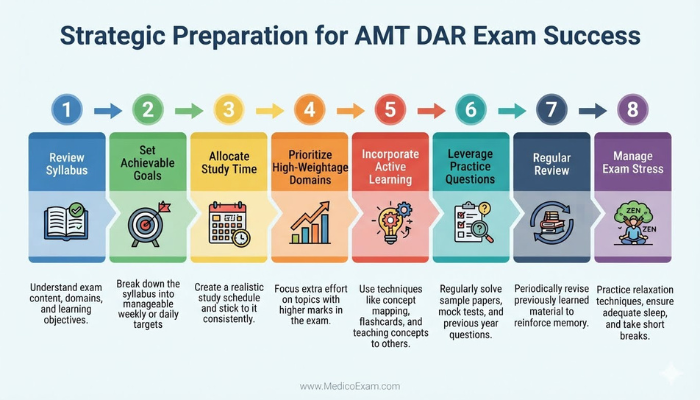
To successfully prepare for the AMT DAR examination, a meticulously well-structured study plan is not just beneficial, but absolutely indispensable. A beginner-friendly approach focuses on systematically breaking down the extensive syllabus into manageable segments, allocating dedicated and focused time for each. Utilizing a comprehensive AMT Dental Assisting Radiography study guide helps organize your entire learning path, meticulously ensuring that all critical areas are thoroughly covered. Effective preparation demands more than mere memorization; it requires a deep, conceptual understanding of the underlying principles and their practical applications in real-world dental scenarios.
Begin your preparation by thoroughly reviewing the official content outline from AMT, which serves as the most accurate and authoritative blueprint for the exam. Create a detailed study schedule that strategically allocates sufficient time for each syllabus domain, paying extra attention to the areas with higher weightage, such as Principles of Dental Radiography and Imaging Techniques. Remember, every single point counts towards achieving the required passing score, so even smaller percentages should not be underestimated. Integrating various active study methods can significantly enhance retention and comprehension, transforming passive learning into an engaging and effective process.
For candidates seeking a more structured and guided learning experience, exploring a best AMT DAR prep course can provide an invaluable pathway through the complex material. These courses often include expert-led lectures, interactive visual aids, comprehensive study modules, and direct instructor support, all designed to streamline your preparation and clarify challenging concepts. Such structured programs can be particularly helpful in demystifying the exam process and boosting confidence.
Building a Solid Study Plan
A personalized study plan, meticulously tailored to your unique learning style, existing knowledge base, and available time, can make a monumental difference in your exam outcome. Begin this process by honestly assessing your current knowledge level in each syllabus area. This initial self-assessment is crucial; it helps you accurately identify your immediate strengths and weaknesses, thereby allowing you to strategically prioritize your study efforts where they are most critically needed. Do not hesitate to dedicate more intensive time and resources to topics that you find particularly challenging.
-
Review the Official Syllabus: Always obtain the most current AMT DAR content outline directly from the AMT website. This document is your primary and most reliable resource for understanding all exam topics and their precise weightage.
-
Set Achievable Goals: Break down the vast amount of study material into smaller, more manageable daily or weekly goals. This systematic approach makes the seemingly daunting volume of information less overwhelming and significantly helps in maintaining consistent motivation.
-
Allocate Dedicated Study Time: Consistently dedicate specific, uninterrupted blocks of time each day or week exclusively for studying. Consistency is the absolute key to long-term retention. Even short, highly focused study sessions are often far more effective than sporadic, marathon cramming sessions.
-
Prioritize High-Weightage Domains: Focus more heavily on key sections like "Principles of Dental Radiography" and "Imaging Techniques and Evaluation," given their higher percentage contribution to the total exam score.
-
Incorporate Active Learning: Move beyond passive reading. Actively engage with the material by summarizing key points in your own words, attempting to teach concepts to others, creating detailed mind maps, or using interactive flashcards.
-
Regular Review and Reinforcement: Schedule regular review sessions to revisit previously studied material. Spaced repetition techniques can significantly improve long-term memory retention and recall.
Leveraging Practice Questions and Resources
One of the most profoundly effective ways to prepare for the AMT DAR exam is by extensively practicing with questions that meticulously simulate the actual test environment. This critical step not only familiarizes you with the specific question format, style, and complexity, but also plays a vital role in honing your time management skills and accurately identifying any remaining knowledge gaps. Seek out reliable, high-quality sources for AMT RDA practice questions to gain invaluable confidence before your actual exam day. Practice tests are truly invaluable tools for accurately gauging your readiness and highlighting specific areas that unequivocally require further concentrated study.
Additionally, make it a point to thoroughly review a variety of AMT DAR sample questions to deeply understand the depth and breadth of topics that are likely to appear on the exam. Many reputable study guides and comprehensive prep courses offer such questions, often accompanied by detailed explanations, which can serve as an exceptional learning tool. Regular and consistent practice helps to firmly solidify your understanding of complex concepts, reinforces key information, and improves your ability to apply theoretical knowledge to practical scenarios under pressure.
While preparing, you might find it immensely beneficial to explore a wide range of available comprehensive study materials. Such specialized platforms can offer a diverse array of tools meticulously designed to aid in your exam preparation, frequently including full-length practice tests, highly detailed answer explanations that reinforce learning, and interactive quizzes to test your understanding progressively.
Mastering Radiation Safety and Patient Positioning
Two critical components of dental radiography that are not only heavily emphasized in the AMT Dental Assisting Radiography exam topics but are also absolutely fundamental to ethical and effective dental practice are radiation safety and accurate patient positioning. Proficiency in these specific skills directly and significantly impacts both patient well-being and the diagnostic quality of the radiographs produced. These are not merely theoretical concepts but practical competencies that underpin responsible radiography.
Radiation safety and legal considerations cover a broad spectrum, encompassing everything from a deep understanding of the biological effects of ionizing radiation on human tissues to the meticulous implementation of stringent protective measures. This includes the correct use of proper shielding (e.g., lead aprons, thyroid collars), maintaining safe distances from the X-ray source, and strictly adhering to recommended exposure limits and ALARA (As Low As Reasonably Achievable) principles. Knowledge of all relevant federal and state regulations, ethical guidelines, and informed consent procedures is also supremely crucial, ensuring both legal compliance and paramount patient protection. Mastering these intricate aspects means safeguarding not only the patient but also the entire dental team from unnecessary radiation exposure.
Equally important for diagnostic success is precise patient positioning for AMT Dental Assisting Radiography. Correct and consistent positioning ensures that all anatomical structures are accurately depicted on the radiograph, thereby preventing retakes, minimizing patient discomfort, and crucially, avoiding unnecessary radiation exposure. This involves a nuanced understanding of different intraoral (periapical, bitewing, occlusal) and extraoral (panoramic, cephalometric) techniques, selecting the appropriate film or digital sensor size, and effectively guiding the patient through the entire procedure comfortably and cooperatively. Incorrect positioning can lead to distorted, magnified, or superimposed images, rendering accurate diagnosis exceptionally challenging and requiring costly, time-consuming retakes.
-
Radiation Protection Principles: Comprehensive application of ALARA (As Low As Reasonably Achievable), proper use of lead aprons and thyroid collars, precise collimation to restrict the X-ray beam, and optimal filtration to remove low-energy photons.
-
Biological Effects: Understanding how radiation interacts with and affects cells and tissues, including somatic and genetic effects, and the associated risks with cumulative exposure.
-
Regulatory Compliance: In-depth knowledge of state and federal guidelines, licensing requirements, and legal responsibilities pertaining to dental radiography.
-
Intraoral Techniques: Expert execution of periapical (both paralleling and bisecting angle techniques), bitewing (horizontal and vertical), and occlusal projections for specific diagnostic needs.
-
Extraoral Techniques: Fundamental principles and applications of panoramic radiography for a broad view of the jaws and cephalometric radiography for orthodontic assessment.
-
Error Identification: The ability to recognize and proactively correct common errors such as conecutting, elongation, foreshortening, overlapping contacts, blurred images, and patient movement artifacts.
Navigating the AMT DAR Registration Process and Exam Cost
The pivotal journey to becoming an AMT Dental Assisting Radiography certified professional begins with successfully navigating the AMT DAR registration process. This typically involves a series of structured steps, starting with meeting specific eligibility criteria, meticulously preparing and submitting an application, and finally, scheduling your exam at an approved testing facility. Understanding each of these steps in detail is essential for a smooth and efficient experience, preventing any potential delays in your certification pursuit and ensuring you are ready for test day.
Eligibility requirements for the AMT DAR certification generally necessitate a combination of formal education and/or substantial work experience as a dental assistant. It is absolutely crucial for all prospective candidates to carefully verify the most current and detailed requirements directly on the official AMT Dental Assisting page to ensure they qualify before proceeding with an application. Once eligibility has been thoroughly confirmed, candidates must meticulously complete the application form, which often involves submitting official transcripts, detailed documentation of work experience, and any other supporting credentials as specified by AMT.
Regarding the AMT Dental Assisting Radiography exam cost, as noted earlier, the current fee is $125 (USD). This fee encompasses the administration of the exam and is typically required to be paid in full during the online registration process. It is highly advisable to factor this cost into your overall preparation budget well in advance. Upon successful application submission and payment, eligible candidates will receive comprehensive instructions on how to schedule their exam at an approved testing center. It is always wise to schedule your exam well in advance to secure your preferred date, time, and location, allowing yourself ample time for final, intensive preparation and review.
Conquering Exam Difficulty: Strategies for AMT RDA Exam Success
Many beginners naturally wonder about the perceived AMT Dental Assisting Radiography exam difficulty. While it is certainly designed to be challenging and comprehensive, it is absolutely manageable with dedicated, strategic preparation and the consistent application of effective study techniques. The exam assesses both profound theoretical knowledge and the critical ability to apply those principles to realistic, practical scenarios, thereby demanding a truly comprehensive understanding of the entire syllabus. Ultimately, success lies in consistent, disciplined study, extensive practice, and a calm, strategic approach to test-taking.
To effectively overcome potential difficulties, candidates should prioritize a deep, conceptual understanding of all principles rather than relying solely on rote memorization. The questions often test critical thinking, problem-solving skills, and the ability to interpret clinical scenarios, especially in complex areas like radiation safety protocols and error identification. Engaging extensively with high-quality AMT DAR sample questions can provide invaluable insight into the style, format, and complexity of the actual exam questions, helping you to anticipate and prepare for what you will face on test day.
Moreover, developing strong time management skills is absolutely essential, given the 120-minute duration allocated for 100 questions. Practice completing entire sections or full-length mock exams under timed conditions to significantly improve your pacing, accuracy, and endurance. Effective AMT RDA exam success tips consistently emphasize maintaining a calm and focused approach throughout the test, ensuring you read each question carefully, analyze all available options thoroughly, and make informed decisions before committing to an answer. Do not rush, and trust your preparation.
-
Master Core Concepts: Focus intensely on understanding the 'why' behind all procedures, safety protocols, and imaging principles, rather than just the 'what'.
-
Extensive Practice: Regularly work through a vast number of practice questions and complete full-length mock exams to build stamina, improve recall, and gain familiarity with the exam format.
-
Time Management: Practice answering questions efficiently within the allotted time frame to avoid rushing on exam day and ensure all questions are attempted.
-
Review Weak Areas: Utilize the results from practice tests to accurately pinpoint specific topics needing more attention, and then dedicate extra, focused study time to reinforce those areas.
-
Stay Updated: Ensure your study materials are current and accurately reflect the latest industry standards, technologies, and AMT guidelines, as these can evolve.
-
Stress Management: Proactively implement effective relaxation techniques and mindfulness practices to manage exam-related anxiety, allowing you to maintain optimal focus and cognitive function during the test.
What is AMT Dental Assisting Radiography Certification?
The fundamental question, what is AMT Dental Assisting Radiography certification, lies at the heart of any prospective candidate's inquiry. In its essence, this certification is a formal, nationally recognized credential awarded by American Medical Technologists (AMT) to dental assistants who have demonstrably achieved and maintained proficiency in the highly specialized area of dental radiography. This certification serves as conclusive confirmation that an individual possesses the requisite knowledge, essential skills, and critical abilities necessary to perform dental imaging procedures safely, effectively, and in strict accordance with established professional standards and regulatory guidelines.
This esteemed certification is specifically tailored and designed for dental assistants who are routinely involved in the vital tasks of exposing, capturing, processing, and evaluating dental X-ray images. It rigorously validates competency across a spectrum of critical responsibilities, including comprehensive patient education regarding procedures, proficient equipment operation, precise image acquisition, meticulous quality assessment of radiographs, and unwavering adherence to rigorous radiation protection and infection control protocols. Holding the AMT DAR credential unequivocally signifies a profound commitment to professional excellence and contributes significantly to ensuring paramount patient safety and delivering the highest quality of care within any dental setting.
Achieving this certification can indeed be a pivotal and transformative career milestone, serving to powerfully distinguish certified professionals in an increasingly competitive job market. It provides undeniable assurance to dental employers of a candidate's specialized capability and reliability, potentially leading to greater autonomy in performing radiography tasks, enhanced trust from supervising dentists, and significant career growth opportunities within the collaborative dental team. For many dedicated dental assistants, the AMT DAR represents the absolute gold standard for dental radiography expertise in an assisting capacity, underscoring their dedication to an elevated level of practice.
Beyond the Exam: Sustaining Your Professional Credential
Achieving the AMT DAR certification is undoubtedly a significant and commendable accomplishment, marking a crucial benchmark in your professional journey. However, it represents the beginning, not the definitive end, of a dynamic professional path. Maintaining this exceptionally valuable credential necessitates an ongoing, proactive commitment to continuous professional development and strict adherence to AMT's specific recertification requirements. This continuous learning ensures that certified dental assistants remain consistently current with rapidly evolving technologies, emerging best practices, and any new regulatory changes within the complex and ever-advancing field of dental radiography.
Typically, highly respected professional certifications like the AMT DAR require periodic renewal, often involving the accumulation of a specified number of continuing education (CE) credits. These essential CE activities can encompass a wide array of learning opportunities, including attending specialized workshops, participating in professional seminars, completing approved online courses, or actively engaging in professional organizations pertinent to dental assisting and radiography. Actively participating in these ongoing educational pursuits not only fulfills mandated recertification requirements but also profoundly enhances your foundational knowledge base, refines your practical skills, and keeps your expertise acutely sharp and relevant in a changing profession.
Staying diligently abreast of advancements in digital imaging technologies, the introduction of new radiation safety protocols, and any shifts in legal considerations is absolutely vital for long-term career success and credential validity. By consistently and actively engaging in continuing education, certified dental assistants powerfully reinforce their expertise, demonstrate an unwavering commitment to lifelong learning, and continue to provide the highest possible quality of care to their patients, thereby ensuring their credential remains a valuable and respected asset throughout their entire professional career.
The AMT Dental Assisting Radiography (DAR) certification is an indispensable credential for dental assistants committed to excellence in dental imaging. From understanding the exam structure and mastering the comprehensive syllabus to employing effective study strategies and comprehending the nuanced registration process, every single step is crucial for beginners embarking on this path. Achieving this certification not only validates specialized technical skills but also significantly enhances career opportunities, boosts professional credibility, and unequivocally reinforces a profound commitment to patient safety and delivering the highest quality of dental care. Embrace this journey with thorough, disciplined preparation, confident in the knowledge that your dedication and hard work will lead to a truly rewarding and impactful professional accomplishment.
Ready to validate your expertise and strategically advance your career in dental radiography? Explore comprehensive resources and start your focused preparation journey today. Visit MedicoExam for detailed AMT DAR preparation materials to support your success and ensure you are fully equipped for certification.
FAQs
1. What are the prerequisites for taking the AMT DAR exam?
Prerequisites typically involve a combination of formal education and/or substantial work experience as a dental assistant. Candidates should always check the official AMT website for the most current and specific eligibility requirements, as these can vary and are subject to change.
2. How long is the AMT DAR certification valid, and what are the renewal requirements?
The AMT DAR certification is valid for a specific period, usually a few years. Renewal typically requires completing a certain number of approved continuing education (CE) credits and may also involve paying a renewal fee. The exact renewal cycles and detailed CE requirements should always be confirmed on the official AMT website.
3. Can I take the AMT DAR exam online?
Most AMT certification exams, including the AMT DAR, are typically administered at approved, proctored testing centers. This is done to ensure a standardized, secure, and fair testing environment. While aspects of your preparation might be online, the actual exam itself is generally proctored in person.
4. What is the difference between AMT DAR and other dental radiography certifications?
The AMT DAR specifically certifies a dental assistant's competency in dental radiography under the rigorous framework established by American Medical Technologists (AMT). Other certifications may be offered by different professional organizations or state dental boards, each possessing its own specific scope, eligibility criteria, and varying levels of recognition within different jurisdictions.
5. Are there any official study materials provided by AMT for the DAR exam?
AMT typically provides a detailed content outline or candidate handbook that comprehensively details the exam syllabus, topic breakdown, and objectives. While they may not offer proprietary "study materials" in the traditional sense, this official outline is the most authoritative guide for what specific topics to study. Candidates often utilize textbooks, reputable review courses, and practice questions from third-party providers for their comprehensive preparation.
- AMT DAR Question Bank |
- AMT DAR Eligibility & Requirements |
- AMT Dental Assisting Radiography Practice Test |
- AMT DAR Exam Cost |
- AMT DAR Registration Process |
- AMT Dental Assisting Radiography Study Guide |
- AMT DAR Recertification |
- AMT DAR Certification Overview |
- AMT Dental Assisting Radiography Syllabus |
- AMT DAR Preparation Time |
- AMT DAR Passing Score |
- AMT DAR Exam Format |
- AMT Dental Assisting Radiography Sample Questions |
- AMT DAR Career Opportunities |
- AMT DAR Exam Difficulty


