
Think You Don't Need CIC? Reconsider Your Coding Future

AAPC Certified Inpatient Coder (CIC) certification represents a pivotal credential for professionals committed to excellence in healthcare coding. This specialized certification, offered by AAPC, validates an individual's proficiency in the complex nuances of inpatient coding, encompassing everything from medical record documentation to payment methodologies. Professionals aspiring to specialize in hospital coding, or those seeking to enhance their career trajectory within inpatient facilities, should consider the CIC exam. This comprehensive article delves into the critical need for CIC certification, its structure, benefits, and effective preparation strategies, offering a clear, directional guide to reconsider your coding future.
Validating Expertise: The Role of a Certified Inpatient Coder
A Certified Inpatient Coder (CIC) is an indispensable asset in the healthcare system, specifically within hospital environments where accurate and compliant inpatient medical coding is paramount. These professionals are responsible for abstracting information from patient medical records and assigning appropriate ICD-10-CM diagnosis and procedure codes for services rendered in an inpatient setting. Their work directly impacts a healthcare facility's revenue cycle, data quality, and regulatory compliance. The CIC credential signifies a coder's advanced ability to navigate intricate medical documentation, understand complex payer requirements, and ensure the integrity of health information.
Inpatient coding demands a deep understanding of anatomical structures, disease processes, medical terminology, and the specific guidelines that govern the assignment of codes for inpatient services. A miscoded inpatient record can lead to significant financial losses for hospitals, compliance penalties, and distorted healthcare data. Therefore, the role of a CIC is not merely administrative; it is a critical function that supports financial health, research, and public health initiatives by ensuring the accurate representation of patient care experiences. This certification confirms an individual's readiness to handle these substantial responsibilities with precision and authority.
Exploring the AAPC CIC Certification Framework
The AAPC CIC certification is a rigorous examination designed to assess a coder's comprehensive knowledge of inpatient coding practices. Understanding the structure and content of this exam is the first step towards successful certification. The credential distinguishes coders with specialized expertise required for hospital-based inpatient services.
Exam Structure and Logistics
The AAPC CIC exam requires focused preparation and a thorough understanding of its composition to achieve a passing score. The assessment is meticulously designed to test a coder's practical application of inpatient coding principles rather than just theoretical knowledge. Key details for candidates include:
-
Exam Price: The exam costs $425 for a single attempt. Candidates also have the option to purchase two exam attempts for $499, which can offer a valuable safeguard and peace of mind for those needing a second chance.
-
Duration: Candidates are allotted 240 minutes, equivalent to four hours, to complete the entire examination. This generous timeframe allows for careful review and thoughtful completion of the practical coding cases.
-
Question Format: The assessment is composed of two distinct sections. It features 40 multiple-choice questions that cover a broad range of theoretical knowledge, alongside seven detailed inpatient coding cases that require fill-in-the-blank responses, simulating real-world scenarios.
-
Proctoring and Resources: The examination is strictly proctored to maintain integrity. Critically, candidates are permitted to use open code books (manuals), including ICD-10-CM, ICD-10-PCS, and CPT, emphasizing practical application skills over rote memorization.
-
Passing Score: To achieve the esteemed CIC certification, a minimum score of 70% is required. This threshold ensures that certified individuals possess a robust understanding of inpatient coding standards.
Further details about the exam's format and policies can be found on the official AAPC page, which serves as the definitive resource for candidates.
AAPC CIC Syllabus Breakdown
The AAPC CIC exam syllabus provides a detailed roadmap of the knowledge areas critical for inpatient coding proficiency. Each section carries a specific weight, reflecting its importance in real-world application and guiding candidates on where to focus their study efforts. The comprehensive nature of the syllabus ensures that certified coders are well-versed in all facets of inpatient documentation and reimbursement.
-
Medical Record and Healthcare Documentation Guidelines (7 Questions): This fundamental section focuses on the principles governing complete and accurate medical recordkeeping, emphasizing the documentation guidelines crucial for compliant coding.
-
Medical Terminology, Anatomy and Pathophysiology (3 Questions): This segment assesses foundational clinical knowledge, including medical language, human anatomy, and disease processes, all of which are essential for interpreting physician documentation correctly.
-
Inpatient Coding (7 Questions): A significant portion of the exam directly evaluates a candidate's proficiency in applying coding rules and guidelines specifically for inpatient services, covering various conditions and procedures.
-
Inpatient Payment Methodologies (9 Questions): As the largest segment, this area rigorously tests understanding of the complex payment systems, such as MS-DRGs, specific to inpatient care, highlighting their impact on hospital reimbursement.
-
Outpatient Payment Methodology (3 Questions): Although inpatient-focused, this section ensures candidates have a basic grasp of outpatient payment principles like APCs, acknowledging the interconnectedness of healthcare services.
-
Regulatory and Payer Requirements (6 Questions): This area assesses knowledge of the diverse regulations and payer-specific guidelines that significantly influence coding decisions and compliance in the inpatient setting.
-
Compliance (5 Questions): This section underscores the ethical and legal obligations of inpatient coders, focusing on strategies and principles for preventing fraud, waste, and abuse in coding practices.
-
Coding Cases (7 Questions): The practical application component of the exam requires candidates to apply their theoretical and practical knowledge to realistic inpatient scenarios, demonstrating critical thinking and accurate code selection.
Elevating Your Professional Trajectory with CIC Certification
Attaining the AAPC CIC certification is more than just passing an exam; it is a strategic investment in a coder's professional development and career longevity. This credential serves as a robust signal to employers that an individual possesses a specialized skill set, capable of navigating the complex and highly regulated world of inpatient coding. The benefits extend beyond immediate job prospects, fostering long-term career growth and stability within the dynamic healthcare industry.
Advancing Career Prospects
The healthcare landscape constantly evolves, demanding coders with specialized expertise to handle the intricacies of different care settings. For those with a passion for hospital coding, the CIC credential is a powerful differentiator. It opens doors to advanced roles such as inpatient coding specialist, auditor, educator, or even management positions. Employers actively seek CIC-certified professionals because they demonstrate a proven commitment to their craft and a validated understanding of the specific challenges in inpatient environments. This can lead to increased earning potential and greater job security, especially as healthcare systems increasingly rely on precise data for financial sustainability and patient outcomes.
Ensuring Coding Accuracy and Compliance
The precision required in inpatient coding cannot be overstated, directly influencing hospital reimbursement and patient care data. CIC certification validates a coder's ability to interpret complex medical documentation and apply the most accurate ICD-10-CM/PCS codes, ensuring compliance with federal regulations like HIPAA and OIG guidelines. This level of accuracy is crucial for preventing coding errors that could result in audits, penalties, or even accusations of fraud. By holding the CIC, professionals not only safeguard their facility's financial health but also uphold the ethical standards of the medical coding profession. The credential demonstrates a deep understanding of inpatient coding principles AAPC CIC expects, making certified individuals invaluable assets in any healthcare organization.
Strategic Preparation for Your CIC Exam Success
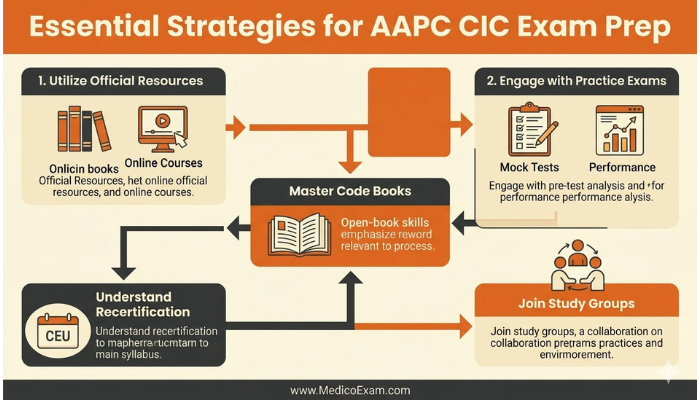
Preparing for the AAPC CIC exam requires a disciplined approach, integrating various study methods to cover the breadth and depth of the syllabus. Success hinges not just on knowledge acquisition but also on effective time management and strategic resource utilization. Candidates should formulate a comprehensive study plan that addresses all exam domains.
Utilizing Official Study Resources
The foundation of any successful AAPC CIC exam preparation lies in leveraging official and reputable study materials. The AAPC itself provides a wealth of resources, including study guides, online courses, and official code books (ICD-10-CM, ICD-10-PCS, and CPT manuals) that are indispensable. These materials are tailored to the exam's content and structure, offering the most accurate and relevant information. Engaging with AAPC-approved education vendors can also provide structured courses and expert guidance, which can be particularly beneficial for navigating complex topics. Effective study involves not just reading but actively working through examples and case studies provided in these resources.
The Value of Practice Exams
Beyond theoretical study, applying knowledge through practice exams is critical for building confidence and identifying areas for improvement. Practice questions simulate the actual exam environment, helping candidates become familiar with the question format, time constraints, and the intensity of the seven inpatient cases. Engaging with effective practice questions allows for the refinement of coding skills under pressure, revealing any weak spots in understanding or application. Medicoexam offer robust practice exam questions designed to mirror the AAPC CIC exam's difficulty and scope, providing invaluable experience before the official test. Regular practice enhances speed and accuracy, which are crucial for success.
Understanding Recertification Requirements
Achieving CIC certification is an accomplishment, but maintaining it requires ongoing commitment to professional development. AAPC mandates specific recertification requirements to ensure that certified professionals remain current with evolving coding guidelines, regulations, and industry best practices. Typically, this involves earning Continuing Education Units (CEUs) within a set cycle, often two years. Staying informed about these requirements and planning for continuous learning is essential for long-term credential validity. Resources on AAPC's CEU policies can provide comprehensive details on approved activities and tracking mechanisms.
Mastering Inpatient Coding Complexities
The core of the Certified Inpatient Coder's expertise lies in their ability to accurately assign codes for complex inpatient scenarios. This involves a granular understanding of specific coding systems and the methodologies governing payment. The CIC exam thoroughly tests these critical competencies, making mastery essential for certified professionals.
Navigating ICD-10-CM and ICD-10-PCS for Inpatient Settings
The proficiency in inpatient coding ICD-10-CM AAPC CIC emphasizes goes beyond mere memorization. It demands an in-depth understanding of the guidelines for ICD-10-CM (diagnosis codes) and ICD-10-PCS (procedure codes) as they apply specifically to the inpatient environment. This includes knowing how to sequence diagnoses correctly, identifying principal diagnoses, and accurately capturing all relevant procedures performed during a hospital stay. The complexity often arises from vague documentation, comorbidities, and complications, requiring coders to query physicians effectively to ensure comprehensive and precise code assignment. Mastering these systems is fundamental to reflecting the patient's condition and the services provided accurately.
Decoding Inpatient Payment Methodologies
Inpatient payment methodologies represent one of the most challenging, yet critical, areas for CIC-certified professionals. Understanding systems like Medicare Severity-Diagnosis Related Groups (MS-DRGs) and how they influence hospital reimbursement is vital. This involves grasping the concepts of base rates, relative weights, and geometric mean length of stay, as well as the impact of present on admission (POA) indicators and hospital-acquired conditions (HACs). The ability to accurately assign codes that lead to the correct DRG ensures fair and appropriate payment for the services rendered, directly affecting a hospital's financial viability. Coders must stay abreast of ongoing changes and updates to these complex payment systems.
Is the AAPC CIC Right for Your Coding Future?
Deciding whether to pursue the AAPC CIC certification involves careful consideration of your career aspirations, current professional role, and a realistic assessment of the commitment required. This credential is not for every coder but is invaluable for those dedicated to inpatient facility coding. It represents a significant step in professional specialization.
Consider the following factors:
-
Career Focus: Do you envision your career primarily within hospital inpatient departments, or are you aiming for a leadership role that requires deep expertise in this area?
-
Industry Demand: Recognize the consistent demand for skilled inpatient coders due to the complexity and regulatory scrutiny of hospital billing.
-
Skill Alignment: Are you passionate about deciphering intricate medical records, mastering detailed coding guidelines, and understanding the financial implications of coding?
-
Commitment to Learning: Are you prepared for rigorous study and ongoing professional development to maintain your certification?
If these considerations resonate with your professional goals, the AAPC CIC certification can indeed redefine and elevate your coding career trajectory. It’s an investment that pays dividends in expertise, credibility, and opportunity.
In conclusion, the AAPC Certified Inpatient Coder (CIC) credential is a powerful testament to an individual's specialized skill and dedication in the demanding field of inpatient medical coding. From ensuring accurate reimbursement to upholding compliance standards, CIC-certified professionals are vital to the healthcare ecosystem. The journey to certification, while challenging, unlocks significant career growth and establishes a coder as an expert in a critical domain. By thoroughly understanding the exam, preparing strategically, and committing to continuous learning, you can solidify your position as an invaluable asset in any inpatient facility.
If you are ready to specialize and take your medical coding career to the next level, delving into the intricacies of inpatient coding with the AAPC CIC certification is a highly advisable path. Explore comprehensive resources and begin your preparation today to secure your future in this essential healthcare profession. For more detailed information and preparation tools, visit AAPC CIC exam information or explore certification paths on our platform.
FAQs
1. What does the AAPC CIC certification validate?
The AAPC CIC certification validates a professional's expertise in applying ICD-10-CM and ICD-10-PCS codes for inpatient facility services, ensuring accuracy in medical record documentation, payment methodologies, and regulatory compliance.
2. What is the typical salary range for a Certified Inpatient Coder?
Certified Inpatient Coder salary can vary significantly based on experience, geographic location, and employer. However, specialized credentials like the CIC generally command higher salaries than non-certified or general coding positions due to the complex nature of the work.
3. How difficult is the AAPC CIC exam?
The AAPC CIC exam difficulty is considered high due to its comprehensive scope, detailed inpatient cases, and the requirement for a deep understanding of complex coding guidelines and payment methodologies. It requires rigorous preparation and practical application skills.
4. What are the key benefits of AAPC CIC certification?
Key benefits include enhanced career opportunities in hospital inpatient settings, increased earning potential, validation of specialized expertise, improved job security, and the ability to ensure critical coding accuracy and compliance for healthcare facilities.
5. How often is AAPC CIC recertification required?
AAPC CIC recertification typically requires certified professionals to earn Continuing Education Units (CEUs) every two years. This ensures coders stay updated with the latest coding guidelines, industry changes, and regulatory requirements.
- AAPC CIC Question Bank |
- AAPC CIC Eligibility & Requirements |
- AAPC Inpatient Coder Practice Test |
- AAPC CIC Exam Cost |
- AAPC CIC Registration Process |
- AAPC Inpatient Coder Study Guide |
- AAPC CIC Recertification |
- AAPC CIC Certification Overview |
- AAPC Inpatient Coder Syllabus |
- AAPC CIC Preparation Time |
- AAPC CIC Passing Score |
- AAPC CIC Exam Format |
- AAPC Inpatient Coder Sample Questions |
- AAPC CIC Career Opportunities |
- AAPC CIC Exam Difficulty


