
AMT RPT: The Proven 7-Phase Plan for Certification
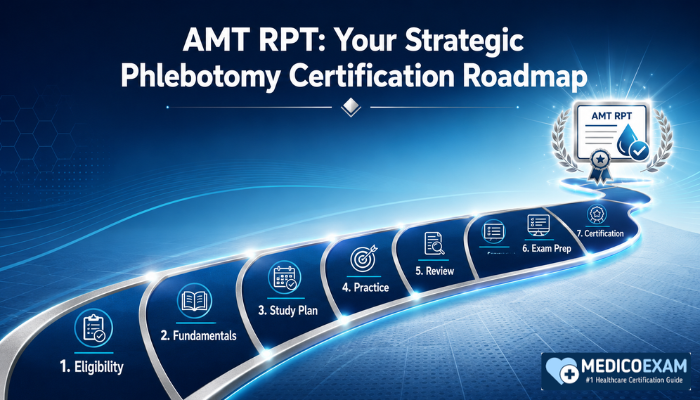 The AMT Registered Phlebotomy Technician (RPT) certification validates a professional's expertise in collecting blood specimens for laboratory analysis, a critical function within healthcare. This credential, offered by the American Medical Technologists (AMT), signifies a commitment to high standards in patient care and laboratory integrity. Individuals aiming to solidify their career in phlebotomy, enhance their professional credibility, and open doors to diverse clinical settings should consider pursuing the AMT RPT. This article outlines a strategic, 7-phase plan designed to guide aspiring technicians through the preparation, examination, and successful achievement of this important certification, offering a clear roadmap to becoming a certified phlebotomist.
Defining the AMT RPT Credential's Value
The AMT RPT credential is a testament to a phlebotomist's knowledge, skills, and abilities in performing venipuncture, capillary puncture, and other specimen collection procedures. It underscores a professional's understanding of safety protocols, legal and ethical considerations, and effective communication essential in healthcare environments. Achieving this certification demonstrates to employers and patients alike a verified level of competence, often translating into increased career opportunities and earning potential. This professional recognition not only boosts an individual’s confidence but also ensures adherence to industry best practices, contributing to safer and more efficient patient care.
Earning the AMT RPT can significantly accelerate a phlebotomist's career trajectory. It often serves as a prerequisite for employment in many hospitals, clinics, and diagnostic laboratories across the United States. Beyond initial employment, it can also unlock pathways for specialization or leadership roles within phlebotomy departments. For comprehensive details on the credential, interested candidates can visit the official AMT phlebotomy technician page to review specific eligibility and benefits.
Navigating the AMT RPT Exam Structure
Understanding the examination's framework is crucial for effective preparation for the AMT RPT certification. The American Medical Technologists (AMT) has designed the RPT exam to comprehensively assess a candidate's readiness for real-world phlebotomy responsibilities. Success hinges not just on subject matter mastery but also on strategic time management during the test.
The AMT RPT exam details are as follows:
-
Exam Code: RPT
-
Exam Price: RPT - $125; RPT International - $155
-
Duration: Candidates are allotted 150 minutes to complete the examination.
-
Number of Questions: The exam consists of 200 multiple-choice questions.
-
Passing Score: A scaled score of 70 (approximately 70% accuracy) is required to pass. The score is reported on a scale of 0-100.
These parameters highlight the need for a well-rounded study plan that covers all essential topics while also incorporating timed practice to build endurance and pacing. Familiarity with the exam’s format, including the number of questions and time limit, allows candidates to develop effective test-taking strategies long before exam day.
Comprehensive Review of RPT Syllabus Domains
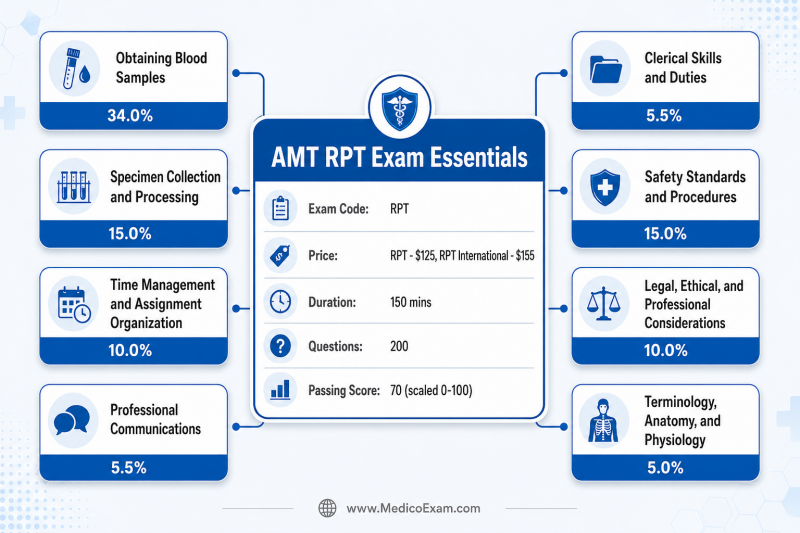 The AMT RPT examination covers a broad range of topics critical to the practice of phlebotomy, ensuring that certified professionals possess a holistic understanding of their role. Each domain is weighted to reflect its importance in daily operations, guiding candidates on where to focus their study efforts. A detailed breakdown of the content areas and their respective percentages is fundamental for targeted preparation.
The key syllabus topics include:
| Syllabus Topic | Exam Weight | Focus Area |
|---|---|---|
| Obtaining Blood Samples | 34.0% | This significant portion covers various venipuncture techniques, capillary puncture methods, proper equipment selection, order of draw, and addressing difficult draws. It’s the cornerstone of phlebotomy practice. |
| Specimen Collection and Processing | 15.0% | Focuses on the correct procedures for collecting, handling, labeling, and transporting different types of specimens, ensuring sample integrity and accurate test results. |
| Time Management and Assignment Organization | 10.0% | Emphasizes efficient workflow, prioritizing tasks, managing multiple assignments, and optimizing routes for specimen collection to enhance productivity. |
| Safety Standards and Procedures | 15.0% | Crucial for protecting both patients and phlebotomists, this section covers infection control, personal protective equipment (PPE), biohazard waste disposal, and emergency protocols. |
| Legal, Ethical, and Professional Considerations | 10.0% | Addresses patient rights, confidentiality (HIPAA), informed consent, professional conduct, and the legal implications of phlebotomy practice. |
| Professional Communications | 5.5% | Covers effective verbal and non-verbal communication with patients, colleagues, and other healthcare professionals, including conflict resolution and active listening. |
| Clerical Skills and Duties | 5.5% | Includes accurate record-keeping, documentation, computer system navigation, and maintaining patient information, vital for administrative efficiency. |
| Terminology, Anatomy, and Physiology | 5.0% | Provides the foundational medical language and biological knowledge necessary to understand the human body systems relevant to blood collection. |
Candidates should consult the official AMT RPT Content Outline for a full delineation of subtopics within each domain to ensure no area is overlooked. Thorough comprehension of these areas forms the bedrock of a successful exam attempt.
Phase 1: Laying the Groundwork for RPT Success
The initial phase of your AMT RPT certification journey involves establishing a robust foundation for learning. This isn't just about opening a book; it's about creating an environment and mindset conducive to deep understanding and retention. Successful candidates begin by assessing their current knowledge base, identifying areas of strength and weakness, and committing to a structured study regimen. This preparatory stage sets the tone for the entire plan, preventing burnout and ensuring sustained progress.
Setting Up Your Study Environment
A dedicated study space is paramount. This environment should be free from distractions, well-lit, and comfortable, but not so comfortable that it invites relaxation over focus. Organizing your physical and digital resources – textbooks, notes, online materials – ensures that everything you need is readily accessible. Establishing a consistent study schedule, even if only for a few hours each day, builds routine and discipline. This structured approach helps in dedicating specific blocks of time solely to RPT preparation, signaling to your brain that it's time to learn. Consider using a planner to map out study sessions, breaks, and review periods.
Understanding Foundational Concepts
Before delving into the intricate details of phlebotomy, a solid grasp of basic medical terminology, human anatomy, and physiology is indispensable. The RPT exam includes a dedicated section on these foundational elements, albeit a smaller percentage. Revisiting these basics ensures that more complex topics, such as the order of draw or specific venipuncture sites, are understood within their proper biological context. Utilize flashcards for terminology, anatomical diagrams for visual learning, and introductory textbooks to reinforce core physiological processes. This preliminary review acts as an essential primer, making subsequent learning phases more efficient and effective.
Phase 2: Deep Dive into Phlebotomy Principles
With foundational knowledge firmly in place, Phase 2 shifts focus to the core technical skills and theoretical principles that define the phlebotomy profession. This stage demands intensive study of practical procedures, safety measures, and the nuanced science behind specimen collection. Mastering these areas is not only crucial for the AMT RPT exam but also for developing the confidence and competence required for real-world clinical application.
Mastering Blood Sample Techniques
This segment involves a comprehensive study of venipuncture, capillary puncture, and arterial puncture (though less common for RPT, general awareness is good). It covers:
-
Equipment Selection: Understanding different needle gauges, syringe types, vacuum tubes, and their appropriate uses based on patient age, vein condition, and test requirements.
-
Patient Identification and Preparation: Strict protocols for verifying patient identity, explaining procedures, obtaining consent, and positioning the patient comfortably and safely.
-
Site Selection and Preparation: Identifying suitable venipuncture sites, palpating veins, and proper antiseptic techniques to prevent contamination.
-
Order of Draw: Memorizing the correct sequence for collecting blood in multiple tubes to prevent cross-contamination of additives, a frequent area of examination.
-
Addressing Difficult Draws: Strategies for managing challenging situations such as collapsed veins, rolling veins, or anxious patients, including when to seek assistance.
Practical application, even simulated, can significantly enhance understanding here.
Specimen Handling Protocols
Beyond collection, the integrity of a specimen relies heavily on proper post-collection handling. This aspect of phlebotomy ensures accurate and reliable laboratory results, directly impacting patient diagnosis and treatment. Key areas of focus include:
-
Labeling Requirements: Accurate and timely labeling of all specimens at the patient's side, including patient name, unique identifier, date, time, and collector's initials.
-
Transportation Guidelines: Understanding appropriate temperatures, light sensitivity, and physical handling requirements for different specimens to prevent degradation.
-
Processing and Centrifugation: Knowledge of how to process specimens (e.g., separating serum/plasma), including proper centrifuge operation and safety.
-
Documentation and Chain of Custody: Maintaining meticulous records for all collected specimens, especially for forensic or legal testing, to ensure accountability and traceability.
This phase demands detailed attention to protocol and an understanding of why each step is critical.
Phase 3: Operational Efficiency and Safety Protocols
Moving beyond individual techniques, Phase 3 of your AMT RPT preparation integrates procedural knowledge with practical workflow management and critical safety standards. A skilled phlebotomist is not only proficient in drawing blood but also adept at managing their workload efficiently and, most importantly, ensuring a safe environment for both patients and themselves. This dual focus prepares candidates for the systemic challenges and responsibilities of the role.
Optimizing Time and Assignments
Effective time management in phlebotomy involves more than just speed; it requires strategic planning and organization. This aspect is vital for minimizing patient wait times, ensuring specimens are collected within stability windows, and maintaining a smooth workflow in busy clinical settings. Key components include:
-
Route Planning: For mobile phlebotomists or those covering multiple units, organizing patient visits geographically to save time and reduce travel.
-
Prioritization of Tasks: Identifying STAT orders, timed draws, and routine collections, and arranging them in an order that ensures critical samples are collected promptly without compromising other tasks.
-
Anticipating Needs: Ensuring all necessary supplies are prepared before entering a patient's room, preventing multiple trips and delays.
-
Documentation Efficiency: Completing necessary paperwork or electronic entries accurately and promptly to avoid backlogs and errors.
Proficiency in these areas reflects a phlebotomist's capacity to handle a dynamic workload effectively.
Adhering to Safety Standards
Safety is paramount in phlebotomy, encompassing a range of measures designed to protect against exposure to bloodborne pathogens and other hazards. The AMT RPT exam places significant emphasis on these protocols, reflecting their non-negotiable importance in healthcare. Critical safety areas include:
-
Infection Control: Universal precautions, standard precautions, hand hygiene, and proper use of disinfectants to prevent the spread of infections.
-
Personal Protective Equipment (PPE): Correct selection, donning, doffing, and disposal of gloves, gowns, masks, and eye protection based on the risk assessment of each procedure.
-
Needle Safety and Sharps Disposal: Utilizing safety-engineered devices, immediate disposal of used needles in puncture-resistant containers, and preventing needlestick injuries.
-
Biohazard Waste Management: Proper segregation, containment, and disposal of all biohazardous materials according to federal, state, and institutional regulations.
-
Emergency Procedures: Knowing how to respond to exposures, spills, and patient reactions such as fainting or seizures, including first aid and reporting protocols.
A thorough understanding and application of these safety standards are integral to the ethical and responsible practice of phlebotomy.
Phase 4: Cultivating Professionalism and Ethical Practice
The role of a Registered Phlebotomy Technician extends far beyond technical proficiency; it demands a high degree of professionalism, ethical conduct, and effective communication. Phase 4 of the AMT RPT plan focuses on developing these crucial soft skills and understanding the legal and ethical framework within which phlebotomists operate. These competencies ensure patient trust, maintain professional integrity, and contribute to a positive healthcare environment.
Effective Communication Strategies
Communication is a cornerstone of patient care and teamwork in phlebotomy. This involves not only conveying information clearly but also actively listening and responding with empathy.
-
Patient Interaction: Establishing rapport, explaining procedures in clear, understandable language, addressing patient anxieties, and confirming understanding. This often involves active listening to patient concerns and adapting communication style to diverse populations.
-
Interprofessional Communication: Collaborating effectively with nurses, doctors, lab personnel, and other healthcare team members, including giving and receiving clear instructions and reporting critical observations.
-
Conflict Resolution: Handling disagreements or challenging interactions professionally and constructively, maintaining composure, and focusing on positive outcomes.
-
Cultural Competence: Recognizing and respecting diverse cultural backgrounds and beliefs that may impact patient care and communication, ensuring equitable service.
Strong communication skills minimize misunderstandings and enhance the overall patient experience.
Legal and Ethical Boundaries
Phlebotomists operate within strict legal and ethical guidelines designed to protect patient rights and ensure the integrity of healthcare services. Understanding these boundaries is critical for responsible practice and is thoroughly assessed on the AMT RPT exam.
-
Patient Confidentiality (HIPAA): Adhering to federal regulations regarding the protection of protected health information (PHI), ensuring patient privacy in all interactions and documentation.
-
Informed Consent: Verifying that patients understand and agree to procedures before they are performed, including understanding their right to refuse.
-
Scope of Practice: Recognizing the limits of a phlebotomist's responsibilities and avoiding tasks or advice that fall outside this scope.
-
Professional Accountability: Taking responsibility for actions, reporting errors, and upholding the ethical standards of the profession, including honesty and integrity.
-
Legal Implications: Awareness of potential legal ramifications related to negligence, malpractice, or breach of confidentiality, underscoring the importance of meticulous practice.
Adherence to these principles safeguards both the patient and the phlebotomist, solidifying trust in the healthcare system.
Phase 5: Strategic Exam Preparation Techniques
As the AMT RPT examination date approaches, Phase 5 transitions into active, results-oriented study strategies. This involves moving beyond passive reading to engaging with the material in ways that reinforce learning and prepare you for the specific demands of the exam. The focus here is on leveraging diverse resources and developing a systematic approach to knowledge retention and recall.
Utilizing Study Resources Effectively
A wide array of study resources can enhance your preparation. The key is to select and integrate them strategically:
-
Official Study Guides: AMT often provides or recommends official study materials. These are invaluable as they directly align with the exam content outline and format.
-
Textbooks and Reference Manuals: Comprehensive phlebotomy textbooks offer in-depth explanations and illustrations for all syllabus topics. Focus on chapters corresponding to the heaviest weighted domains.
-
Online Courses and Webinars: Many educational platforms offer structured courses specifically designed for RPT preparation, providing interactive lessons and expert insights.
-
Flashcards: Excellent for memorizing medical terminology, order of draw, safety acronyms, and important values. Digital flashcard apps can be particularly effective for on-the-go study.
-
Study Groups: Collaborating with peers can provide different perspectives, clarify difficult concepts, and offer motivation. Explaining concepts to others solidifies your own understanding.
Diversifying your resources helps to reinforce learning through different modalities and keeps study sessions engaging.
Practice Question Methodologies
Practice questions are not just for testing; they are powerful learning tools. In this phase, consistently engaging with practice questions helps in several ways:
-
Identifying Knowledge Gaps: Incorrect answers highlight areas where further study is needed, allowing for targeted review rather than broad re-reading.
-
Familiarizing with Exam Format: Repeated exposure to multiple-choice questions helps you understand how questions are typically structured and how to approach them effectively.
-
Time Management: Timed practice tests simulate exam conditions, helping you develop pacing strategies to complete all 200 questions within the 150-minute limit.
-
Understanding Rationales: Always review the explanations for both correct and incorrect answers. Understanding *why* an answer is correct (or incorrect) reinforces the underlying principles.
-
Developing Critical Thinking: Many RPT questions require applying knowledge to clinical scenarios, which practice questions can help hone.
For high-quality practice questions, consider resources like MedicoExam's AMT RPT practice questions, which are designed to mirror the actual exam experience and provide detailed explanations. Consistent practice is the bridge between knowing the material and confidently passing the exam.
Phase 6: Simulating the RPT Exam Experience
The penultimate phase of your AMT RPT journey focuses on bridging the gap between diligent study and actual exam performance. This involves rigorous simulation of the testing environment, allowing you to fine-tune your strategies, manage anxiety, and optimize your readiness. It’s about more than just knowing the material; it’s about performing under pressure.
Mock Test Strategies
Engaging with full-length mock exams is arguably the most critical component of this phase. These simulations should replicate the actual AMT RPT exam as closely as possible:
-
Timed Conditions: Always take mock tests within the 150-minute time limit, ideally in a single sitting, to build stamina and practice pacing.
-
Quiet Environment: Choose a distraction-free setting that mimics a testing center to help you concentrate.
-
Review All Questions: After completing a mock test, meticulously review every question, regardless of whether you answered it correctly. Pay close attention to the rationale behind each answer.
-
Identify Weaknesses: Categorize your incorrect answers by syllabus domain. This pinpointing allows for highly targeted review sessions on specific topics where your knowledge is lacking.
-
Practice Breaks: If the testing center allows short breaks, practice taking them strategically to refresh your mind without losing momentum.
Regular mock testing builds familiarity and reduces the element of surprise on exam day.
Performance Analysis and Refinement
Mock test results are not just scores; they are diagnostic tools. Analyzing your performance systematically allows you to refine your study plan and test-taking approach.
-
Score Tracking: Keep a record of your scores on different practice tests. Look for improvements over time and identify any consistent plateaus.
-
Error Patterns: Are you consistently missing questions on "Specimen Collection and Processing" or struggling with "Legal, Ethical, and Professional Considerations"? This indicates where deeper study is required.
-
Question Types: Identify if you struggle more with recall-based questions versus scenario-based application questions. Adjust your study methods accordingly (e.g., more conceptual understanding vs. pure memorization).
-
Time Management Review: Did you run out of time? Did you rush certain sections? Analyze where you spent too much or too little time. This helps in developing a more efficient pace for the actual exam.
-
Strategy Adjustment: Based on your analysis, refine your study schedule, dedicate more time to challenging areas, and experiment with different test-taking tactics (e.g., answering easy questions first, flagging difficult ones for later).
This iterative process of testing, analyzing, and refining ensures you are not just studying, but studying smarter.
Phase 7: Finalizing Application and Maintaining Credential
The final phase of the AMT RPT plan moves from preparation to formal certification and the long-term commitment to professional excellence. This involves navigating the application process, understanding what to expect on exam day, and recognizing the ongoing responsibilities of a certified phlebotomist. Achieving certification is a milestone, but maintaining it is a continuous journey.
Registration and Application Process
Once you feel adequately prepared, the next step is to formally register for the AMT RPT exam. This typically involves:
-
Verifying Eligibility: Ensure you meet all AMT's eligibility criteria, which usually involve a combination of education, training, and/or work experience in phlebotomy.
-
Submitting Application: Complete the online application form on the AMT website, providing all required documentation, such as transcripts, training certificates, and verification of work experience.
-
Paying Exam Fees: Remit the appropriate exam fee as specified by AMT ($125 for RPT, $155 for RPT International).
-
Scheduling the Exam: Upon approval of your application, you will receive instructions on how to schedule your exam at a Pearson VUE testing center. Choose a date and time that aligns with your peak preparedness.
-
Receiving Confirmation: Keep all confirmation emails and documents related to your registration and scheduling.
Careful attention to detail throughout this process ensures a smooth path to your exam day.
Requirements for Renewal
Certification is not a one-time event; it signifies an ongoing commitment to professional development. The AMT RPT credential, like many professional certifications, requires periodic renewal to ensure practitioners remain current with best practices and evolving industry standards.
-
Continuing Education (CE): AMT typically mandates a certain number of continuing education credits over a specified renewal cycle (e.g., 30 CEs every three years). These credits can be earned through approved workshops, seminars, online courses, or self-study programs.
-
Professional Activity: Active employment in the field of phlebotomy is often a component of renewal requirements, demonstrating ongoing practical application of skills.
-
Fee Payment: A renewal fee is usually required to process the re-certification application.
-
Documentation: Maintaining meticulous records of all CE activities and professional employment is essential for submitting a successful renewal application.
-
Adherence to Code of Ethics: Continued adherence to the AMT's code of ethics and professional conduct is implicitly required for maintaining active certification.
Planning for renewal from the outset helps integrate continuous learning into your professional life, ensuring your AMT RPT credential remains active and valuable.
Realizing the Career Advantage of AMT RPT
Earning the AMT RPT certification transcends mere academic achievement; it is a strategic career move that offers tangible benefits in the competitive healthcare landscape. The credential signals to employers a benchmark of quality and a dedication to professional standards, directly impacting employment opportunities and long-term career growth. It validates a phlebotomist's core capabilities, setting them apart in the field.
Enhanced Professional Opportunities
The demand for qualified phlebotomists is consistently high, and holding an AMT RPT credential significantly broadens the scope of available positions. Certified professionals are often preferred for roles in:
-
Hospitals: Working in various departments, from emergency rooms to specialized clinics, performing diverse collection tasks.
-
Outpatient Clinics and Physician Offices: Providing essential services for routine blood tests and specialized diagnostic screenings.
-
Reference Laboratories: Contributing to large-scale specimen processing and analysis, often involving a higher volume of samples.
-
Blood Donation Centers: Playing a crucial role in donor screening and blood collection for transfusions.
-
Research Facilities: Participating in clinical trials and studies that require precise and consistent blood collection.
Beyond just securing a job, certification can lead to more specialized roles, such as phlebotomy trainers, lead phlebotomists, or even roles with increased administrative responsibilities.
Impact on Earning Potential
While salaries vary by region, experience, and healthcare setting, AMT Registered Phlebotomy Technician salary expectations generally trend higher for certified individuals compared to non-certified counterparts. Certification often provides leverage in salary negotiations and can lead to faster career progression and promotions. Employers recognize the investment in skill and knowledge that certification represents, and this is frequently reflected in compensation packages. Furthermore, the enhanced professional standing can open doors to facilities that offer better benefits, work environments, and opportunities for continuous professional development. The credential, therefore, isn't just about initial employment but about building a financially rewarding and stable career path.
Sustaining Your Phlebotomy Expertise
Achieving the AMT RPT certification is a significant milestone, but maintaining excellence in the phlebotomy field requires an ongoing commitment to learning and professional development. The dynamic nature of healthcare, with its continuous advancements in technology, protocols, and patient care methodologies, necessitates that phlebotomists remain vigilant in updating their skills and knowledge. This dedication to lifelong learning ensures that certified professionals consistently deliver the highest standard of care.
Engaging in regular continuing education (CE) activities is crucial. These can include participating in webinars, attending professional conferences, subscribing to industry journals, or completing specialized training courses in areas like pediatric phlebotomy or advanced venipuncture techniques. Active involvement in professional organizations can also provide valuable networking opportunities, access to new research, and a platform for sharing best practices. Such activities not only fulfill renewal requirements but also foster a deeper understanding of emerging trends and challenges in phlebotomy. By consistently seeking out new knowledge and refining practical skills, an AMT RPT professional ensures their expertise remains sharp, relevant, and impactful throughout their career.
The AMT RPT certification is more than just a credential; it's a commitment to excellence in a vital healthcare role. By following this proven 7-phase plan, aspiring phlebotomists can systematically prepare for the exam, confidently achieve certification, and lay the groundwork for a successful and impactful career. Each phase, from foundational study to ongoing professional development, is designed to build the knowledge, skills, and ethical understanding necessary to excel as a Registered Phlebotomy Technician. This structured approach not only maximizes your chances of passing the exam but also ensures you are well-equipped to meet the demands and embrace the opportunities within the dynamic field of phlebotomy.
Embarking on the path to becoming an AMT Registered Phlebotomy Technician is a rewarding decision that elevates your professional standing and enhances your contributions to patient care. For a comprehensive suite of study resources designed to support your journey, explore the specialized preparation materials available on MedicoExam. Begin your focused preparation today and step confidently towards achieving your certification goals.
Frequently Asked Questions
1. What does an AMT Registered Phlebotomy Technician do?
An AMT Registered Phlebotomy Technician (RPT) primarily collects blood samples from patients for laboratory testing, which aids in diagnosis and treatment. This involves performing venipuncture and capillary punctures, ensuring proper specimen handling, maintaining patient safety, and adhering to strict legal and ethical guidelines.
2. Is the AMT RPT exam difficult?
The difficulty of the AMT RPT exam varies by individual preparation and experience. It requires a comprehensive understanding of phlebotomy techniques, safety protocols, anatomy, and professional conduct. Thorough study, practice questions, and mock exams significantly improve the chances of success. The passing score is approximately 70%.
3. What are the benefits of AMT RPT certification?
Benefits of AMT RPT certification include enhanced professional credibility, increased job opportunities in diverse healthcare settings (hospitals, clinics, labs), higher earning potential, and validation of essential phlebotomy skills. It demonstrates a commitment to professional standards and patient safety.
4. What are the renewal requirements for AMT RPT certification?
Renewal requirements for AMT RPT certification typically involve earning a specific number of continuing education (CE) credits (e.g., 30 CEs every three years), maintaining active employment in phlebotomy, and paying a renewal fee. These requirements ensure ongoing professional development and competence.
5. How can I best prepare for the AMT RPT exam?
Effective preparation for the AMT RPT exam includes reviewing official AMT study materials, utilizing comprehensive textbooks, practicing with high-quality mock exams, focusing on syllabus domains, understanding rationales for practice questions, and engaging in practical, hands-on training where possible. Consistent, structured study is key.
- AMT RPT Question Bank |
- AMT RPT Eligibility & Requirements |
- AMT Phlebotomy Technician Practice Test |
- AMT RPT Exam Cost |
- AMT RPT Registration Process |
- AMT Phlebotomy Technician Study Guide |
- AMT RPT Recertification |
- AMT RPT Certification Overview |
- AMT Phlebotomy Technician Syllabus |
- AMT RPT Preparation Time |
- AMT RPT Passing Score |
- AMT RPT Exam Format |
- AMT Phlebotomy Technician Sample Questions |
- AMT RPT Career Opportunities |
- AMT RPT Exam Difficulty


