
Don't Start Your AEMT NREMT Path Without Reading This
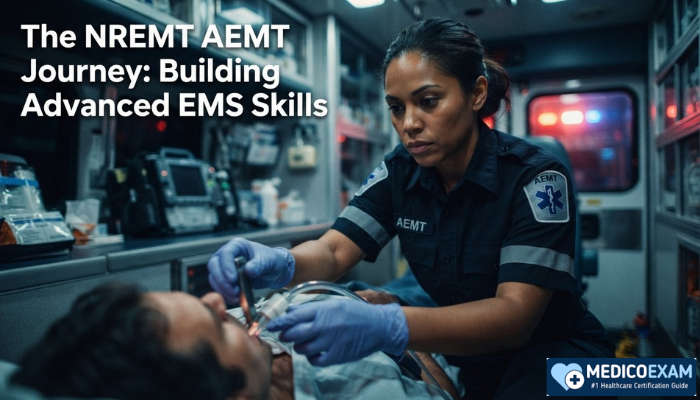
The NREMT Advanced Emergency Medical Technician (AEMT) certification represents a significant step forward for EMS professionals, validating a higher level of prehospital care capabilities. Pursuing the NREMT AEMT credential demonstrates a commitment to expanding critical skills and delivering more advanced interventions in emergency situations. This comprehensive guide will illuminate the certification requirements, exam structure, critical syllabus areas, and effective preparation strategies for the AEMT examination, ensuring aspiring candidates embark on their journey with clarity and confidence.
Evaluating the NREMT AEMT Certification
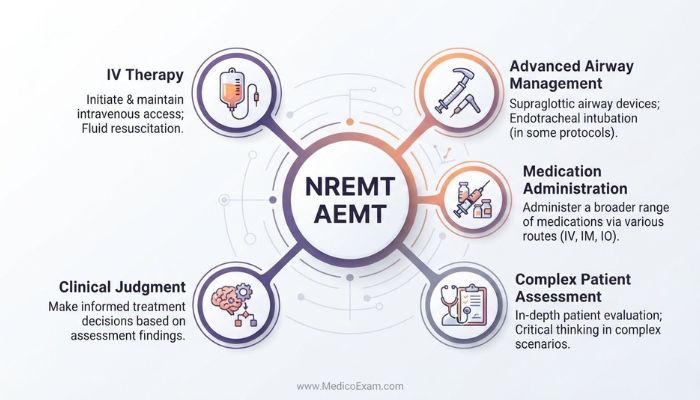
The NREMT AEMT certification, conferred by the National Registry of Emergency Medical Technicians, signifies that an individual possesses the knowledge and skills necessary to provide advanced prehospital emergency care. This credential serves as a vital benchmark for quality and competence within the EMS field, enabling professionals to administer a broader range of medications, perform more complex airway management techniques, and conduct advanced patient assessments. Candidates considering this certification are typically EMTs seeking to enhance their clinical capabilities and career opportunities, moving beyond basic life support to intermediate-level care. It is an essential step for those aiming to provide a higher level of care to patients in various emergency settings.
Defining the Advanced Emergency Medical Technician Role
An Advanced Emergency Medical Technician acts as a bridge between the foundational EMT and the more extensive Paramedic role. AEMTs are authorized to perform skills such as intravenous fluid therapy, advanced airway adjuncts, and specific medication administration, based on state and local protocols. This expanded scope of practice is crucial in rural areas or situations where paramedic-level care might be delayed. The role requires a strong understanding of human anatomy, physiology, pharmacology, and patient assessment, all underpinned by critical thinking and sound clinical judgment. Earning the AEMT certification confirms a provider's readiness to take on these elevated responsibilities.
Attaining NREMT AEMT Certification Prerequisites
To even sit for the NREMT AEMT examination, candidates must first satisfy a set of strict prerequisites established by the National Registry. These requirements ensure that all applicants possess a foundational level of education, experience, and professional standing before attempting the advanced certification. Understanding these foundational steps is crucial for a smooth application process and successful progression toward becoming a certified AEMT. Each requirement plays a role in preparing the candidate for the rigors of advanced prehospital care.
Essential Eligibility Criteria
The path to NREMT AEMT certification begins with several non-negotiable eligibility criteria. Firstly, candidates must hold a current NREMT EMT certification or a state EMS certification at the EMT level. This ensures a consistent baseline of emergency medical knowledge and practical skills. Secondly, applicants must successfully complete a state-approved AEMT course. This course must meet all relevant national guidelines and be taught by an accredited institution. Proof of successful course completion, including official transcripts or certificates, is required during the application process.
Other Key Requirements
Beyond the core certifications and coursework, candidates must also fulfill additional administrative and ethical obligations. These often include submitting an application, paying the examination fee, and affirming adherence to the NREMT’s ethical code of conduct. Candidates are also typically required to provide proof of current CPR certification for healthcare providers. It is highly recommended that candidates review the complete list of prerequisites directly on the official NREMT AEMT certification page to ensure they meet every condition before applying for the examination.
Deconstructing the NREMT AEMT Examination Structure
The NREMT Advanced Emergency Medical Technician (AEMT) examination is a comprehensive assessment designed to rigorously evaluate a candidate's readiness to practice at the advanced intermediate level. It comprises two distinct components: a cognitive (knowledge-based) examination and a psychomotor (skills-based) examination. Both parts are critical for certification and must be successfully passed to earn the NREMT AEMT credential. Familiarity with the structure and details of each section is essential for effective preparation.
Cognitive Exam Overview
The cognitive examination for the NREMT AEMT is a computer-adaptive test (CAT) that assesses a broad range of medical knowledge and critical thinking skills. It evaluates a candidate's ability to apply advanced concepts to various patient scenarios.
The key details of the cognitive exam are:
-
Exam Price: $159 (per examination attempt)
-
Duration: 180 minutes
-
Number of Questions: 135 total questions (100 scored and 35 unscored pilot questions)
-
Passing Score: Candidates must achieve a scaled score of 950 on a scale of 100 to 1500
The adaptive nature of the exam means that the difficulty of questions adjusts based on the candidate's performance, ensuring a precise evaluation of their competency. This format makes a thorough understanding of all syllabus areas paramount, as the exam dynamically tests depth of knowledge.
Psychomotor Exam Components
The psychomotor examination is a hands-on assessment where candidates demonstrate their practical skills in simulated emergency scenarios. This portion of the exam typically involves several skill stations designed to evaluate critical interventions and patient assessment techniques. These stations may include:
-
Patient Assessment - Trauma: Demonstrating a systematic approach to assessing a trauma patient, including spinal immobilization, hemorrhage control, and rapid transport decisions.
-
Patient Assessment - Medical: Exhibiting the ability to assess a medical patient, focusing on history taking, physical examination, and formulating a treatment plan.
-
Dynamic Cardiology: Managing a patient with a cardiac emergency, including rhythm interpretation, defibrillation, and medication administration.
-
Static Cardiology: Interpreting various ECG rhythms and verbally outlining appropriate management.
-
Oral Station: Often involves a scenario-based discussion where candidates explain their clinical decisions and rationale.
-
Advanced Airway Management: Performing advanced airway techniques such as endotracheal intubation or other supraglottic airway insertion.
-
IV & Medication Skills: Demonstrating proficiency in intravenous access and medication preparation/administration.
Success on the psychomotor exam relies heavily on consistent practice and a deep familiarity with all required skills, performed accurately and efficiently under pressure. Candidates are advised to review the detailed AEMT test plan published by NREMT for a comprehensive breakdown of each station and the evaluation criteria.
Mastering the AEMT NREMT Exam Content
Achieving success on the NREMT AEMT cognitive exam requires a meticulous understanding of its content outline, which spans several critical domains of advanced emergency medical care. Each domain is weighted to reflect its importance in real-world practice, guiding candidates on where to focus their study efforts. A strategic approach to studying involves allocating time proportionally to these areas, ensuring comprehensive coverage and deep comprehension.
Core Knowledge Domains
The cognitive exam broadly covers several key areas, each with a specific percentage of the total questions. These domains reflect the essential competencies of an Advanced Emergency Medical Technician.
-
Airway, Respiration & Ventilation (9% – 13%): This section assesses knowledge of basic and advanced airway adjuncts, ventilation techniques, oxygen administration, and recognizing respiratory emergencies.
-
Cardiology & Resuscitation (11% – 15%): Focuses on cardiac arrest management, rhythm interpretation, defibrillation, acute coronary syndromes, and pharmacologic interventions for cardiac emergencies.
-
Trauma (7% – 11%): Covers the assessment and management of various traumatic injuries, including hemorrhage control, shock management, head and spinal trauma, and musculoskeletal injuries.
-
Medical/Obstetrics/Gynecology (25% – 29%): This is the largest domain, encompassing a wide array of medical emergencies such as diabetic emergencies, allergic reactions, neurological disorders, environmental emergencies, behavioral health crises, and obstetric/gynecological complications.
-
EMS Operations (6% – 10%): Explores topics like scene safety, mass casualty incidents, hazardous materials, communication, documentation, and ethical/legal considerations in EMS.
Each of these areas demands a thorough understanding of underlying pathophysiology, assessment findings, and appropriate advanced interventions. Candidates should not underestimate the breadth of knowledge required across these diverse topics.
Clinical Judgment Emphasis
Significantly, a large portion of the NREMT AEMT exam, ranging from 31% to 35%, is dedicated to Clinical Judgment. This domain is not a standalone subject but rather an overarching assessment of a candidate’s ability to integrate knowledge from all other domains to make sound patient care decisions.
Clinical judgment involves:
-
Problem Recognition: Identifying the patient's primary problem and potential secondary issues.
-
Information Gathering: Prioritizing and synthesizing patient assessment data from various sources.
-
Formulating a Field Impression: Developing a working diagnosis based on gathered information.
-
Management Planning: Creating and adapting a patient care plan in dynamic situations.
-
Evaluating Patient Response: Monitoring the effectiveness of interventions and modifying care as needed.
This emphasis on clinical judgment means that rote memorization alone is insufficient. Candidates must be able to think critically, apply protocols, and adapt their approach based on the specific patient presentation and environmental factors. Focusing on case studies and scenario-based learning can be particularly beneficial for developing this crucial skill.
Crafting Your NREMT AEMT Study Strategy
Effective preparation for the NREMT AEMT examination demands more than just passively reviewing course materials; it requires a structured and consistent approach. Developing a robust study strategy ensures that all critical content areas are covered, and practical skills are honed to perfection. Success on both the cognitive and psychomotor components hinges on deliberate practice and a clear understanding of what the examination entails.
Optimizing Your Study Resources
Selecting the right study materials is foundational to a successful preparation journey. Candidates should prioritize resources that align with the current NREMT AEMT curriculum and test plan.
Consider incorporating:
-
Official NREMT Resources: The NREMT website provides essential documents, including the detailed test plan, which outlines specific cognitive and psychomotor competencies. This should be the primary guide for your studies.
-
Comprehensive Textbooks: Utilize your AEMT course textbook as a primary reference, focusing on core concepts, pathophysiology, and treatment protocols.
-
Review Courses: Many reputable organizations offer NREMT AEMT review courses, either online or in-person, which can provide structured learning and highlight key areas.
-
Flashcards and Mnemonics: These tools are invaluable for memorizing pharmacology, assessment findings, and treatment algorithms, especially for quick recall during the exam.
-
Online Question Banks: Engaging with a variety of practice questions, like those found on reputable platforms, helps in familiarizing with the exam format and identifying knowledge gaps. For instance, exploring sample questions for NREMT AEMT can offer valuable insights.
Avoid relying on "dumps" or unauthorized materials, as these can be inaccurate, outdated, and unethical, ultimately hindering genuine learning and exam success. Focus instead on understanding the underlying principles of patient care.
Leveraging Practice Assessments
Practice tests and simulated scenarios are indispensable for both the cognitive and psychomotor portions of the NREMT AEMT exam. They serve as diagnostic tools, allowing candidates to gauge their readiness and pinpoint areas requiring further attention.
For the cognitive exam:
-
Timed Practice Exams: Simulate the actual 180-minute exam duration to build stamina and practice time management under pressure.
-
Targeted Quizzes: Focus on specific content domains where performance is weak to reinforce understanding.
-
Reviewing Rationales: Understand why correct answers are correct and why incorrect options are wrong. This deepens conceptual understanding, especially beneficial for questions testing clinical judgment.
For the psychomotor exam:
-
Repeated Skill Drills: Practice each skill station repeatedly until muscle memory is developed, and procedures become second nature.
-
Scenario Rehearsals: Work with peers or instructors to run through full patient scenarios, mimicking the psychomotor exam environment. This helps integrate individual skills into a cohesive patient management plan.
-
Peer Feedback: Seek constructive criticism from instructors or experienced AEMTs on your performance during skill drills and scenarios.
Consistent use of these practice methods will not only boost confidence but also refine both knowledge application and practical proficiency, essential for passing the NREMT AEMT exam.
Recognizing the Value of AEMT Certification
The NREMT Advanced Emergency Medical Technician certification offers significant professional benefits, extending beyond merely an expanded scope of practice. It represents a commitment to personal growth, enhanced patient care, and a robust career trajectory within the emergency medical services field. For many, this credential is a critical stepping stone, providing increased opportunities and recognition.
Enhanced Professional Credibility
Earning the AEMT certification immediately elevates an individual's professional standing within the EMS community. It signifies a verified level of competence in advanced life support interventions, assuring employers, colleagues, and patients of a provider's capabilities. This enhanced credibility can lead to greater trust, more challenging assignments, and increased responsibilities in the field. Furthermore, in an increasingly regulated healthcare environment, nationally recognized certifications like the NREMT AEMT are often required for employment and licensure across different states.
Expanded Career Pathways
The AEMT credential opens doors to a broader range of career opportunities that might not be accessible to those with only EMT certification.
Potential career advancements include:
-
Increased Employment Opportunities: Many ambulance services, fire departments, and healthcare facilities specifically seek AEMTs to staff intermediate care units or provide advanced services in communities.
-
Higher Earning Potential: The expanded skill set and responsibility typically correspond with a higher salary compared to an EMT.
-
Bridge to Paramedic: For many, AEMT certification serves as a practical and educational bridge to paramedic school, allowing for incremental skill development and experience. It provides a solid foundation for further advanced training.
-
Specialized Roles: AEMTs may find opportunities in specialized areas such as tactical EMS, critical care transport, or industrial medicine, where their advanced skills are highly valued.
Investing in NREMT AEMT certification is therefore not just about passing an exam, but about strategically positioning oneself for a more impactful and rewarding career in emergency medicine.
Maintaining Your Advanced Status: NREMT AEMT Recertification
Once achieved, the NREMT AEMT certification is not a lifetime credential. To ensure ongoing competence and adherence to evolving standards of care, the National Registry of Emergency Medical Technicians requires AEMTs to periodically recertify. This process is crucial for maintaining active status and continuing to practice with an advanced scope. Understanding the recertification requirements from the outset helps in planning for continuous professional development.
Recertification Cycle and Requirements
NREMT AEMT certification typically requires renewal every two years. The recertification process generally involves completing a specific number of continuing education (CE) hours, maintaining current CPR certification, and affirming compliance with the NREMT's ethical standards. The required CE hours are usually divided into several categories, ensuring a breadth of education across core competencies and patient care topics. These often include:
-
National Component: Specific hours dictated by the NREMT, focusing on current national guidelines and critical topics.
-
Local/State Component: Hours determined by the candidate's state or local EMS authority, addressing regional needs or protocols.
-
Individual Component: Elective hours that allow the AEMT to pursue education in areas of personal interest or professional development.
It's important for AEMTs to track their CE hours meticulously throughout the two-year cycle to avoid last-minute rushing. Many online platforms and professional organizations offer courses that fulfill NREMT-approved CE requirements.
Preparing for Recertification
The key to a smooth recertification process lies in proactive planning and continuous learning.
Consider these steps:
-
Start Early: Begin accumulating CE hours well in advance of your expiration date, rather than waiting until the last few months.
-
Stay Informed: Regularly check the NREMT website for any updates to recertification policies or required topics, as these can change.
-
Utilize Approved Providers: Ensure that any continuing education courses you take are from NREMT-approved sources to guarantee they will count towards your requirements.
-
Maintain Documentation: Keep detailed records of all completed CE courses, including certificates of completion and course descriptions, in case of an audit.
Recertification is not merely an administrative task but an opportunity for AEMTs to continuously update their knowledge and skills, ensuring they remain highly competent and effective providers in the dynamic field of emergency medicine.
Embarking on the NREMT AEMT certification journey is a significant undertaking that requires dedication, thorough preparation, and a clear understanding of the process. From meeting the initial eligibility requirements to mastering the comprehensive cognitive and psychomotor examinations, each step is designed to mold a highly capable and confident advanced EMS professional. This credential not only expands an individual's medical scope but also opens avenues for career growth and deeper engagement in patient care. By utilizing structured study plans, leveraging quality resources, and committing to continuous learning, aspiring AEMTs can navigate this path successfully, ensuring they are well-prepared to make a profound difference in the lives of their patients.
For further insights into common questions and effective strategies, delve into resources that offer a detailed AEMT exam FAQs and preparation guide. These materials can provide valuable perspectives and clarify any lingering doubts as you advance in your EMS career.
FAQs
1. What is the NREMT AEMT certification, and why is it important?
The NREMT AEMT (Advanced Emergency Medical Technician) certification validates an EMS professional's ability to provide advanced prehospital care, bridging the gap between EMT and Paramedic. It's important for expanding skills, enhancing career opportunities, and delivering a higher level of patient care in emergency situations.
2. What are the main components of the NREMT AEMT examination?
The examination consists of two main components: a cognitive (knowledge-based) exam, which is a computer-adaptive test assessing theoretical knowledge and clinical judgment, and a psychomotor (skills-based) exam, which evaluates practical skills in various simulated emergency scenarios.
3. How many questions are on the NREMT AEMT cognitive exam, and what is the passing score?
The NREMT AEMT cognitive exam has 135 questions (100 scored and 35 unscored pilot questions) and candidates must achieve a scaled score of 950 on a scale of 100 to 1500 to pass.
4. What are the key subject areas covered in the NREMT AEMT exam syllabus?
The exam syllabus covers Airway, Respiration & Ventilation; Cardiology & Resuscitation; Trauma; Medical/Obstetrics/Gynecology; EMS Operations; and significantly, Clinical Judgment, which integrates knowledge from all other domains.
5. How often do I need to recertify my NREMT AEMT credential?
NREMT AEMT certification typically requires recertification every two years. This involves completing specific continuing education hours across national, state/local, and individual components, along with maintaining current CPR certification.
- NREMT AEMT Question Bank |
- NREMT AEMT Eligibility & Requirements |
- NREMT Advanced Emergency Medical Technician Practice Test |
- NREMT AEMT Exam Cost |
- NREMT AEMT Registration Process |
- NREMT Advanced Emergency Medical Technician Study Guide |
- NREMT AEMT Recertification |
- NREMT AEMT Certification Overview |
- NREMT Advanced Emergency Medical Technician Syllabus |
- NREMT AEMT Preparation Time |
- NREMT AEMT Passing Score |
- NREMT AEMT Exam Format |
- NREMT Advanced Emergency Medical Technician Sample Questions |
- NREMT AEMT Career Opportunities |
- NREMT AEMT Exam Difficulty


