
Ditch Common Prep: Master the AMT RDA Exam, Differently
The AMT Registered Dental Assistant (RDA) certification, designated by exam code RDA, signifies a dental professional's proven competency in advanced chairside assisting, administrative tasks, and patient care. This credential, offered by the American Medical Technologists (AMT), is essential for individuals seeking to validate their expertise and elevate their standing within the dynamic dental healthcare field. This comprehensive guide delves into the specific preparation strategies, core content areas, and long-term career advantages of achieving the AMT RDA certification, equipping aspiring candidates with the insights to approach this rigorous assessment effectively and distinguish themselves in a competitive landscape.
Validating Clinical Competence: The AMT RDA Examination Structure
Achieving the AMT Registered Dental Assistant certification demonstrates a deep understanding of the diverse responsibilities integral to modern dental practice. This rigorous examination assesses critical knowledge and skills across various domains, ensuring that certified professionals meet a high standard of competence. Candidates must prepare for a comprehensive assessment that evaluates both theoretical knowledge and practical application, aligning with the demanding expectations of the role. Understanding the examination’s foundational structure is the first step toward a focused and effective study plan.
Essential Exam Logistics and Format
The AMT RDA examination is designed to test a candidate's readiness for the multifaceted role of a Registered Dental Assistant. Familiarity with the exam's logistical details is crucial for effective preparation and to minimize surprises on test day. These details provide a clear framework for allocating study time and understanding the assessment's scope.
-
Exam Name: AMT Registered Dental Assistant
-
Exam Code: RDA
-
Exam Price: $150 (USD)
-
Duration: Candidates are allotted 150 minutes to complete the examination.
-
Number of Questions: The test consists of 210 multiple-choice questions.
-
Passing Score: A scaled score of 70 (on a scale of 0-100), which approximately translates to 70% accuracy, is required to pass.
Prospective candidates are encouraged to visit the official AMT guidelines for any updates or additional information regarding registration and test administration policies. Adhering to these guidelines ensures a smooth certification journey.
Mapping Your Expertise: Core Content Areas for the RDA Exam
The AMT RDA examination meticulously evaluates a candidate's proficiency across several critical domains, reflecting the breadth of a dental assistant's responsibilities. Each section carries a specific weight, signaling the relative importance of these knowledge areas in the overall assessment. A strategic preparation approach requires a thorough understanding of these domains and their respective contributions to the total score. This segmentation allows for targeted study efforts, ensuring comprehensive coverage of all essential topics.
-
Office Assisting Skills (13.3%): This domain covers the administrative and front-office duties essential for the smooth operation of a dental practice. It includes patient scheduling, record management, billing procedures, inventory control, and communication protocols. Proficiency here ensures an organized and efficient clinical environment, directly impacting patient experience and operational effectiveness.
-
Dental Sciences (33.3%): Representing the largest portion of the exam, this section delves into the foundational scientific knowledge underpinning dental practice. Topics include oral anatomy, microbiology, pharmacology, pathology, and nutrition as it relates to oral health. A strong grasp of dental sciences is indispensable for understanding procedures, identifying conditions, and ensuring patient safety.
-
Clinical Procedures (29.0%): This domain assesses the hands-on, chairside assisting skills and procedural knowledge required in various dental treatments. It encompasses aspects such as infection control, assisting with restorative procedures, oral surgery, endodontics, periodontics, and prosthodontics. Mastery of clinical procedures directly translates to effective support for the dentist and optimal patient care.
-
Dental Imaging (24.3%): Focused on the critical role of radiography in dental diagnostics, this section covers the principles of dental X-rays, image acquisition techniques, safety protocols, and interpretation. Understanding dental imaging is vital for assisting in diagnosis, treatment planning, and monitoring patient progress while adhering to strict radiation safety standards.
Each of these content areas demands focused attention to ensure a well-rounded understanding. The percentages indicate where to allocate more significant study time to maximize efficiency and impact on the overall score.
Elevating Your Career Trajectory: Advantages of AMT RDA Certification
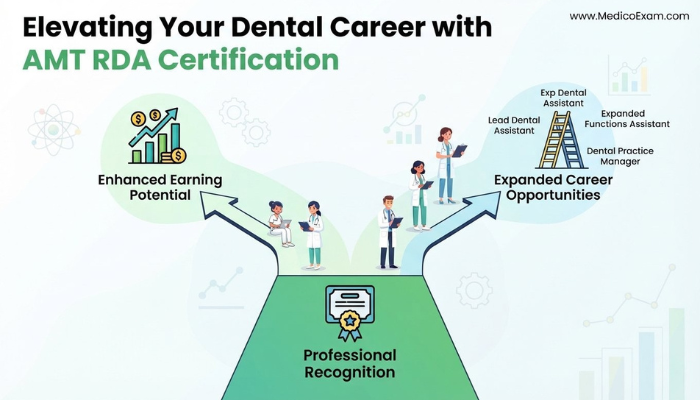
Pursuing the AMT Registered Dental Assistant certification is more than just passing an exam; it is a strategic investment in a professional future. The credential brings a host of tangible and intangible benefits that enhance a dental assistant's career prospects, standing, and overall professional satisfaction. Candidates who achieve this certification position themselves as leaders and highly skilled practitioners within the dental healthcare ecosystem. The commitment to certification reflects a dedication to excellence that resonates with employers and patients alike.
Professional Recognition and Credibility
Holding the AMT RDA credential instantly elevates a professional's standing. It signals to employers, colleagues, and patients a verified level of competence and adherence to national standards of practice. This recognition can open doors to more advanced roles and responsibilities within a dental team. Certification underscores a commitment to ongoing learning and professional development, setting individuals apart in a competitive job market.
Enhanced Earning Potential
Certified dental assistants often command higher salaries compared to their non-certified counterparts. Employers recognize the value of verified skills and knowledge, which can translate into better compensation packages. The investment in the exam fee and study materials is frequently recouped through increased earning potential over time, making it a financially sound career move. Exploring specific AMT RDA certification details can provide further insights into career advantages.
Expanding Career Opportunities
The AMT RDA certification broadens the scope of career opportunities available to dental assistants. It can qualify individuals for roles that require a higher level of autonomy, specialized procedures, or supervisory responsibilities. Certified RDAs may find opportunities in diverse settings, including general dentistry, orthodontics, oral surgery, and public health clinics, offering greater flexibility and choice in their career paths. This expanded reach allows professionals to align their work with their long-term career aspirations.
Strategic Preparation Pathways: An Expert Approach to the RDA Exam
Success on the AMT RDA exam necessitates a structured and discerning approach to preparation, moving beyond generic study habits. An expert-level strategy involves deeply engaging with the content, understanding the exam's nuances, and systematically addressing potential weaknesses. This targeted methodology not only optimizes study time but also builds confidence, preparing candidates for the actual examination environment. Ethical and comprehensive preparation is paramount to achieving a passing score.
Deconstructing the Official Content Outline
The AMT provides a comprehensive content outline that serves as the blueprint for the RDA exam. This document details the topics and sub-topics covered in each domain, along with their respective weightings. A crucial step involves methodically breaking down this outline to identify areas where knowledge is strong and where it needs reinforcement. It is highly recommended to download and meticulously review the detailed content outline directly from the AMT website to ensure alignment with the exam's expectations.
Leveraging Practice Assessments
Practice tests are invaluable tools for familiarizing oneself with the exam format, question types, and time constraints. They help in identifying knowledge gaps and building stamina for the actual test. Regularly taking practice assessments and analyzing performance provides insights into areas requiring further study. Engaging with sample questions allows candidates to gauge their readiness realistically. It is important to treat practice exams seriously, simulating real test conditions as closely as possible.
Developing a Focused Study Plan
A personalized study plan tailored to individual learning styles and schedules is critical. This plan should allocate specific time slots for each content domain, giving more attention to areas with higher weighting or identified weaknesses. Incorporate a variety of study methods, such as reading textbooks, reviewing notes, watching educational videos, and participating in study groups. Consistency and adherence to the plan are key to effective learning and retention. Regularly review progress and adjust the plan as needed.
Achieving Exam Readiness: Beyond Rote Memorization
True exam readiness for the AMT RDA certification extends beyond merely recalling facts; it involves integrating knowledge, applying critical thinking, and managing the pressures of the examination environment. This phase of preparation focuses on refining study techniques, building mental fortitude, and ensuring physical well-being. Candidates must cultivate a state of calm confidence, enabling them to perform optimally when it counts. A holistic approach to readiness covers both cognitive and psychological aspects of test-taking.
Effective Time Management During Study
Efficiently managing study time is crucial for covering the vast amount of material required for the AMT RDA exam. This includes prioritizing topics based on their weight in the exam and personal proficiency. Breaking down large study goals into smaller, manageable tasks can prevent overwhelm and make the process more approachable. Techniques like the Pomodoro Technique or creating a detailed daily schedule can significantly enhance productivity. Regular breaks are also essential to prevent burnout and maintain focus.
Simulating Exam Day Conditions
Practicing under conditions that mimic the actual exam day can significantly reduce anxiety and improve performance. This means setting aside a block of 150 minutes, eliminating distractions, and answering 210 questions without external aid. This simulation helps candidates get accustomed to the pace required and the mental endurance needed. Post-simulation analysis of performance and timing is vital for fine-tuning strategies. Consider reviewing a comprehensive preparation guide for more tips on creating a realistic test environment.
Maintaining Well-being Through Preparation
The journey to certification can be demanding, making self-care an integral part of the preparation strategy. Adequate sleep, a balanced diet, regular exercise, and stress-reduction techniques like meditation are not just beneficial but essential. A well-rested and mentally balanced candidate is far more capable of processing information and performing under pressure. Prioritizing well-being ensures that the mind is sharp and ready to tackle the challenges of the exam. Avoiding the temptation of unreliable "dumps" and focusing on genuine learning protects both integrity and long-term professional growth.
Sustaining Your Credential: AMT RDA Recertification
Earning the AMT Registered Dental Assistant certification is a significant accomplishment, but maintaining it is equally important for long-term career viability and professional growth. Certification validity often depends on ongoing professional development and adherence to recertification requirements set by the American Medical Technologists. This commitment ensures that AMT RDAs remain current with evolving dental practices, technologies, and patient care standards. Recertification is a testament to an individual's dedication to continuous learning and excellence in the dental field.
Typically, recertification involves accumulating a certain number of continuing education (CE) credits within a specified period, often every few years. These credits can be earned through various approved activities, including:
-
Attending Seminars and Workshops: Participating in professional development events focused on dental assisting, dental sciences, or related healthcare topics.
-
Online Courses and Webinars: Completing accredited online learning modules that enhance clinical, administrative, or technical skills.
-
Publishing or Presenting: Contributing to the professional body of knowledge through articles, presentations, or research.
-
Active Membership in Professional Organizations: Engagement with professional dental associations can also contribute to CE requirements.
It is imperative for AMT RDAs to regularly check the official AMT website for the most current recertification policies and guidelines. Proactive planning for continuing education ensures a seamless renewal process and safeguards the invaluable professional credential. Staying abreast of industry advancements is not just a requirement but a professional imperative.
The AMT Registered Dental Assistant certification is a powerful differentiator in the dental healthcare landscape, validating a candidate's comprehensive skills and knowledge. By embracing a strategic and ethical preparation methodology, including a deep dive into the syllabus, rigorous practice, and a commitment to well-being, aspiring RDAs can confidently approach the exam. This credential not only signifies a mastery of essential dental assisting competencies but also unlocks doors to enhanced career opportunities, greater earning potential, and heightened professional recognition. Invest in dedicated study, leverage all available legitimate resources, and approach your examination with a mindset of mastery, ready to embark on a distinguished career.
For those ready to solidify their professional standing and advance their careers in dental assisting, the path to AMT RDA certification offers significant rewards. Equip yourself with the right knowledge and tools. Explore further resources and dental assistant certifications to continue your professional journey and ensure you are prepared for every step.
FAQs
1. What does the AMT Registered Dental Assistant (RDA) certification validate?
The AMT Registered Dental Assistant (RDA) certification validates a dental professional's competency in advanced chairside assisting, administrative tasks, and comprehensive patient care, ensuring adherence to national standards of practice.
2. What is the typical passing score for the AMT RDA exam?
Candidates typically need to achieve a scaled score of 70 (on a 0-100 scale), which approximates 70% accuracy, to pass the AMT RDA examination.
3. How long is the AMT RDA exam duration and how many questions are there?
The AMT RDA exam has a duration of 150 minutes and consists of 210 multiple-choice questions designed to assess various aspects of dental assisting knowledge.
4. What are the main content areas covered in the AMT RDA syllabus?
The main content areas covered include Office Assisting Skills, Dental Sciences, Clinical Procedures, and Dental Imaging, with Dental Sciences holding the largest weight.
5. What are the benefits of obtaining the AMT RDA certification?
Benefits include enhanced professional recognition and credibility, improved earning potential, expanded career opportunities, and a validated demonstration of expertise in the dental assisting field.
- AMT RDA Question Bank |
- AMT RDA Eligibility & Requirements |
- AMT Dental Assistant Practice Test |
- AMT RDA Exam Cost |
- AMT RDA Registration Process |
- AMT Dental Assistant Study Guide |
- AMT RDA Recertification |
- AMT RDA Certification Overview |
- AMT Dental Assistant Syllabus |
- AMT RDA Preparation Time |
- AMT RDA Passing Score |
- AMT RDA Exam Format |
- AMT Dental Assistant Sample Questions |
- AMT RDA Career Opportunities |
- AMT RDA Exam Difficulty


