
BCEN TCRN: Is it your next career game-changer?
The BCEN TCRN (Trauma Certified Registered Nurse) certification stands as a premier credential for registered nurses dedicated to providing expert care to trauma patients across the continuum of care. This specialized certification, offered by the Board of Certification for Emergency Nurses (BCEN), validates a nurse's comprehensive knowledge and critical thinking skills in trauma nursing. Ideal for experienced RNs working in emergency departments, intensive care units, or pre-hospital settings, this article will thoroughly explore the TCRN exam, its requirements, benefits, and effective preparation strategies to help you determine if it's the right step for your professional advancement.
Validating Expertise in Trauma Care
The TCRN certification signifies a nurse's mastery in trauma care, encompassing the full spectrum from injury prevention and initial resuscitation to definitive care and rehabilitation. Achieving this credential demonstrates an advanced understanding of the physiological responses to trauma, multidisciplinary team collaboration, and evidence-based interventions crucial for optimal patient outcomes. It’s a mark of distinction that underscores a commitment to specialized excellence in a high-stakes environment. For more information about the official program, visit the BCEN TCRN official page.
This certification is specifically designed for registered nurses who are actively involved in trauma care and wish to formally validate their specialized knowledge. It applies to professionals in various settings where trauma patients are managed, including:
-
Emergency Departments: Nurses who are often the first point of contact for severely injured patients.
-
Intensive Care Units: Those providing critical care and continuous monitoring for trauma patients.
-
Trauma Units: Specialists in dedicated trauma centers focusing on acute and ongoing trauma management.
-
Flight/Ground Transport: Nurses providing pre-hospital or inter-facility care for trauma patients.
-
Rehabilitation Centers: Nurses supporting the recovery and long-term care of trauma survivors.
Understanding the BCEN TCRN Examination Structure
The BCEN Trauma Certified Registered Nurse (TCRN) examination evaluates a candidate's competency across critical domains of trauma nursing. It is a rigorous assessment designed to ensure certified nurses possess the necessary knowledge to deliver high-quality patient care in diverse trauma scenarios. Understanding its format is crucial for effective preparation.
Here are the key details regarding the TCRN examination:
-
Exam Name: BCEN Trauma Certified Registered Nurse
-
Exam Code: TCRN
-
Exam Duration: Candidates are allotted 180 minutes (3 hours) to complete the examination.
-
Number of Questions: The exam consists of 175 items. Of these, 150 questions are scored, and 25 are unscored pretest items used for future exam development. Only the 150 scored items contribute to the final pass/fail decision.
-
Passing Score: A candidate must correctly answer 96 out of the 150 scored items to achieve a passing result. This translates to approximately 64% accuracy.
-
Exam Price:
-
Initial exam: $380
-
STN member initial exam: $285
-
Military discount: $195
-
Initial exam with BCEN Test Assurance: $450
-
STN member with BCEN Test Assurance: $355
-
Military with BCEN Test Assurance: $265
-
Retest: $200
-
The structured nature of the exam demands not only extensive knowledge but also strategic test-taking skills, including time management to ensure all questions are addressed within the given duration.
Mastering the BCEN TCRN Syllabus Domains
The BCEN TCRN examination is meticulously designed to assess a broad range of knowledge pertinent to trauma nursing across various clinical scenarios and professional practices. A thorough understanding of the syllabus is the foundation for any successful study plan. The content outline ensures that certified nurses are well-versed in all critical aspects of trauma care. For a detailed breakdown, you can refer to the BCEN TCRN exam content outline.
Key Content Areas
The TCRN exam content is divided into specific domains, each representing a crucial area of trauma nursing. Candidates must demonstrate proficiency across all these areas:
-
Clinical Practice: Head and Neck: This domain covers injuries specific to the head and neck region, including assessment, management of intracranial pressure, airway compromise, and spinal precautions.
-
Clinical Practice: Trunk and Pelvis: Focuses on trauma to the chest, abdomen, and pelvis. Topics include pneumothorax, cardiac tamponade, abdominal organ injury, and pelvic fractures, along with associated complications and interventions.
-
Clinical Practice: Musculoskeletal and Wound: Encompasses injuries to bones, joints, soft tissues, and general wound care. This includes fracture management, compartment syndrome, crush injuries, and infection prevention.
-
Special Populations: Addresses the unique considerations and physiological responses to trauma in specific patient groups such as pediatric, geriatric, pregnant, or bariatric patients.
-
Continuum of Care for Trauma: This section examines the patient journey through the entire trauma system, from pre-hospital care and transport to acute resuscitation, critical care, surgical intervention, and rehabilitation.
-
Professional Practice: Covers ethical, legal, and professional issues in trauma nursing, including patient advocacy, scope of practice, cultural competency, quality improvement, and evidence-based practice principles.
Each domain requires not just theoretical knowledge but also the ability to apply critical thinking to complex trauma situations, reflecting real-world clinical practice.
Pathways to BCEN TCRN Eligibility
Aspiring candidates for the BCEN TCRN certification must meet specific eligibility criteria established by the Board of Certification for Emergency Nurses. These requirements ensure that individuals taking the exam possess the foundational education and practical experience necessary for a trauma nursing specialist. Understanding these prerequisites is the first step toward embarking on your certification journey.
Core Requirements for Application
The eligibility criteria for the Trauma Certified Registered Nurse exam are designed to verify a candidate's readiness for the rigorous assessment. While specific details can be found on the official BCEN website, general requirements typically include:
-
Current RN Licensure: Candidates must hold a current, unrestricted Registered Nurse license in the United States or its territories.
-
Clinical Experience: Although there isn't a mandatory minimum number of hours required, BCEN recommends that candidates have at least two years of experience in an emergency care or critical care setting before attempting the TCRN exam. This recommendation is based on the exam's difficulty level and the practical application of trauma knowledge it demands.
-
Continuing Education: While not a direct eligibility requirement for application, ongoing professional development is expected for maintaining a high level of trauma nursing competency.
Meeting these criteria confirms that a candidate has the essential clinical background and professional standing to pursue advanced certification in trauma nursing. It reflects BCEN's commitment to credentialing only highly qualified professionals.
Benefits of Earning Your TCRN Credential
Achieving the BCEN TCRN certification offers a multitude of advantages for registered nurses specializing in trauma care, significantly impacting both individual career trajectories and the quality of patient care. This credential is far more than a simple title; it represents a tangible commitment to excellence and ongoing professional growth within a demanding field.
Professional Growth and Recognition
Obtaining the TCRN credential provides clear professional benefits:
-
Enhanced Professional Credibility: It demonstrates specialized knowledge and expertise in trauma nursing, earning respect from peers, physicians, and employers.
-
Career Advancement Opportunities: Many healthcare institutions prefer or require specialized certifications for leadership roles, trauma coordinator positions, or roles in designated trauma centers.
-
Increased Earning Potential: While varying by region and institution, BCEN TCRN certification salary often reflects the advanced skill set and dedication, potentially leading to higher compensation or bonuses.
-
Commitment to Excellence: The certification signals a dedication to lifelong learning and adherence to the highest standards of trauma care.
Impact on Patient Care and Confidence
Beyond individual career benefits, the TCRN positively influences patient outcomes and a nurse's professional confidence:
-
Improved Patient Outcomes: Certified nurses are equipped with advanced, evidence-based knowledge to make quicker, more effective decisions in critical trauma situations, directly improving patient care and survival rates.
-
Increased Self-Confidence: The rigorous preparation and successful passing of the exam instill a greater sense of confidence in one's abilities to manage complex trauma cases.
-
Advocacy for Best Practices: TCRN-certified nurses often become advocates for implementing and maintaining best practices in their units, contributing to a culture of continuous improvement in trauma care.
-
Networking and Collaboration: Being part of a credentialed community can open doors to professional networks and collaborative opportunities within the trauma care specialty.
The TCRN certification thus serves as a powerful catalyst for both personal professional development and broader advancements in the field of trauma nursing.
Crafting Your BCEN TCRN Preparation Strategy
Successfully passing the BCEN TCRN exam requires a structured and comprehensive preparation strategy. Given the exam's difficulty level and breadth of content, a haphazard approach is unlikely to yield the desired results. A thoughtful plan integrates various study methods, leverages appropriate resources, and focuses on understanding complex concepts rather than rote memorization. Developing a solid study approach is key for any candidate pursuing this credential.
Developing an Effective Study Plan
A well-organized study plan is the cornerstone of effective preparation:
-
Review the Exam Content Outline: Begin by thoroughly examining the official TCRN exam content outline to identify your strengths and weaknesses across all domains. This will help you allocate study time efficiently.
-
Set Realistic Goals: Break down the syllabus into manageable chunks and set daily or weekly study goals. Consistency is more important than cramming.
-
Allocate Time for Each Domain: Dedicate more time to areas where you feel less confident or which carry a higher weight on the exam.
-
Schedule Regular Study Sessions: Establish a consistent study schedule and stick to it, treating study time as a non-negotiable appointment.
Recommended Resources and Study Tools
Leveraging high-quality study materials is vital. Consider incorporating a mix of resources into your preparation:
-
BCEN TCRN Study Guide: Official or highly recommended study guides provide structured content aligned with the exam blueprint. These often include practice questions and explanations.
-
Specialized Textbooks and Journals: Refer to foundational trauma nursing textbooks and current trauma journals to deepen your understanding of specific conditions and interventions.
-
BCEN TCRN Practice Exam Questions: Regularly testing your knowledge with sample questions for BCEN TCRN is crucial. Practice exams help familiarize you with the format, question style, and pacing needed for the actual test.
-
Best BCEN TCRN Prep Course: Enrollment in a reputable BCEN TCRN exam review course can provide structured learning, expert instruction, and peer interaction. These courses often highlight critical concepts and test-taking strategies.
-
Flashcards and Mnemonics: These tools can be highly effective for memorizing key facts, definitions, and complex pathways.
-
Study Groups: Collaborating with peers can provide different perspectives, clarify difficult concepts, and offer motivation.
A multi-faceted approach, combining self-study with structured resources and practice, offers the best chance for success on this challenging certification exam.
Navigating the BCEN TCRN Certification Journey
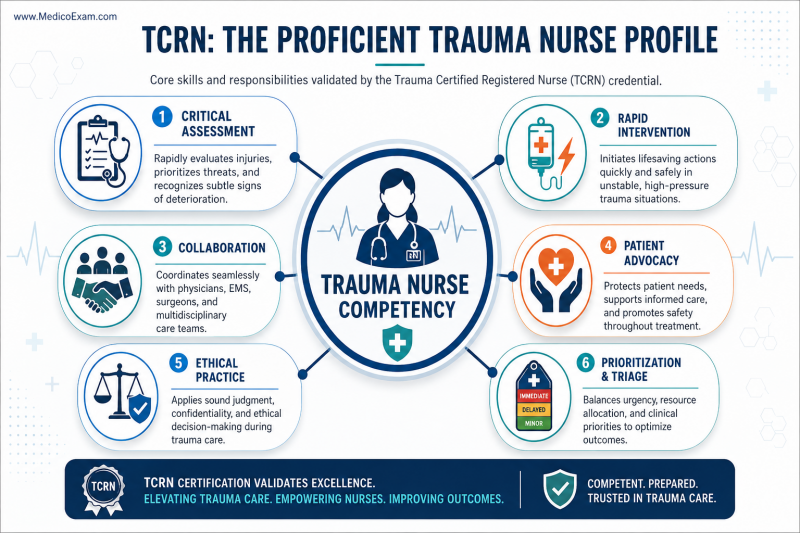
Embarking on the BCEN TCRN certification journey involves more than just studying; it includes understanding the entire process from registration to maintaining your credential. A clear roadmap helps demystify the administrative aspects and ensures you can focus primarily on your preparation.
Understanding the Registration and Testing Process
The BCEN TCRN exam registration process is streamlined to guide candidates through scheduling their examination:
-
Account Creation: Begin by creating an account on the official BCEN website.
-
Eligibility Verification: Ensure you meet all the specified eligibility requirements before applying.
-
Application Submission: Complete the online application and pay the required exam fee.
-
Scheduling the Exam: Once your application is approved, you will receive an Authorization to Test (ATT) and can then schedule your exam at a Pearson VUE testing center of your choice.
-
Retest Policy: If you do not pass, you can retest, typically after a waiting period and payment of the retest fee.
It is always advisable to review the most current BCEN policies regarding registration, cancellations, and retesting on their official website to avoid any surprises.
Maintaining Your TCRN Credential
Certification is not a one-time event; it's an ongoing commitment to professional development. To maintain your Trauma Certified Registered Nurse credential, you will typically need to:
-
Renew Periodically: TCRN certification usually requires renewal every four years.
-
Meet Continuing Education Requirements: Accumulate a certain number of continuing education (CE) hours relevant to trauma nursing.
-
Maintain RN Licensure: Keep your unrestricted Registered Nurse license current.
-
Attest to Practice Hours: Depending on the specific renewal cycle, you might need to attest to a certain number of practice hours in trauma nursing.
Staying informed about renewal requirements is crucial for ensuring your credential remains active and your expertise is continuously recognized in the field.
Investing in Your Trauma Nursing Future
The BCEN TCRN certification represents a significant investment in a nurse's professional future, validating a specialized skill set that is increasingly vital in today's complex healthcare landscape. This credential goes beyond mere academic achievement, signifying a deep commitment to excellence in trauma care and a readiness to tackle the most challenging clinical scenarios. It empowers nurses to elevate their practice, influence patient outcomes, and contribute meaningfully to the advancement of trauma services.
Choosing to pursue the TCRN is a strategic career move for any dedicated trauma nurse, opening doors to enhanced recognition, career progression, and a greater sense of confidence in one's ability to save lives and improve the quality of care for critically injured patients. It’s a testament to professional growth and the pursuit of mastery in a field where every second counts.
Frequently Asked Questions
1. What is the BCEN TCRN certification?
The BCEN TCRN (Trauma Certified Registered Nurse) is a professional certification for registered nurses who specialize in trauma care. It validates advanced knowledge, skills, and critical thinking in managing trauma patients across the entire continuum of care.
2. Who is the BCEN TCRN certification for?
This certification is designed for experienced registered nurses practicing in various trauma settings, including emergency departments, intensive care units, pre-hospital transport, and rehabilitation. It is ideal for those seeking to validate their specialized expertise and enhance their career.
3. How difficult is the BCEN TCRN exam?
The BCEN TCRN exam difficulty level is considered challenging due to its comprehensive scope and emphasis on critical thinking and application of trauma nursing knowledge. It assesses a broad range of clinical practice, special populations, and professional practice domains.
4. What is the typical BCEN TCRN exam pass rate?
BCEN typically publishes exam pass rate statistics annually on its official website. While the exact BCEN TCRN exam pass rate can vary from year to year, it generally reflects the rigorous nature of the exam and the high standards required for certification.
5. Are there any recommended resources for BCEN TCRN exam preparation?
Yes, recommended resources for BCEN TCRN exam preparation include the official BCEN TCRN study guide, specialized trauma nursing textbooks, practice exam questions, and BCEN-approved review courses. These resources help candidates cover the exam content outline comprehensively.
- BCEN TCRN Question Bank |
- BCEN TCRN Eligibility & Requirements |
- BCEN Trauma Registered Nurse Practice Test |
- BCEN TCRN Exam Cost |
- BCEN TCRN Registration Process |
- BCEN Trauma Registered Nurse Study Guide |
- BCEN TCRN Recertification |
- BCEN TCRN Certification Overview |
- BCEN Trauma Registered Nurse Syllabus |
- BCEN TCRN Preparation Time |
- BCEN TCRN Passing Score |
- BCEN TCRN Exam Format |
- BCEN TCRN Exam Difficulty |
- BCEN TCRN Career Opportunities |
- BCEN Trauma Registered Nurse Sample Questions


