
Beyond the Basics: The NREMT EMT Certification Paradigm Shift
The NREMT EMT Certification is a foundational credential validating the critical skills required of Emergency Medical Technicians across the United States. This certification ensures a nationally recognized standard of competence for individuals who provide out-of-hospital emergency medical care and transportation for critically ill and injured patients. The modern EMT role demands not just technical proficiency but also adaptability, critical thinking, and a deep understanding of evolving patient care protocols. This advanced guide delves into the nuances of the NREMT EMT certification, exploring its requirements, examination components, strategic preparation methodologies, and the continuous professional development necessary to thrive in an ever-changing healthcare landscape.
Defining the NREMT EMT Certification's Evolving Role
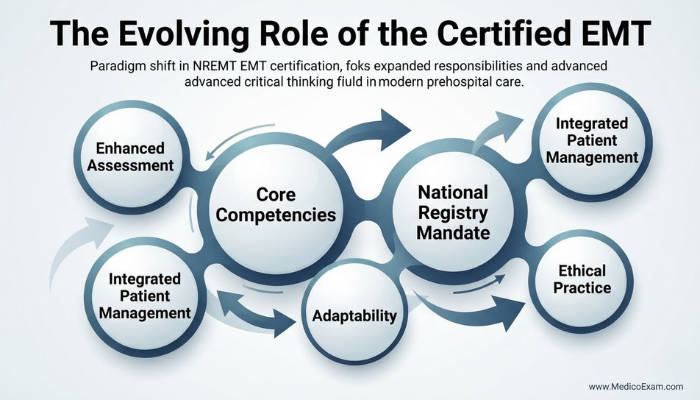
The NREMT Emergency Medical Technicians (EMT) certification stands as a testament to an individual's readiness to perform life-saving interventions and provide essential patient care in diverse emergency settings. This credential signifies adherence to national education standards, ensuring that certified professionals possess a uniform core set of knowledge and skills. As prehospital medicine advances, the NREMT continuously updates its requirements and examination blueprints, reflecting a paradigm shift towards higher critical thinking, enhanced assessment capabilities, and a more integrated approach to patient management. Professionals earning this certification are integral to emergency response systems, often being the first medically trained personnel to arrive on scene.
Core Competencies for Emergency Medical Technicians
Emergency Medical Technicians are expected to master a wide array of skills, ranging from basic life support to assisting with advanced procedures under medical direction. The NREMT EMT certification validates a comprehensive set of competencies crucial for effective prehospital care. These include:
-
Patient Assessment: Rapid and accurate evaluation of a patient's condition, identifying life threats and determining appropriate interventions.
-
Airway Management: Opening and maintaining a patient's airway, including the use of basic airway adjuncts and suctioning techniques.
-
Ventilation: Providing artificial ventilation to patients who are not breathing adequately, often with bag-valve masks.
-
Circulation Management: Controlling external bleeding, recognizing and managing shock, and initiating cardiopulmonary resuscitation (CPR).
-
Pharmacology: Administering certain medications such as aspirin, oral glucose, activated charcoal, and assisting with prescribed inhalers or epinephrine auto-injectors.
-
Trauma Management: Stabilizing fractures, immobilizing spinal injuries, and managing various types of wounds.
-
Medical Emergencies: Recognizing and initiating care for conditions like cardiac arrest, stroke, diabetes emergencies, seizures, and allergic reactions.
-
Special Populations: Adapting care for pediatric, geriatric, and obstetric patients, as well as individuals with special needs.
-
Communication: Effectively conveying patient information to receiving facilities and other healthcare providers, both verbally and through documentation.
These skills are continuously refined through training and field experience, forming the bedrock of an EMT's professional practice.
The Mandate for National Registry Credentialing
The National Registry of Emergency Medical Technicians (NREMT) plays a pivotal role in ensuring that EMTs meet rigorous national standards. This national credentialing process is critical for several reasons, primarily to promote uniformity in EMS education and practice across state lines. Without a national standard, the quality and scope of practice for EMTs could vary drastically, potentially impacting patient outcomes and limiting professional mobility. The NREMT's commitment to continuous review and update of its certification processes ensures that EMTs are equipped with the most current, evidence-based knowledge and skills. This focus on national consistency helps elevate the EMS profession as a whole, fostering trust among the public and within the broader healthcare community.
Dissecting the NREMT Emergency Medical Technicians Exam Structure
The NREMT Emergency Medical Technicians (EMT) certification examination is a comprehensive assessment designed to evaluate a candidate's readiness for entry-level practice. It comprises both a cognitive (knowledge-based) and a psychomotor (skills-based) portion. The cognitive exam is computer-adaptive, dynamically adjusting the difficulty of questions based on a candidate's responses, while the psychomotor exam assesses practical application of critical skills. Understanding the structure, duration, and scoring mechanism is fundamental to effective preparation for this crucial step in becoming a certified EMT. For more detailed information, candidates are encouraged to consult official NREMT certification guidelines directly.
Cognitive Exam Dynamics
The NREMT EMT cognitive examination is a computer-adaptive test (CAT), which means the number of questions and their difficulty level will vary based on how a candidate performs.
-
Number of Questions: The exam ranges from 70 to 120 questions. This variability is a hallmark of CAT, as the system identifies a candidate's competence level with statistical precision.
-
Duration: Candidates are allotted 120 minutes (2 hours) to complete the cognitive exam. This provides ample time for careful consideration of each question.
-
Passing Score: The NREMT uses a scaled score to determine passing status. A score of 950 on a scale of 100 to 1500 is required to pass. This scaled score accounts for the varying difficulty of questions presented during the adaptive testing process.
-
Examination Fee: Each attempt at the cognitive examination incurs a fee of $104. This fee must be paid prior to scheduling an exam.
The cognitive exam covers a wide spectrum of EMT knowledge, designed to ensure candidates possess the foundational understanding necessary for safe and effective patient care.
Psychomotor Exam Components
Beyond theoretical knowledge, the NREMT EMT certification requires demonstration of practical skills. The psychomotor exam evaluates a candidate's ability to perform essential EMT skills in a simulated environment. While specific detailed components are not provided in the inputs, generally, these practical exams involve a series of skill stations where candidates must perform specific tasks, such as:
-
Patient Assessment/Management: Typically a complex scenario involving a medical or trauma patient, requiring a complete assessment and verbalized treatment plan.
-
Basic Airway Management and Ventilation: Demonstrating proper use of airway adjuncts and ventilation techniques.
-
Cardiac Arrest Management (CPR): Performance of high-quality CPR and use of an automated external defibrillator (AED).
-
Spinal Immobilization: Proper technique for immobilizing a patient with suspected spinal injury.
-
Bleeding Control/Shock Management: Demonstrating control of external hemorrhage and management of associated shock.
These stations are overseen by evaluators who assess adherence to NREMT standards and critical criteria. The successful completion of both the cognitive and psychomotor exams is mandatory for certification.
Decoding the NREMT EMT Examination's Thematic Domains
The NREMT EMT cognitive exam is meticulously structured around several key domains, each representing a crucial area of knowledge and skill for Emergency Medical Technicians. Understanding the weighted distribution of these domains provides candidates with a strategic advantage in tailoring their study efforts. The exam blueprint is designed to ensure comprehensive coverage of the responsibilities and challenges an EMT will face in the field. A thorough review of the comprehensive NREMT test plan offers invaluable insights into these areas.
Critical Patient Care Areas
A significant portion of the NREMT EMT exam focuses on direct patient care, reflecting the primary role of an EMT. These domains test a candidate's ability to assess, treat, and manage patients effectively under various emergency conditions.
-
Primary Assessment (39–43%): This is the largest domain, emphasizing the initial rapid evaluation of a patient to identify and manage immediate life threats. It includes assessing mental status, airway, breathing, and circulation (ABCs).
-
Patient Treatment and Transport (20–24%): This section covers the execution of specific interventions, medication administration, and the appropriate transport decisions, including ongoing patient monitoring.
-
Secondary Assessment (5–9%): This domain focuses on the detailed physical exam, vital signs, and patient history gathering once immediate life threats are managed, or in stable patients.
Proficiency in these areas is paramount, as they directly impact patient survival and recovery.
Operational Readiness and Safety
Beyond direct patient interaction, EMTs operate within complex environments, necessitating a strong grasp of operational procedures, safety protocols, and incident management.
-
Scene Size-up and Safety (15–19%): This domain assesses the ability to quickly evaluate an emergency scene, identify potential hazards, and ensure the safety of the EMT, patient, and bystanders. It also includes incident command principles.
-
Operations (10–14%): This section encompasses broader operational aspects, such as effective communication, legal and ethical considerations, mass casualty incident response, and proper documentation.
These domains collectively ensure that an EMT is not only clinically competent but also capable of operating safely and effectively within the broader emergency medical services system.
Navigating NREMT EMT Certification Requirements and Process
Embarking on the path to NREMT EMT certification involves a structured process that begins with meeting specific eligibility requirements and culminates in successful examination performance. Understanding each step, from initial training to the final certification, is crucial for a smooth and efficient journey. This includes recognizing the administrative and financial aspects, such as application procedures, associated fees, and the vital process of certification renewal. Candidates must proactively manage their application and preparation to avoid unnecessary delays or complications.
Eligibility and Application Pathway
Before attempting the NREMT EMT certification exams, aspiring Emergency Medical Technicians must fulfill several prerequisites. While state requirements can vary, the national standards set by NREMT typically include:
-
Completing an Approved Course: Candidates must successfully complete an EMT course that meets or exceeds the National EMS Education Standards and is approved by the State EMS Agency. This course often involves a minimum number of classroom hours and practical rotations.
-
Age Requirement: Candidates must be at least 18 years of age.
-
CPR Certification: Current certification in Basic Life Support (BLS) for Healthcare Providers (or equivalent) is universally required.
-
Psychomotor Competency: Successful completion of a state-approved psychomotor (practical) exam. This can often be integrated into the approved EMT course.
Once these prerequisites are met, candidates can create an account on the NREMT website, submit their application, and pay the examination fee to schedule their cognitive exam. Diligent record-keeping of course completion and certifications is essential for this application phase. For comprehensive preparation beyond the classroom, exploring focused study resources can significantly enhance readiness.
Financial Considerations and Renewal Cycles
Pursuing NREMT EMT certification involves several financial obligations, not just for the initial examination but also for maintaining the credential over time. Budgeting for these costs is an important part of a candidate's planning.
-
Examination Fee: The fee for each attempt at the NREMT EMT cognitive examination is $104. Candidates should prepare for the possibility of multiple attempts if initial success is not achieved.
-
Certification Renewal Fee: Once certified, maintaining NREMT registration requires a biennial renewal. The standard renewal fee is $25.
-
Late Fee: If a certification is allowed to lapse past its expiration date, a late fee of $50 is assessed in addition to the standard renewal fee, totaling $75. This underscores the importance of timely renewal.
Beyond these direct NREMT fees, candidates should also account for costs associated with their EMT course, study materials, and any state-specific licensing fees. Strategic financial planning can alleviate stress during the certification and renewal processes.
Strategic Preparation for the NREMT EMT Cognitive Exam
Achieving success on the NREMT EMT cognitive exam demands more than just rote memorization; it requires a strategic, multi-faceted approach to preparation. Given the computer-adaptive nature of the exam and its wide-ranging domains, candidates must cultivate strong critical thinking skills alongside a deep understanding of core medical concepts. An effective preparation strategy integrates structured study, consistent practice, and the use of high-quality resources to build confidence and competence. This advanced guide provides insights into optimizing your study methods for peak performance.
Developing an Effective Study Plan
A well-structured study plan is the cornerstone of NREMT EMT exam preparation. It helps organize vast amounts of information, prioritizes weak areas, and ensures consistent progress.
-
Content Review: Systematically revisit all major topics covered in your EMT course, using textbooks, lecture notes, and reliable online resources. Focus particularly on high-percentage domains like Primary Assessment and Patient Treatment and Transport.
-
Identify Weaknesses: Utilize practice questions and mock exams to pinpoint areas where your knowledge is less robust. Allocate more study time to these challenging topics.
-
Active Learning: Move beyond passive reading. Engage with the material through methods like teaching concepts to others, creating flashcards, summarizing chapters, or drawing diagrams.
-
Schedule Regular Sessions: Consistency is key. Establish a realistic study schedule that incorporates short, frequent sessions rather than infrequent, lengthy cramming.
-
Breaks and Self-Care: Integrate regular breaks to prevent burnout and ensure information retention. Prioritize adequate sleep, nutrition, and stress management.
A dynamic study plan allows for adjustments based on your learning progress and changing needs.
Maximizing Practice Question Benefits
Practice questions are an indispensable tool for NREMT EMT cognitive exam preparation. They not only test knowledge but also familiarize candidates with the exam format, question styles, and time management.
-
Simulate Exam Conditions: Practice answering questions under timed conditions to build speed and accuracy. This helps reduce exam-day anxiety.
-
Analyze Rationales: Do not just look at whether your answer was right or wrong. Critically review the rationale for both correct and incorrect answers. Understanding *why* an answer is correct or incorrect reinforces learning.
-
Diverse Question Sources: Utilize a variety of practice question sources to expose yourself to different question structures and content emphasis. This includes reputable online platforms that offer practice questions for the NREMT EMT exam, such as MedicoExam, which offers valuable resources designed to help candidates solidify their understanding.
-
Focus on Application: NREMT questions often require applying knowledge to patient scenarios. Practice thinking critically about how concepts translate into real-world decisions.
By thoughtfully engaging with practice questions, candidates can refine their test-taking strategies and deepen their comprehension of complex medical scenarios. Ethical preparation, which relies on genuine study and practice, is the only recommended path to certification.
Leveraging Quality Study Materials
The quality of your study materials can significantly influence your NREMT EMT exam success. Choosing reliable and comprehensive resources is paramount.
-
EMT Textbook: Your primary EMT course textbook should be your foundational resource, offering in-depth coverage of all topics.
-
NREMT Website: The official NREMT website provides the most accurate and up-to-date information regarding exam blueprints, skill sheets, and policies.
-
Reputable Online Platforms: Many online platforms offer practice exams, quizzes, and structured review courses. Ensure these resources are current and align with NREMT standards.
-
Flashcards and Mnemonics: These tools are excellent for memorizing key definitions, drug dosages, and assessment steps.
-
Study Groups: Collaborating with peers can provide different perspectives, clarify difficult concepts, and offer mutual support and accountability.
Combining these diverse resources allows for a holistic and robust preparation strategy, covering both breadth and depth of the NREMT EMT curriculum.
Mastering the NREMT EMT Psychomotor Exam
The NREMT EMT psychomotor exam is a critical hurdle, evaluating a candidate's ability to translate theoretical knowledge into practical, hands-on patient care. Unlike the cognitive exam, this portion demands physical dexterity, adherence to strict protocols, and effective communication under pressure. Mastery of the psychomotor skills stations is not about perfection, but about demonstrating a consistent, safe, and systematic approach to patient assessment and intervention. Success on this exam validates a candidate's readiness to perform essential life-saving tasks in the field.
Practical Skill Station Proficiency
The psychomotor exam typically involves a series of distinct skill stations, each designed to test a specific set of competencies. Achieving proficiency in these stations requires repeated practice and attention to detail.
-
Repetitive Practice: Dedicate significant time to hands-on practice for each skill, preferably with an instructor or experienced EMT providing feedback. Repetition builds muscle memory and confidence.
-
NREMT Skill Sheets: Study and internalize the NREMT's official skill sheets for each station. These sheets outline the exact steps and critical criteria that evaluators will use. Missing a critical step typically results in failure for that station.
-
Verbalization: Many stations require candidates to verbalize their actions, assessments, and treatment plans. Practice articulating your thought process clearly and concisely throughout the scenario.
-
Equipment Familiarity: Become thoroughly familiar with all equipment used in each skill station. Know how to operate a stethoscope, blood pressure cuff, bag-valve mask, cervical collar, and other common EMT tools.
Consistent, focused practice on these core skills is the most direct route to psychomotor exam success.
Scenario-Based Assessment Acumen
Beyond individual skills, the psychomotor exam often includes comprehensive patient assessment/management scenarios that require integrating multiple skills and making critical decisions. This tests a candidate's ability to act as a cohesive healthcare provider.
-
Scenario Simulation: Practice full patient assessment scenarios with classmates or instructors. Work through various medical and trauma presentations.
-
Critical Thinking: Focus on the "why" behind each action. Why are you performing a specific intervention? What are you looking for during an assessment? This demonstrates clinical reasoning.
-
Time Management: Although not strictly timed in the same way as the cognitive exam, efficient patient care requires good time management. Practice performing assessments and interventions smoothly and without unnecessary delays.
-
Communication Skills: Effective communication with the patient (if conscious), partners, and simulated receiving facility personnel is crucial. Practice giving clear patient reports and taking accurate histories.
-
Stress Inoculation: Simulate exam conditions as closely as possible to build resilience to pressure. The ability to perform calmly and methodically under observation is a key aspect of psychomotor exam success.
Developing strong scenario-based assessment acumen ensures that candidates are prepared for the dynamic and unpredictable nature of actual emergency calls.
Beyond Initial Certification: Sustaining NREMT EMT Credentialing
Earning the NREMT EMT certification is a significant milestone, but it marks the beginning, not the end, of a professional journey. Maintaining national registration requires ongoing commitment to education and adherence to renewal requirements. The NREMT's renewal process ensures that certified Emergency Medical Technicians remain current with evolving medical practices, updated protocols, and continued professional development. This sustained credentialing process is vital for ensuring public safety and the continued credibility of the EMS profession.
Understanding Renewal Criteria
To maintain active NREMT EMT certification, individuals must meet specific renewal criteria within their two-year certification cycle. The NREMT offers several pathways for renewal, primarily through continuing education.
-
Biennial Renewal: NREMT EMT certification is valid for two years and must be renewed before its expiration date.
-
Continuing Education (CE) Hours: The most common renewal pathway involves completing a specific number of continuing education hours. These hours typically must cover a broad range of topics relevant to EMT practice, often including distributive (online) and traditional (live) courses.
-
Skills Verification: In some cases, documentation of current competency in specific psychomotor skills, often verified by an approved instructor or medical director, may also be required.
-
No Felony Convictions: Maintain a clean criminal record, free of felony convictions.
-
Current BLS Certification: Hold a current Basic Life Support (BLS) certification for Healthcare Providers.
It is essential for EMTs to regularly check the official NREMT website for the most current and detailed renewal policies to ensure continuous compliance.
Continuing Education Pathways
The NREMT emphasizes continuing education (CE) as the primary mechanism for professional growth and skill maintenance. EMTs have a variety of pathways to acquire the necessary CE hours for renewal.
-
Approved Programs: Many EMS agencies, educational institutions, and professional organizations offer NREMT-approved continuing education programs, workshops, and conferences.
-
Online Modules: Numerous online platforms provide self-paced or live virtual CE modules, offering flexibility for busy professionals.
-
Medical Director Oversight: Participation in quality improvement initiatives, case reviews, or grand rounds under the direction of a medical director can often count towards CE hours.
-
Academic Courses: Relevant college-level courses in health sciences or related fields may also be accepted for CE credit.
-
Instructor-Led Training: Attending or teaching approved EMS-related courses can contribute to CE requirements.
Proactive engagement in continuing education not only facilitates NREMT renewal but also enhances an EMT's clinical expertise, leading to improved patient care and expanded career opportunities. Planning for CE early in the renewal cycle helps avoid last-minute rushing and potential lapse in certification.
Conclusion
The NREMT EMT certification is far more than a simple credential; it represents a commitment to excellence, continuous learning, and life-saving service in the demanding field of emergency medical care. The shift towards higher standards and a more comprehensive assessment paradigm ensures that certified Emergency Medical Technicians are prepared for the complexities of modern prehospital environments. From mastering cognitive knowledge to demonstrating critical psychomotor skills and engaging in ongoing professional development, the journey to becoming and remaining an NREMT EMT is one of dedication and significant impact.
Embarking on this challenging yet rewarding career path requires diligent preparation and access to high-quality study resources. To further your readiness and explore comprehensive preparation materials, visit NREMT EMT exam preparation. Invest in your professional development and solidify your foundation for a impactful career in emergency medicine.
FAQs
What does NREMT EMT certification validate?
The NREMT EMT certification validates an individual's competency to provide basic out-of-hospital emergency medical care and transportation, adhering to nationally recognized education standards for Emergency Medical Technicians.
How long is the NREMT EMT cognitive exam?
The NREMT EMT cognitive exam is a computer-adaptive test with 70 to 120 questions, and candidates are allotted 120 minutes (2 hours) to complete it.
What is the passing score for the NREMT EMT cognitive exam?
Candidates must achieve a scaled score of 950 on a scale of 100 to 1500 to pass the NREMT EMT cognitive examination.
How often do I need to renew my NREMT EMT certification?
NREMT EMT certification must be renewed biennially, meaning every two years, by fulfilling specific continuing education requirements and paying the renewal fee.
What is the purpose of the psychomotor exam for NREMT EMT certification?
The psychomotor exam assesses an EMT candidate's ability to practically apply essential emergency medical skills in simulated scenarios, ensuring they can perform hands-on patient care safely and effectively.
- NREMT EMT Question Bank |
- NREMT EMT Eligibility & Requirements |
- NREMT Emergency Medical Technicians Practice Test |
- NREMT EMT Exam Cost |
- NREMT EMT Registration Process |
- NREMT Emergency Medical Technicians Study Guide |
- NREMT EMT Recertification |
- NREMT EMT Certification Overview |
- NREMT Emergency Medical Technicians Syllabus |
- NREMT EMT Preparation Time |
- NREMT EMT Passing Score |
- NREMT EMT Exam Format |
- NREMT Emergency Medical Technicians Sample Questions |
- NREMT EMT Career Opportunities |
- NREMT EMT Exam Difficulty


