NREMT EMR: Your Launchpad to Lifesaving Careers
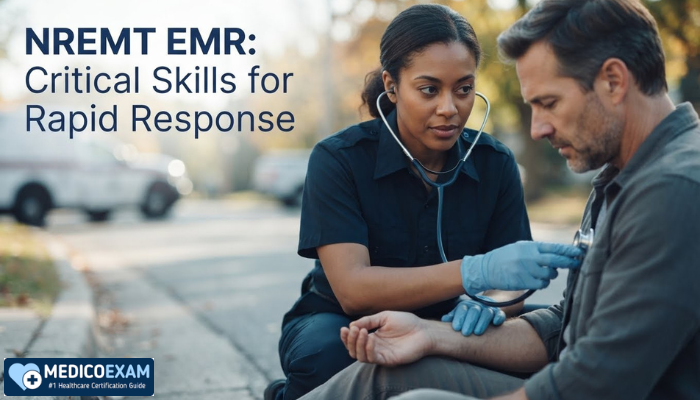
The NREMT Emergency Medical Responders (EMR) certification signifies a foundational level of competency in immediate patient care, equipping individuals with critical skills to provide initial medical assistance in emergencies. This credential, issued by the National Registry of Emergency Medical Technicians (NREMT), validates an individual's readiness to serve as a vital first responder, bridging the gap between an incident and the arrival of advanced medical personnel. Professionals holding the NREMT EMR certification are essential in various settings, from community emergency response teams to industrial safety roles. This article explores the profound benefits, comprehensive preparation strategies, and diverse career opportunities associated with achieving this pivotal certification, guiding aspiring EMRs through their journey.
Grasping the NREMT EMR Certification Specifics
Attaining the NREMT Emergency Medical Responders (EMR) certification opens doors to fulfilling roles where immediate, competent care can mean the difference between life and death. Understanding the foundational elements of this examination is crucial for effective preparation. The NREMT EMR certification assesses a candidate's ability to quickly and effectively respond to medical emergencies, perform initial assessments, and provide stabilizing care until higher-level responders arrive. This initial step in emergency medical services training provides critical hands-on skills and theoretical knowledge necessary for pre-hospital care. For those seeking official details on this entry-level credential, the official NREMT EMR certification details are available directly from the National Registry.
The EMR exam itself is structured to evaluate both cognitive knowledge and practical skills. Candidates must navigate a rigorous assessment process designed to ensure they possess the fundamental capabilities required of an emergency medical responder.
1. Examination Fee: Each attempt for the NREMT EMR examination costs $88, a standard fee ensuring access to the testing facilities and administration.
2. Recertification Fee: Maintaining certification requires a recertification fee of $18, which supports ongoing professional development and continued registration.
3. Late Fee: A late fee of $50 is applied for candidates who miss recertification deadlines, emphasizing the importance of timely renewal.
4. Cognitive Exam Duration: Candidates are allotted 105 minutes to complete the cognitive portion of the exam, providing sufficient time to process and respond to questions.
5. Number of Questions: The cognitive exam consists of 90-110 questions, designed to comprehensively test knowledge across all core EMR domains.
6. Passing Score: A scaled score of 950 on a range from 100 to 1500 is required to pass the cognitive exam, reflecting a robust standard of competency.
This structured approach ensures that all certified EMRs meet a consistent national benchmark for emergency response, promoting public safety and confidence in their abilities.
Key Domains of the NREMT Emergency Medical Responders Exam
The NREMT EMR exam comprehensively evaluates a candidate's mastery across several critical domains of emergency medical response. Each section is weighted to reflect its importance in real-world scenarios, ensuring that certified individuals are well-rounded and proficient in all aspects of immediate patient care. Effective preparation necessitates a focused review of these core areas to maximize success on the examination. Understanding the distribution of questions and topics allows aspiring EMRs to tailor their study plans efficiently. The official EMR test plan provides a detailed breakdown of these critical areas.
The NREMT EMR examination syllabus is divided into five primary sections, each with a specific percentage of the total questions:
-
Scene Size-up and Safety (19–23%): This domain emphasizes the crucial initial steps upon arriving at an emergency scene. It covers recognizing hazards, ensuring personal and patient safety, identifying the mechanism of injury or nature of illness, and determining the need for additional resources. A strong understanding here is paramount for protecting oneself and others while initiating care.
-
Primary Assessment (37–41%): The largest portion of the exam, this section focuses on the rapid identification and management of immediate life threats. Topics include assessing the patient's airway, breathing, and circulation (ABCs), determining the patient's level of consciousness, and prioritizing critical interventions. Proficiency in primary assessment is foundational for effective emergency care.
-
Secondary Assessment (4–8%): While a smaller percentage, secondary assessment involves a more detailed examination of the patient after immediate life threats have been addressed. This includes taking vital signs, performing a head-to-toe assessment for trauma patients or a focused physical exam for medical patients, and gathering a comprehensive patient history.
-
Patient Treatment and Transport (20–24%): This domain covers the practical interventions and decisions made during patient care and preparation for transport. It includes managing wounds, fractures, medical emergencies, and ensuring appropriate packaging and movement of the patient. The EMR's role in stabilizing the patient for transfer to advanced care is central here.
-
Operations (10–14%): This section addresses the broader operational aspects of being an EMR. It encompasses communication protocols, documentation, incident command principles, mass casualty incident management, and ethical and legal considerations. Understanding operations ensures EMRs can function effectively within the larger emergency medical services system.
Mastery of these domains prepares candidates not only for the exam but also for the multifaceted demands of real-world emergency response, making them invaluable assets in any emergency scenario.
Upholding Lifesaving Responsibilities as an EMR
The role of an Emergency Medical Responder is critical in the chain of survival, often serving as the first trained professional on the scene. EMRs perform essential duties that can stabilize patients and improve outcomes before the arrival of higher-level medical personnel. These responsibilities extend beyond basic first aid, encompassing a range of assessments and interventions that demand both technical skill and calm decision-making under pressure. A proficient NREMT EMR is capable of managing diverse emergency situations, from minor injuries to severe trauma and medical crises.
Key responsibilities and capabilities validated by the NREMT EMR certification include:
-
Scene Safety and Hazard Identification: EMRs are trained to quickly assess an emergency environment, identify potential dangers, and take steps to ensure the safety of themselves, the patient, and bystanders. This proactive approach prevents further injury and allows for safe patient access.
-
Patient Assessment: Performing both primary and secondary assessments to rapidly identify life-threatening conditions and thoroughly evaluate the patient's status. This involves checking vital signs, assessing consciousness, and conducting focused physical examinations based on the patient's presentation.
-
Basic Life Support (BLS): Providing fundamental life support interventions such as CPR, foreign body airway obstruction management, and the use of automated external defibrillators (AEDs). These skills are often the most crucial in saving lives during cardiac arrest or severe respiratory distress.
-
Trauma Management: Addressing injuries such as bleeding, fractures, burns, and spinal immobilization. EMRs apply appropriate splinting, bandaging, and stabilization techniques to minimize further harm and prepare the patient for transport.
-
Medical Emergency Care: Recognizing and providing initial care for common medical emergencies, including diabetic emergencies, allergic reactions, seizures, and environmental emergencies (heat stroke, hypothermia). This often involves assisting patients with their prescribed medications or administering basic interventions.
-
Assisting Higher-Level Providers: Effectively communicating patient information, assisting EMTs and paramedics with advanced procedures, and seamlessly transferring patient care to more advanced medical personnel. This collaborative effort ensures continuity of care.
-
Effective Communication and Documentation: Maintaining clear and concise communication with dispatch, other responders, and medical staff. Accurate documentation of patient findings, interventions, and transport details is also a core responsibility.
These responsibilities collectively form the backbone of emergency medical response, making the NREMT EMR an indispensable link in the pre-hospital care system.
Propelling Career Opportunities with NREMT EMR
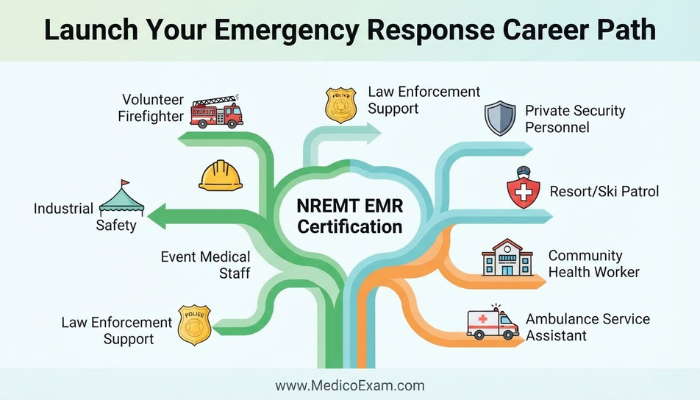
Achieving NREMT EMR certification is more than just passing an exam; it's an investment in a future dedicated to service and rapid response. This entry-level credential serves as a powerful stepping stone, opening doors to a variety of impactful career paths and volunteer opportunities across diverse sectors. For individuals passionate about helping others and making a tangible difference in critical moments, the EMR certification provides the foundational skills and recognition necessary to start. The demand for qualified emergency responders remains consistently high, reflecting the universal need for immediate medical assistance.
The NREMT EMR certification can launch careers in roles such as:
-
Volunteer Firefighter/First Responder: Many fire departments rely on EMR-certified volunteers to provide initial patient care at fire scenes, accidents, and other emergencies. This is a common entry point for those looking to serve their community.
-
Industrial and Construction Site First Aid/Safety Officer: Large industrial facilities, construction sites, and remote work environments often require on-site medical responders. EMRs can provide immediate care for workplace injuries and ensure safety compliance.
-
Event Medical Staff: Concerts, sporting events, festivals, and other large gatherings often employ EMRs to respond to medical incidents among attendees and participants, offering immediate assistance.
-
Emergency Room Technician Assistant: In some hospital settings, EMRs may work under the supervision of nurses and physicians, assisting with basic patient care, vital signs, and transport within the emergency department.
-
Law Enforcement Support: Certain police or sheriff's departments may utilize EMR-trained officers or civilian support staff to enhance their response capabilities in medical emergencies.
-
Ski Patrol/Wilderness Responder: In recreational and outdoor environments, EMRs with additional specialized training can provide critical care in remote or challenging terrain.
-
Security Services with Medical Responsibilities: Some security roles, particularly in high-risk or public-facing environments, include a medical response component for which EMR certification is highly valued.
Beyond these specific roles, the EMR credential fosters transferable skills such as critical thinking, problem-solving under pressure, communication, and teamwork, which are valuable in any professional setting. It also serves as an excellent foundation for those aspiring to advance to higher levels of EMS certification, such as EMT or Paramedic.
Crafting a Winning NREMT EMR Exam Preparation Strategy
Effective preparation for the NREMT EMR exam requires a structured and dedicated approach that goes beyond simply memorizing facts. To truly excel, candidates must integrate theoretical knowledge with practical application, understanding the 'why' behind each medical intervention. A comprehensive study plan addresses both the cognitive and psychomotor components of the exam, building confidence and competence. Success hinges on consistent effort, smart resource utilization, and strategic practice, ensuring readiness for the diverse challenges presented on test day.
Reviewing Core Knowledge Areas
Start your preparation by systematically reviewing all core content areas specified in the NREMT EMR syllabus. Break down complex topics into manageable segments. Focus heavily on areas like primary patient assessment and scene safety, which carry significant weight in the exam. Utilize textbooks, online courses, and detailed study guides to reinforce foundational concepts.
-
Textbook Engagement: Work through a reputable EMR textbook, focusing on understanding the underlying principles of each medical and trauma emergency.
-
Online Course Utilization: Enroll in an accredited NREMT EMR course, whether in-person or online, which typically follows the national curriculum and provides structured learning.
-
Concept Mapping: Create visual aids like flowcharts or concept maps to connect related ideas and improve recall, particularly for assessment algorithms and treatment protocols.
Implementing Active Learning Techniques
Passive reading alone is often insufficient for NREMT EMR exam success. Engage with the material actively through various methods. This includes summarizing information in your own words, teaching concepts to others, and creating flashcards for key terms, definitions, and acronyms. Active learning helps solidify understanding and improves long-term retention.
Practice Question Focus: Regularly attempt in-depth NREMT EMR resources to test your comprehension and identify knowledge gaps. Analyze incorrect answers to learn from mistakes rather than just moving on. This iterative process refines your understanding and familiarizes you with the exam's question style.
Mastering Practical Skills with Confidence
The practical component of the NREMT EMR exam, known as the psychomotor exam, assesses your hands-on ability to perform critical emergency medical skills. This portion is just as vital as the cognitive exam and requires dedicated practice to ensure fluid and accurate execution. Focus on perfecting the sequence and rationale behind each skill station.
Skills Station Practice: Practice each skill station repeatedly until muscle memory develops. This includes patient assessment, bleeding control, splinting, CPR, and using an AED. Seek feedback from instructors or experienced EMRs to refine your technique and adherence to NREMT standards.
Simulating Exam Conditions
To reduce test-day anxiety and familiarize yourself with the exam environment, conduct full-length practice tests under timed conditions. This helps you manage your time effectively and build endurance for the cognitive exam's duration. Similarly, rehearse practical scenarios to simulate the pressure of the psychomotor exam.
Timed Practice Exams: Take NREMT EMR practice exam questions that mimic the official exam's format and length. Pay attention to your pacing and accuracy. Review areas where you consistently struggle and integrate them into your ongoing study plan.
Excelling in the NREMT EMR Cognitive Assessment
The NREMT EMR cognitive exam is a computer-adaptive test (CAT) designed to precisely measure a candidate’s knowledge and decision-making abilities. Unlike traditional fixed-form exams, a CAT adjusts the difficulty of questions based on your performance, ensuring a highly accurate assessment of your competency. This format demands consistent attention and a deep understanding across all content areas, as each question directly influences the next. Preparing for this dynamic assessment requires not only content mastery but also an awareness of the testing methodology.
Understanding the Adaptive Nature of the Exam
The NREMT EMR cognitive exam uses a computer-adaptive format, meaning that the difficulty of subsequent questions is determined by your performance on previous ones. If you answer a question correctly, the system typically presents a slightly more difficult question. Conversely, an incorrect answer might lead to an easier question. The exam continues until the system is 95% confident that your ability is either above or below the passing standard. This adaptive structure means that no two test-takers will receive the exact same set of questions, making comprehensive preparation essential. The total number of questions can range from 90 to 110, and the duration is 105 minutes. A scaled score of 950 out of 100-1500 is required to pass.
Approaching Questions Strategically
Given the adaptive nature, every question holds significance. Read each question and all answer choices thoroughly before making a selection. Avoid rushing, but also don't dwell excessively on a single question. If a question seems particularly challenging, break it down, identify keywords, and eliminate obviously incorrect options. Many questions will test your ability to apply knowledge to realistic patient scenarios, requiring critical thinking rather than simple recall.
Focus on Patient-Centered Care: Most questions will revolve around patient care. When faced with multiple plausible answers, always prioritize the intervention that ensures patient safety and addresses immediate life threats first. Think like an EMR on the scene, considering the immediate actions required for the best patient outcome.
Managing Test Anxiety and Maintaining Focus
Test anxiety can significantly impact performance. Develop strategies to manage stress, such as deep breathing exercises, positive self-talk, and ensuring you get adequate rest before the exam. Familiarizing yourself with the test center environment beforehand can also help reduce apprehension. On test day, focus on one question at a time and maintain a steady pace, trusting in your preparation.
Time Management: While the exam is adaptive, you still have a time limit. Practice pacing yourself during preparation. If you encounter a very difficult question, make your best educated guess and move on, rather than letting it consume too much time. Remember, the system will continue to adjust.
Achieving Success on the NREMT EMR Practical Exam
Beyond theoretical knowledge, the NREMT EMR certification demands demonstrated proficiency in critical hands-on skills through its psychomotor, or practical, examination. This component assesses your ability to perform a series of simulated emergency scenarios and individual skill stations, ensuring you can translate classroom learning into effective, real-world action. Success in the practical exam requires meticulous preparation, repeated practice, and adherence to specific performance criteria established by the NREMT. It's a test of precision, sequence, and calm execution under pressure.
Deconstructing the Psychomotor Exam Stations
The NREMT EMR psychomotor exam typically involves a series of stations designed to evaluate distinct skills. These often include:
-
Patient Assessment/Management (Medical): Demonstrating the ability to assess a medical patient, identify key complaints, gather history, and manage life threats appropriately.
-
Patient Assessment/Management (Trauma): Performing a systematic assessment of a trauma patient, identifying injuries, controlling bleeding, and stabilizing the patient.
-
Bag-Valve Mask (BVM) Ventilation of an Apneic Patient: Accurately ventilating a non-breathing patient using a BVM device.
-
Cardiac Arrest Management/AED: Demonstrating the steps of CPR and the correct application and operation of an Automated External Defibrillator.
-
Bleeding Control/Shock Management: Identifying severe bleeding and applying direct pressure, tourniquets, or hemostatic dressings while also managing for shock.
-
Spinal Immobilization (Supine or Seated Patient): Correctly immobilizing a patient with suspected spinal injuries using appropriate equipment and techniques.
-
Joint Immobilization or Long Bone Immobilization: Applying proper splinting techniques for fractures or dislocations.
-
Skill Scenarios: These may combine multiple skills within a single patient presentation, requiring integrated decision-making.
Each station has a specific critical criteria list that must be met to pass. Failing even one critical criterion often results in failing the entire station, regardless of how well other steps were performed.
Strategies for Hands-On Practice
Consistent, deliberate practice is the cornerstone of psychomotor exam success. Work with instructors, peers, or mentors to set up realistic scenarios. Focus not just on completing a step, but on understanding its rationale and timing.
-
Repetition and Muscle Memory: Practice each skill until it becomes second nature. Repetition builds muscle memory, allowing you to perform under stress.
-
Verbalization: For many stations, you are expected to verbalize your assessment findings, interventions, and patient reassessments. Practice speaking clearly and confidently while performing tasks.
-
Equipment Familiarity: Become intimately familiar with all equipment you might use (BVMs, AEDs, splints, bandages, spinal immobilization devices). Know where everything is, how it works, and how to troubleshoot.
-
Scenario-Based Learning: Engage in mock scenarios that integrate multiple skills. This helps develop critical thinking and decision-making within a dynamic environment.
Maintaining Professionalism and Communication
Beyond technical skills, the practical exam also assesses your professionalism, communication skills, and ability to work as part of a team (even if your "team" is a simulated assistant). Clear communication with your patient (even a mannequin), your "partner," and the evaluators is essential. Approach each station calmly, listen carefully to instructions, and ask clarifying questions if needed. A confident, professional demeanor can positively influence your performance.
Receiving Feedback: Actively seek constructive criticism during practice sessions. Be open to feedback and use it to refine your techniques and improve areas of weakness. This iterative process is crucial for mastering the required skills.
Ensuring Continued Competency: NREMT EMR Recertification
Maintaining NREMT EMR certification is a testament to an individual's ongoing commitment to professional excellence and patient safety. Recertification ensures that Emergency Medical Responders remain current with the latest medical protocols, advancements in emergency care, and essential skill maintenance. It’s a vital process that reinforces the public's trust in certified professionals and upholds the high standards set by the National Registry. Neglecting this process can lead to lapse in certification, necessitating re-examination. The recertification fee is $18, with a late fee of $50 emphasizing timely renewal.
The NREMT outlines specific requirements for EMR recertification, typically involving a combination of continuing education (CE) hours and skills verification. These requirements ensure that certified individuals continuously update their knowledge and maintain proficiency in hands-on skills.
Common elements of the recertification process include:
-
Continuing Education (CE) Hours: EMRs are required to complete a certain number of continuing education hours within their certification cycle. These hours can often be acquired through various approved courses, workshops, seminars, and online modules covering relevant emergency medical topics.
-
Skills Verification: While typically not requiring a full psychomotor exam for recertification, EMRs often need to demonstrate competency in critical skills. This may involve practical skills sessions or attestations from qualified instructors or medical directors confirming proficiency in areas like CPR, patient assessment, and trauma management.
-
Application Submission: Submitting a completed recertification application through the NREMT online portal, along with all supporting documentation for continuing education and skills verification.
-
Payment of Fees: Paying the required recertification fee, and any late fees if applicable, to finalize the renewal process.
It is crucial for EMRs to track their continuing education hours throughout their certification period and be aware of their expiration date to avoid any lapse. Proactive planning and engagement with professional development opportunities are key to a smooth recertification experience. Many state EMS offices may have additional requirements beyond the NREMT, so always check local guidelines.
Conclusion: Your Commitment to Emergency Response
The NREMT EMR certification is far more than a credential; it's a profound commitment to saving lives and serving communities. It equips individuals with the fundamental knowledge and practical skills to act as immediate, competent medical responders, forming the crucial first link in the chain of survival. From providing basic life support to assisting higher-level professionals, NREMT EMRs play an indispensable role in emergencies, demonstrating valor and critical thinking under pressure. This certification not only validates essential capabilities but also opens a dynamic array of career opportunities, empowering individuals to make a tangible, positive impact when it matters most.
Embarking on this journey signifies your dedication to public safety and personal growth. The preparation is rigorous, but the rewards are immeasurable, offering a sense of purpose and the ability to truly make a difference. If you're ready to take this vital step towards a fulfilling career in emergency medical response, exploring advanced study tools and practice exams can provide the edge you need for success. Discover comprehensive preparation materials and elevate your readiness. Begin your path to becoming a certified Emergency Medical Responder today and join the ranks of those who stand ready to help in moments of crisis.
For more information and to prepare for your exam, explore the advanced study tools and practice exams available at MedicoExam's dedicated EMR section.
FAQs
1. What does NREMT EMR certification validate?
The NREMT EMR certification validates an individual's foundational competency in providing immediate, life-saving medical assistance as a first responder. It ensures they possess the essential skills for scene safety, patient assessment, and basic interventions before advanced medical personnel arrive.
2. Who should consider pursuing NREMT EMR certification?
Individuals who are interested in becoming the first line of medical response, such as volunteer firefighters, law enforcement officers, industrial safety officers, or those looking to begin a career path in emergency medical services, should consider this certification.
3. How long does the NREMT EMR cognitive exam last, and how many questions are there?
The NREMT EMR cognitive exam typically lasts for 105 minutes and consists of 90-110 questions, which are delivered in a computer-adaptive format.
4. What is the passing score for the NREMT EMR cognitive exam?
Candidates must achieve a scaled score of 950 on a range of 100 to 1500 to pass the NREMT EMR cognitive examination.
5. What are the key areas covered in the NREMT EMR practical exam?
The NREMT EMR practical exam, also known as the psychomotor exam, covers core hands-on skills such as patient assessment (medical and trauma), basic life support interventions (e.g., BVM ventilation, AED use), bleeding control, and spinal or extremity immobilization.
- NREMT EMR Question Bank |
- NREMT EMR Eligibility & Requirements |
- NREMT Emergency Medical Responders Practice Test |
- NREMT EMR Exam Cost |
- NREMT EMR Registration Process |
- NREMT Emergency Medical Responders Study Guide |
- NREMT EMR Recertification |
- NREMT EMR Certification Overview |
- NREMT Emergency Medical Responders Syllabus |
- NREMT EMR Preparation Time |
- NREMT EMR Passing Score |
- NREMT EMR Exam Format |
- NREMT Emergency Medical Responders Sample Questions |
- NREMT EMR Career Opportunities |
- NREMT EMR Exam Difficulty


