
The NCC NNP-BC Isn't Scary: A True Beginner's Guide

The NCC NNP-BC (Neonatal Nurse Practitioner – Board Certified) credential signifies a specialized level of expertise for advanced practice registered nurses (APRNs) dedicated to caring for high-risk neonates. This board certification, offered by the National Certification Corporation (NCC), is a critical step for NNPs seeking to validate their in-depth knowledge and clinical competence in the demanding field of neonatal intensive care. It is ideal for experienced registered nurses who have completed a graduate-level NNP program and are ready to demonstrate mastery, ultimately improving outcomes for vulnerable newborns and their families. This guide aims to demystify the NCC NNP-BC process, offering a simple, friendly, and supportive roadmap for beginners contemplating this significant professional advancement, covering everything from eligibility to successful exam strategies.
Understanding the NCC NNP-BC Credential
Achieving the NCC NNP-BC certification marks a pivotal professional milestone, demonstrating a profound commitment to excellence in neonatal care. This board certification validates a Neonatal Nurse Practitioner's advanced knowledge and clinical judgment necessary to manage the complex health needs of neonates, from critically ill infants requiring intensive care to those needing specialized follow-up after discharge. It sets a recognized standard of proficiency, ensuring that certified individuals possess the foundational and specialized expertise required for this demanding role. Beyond basic licensure, it acts as a robust indicator of a practitioner's dedication to continuous learning and adherence to the highest professional standards, making it highly valued by employers and healthcare institutions.
The credentialing process with NCC is designed to objectively assess a candidate's readiness to provide comprehensive, evidence-based care in diverse neonatal settings. It goes beyond mere theoretical knowledge, delving into practical application and critical decision-making skills. For employers, it's a key indicator of a practitioner's qualifications, often preferred or even required for advanced NNP positions, particularly in high-acuity environments. For patients and their families, the NNP-BC designation offers reassurance that their care providers are not just experienced, but also formally recognized as experts in their highly specialized field, capable of navigating complex medical scenarios with precision and compassion.
What the Certification Verifies
The NCC NNP-BC certification confirms a Neonatal Nurse Practitioner's ability to perform a broad spectrum of responsibilities with confidence and competence. This encompasses everything from initial comprehensive assessment and accurate diagnosis to the development, implementation, and evaluation of holistic treatment plans for neonates across various acuity levels. It underscores proficiency in managing acute and chronic conditions, performing advanced diagnostic and therapeutic procedures, and collaborating effectively within intricate multidisciplinary teams, including neonatologists, residents, nurses, and allied health professionals. This comprehensive skill set is vital for providing integrated, patient-centered care.
Crucially, the certification verifies an NNP's deep understanding of the latest evidence-based practices, clinical guidelines, and technological advancements specific to neonatal care. This includes an advanced grasp of neonatal pharmacology, complex pathophysiology, developmental care principles, fluid and electrolyte management, nutritional support, and the unique ethical considerations inherent in caring for this vulnerable patient population. Through a rigorous and standardized examination process, the NCC ensures that certified NNPs are not only knowledgeable but also equipped to handle the unique challenges and rapidly evolving complexities inherent in caring for newborns, particularly those facing critical illness or extreme prematurity.
The Role of Board Certification in Advanced Practice
For Advanced Practice Registered Nurses (APRNs), board certification like the NCC NNP-BC is more than just an optional credential; it's an affirmation of specialized knowledge and adherence to national practice standards. It delineates a clear pathway for professional growth and specialization within nursing, distinguishing NNPs who have demonstrated a higher level of expertise. This formal recognition supports the role of NNPs in leading clinical initiatives, contributing to policy development, and serving as mentors for junior staff. The certification process encourages continuous professional development, ensuring that practitioners remain at the forefront of neonatal science and practice. It empowers NNPs to function autonomously and collaboratively, taking on greater responsibilities in assessment, diagnosis, and management, thereby expanding their scope of practice and contributing significantly to healthcare delivery.
Qualifying for NNP-BC Certification
Before aspiring Neonatal Nurse Practitioners can sit for the NCC NNP-BC exam, they must meet specific eligibility criteria established by the National Certification Corporation. These requirements are thoughtfully structured to ensure that all candidates possess the foundational education, comprehensive clinical experience, and appropriate professional licensure necessary to practice at an advanced level within the demanding field of neonatal care. Understanding these prerequisites in detail is the first critical step on your journey toward becoming board certified and validating your expertise.
While precise details should always be confirmed through the official NCC candidate guide—as criteria can be updated—general requirements typically include holding an active, unencumbered Registered Nurse (RN) license in the United States or Canada. This ensures a baseline professional standing. Additionally, candidates must have completed a master's or doctoral degree from an accredited Neonatal Nurse Practitioner program. This rigorous educational background provides the advanced theoretical knowledge, evidence-based reasoning, and extensive clinical training essential for assuming the complex and high-stakes responsibilities inherent in the NNP role.
Navigating Educational Prerequisites
The cornerstone of NNP-BC eligibility is the successful completion of an approved graduate-level NNP program. This program must be accredited by a recognized nursing education accrediting body, such as the Accreditation Commission for Education in Nursing (ACEN) or the Commission on Collegiate Nursing Education (CCNE), and specifically focus on neonatal care. The curriculum typically covers advanced concepts in physiology, pathophysiology, advanced pharmacology, comprehensive health assessment, diagnostic reasoning, and clinical management tailored specifically to the neonatal population, including preterm, term, and critically ill infants.
Clinical hours accumulated during this graduate program are an indispensable component, providing hands-on experience under the direct guidance and supervision of experienced NNP preceptors and neonatologists. These hours are critical for translating theoretical knowledge into practical, real-world clinical competence. It's absolutely vital for prospective candidates to diligently verify that their academic institution and specific NNP program meet the National Certification Corporation's rigorous accreditation standards. Any discrepancies or unapproved programs could significantly delay or, in some cases, entirely prevent eligibility for the certification exam. Early and thorough verification can save considerable time, effort, and potential frustration in the long run. For the most precise and up-to-date eligibility details, including a comprehensive list of recognized programs and specific hour requirements, candidates are strongly advised to consult the official NCC candidate guide available directly on their website.
Clinical Experience and Licensure Considerations
Beyond academic preparation, practical experience is often a crucial component of NNP-BC eligibility. While the graduate program provides structured clinical hours, some certification pathways or state licensure boards may also require a certain period of post-graduation NNP practice. It's essential to understand the interplay between your NNP program's clinical requirements, your state's APRN licensure requirements, and the NCC's specific eligibility criteria. Maintaining an active, unencumbered RN license, and subsequently, your APRN license in good standing, is non-negotiable throughout the application and certification maintenance process. Any disciplinary actions or issues with licensure could jeopardize your ability to sit for the exam or maintain your certification. Therefore, continuous adherence to professional and legal standards of nursing practice is paramount for all aspiring and certified Neonatal Nurse Practitioners.
Realizing the Value of NNP-BC Certification
Pursuing and ultimately achieving the NCC NNP-BC certification offers a multitude of tangible and intangible benefits that significantly impact a Neonatal Nurse Practitioner's career trajectory, professional standing, and, most importantly, their ability to provide superior patient care. It’s an investment in your future that yields substantial returns, reinforcing your expertise and unwavering commitment to the specialized and critically important field of neonatology. This credential goes far beyond a simple title; it's a testament to your advanced skills, profound knowledge, and dedication to excellence.
One of the most immediate and impactful advantages is significantly enhanced professional recognition and undeniable credibility within the healthcare community. Hospitals, academic medical centers, and various healthcare systems increasingly value and frequently require board certification for advanced practice roles, particularly in high-acuity specialties like neonatal intensive care. The NNP-BC designation prominently signals to employers, esteemed colleagues, and the families of patients that you meet rigorous national standards for competence, clinical judgment, and excellence, thereby differentiating you considerably in a competitive job market. This enhanced recognition can open previously inaccessible doors to more advanced and specialized clinical roles, significant leadership opportunities, and prestigious academic positions within top-tier neonatal units and institutions.
Elevating Patient Outcomes
At the very heart of NNP-BC certification is its profound and direct impact on patient care. Certified Neonatal Nurse Practitioners are equipped with a validated, comprehensive skill set that translates directly into demonstrably improved outcomes for their tiny, often critically ill, patients. Their deep expertise in complex assessment, precise diagnosis, and sophisticated management of diverse neonatal conditions ensures that the most vulnerable infants receive the highest standard of evidence-based, compassionate care. This includes proficiency in recognizing subtle changes in neonates, initiating rapid interventions, and skillfully managing complex pharmacological regimens.
This unwavering commitment to excellence through rigorous certification fosters a vital culture of continuous quality improvement within neonatal intensive care units (NICUs). NNPs who achieve board certification actively contribute to safer patient environments, the development and implementation of more effective treatment protocols, and ultimately, better short-term and long-term health trajectories for newborns facing critical health challenges. The advanced knowledge gained and meticulously validated through the intensive certification process directly enhances their ability to make critical, often life-saving, decisions under immense pressure, thereby significantly reducing morbidity and mortality rates among their patient population.
Advancing Your Professional Journey
Beyond the immediate and profound impact on patient care, the NNP-BC certification provides a significant and lasting boost to a Neonatal Nurse Practitioner’s entire career. Many progressive institutions offer attractive salary differentials, sign-on bonuses, or performance-based incentives for certified nurses, recognizing the substantial added value and specialized expertise they bring to the healthcare team. This directly translates to increased earning potential over your professional lifespan. Furthermore, board certification frequently serves as a mandatory prerequisite for certain leadership roles, allowing NNPs to influence practice guidelines, participate in clinical research, and serve as invaluable mentors for newer practitioners and students, shaping the future of neonatal nursing.
The intensive process of preparing for the NNP-BC exam itself is a powerful and transformative learning experience. It rigorously solidifies existing knowledge, identifies and fills any potential knowledge gaps, and deepens understanding across all critical domains of neonatal care—from advanced physiology and genetic considerations to developmental support and ethical decision-making. This comprehensive preparation empowers NNPs to confidently tackle the most complex cases, contribute meaningfully to groundbreaking research, and vigorously advocate for best practices in their highly specialized field, truly advancing not just their own careers but the entire profession of neonatal nursing. Exploring the full spectrum of career advantages offered by this credential can be a powerful motivator for aspiring NNPs.
Developing Your NNP-BC Study Strategy
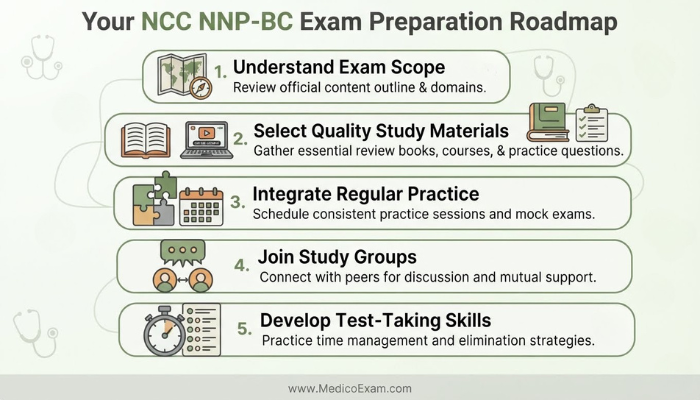
Preparing for the NCC NNP-BC certification exam requires a structured, consistent, and highly personalized approach. It’s not simply about rote memorization of facts, but rather about synthesizing vast amounts of complex information, understanding intricate physiological processes, and critically applying this knowledge to nuanced clinical scenarios in neonatal care. A well-designed, comprehensive study strategy is absolutely crucial for success, helping you manage your time effectively, strategically focus on high-yield topics, and steadily build confidence as exam day inevitably approaches.
Begin by thoroughly understanding the general content areas, or domains, covered by the exam. Although specific syllabus details are not explicitly provided here, NNP-BC exams universally cover broad and critical domains such as advanced neonatal physiology and pathophysiology, comprehensive pharmacology tailored to neonates, detailed assessment and diagnostic studies, extensive disease management (including respiratory, cardiovascular, neurological, gastrointestinal, renal, endocrine, hematologic, infectious disease, and genetic disorders), principles of developmental care, and critical professional practice issues (including ethics, legal aspects, and leadership). Creating an initial study plan that meticulously allocates time to each of these complex areas, based on your perceived strengths and weaknesses, is an excellent and indispensable starting point.
Essential Study Material Selection
Choosing the right, high-quality study materials is paramount to developing an effective and efficient preparation strategy. While foundational textbooks, peer-reviewed professional journals, and established clinical guidelines form the bedrock of knowledge, a diverse variety of supplementary resources can significantly enhance your learning and retention. Consider incorporating the following types of materials into your study regimen:
-
Comprehensive Review Books: Seek out NNP-specific board review guides that skillfully consolidate key concepts, present complex information clearly, and include challenging practice questions.
-
Current Clinical Practice Guidelines: Consistently refer to the most up-to-date guidelines from reputable professional organizations relevant to neonatal care (e.g., AAP, AWHONN), as the exam questions are often grounded in current evidence-based best practices.
-
Accredited Online Courses and Webinars: Many esteemed organizations offer structured online review courses that provide expertly delivered lectures, interactive quizzes, and simulated exam environments, which can be invaluable for active learning.
-
Customized Flashcards: For rapid recall of critical definitions, medication dosages, disease presentations, and key concepts, creating or utilizing high-quality flashcards can be an extremely effective memory aid.
-
Robust Practice Question Banks: Engaging extensively with a diverse range of high-quality practice questions is absolutely vital for truly understanding the exam format, identifying specific areas for further study, and refining your test-taking skills.
When selecting your materials, always prioritize resources that are current, highly reputable, evidence-based, and directly align with the general scope of advanced NNP practice. A diverse range of materials can effectively cater to different learning styles and reinforce knowledge from multiple perspectives. Many successful candidates find immense value in resources that closely simulate the actual testing experience, as this helps to significantly reduce anxiety and improve pacing on exam day.
Incorporating Practice into Your Routine
While passive reading and extensive content review are undoubtedly essential, true mastery and preparedness for the NCC NNP-BC exam come from actively applying that knowledge through consistent practice. Regularly incorporating high-quality practice questions into your daily or weekly study routine is one of the single most effective ways to prepare for the rigorous exam. Practice questions serve multiple critical functions:
-
Identify Knowledge Gaps: Repeatedly answering questions incorrectly in specific areas will clearly highlight where your understanding is weak, thereby precisely guiding your subsequent, more focused study efforts.
-
Familiarize with Exam Format: Extensive exposure to the types of questions, their structure, and the overall testing environment helps you become thoroughly comfortable with the format, reducing surprises on exam day.
-
Improve Time Management: Practicing under timed conditions allows you to accurately gauge your pacing, develop efficient strategies for allocating time per question, and learn to make educated guesses when necessary.
-
Build Confidence: Consistently performing well and seeing improvement on practice questions significantly boosts your self-assurance and reduces test anxiety for the actual exam.
Platforms like medicoexam.com offer a wealth of practice questions specifically tailored to various certification exams, providing an invaluable tool for self-assessment and highly focused review. Utilize these resources not just for the scores, but more importantly, as profound learning opportunities to deeply understand the rationale behind both correct and incorrect answers. Always make sure to choose platforms that emphasize ethical practice and high-quality, up-to-date content, steering completely clear of any materials that promote unethical means of preparation or "dumps."
Additionally, consider joining a dedicated study group with fellow NNP candidates. Discussing challenging concepts, explaining rationales to each other, and sharing effective study tips can provide invaluable different perspectives and profoundly reinforce your learning. Teaching complex material to others is widely recognized as one of the most powerful ways to solidify your own understanding and memory. Consistent engagement with both individual practice and collaborative learning will significantly enhance your readiness for the NNP-BC exam.
Navigating Common NNP-BC Exam Obstacles
The NCC NNP-BC examination is a comprehensive assessment designed to challenge candidates and verify a high level of expertise. It's natural to encounter obstacles during preparation and on exam day, ranging from test anxiety to grappling with complex physiological concepts. Recognizing and proactively addressing these common challenges is a crucial part of a successful study and exam strategy, transforming potential pitfalls into opportunities for growth and deeper understanding. Many candidates experience similar struggles, so understanding them can normalize your own experience and equip you with coping mechanisms.
One of the most pervasive obstacles is test anxiety. The pressure to perform well on a high-stakes exam can be paralyzing, affecting recall and decision-making. Another common hurdle is the sheer breadth and depth of the content, which spans multiple sub-specialties within neonatal care, demanding a holistic understanding rather than isolated facts. Balancing study with ongoing work and personal commitments also presents a significant challenge for most busy advanced practice nurses. Effectively overcoming these requires a multi-faceted approach that integrates mental preparation, strategic study, and practical test-taking skills.
Strategies for Managing Content Complexity
The vastness of neonatal content can feel overwhelming. To manage this complexity:
-
Systematic Review: Break down the content into manageable blocks, focusing on one system or disease process at a time. Utilize mnemonics, flowcharts, and concept maps to visualize relationships between different topics.
-
Prioritize High-Yield Areas: While all content is important, some areas typically have higher representation on board exams. Consult official NCC resources for general domain percentages if available, or rely on reputable review course guidance to focus your efforts.
-
Deep Understanding vs. Memorization: Strive for a deep understanding of underlying pathophysiology and rationales for treatment, rather than just memorizing facts. This allows you to apply knowledge to novel clinical scenarios, which is often tested.
-
Utilize Diverse Resources: If one textbook or review guide isn't clicking, try another. Different explanations or visual aids can clarify difficult concepts.
Engaging with challenging content regularly, even when it feels difficult, builds resilience and familiarity. Breaking down large topics into smaller, digestible chunks makes the learning process less daunting and more effective. Consistent review, even short sessions, can prevent information overload and improve long-term retention of complex material.
Conquering Exam Day Anxiety and Performing Under Pressure
Test anxiety can undermine even the most thorough preparation. Developing strategies to manage this on exam day is paramount:
-
Pre-Exam Routine: Establish a calm routine for the days leading up to the exam. Ensure adequate sleep, nourishing meals, and light physical activity. Avoid cramming in the final 24-48 hours; instead, focus on light review and relaxation.
-
Logistics Preparedness: Eliminate all potential logistical stressors. Know the exact location of the testing center, optimal travel route, and required arrival time. Double-check all identification and necessary documentation well in advance.
-
Mindfulness Techniques: Practice deep breathing exercises or short meditation sessions. If you feel overwhelmed during the exam, take a brief pause, close your eyes, and focus on your breath to regain composure.
-
Strategic Test-Taking: On exam day, read each question and all answer choices carefully. Eliminate obviously incorrect options. If unsure, make an educated guess and flag the question for review if time permits, rather than getting stuck. Trust your initial instincts unless you have a strong reason to change your answer.
Remember that the NCC NNP-BC exam is designed to assess critical thinking and the application of advanced NNP knowledge, not to trick you. Approaching it with a well-rested mind, a strategic plan, and a belief in your diligent preparation will significantly enhance your performance. For additional insights on what to expect in the testing environment and specific procedural guidelines, candidates should always refer to official NCC resources, such as the certification exam details page, which offers invaluable practical advice.
Administering Your NNP-BC Certification Journey
The journey to NCC NNP-BC certification involves several critical administrative steps beyond just rigorous studying. Successfully navigating the application and registration process is just as important as mastering the clinical content, as any misstep here can cause significant delays or complications. Early planning, meticulous attention to detail, and proactive engagement with the National Certification Corporation's guidelines will ensure a smooth and stress-free experience, allowing you to focus primarily on your preparation.
Typically, candidates will begin by creating a secure personal account on the NCC website. This dedicated online portal is where you will initiate and submit your comprehensive application, including detailed documentation of your extensive educational background (e.g., official transcripts from your NNP program) and verification of your current, active, and unencumbered professional licensure. Be prepared to upload all required documents and provide accurate, precise information regarding your NNP program and clinical hours. It is absolutely crucial to allow ample time for the NCC to thoroughly review and officially approve your application, as this comprehensive verification process can often take several weeks, particularly during peak application periods.
Registering for the Exam
Once your application has been meticulously reviewed and officially approved by the NCC, you will receive an Authorization to Test (ATT) letter. This vital letter serves as your official green light to proceed with scheduling your examination at a designated testing center. The ATT will provide you with precise, detailed instructions on how to register with the specific testing vendor (e.g., Pearson VUE), including a specific timeframe or eligibility window within which you must successfully take the exam. It is highly advisable to schedule your exam as soon as practically possible after receiving your ATT to secure your preferred date, time, and geographical location, as testing slots can fill up quickly.
During the registration process with the testing vendor, you will meticulously select your desired testing date and time. It is important to bear in mind that testing centers have finite availability, especially during peak seasons for certification exams, so a degree of flexibility in your scheduling may be required. Be sure to meticulously confirm the exact address of your chosen testing center and familiarize yourself with any specific entry requirements or security protocols well in advance. Paying the current exam fee, which should always be verified directly through the NCC or the testing vendor's portal as costs can change, is the final essential step in securing your test slot and completing the registration process. Always retain confirmation emails and receipts for your records.
Sustaining NNP-BC Excellence Through Continuing Education
Achieving NCC NNP-BC certification is undoubtedly a significant and well-deserved accomplishment, but it represents the beginning, not the definitive end, of your lifelong commitment to professional excellence and specialized competence in neonatal care. Maintaining this extremely valuable credential requires ongoing, proactive engagement in rigorous continuing education (CE) activities. This ensures that Neonatal Nurse Practitioners remain consistently current with the latest evidence-based advancements in neonatal care, evolving clinical guidelines, emerging treatment modalities, and best practices, thereby continuously enhancing their specialized expertise and, most critically, ensuring optimal patient safety and outcomes.
The National Certification Corporation meticulously outlines specific continuing education requirements that are mandatory for NCC NNP-BC renewal. These requirements typically involve earning a prescribed number of CE hours within a defined NCC NNP-BC maintenance cycle, which is commonly every three years. The CE activities must be directly relevant to the NNP scope of practice and clinical responsibilities, and can encompass a wide variety of formats designed to promote diverse learning experiences:
-
Accredited Courses and Conferences: Actively attending and participating in specialized workshops, seminars, and national or international conferences focused on cutting-edge neonatal care topics.
-
Online Learning Modules: Completing structured web-based educational programs, enduring materials, or interactive modules offered by reputable and accredited organizations.
-
Professional Publication and Presentation: Engaging in scholarly activities such as authoring articles in peer-reviewed journals, contributing to professional textbooks, or delivering presentations at professional gatherings.
-
Professional Development Activities: Participating in clinical quality improvement initiatives within your practice setting, serving as a preceptor for NNP students, or holding leadership roles in professional nursing organizations.
-
NCC Modules: Utilizing specific NCC-provided CE modules and assessments, which are tailored to the certification's knowledge domains and ensure direct relevance.
It is absolutely essential for all NNP-BCs to meticulously track and document their CE activities, ensuring they meet both the quantity and specific type of requirements stipulated by the NCC. The NCC typically provides a user-friendly online maintenance portal where certificants can conveniently log their CE hours, track their progress toward renewal, and submit necessary documentation. Proactive and organized management of these renewal requirements is paramount; it not only prevents any potential lapses in your valuable certification but also reinforces your unwavering commitment to lifelong learning and continuous professional standing. Embracing continuing education is far more than just fulfilling a renewal requirement; it underscores a profound lifelong dedication to advancing neonatal nursing practice and consistently optimizing outcomes for the most vulnerable infants under your care.
The journey to becoming an NCC NNP-BC may appear extensive and challenging, but it is a profoundly rewarding and career-defining path for dedicated Neonatal Nurse Practitioners. This distinguished certification not only significantly elevates your professional credibility, expands your career opportunities, and often increases your earning potential, but, most importantly, it profoundly enhances your capacity to provide truly exceptional, evidence-based care to the most fragile and vulnerable patients. By approaching the entire process with a clear and informed understanding of the requirements, implementing a meticulously well-structured study plan, and fostering a positive, supportive mindset, you can confidently navigate each and every step towards achieving this esteemed credential.
Don’t allow the thought of a rigorous board certification exam to intimidate you or deter your aspirations. Instead, embrace it as an invaluable opportunity to solidify and advance your expertise, refine your clinical judgment, and join a distinguished community of highly specialized neonatal care professionals who are making a profound difference every day. Start your comprehensive preparation today, judiciously leverage high-quality and ethical resources, and remember that every focused study session and every practice question brings you closer to achieving this highly valuable and impactful credential. For comprehensive resources and reliable practice questions specifically designed to aid your journey, visit medicoexam.com and take a proactive, confident step towards your certification success.
FAQs
1. What is the NCC NNP-BC certification?
The NCC NNP-BC is a board certification for Neonatal Nurse Practitioners, offered by the National Certification Corporation. It validates the advanced knowledge and expertise of registered nurses specializing in the care of high-risk newborns and their families, ensuring adherence to national standards.
2. Who should pursue the NCC NNP-BC certification?
This certification is designed for experienced Registered Nurses who have completed a graduate-level Neonatal Nurse Practitioner program and are actively working or aspiring to work in advanced practice roles within neonatal intensive care, specialty nurseries, or other settings caring for neonates.
3. How long does NCC NNP-BC certification last, and how is it maintained?
NCC NNP-BC certification typically requires renewal every three years. Maintenance involves ongoing continuing education activities relevant to neonatal nurse practitioner practice, as outlined by the NCC, to ensure continued competence and current knowledge in the field.
4. What are the typical benefits of achieving NNP-BC certification?
Benefits often include enhanced professional recognition, increased credibility with employers and peers, potential for higher earning potential, expanded career opportunities, and the assurance of providing evidence-based, high-quality care to neonatal patients and their families.
5. Are there specific study materials recommended for the NCC NNP-BC exam?
While specific materials vary based on individual learning styles, recommended study resources typically include comprehensive NNP review books, current clinical practice guidelines, accredited online review courses, and robust practice question banks to cover all domains of neonatal nurse practitioner practice effectively.
- NCC NNP-BC Question Bank |
- NCC NNP-BC Eligibility & Requirements |
- NCC Neonatal Nurse Practitioner Practice Test |
- NCC NNP-BC Exam Cost |
- NCC NNP-BC Registration Process |
- NCC Neonatal Nurse Practitioner Study Guide |
- NCC NNP-BC Recertification |
- NCC NNP-BC Certification Overview |
- NCC Neonatal Nurse Practitioner Syllabus |
- NCC NNP-BC Preparation Time |
- NCC NNP-BC Passing Score |
- NCC NNP-BC Exam Format |
- NCC Neonatal Nurse Practitioner Sample Questions |
- NCC NNP-BC Career Opportunities |
- NCC NNP-BC Exam Difficulty


