
CMAS Explained: Is Certification Right For You?

The AMT Certified Medical Administrative Specialist (CMAS) certification validates the critical administrative and clinical competencies essential for managing the operational aspects of a healthcare facility. This credential, offered by American Medical Technologists (AMT), signifies that a professional possesses the foundational knowledge and practical skills required for efficient patient care coordination, medical record management, and essential office procedures. This article will thoroughly explore the CMAS certification, detailing its purpose, examination structure, syllabus topics, benefits for your career, and comprehensive preparation strategies to help you determine if pursuing this specialization is the right step for your professional journey.
Understanding the Value of CMAS Credentialing
In today's complex healthcare landscape, medical administrative specialists play a pivotal role in ensuring smooth operations and quality patient experiences. The CMAS certification is designed for individuals who aspire to excel in these roles, offering a standardized measure of their administrative proficiency. It covers a broad spectrum of responsibilities, from scheduling appointments and managing patient data to handling billing and insurance claims, making it a comprehensive benchmark for excellence in the field.
Achieving the CMAS credential demonstrates a commitment to professional growth and adherence to industry best practices. It distinguishes certified individuals in a competitive job market, assuring employers that they possess a verified skillset. For aspiring and current medical administrative professionals, it’s not just a title, but a testament to their dedication to supporting healthcare providers and patients with precision and competence. To explore the official details and eligibility, visit the AMT official page.
AMT Certified Medical Administrative Specialist Exam Overview
The AMT Certified Medical Administrative Specialist (CMAS) exam, identified by exam code CMAS, is a rigorous assessment designed to evaluate a candidate’s readiness for the demands of a medical administrative role. Understanding the structure and requirements of this examination is crucial for effective preparation.
Exam Structure at a Glance
The CMAS exam is structured to comprehensively test a wide array of knowledge domains. It consists of 200 multiple-choice questions, challenging candidates to demonstrate their understanding across various administrative and clinical contexts. The examination is timed, with candidates allotted 120 minutes to complete all questions, emphasizing both knowledge recall and efficient decision-making under pressure.
-
Exam Name: AMT Certified Medical Administrative Specialist
-
Exam Code: CMAS
-
Number of Questions: 200
-
Duration: 120 minutes
-
Exam Price: $125 (USD)
Scoring and Passing Expectations
To successfully achieve the CMAS certification, candidates must attain a passing score of 70 on a scaled score of 0-100. This approximately translates to needing to answer around 70% of the questions correctly, though the exact raw score needed may vary slightly due to the scaling process. This scaled scoring helps to ensure fairness across different exam versions. Preparing thoroughly for each section of the exam is key to confidently meeting this passing threshold.
Key Domains: CMAS Exam Syllabus Topics
The AMT CMAS exam covers a diverse range of topics, ensuring that certified professionals are well-versed in all facets of medical administration. Each domain carries a specific weight, reflecting its importance in the daily responsibilities of a medical administrative specialist. A thorough understanding of these areas is paramount for comprehensive exam preparation.
-
Medical Assisting Foundations (13%): This section establishes the baseline knowledge required for medical assisting. It includes topics like ethical and legal considerations, patient communication, professional responsibilities, and medical terminology. A strong grasp here is fundamental for all subsequent administrative tasks.
-
Basic Clinical Concepts (7%): While primarily an administrative role, CMAS professionals need a rudimentary understanding of clinical procedures and terminology. This domain covers basic anatomy and physiology, common diseases, emergency procedures, and infection control, allowing for better communication and coordination within a healthcare setting.
-
Medical Office Clerical Assisting (10%): This domain focuses on the day-to-day clerical duties crucial for office efficiency. It encompasses scheduling, patient registration, telephone etiquette, mail handling, and general office organization. Proficiency here ensures the smooth flow of administrative tasks.
-
Medical Records Management (17%): A critical aspect of medical administration, this section delves into the creation, maintenance, and security of patient records. It includes topics such as electronic health records (EHR), patient confidentiality (HIPAA), record-keeping protocols, and information release procedures.
-
Health Care Insurance Processing, Coding, and Billing (17%): This domain is vital for financial operations within a medical office. It covers different types of health insurance plans, coding systems (e.g., CPT, ICD-10), claim submission processes, and billing procedures. Accurate handling of these tasks is essential for revenue cycle management.
-
Medical Office Financial Management (17%): Beyond billing, this section addresses broader financial responsibilities. Topics include financial policies, accounts payable and receivable, petty cash management, banking procedures, and basic accounting principles relevant to a medical office.
-
Medical Office Information Processing (7%): This domain focuses on the use of technology in medical administration. It covers computer software applications, data entry, report generation, and the maintenance of information systems, highlighting the importance of digital literacy.
-
Medical Office Management (12%): This overarching domain touches upon leadership, team coordination, human resources, office policies and procedures, and quality improvement initiatives. It prepares specialists to contribute to the overall effectiveness and compliance of the medical practice.
Who Benefits from CMAS Credentialing?
The AMT CMAS certification is tailored for a specific segment of healthcare professionals seeking to formalize their expertise and advance their careers. It's particularly beneficial for individuals working in or aspiring to roles that involve a blend of administrative and limited clinical support within a medical office setting.
Target candidates typically include:
-
Entry-Level Medical Administrative Assistants: Those just starting their careers who wish to gain a strong foundational credential.
-
Experienced Administrative Professionals: Individuals already working in healthcare administration looking to validate their skills and enhance their professional standing.
-
Medical Assistants: Professionals with clinical experience who want to specialize or pivot into administrative roles.
-
Students of Medical Administrative Programs: Graduates seeking to cap their education with a recognized industry certification.
Achieving the CMAS proves a candidate's proficiency in managing diverse administrative responsibilities, from patient scheduling and billing to health information management, thereby improving their marketability and potential for higher-level positions.
Unlocking Career Potential: The Benefits of Becoming an AMT CMAS
Earning the AMT CMAS certification offers significant advantages, translating directly into enhanced career prospects and professional growth within the dynamic healthcare industry. It's more than just a certificate; it's an investment in a stable and rewarding future.
Enhanced Professional Credibility
Certification by AMT, a respected national agency, instills confidence in employers and peers. It serves as an official endorsement of your skills and knowledge, demonstrating that you meet recognized industry standards. This credibility can open doors to opportunities that might otherwise be inaccessible, positioning you as a trusted professional.
Demonstrated Expertise
The comprehensive nature of the CMAS exam ensures that certified individuals possess a broad and deep understanding of medical administrative functions. This verified expertise in areas like medical records, insurance processing, and office management is invaluable to healthcare practices, which rely on administrative efficiency for their success. For additional resources regarding the certification, refer to the CMAS certification details page.
Career Advancement Opportunities
With a CMAS credential, professionals are often better positioned for promotions, increased responsibilities, and leadership roles within their organizations. It signals to employers that you are not only capable but also committed to ongoing professional development, making you a prime candidate for growth. Certified individuals can often command higher salaries compared to their non-certified counterparts, reflecting the added value they bring to a medical practice.
Future Prospects: AMT Certified Medical Administrative Specialist Job Outlook
The job outlook for medical administrative specialists remains positive, driven by the ongoing growth of the healthcare sector. As the population ages and demand for healthcare services increases, the need for skilled administrative professionals to manage offices, process information, and coordinate patient care will continue to rise.
Professionals with an AMT CMAS certification are particularly well-suited to capitalize on this growth. Their validated skills in areas such as electronic health records, insurance processing, and financial management make them indispensable assets to hospitals, clinics, physician's offices, and other healthcare facilities. The certification enhances their competitive edge, leading to better job security and more diverse employment opportunities.
Regarding salary, the AMT Certified Medical Administrative Specialist average salary can vary significantly based on location, experience, and the type of healthcare facility. However, certified individuals typically earn more than their non-certified peers, reflecting the specialized knowledge and proven competency that the CMAS credential represents. This makes the investment in certification a worthwhile endeavor for long-term financial stability and career satisfaction.
Preparing for Your CMAS Exam: Essential Strategies
Effective preparation is the cornerstone of success for the AMT CMAS exam. A structured and strategic approach will not only enhance your understanding of the material but also boost your confidence on exam day. Given the breadth of the syllabus, a multi-faceted study plan is highly recommended.
Developing a Study Plan
Begin by creating a realistic study schedule that allocates sufficient time to each syllabus domain, particularly those with higher weightings like Medical Records Management and Health Care Insurance Processing, Coding, and Billing. Identify your strengths and weaknesses early on; dedicate more time to areas where you feel less confident. Consistency is key, so breaking down study sessions into manageable daily or weekly chunks is more effective than cramming.
Leveraging Official Resources
The AMT provides valuable resources that can significantly aid your preparation. Review the detailed CMAS content outline, which serves as a roadmap for the exam. This document precisely lists all the topics covered, allowing you to tailor your study efforts. While AMT does not endorse specific prep courses, they often recommend general study guides or practice materials that align with their content. Access the detailed content outline directly from the CMAS Content Outline provided by AMT.
Identifying Study Materials
There are various resources available, including textbooks on medical office procedures, administrative medical assisting, and healthcare law. Consider reputable online courses or study guides specifically designed for the AMT CMAS. Flashcards, summary notes, and study groups can also be excellent tools for reinforcing knowledge and discussing complex topics. Focus on materials that cover all aspects of the CMAS exam syllabus topics comprehensively.
Utilizing Practice Tests Effectively
Practice tests are invaluable for familiarizing yourself with the exam format, question types, and time constraints. They help you identify areas where further study is needed and improve your test-taking skills. Take practice exams under timed conditions to simulate the actual testing environment. Afterward, thoroughly review both correct and incorrect answers to understand the reasoning behind them. For valuable preparation, consider taking CMAS practice questions to gauge your readiness.
Choosing the Best AMT CMAS Study Materials
Selecting appropriate study materials is a critical step in your CMAS certification journey. The best resources are those that align closely with the official AMT CMAS exam syllabus and cater to your individual learning style. Given the comprehensive nature of the exam, a multi-resource approach is often most effective.
When evaluating study materials, look for:
-
Comprehensive Coverage: Ensure the material covers all percentage-weighted domains of the CMAS exam syllabus.
-
Clear Explanations: The content should be presented clearly, with easy-to-understand explanations of complex medical and administrative concepts.
-
Practice Questions: High-quality practice questions, ideally with detailed explanations for both correct and incorrect answers, are essential for self-assessment.
-
Updated Content: Healthcare regulations and administrative practices can evolve. Verify that the study materials are current and reflect the latest industry standards.
-
Accessibility: Whether you prefer textbooks, online courses, or mobile apps, choose materials that fit your lifestyle and can be accessed conveniently.
While official AMT resources are paramount, supplementing with well-regarded third-party study guides and online platforms can provide different perspectives and additional practice opportunities to solidify your understanding.
Navigating the AMT CMAS Certification Renewal Process
Maintaining your AMT CMAS certification is essential for continued professional recognition and demonstrating ongoing competency in the field. Unlike some certifications that are lifetime, the CMAS credential requires periodic renewal, typically every three years, through a process designed to ensure that certified professionals remain current with evolving healthcare practices and administrative standards.
The primary mechanism for renewal is accumulating Continuing Education (CE) credits. AMT outlines specific requirements for the number of CE credits needed within each renewal cycle. These credits can be earned through various approved activities, including:
-
Attending professional workshops, seminars, or conferences.
-
Completing online courses relevant to medical administration.
-
Participating in professional development activities, such as presenting at conferences or publishing articles.
-
Engaging in self-study programs approved by AMT.
It is crucial to keep meticulous records of all CE activities, including dates, topics, and completion certificates, as these may be required during the audit process. Proactive tracking ensures a smooth renewal process and avoids any lapses in your certification status, safeguarding your professional standing.
Understanding the Role: What Does an AMT Medical Administrative Specialist Do?
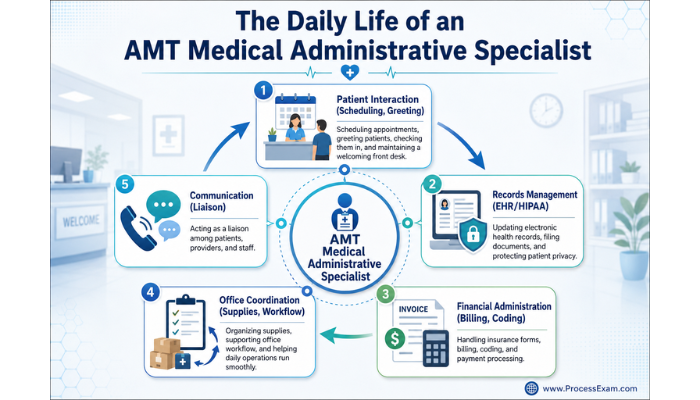
An AMT Medical Administrative Specialist is a crucial member of any healthcare team, serving as the backbone of efficient office operations. Their responsibilities extend far beyond simple clerical tasks, encompassing a wide array of duties vital for patient care coordination and practice management.
Key responsibilities typically include:
-
Patient Interaction: Greeting patients, scheduling appointments, handling incoming calls, and managing patient inquiries with professionalism and empathy.
-
Records Management: Maintaining accurate and confidential patient medical records, both paper-based and electronic (EHR/EMR), ensuring compliance with HIPAA regulations.
-
Financial Administration: Processing health care insurance claims, handling billing and coding procedures, managing patient accounts, and overseeing general office finances.
-
Office Coordination: Managing office supplies, organizing workflow, coordinating with clinical staff, and ensuring a welcoming and efficient office environment.
-
Communication: Serving as a liaison between patients, medical staff, insurance companies, and other healthcare providers, facilitating clear and timely information exchange.
These diverse tasks require a blend of organizational skills, attention to detail, strong communication abilities, and a solid understanding of medical office protocols, all of which are validated by the CMAS certification.
Is the AMT CMAS Exam Hard? Setting Realistic Expectations
The question of whether the AMT CMAS exam is "hard" often arises among prospective candidates. The difficulty of any certification exam is subjective and depends heavily on an individual's background, study habits, and prior experience in medical administration. However, it is designed to be a comprehensive assessment that requires dedicated preparation.
The CMAS exam covers a broad spectrum of topics, from foundational medical assisting principles to intricate billing and coding procedures. Its 200 questions across 120 minutes demand both extensive knowledge and efficient time management. Achieving the required 70% passing score means candidates must demonstrate a solid grasp of the material, not just superficial familiarity.
While challenging, the exam is certainly passable with the right approach. Those with practical experience in a medical office often find certain sections more intuitive, but thorough study of all syllabus topics, especially less familiar areas, is still essential. Leveraging official resources, effective study guides, and diligent practice tests can significantly mitigate the perceived difficulty and enhance a candidate's chances of success. It is not an insurmountable challenge, but one that rewards diligent effort and focused preparation.
The AMT Certified Medical Administrative Specialist (CMAS) certification represents a significant step forward for professionals in healthcare administration. It provides a structured pathway to validate essential skills, enhance career prospects, and contribute meaningfully to the efficiency and quality of patient care. From understanding intricate medical billing to maintaining precise patient records, the CMAS credential confirms a broad spectrum of critical competencies. The investment in time and effort for certification yields substantial returns in professional recognition and career stability. For anyone seeking to solidify their expertise and advance within the medical administrative field, the CMAS certification offers a robust and respected pathway to achieving those goals.
Ready to validate your administrative expertise in healthcare? Explore the full details of the CMAS certification and take the next step toward enhancing your career. Visit the CMAS sample questions page for more resources to guide your preparation and boost your confidence.
Frequently Asked Questions
1. What does the CMAS certification validate?
The CMAS certification, offered by AMT, validates a professional's administrative and clinical competencies essential for managing the operational aspects of a healthcare facility, including patient care coordination, medical record management, and essential office procedures.
2. What are the eligibility requirements for the AMT CMAS?
Eligibility typically includes a combination of education and/or work experience in medical administration. Specific pathways may involve completing an accredited medical administrative program, or having a certain number of years of verifiable work experience in a relevant role. Candidates should check the official AMT website for the most current and detailed requirements.
3. How long does it take to study for the AMT CMAS exam?
The ideal study duration for the AMT CMAS exam varies based on individual background and prior knowledge. Many candidates dedicate several weeks to a few months of consistent study, typically between 80 to 120 hours, to thoroughly cover all syllabus topics and feel confident with the material.
4. What is the average salary for an AMT Certified Medical Administrative Specialist?
The average salary for an AMT Certified Medical Administrative Specialist can vary depending on factors such as geographic location, years of experience, and the type of healthcare facility. However, CMAS-certified professionals generally earn a competitive salary, often higher than their non-certified counterparts, reflecting their validated skills and expertise.
5. How often do I need to renew my AMT CMAS certification?
The AMT CMAS certification typically requires renewal every three years. This process usually involves earning a specified number of continuing education (CE) credits to demonstrate ongoing professional development and ensure you remain current with industry standards and practices.
- AMT CMAS Question Bank |
- AMT CMAS Eligibility & Requirements |
- AMT Medical Administrative Specialist Practice Test |
- AMT CMAS Exam Cost |
- AMT CMAS Registration Process |
- AMT Medical Administrative Specialist Study Guide |
- AMT CMAS Recertification |
- AMT CMAS Certification Overview |
- AMT Medical Administrative Specialist Syllabus |
- AMT CMAS Preparation Time |
- AMT CMAS Passing Score |
- AMT CMAS Exam Format |
- AMT Medical Administrative Specialist Sample Questions |
- AMT CMAS Career Opportunities |
- AMT CMAS Exam Difficulty


