
The Definitive First-Timer's CASCC Decision
The AAPC Certified Ambulatory Surgery Center Coder (CASCC) certification validates a professional's expertise in the intricate field of ambulatory surgery center (ASC) coding. This specialized credential signifies proficiency in applying CPT, HCPCS Level II, and ICD-10-CM codes for surgical procedures performed in ASC settings, ensuring compliance with complex payer regulations. Healthcare professionals, particularly medical coders aiming to specialize or advance their careers within the fast-growing ambulatory surgery sector, should consider the CASCC. This comprehensive guide serves as a first-timer's decision-making resource, covering the exam's structure, syllabus, benefits, and effective preparation strategies to help you navigate your certification journey.
Validating Specialty Coding Skills for ASCs
Achieving the AAPC CASCC credential establishes a coder as an expert in the highly specific and complex coding requirements of Ambulatory Surgery Centers. Unlike general outpatient coding, ASC coding demands a nuanced understanding of facility fees, procedure bundling, and specific payment methodologies unique to these environments. The certification demonstrates a coder's ability to accurately assign codes, ensuring proper reimbursement and compliance with federal and commercial payer guidelines. This validation is crucial for maintaining the financial health and regulatory integrity of ASCs, making CASCC-certified professionals highly sought after.
The role of a certified CASCC professional extends beyond mere code assignment. They are instrumental in:
-
Ensuring accurate documentation review for surgical procedures.
-
Applying correct CPT, HCPCS Level II, and ICD-10-CM codes.
-
Navigating complex reimbursement models specific to ASCs.
-
Adhering to local and national coding guidelines and regulations.
-
Identifying coding deficiencies and recommending improvements.
Understanding CASCC Exam Structure and Logistics
Prospective CASCC candidates need a clear understanding of the exam's format and administrative details to prepare effectively. The AAPC CASCC examination is designed to rigorously test a coder's knowledge across various domains critical to ambulatory surgery center operations. This assessment ensures that certified individuals possess the practical skills required for accurate and compliant coding within this specialized environment.
CASCC Examination Overview
The CASCC exam is a challenging assessment that measures both theoretical knowledge and practical application skills. Candidates are provided with specific parameters and a limited timeframe to demonstrate their expertise. Familiarity with these details is a foundational step in any successful preparation plan.
-
Exam Price: $325 for one attempt or $399 for two exam attempts.
-
Duration: Candidates are allotted 240 minutes (4 hours) to complete the exam.
-
Number of Questions: The exam comprises 100 multiple-choice questions.
-
Passing Score: A minimum score of 70% is required to pass the certification exam.
These details highlight the importance of efficient time management and a solid grasp of the subject matter, as the exam requires both speed and accuracy. Understanding these elements from the outset helps in structuring a study plan that addresses the exam's specific demands.
Exploring Core CASCC Content Areas
The AAPC CASCC certification syllabus covers a comprehensive range of topics essential for competent coding in an ambulatory surgery center. Candidates must master these content areas to successfully navigate the exam and perform effectively in a professional setting. The breadth of the syllabus ensures that certified coders are well-rounded experts, capable of handling diverse scenarios encountered in ASCs.
The CASCC curriculum focuses on several key knowledge domains:
-
Core knowledge areas: This foundational segment includes general medical terminology, anatomy, physiology, and basic coding principles that underpin all specialized coding.
-
Outpatient surgical specialties: Candidates must demonstrate proficiency in coding various surgical procedures performed in ASCs, spanning multiple medical specialties such as orthopedics, gastroenterology, ophthalmology, and pain management.
-
ASC-specific reporting and billing: This critical section covers the unique rules and regulations governing reporting and billing for services provided in ambulatory surgery centers, including facility fees, modifiers, and payment indicators.
-
Compliance and regulatory standards: A strong understanding of HIPAA, OIG work plans, NCCI edits, and other compliance mandates is vital to ensure ethical and legal coding practices within ASC environments.
Thorough preparation across these areas is crucial, as the exam questions are designed to test both isolated knowledge points and the integrated application of guidelines across different scenarios.
Benefits of CASCC Credentialing in Healthcare
Obtaining the AAPC CASCC certification offers significant advantages for medical coding professionals seeking to specialize and advance their careers. This credential signals a higher level of expertise and commitment, differentiating individuals in a competitive job market. Employers increasingly seek certified specialists who can immediately contribute to the complex financial and regulatory landscape of Ambulatory Surgery Centers.
Key advantages of holding the CASCC credential include:
-
Enhanced Career Opportunities: The specialized nature of ASC coding opens doors to roles specifically requiring this expertise, often with greater responsibility and growth potential.
-
Increased Earning Potential: Certified specialists generally command higher salaries than general coders due to their advanced knowledge and value to healthcare organizations.
-
Professional Credibility: The CASCC designation affirms a coder's dedication to the profession and their proficiency in a vital, high-demand area of healthcare.
-
Deeper Industry Understanding: The rigorous preparation process equips professionals with an in-depth understanding of ASC operations, compliance, and revenue cycle management.
-
Contribution to Compliance: CASCC-certified coders play a critical role in ensuring their organizations adhere to complex coding guidelines, reducing audit risks and ensuring accurate reimbursement.
These benefits collectively contribute to a more rewarding and impactful career trajectory within the healthcare coding sector.
Charting Your CASCC Preparation Journey Effectively
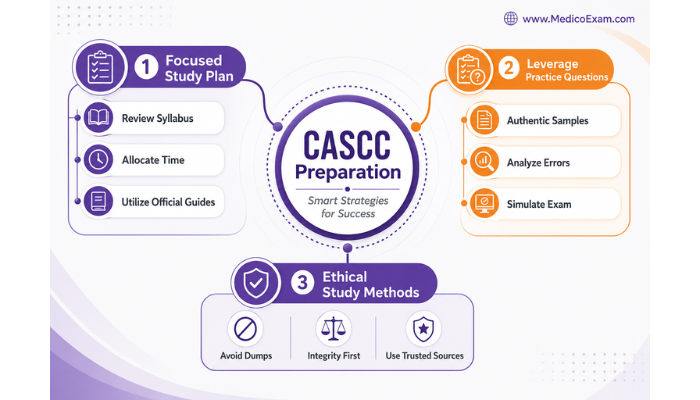
Embarking on the CASCC certification path requires a structured and dedicated approach to study. Effective preparation is key to mastering the extensive syllabus and performing confidently on exam day. Candidates should utilize a variety of resources and employ strategic study habits to maximize their chances of success.
Developing a Focused Study Plan
A well-thought-out study plan is the cornerstone of CASCC exam preparation. It helps organize the vast amount of information and ensures all critical areas are covered. Your plan should integrate official AAPC materials with supplementary resources to build a robust knowledge base.
-
Review the official AAPC CASCC syllabus thoroughly to identify all core knowledge areas and subtopics.
-
Allocate sufficient time to each syllabus section, particularly those you find challenging, creating a realistic study schedule.
-
Utilize official AAPC study guides and code books (CPT, ICD-10-CM, HCPCS Level II) as primary resources.
-
Supplement your studies with dedicated study materials available from reputable platforms, which can offer alternative explanations and practical examples.
Beyond structured learning, consistent practice is indispensable. Engaging with realistic scenarios helps solidify theoretical knowledge and improves application speed, both vital for the timed exam. For enhancing your preparation, explore diverse resources available online.
Leveraging Practice Questions and Ethical Study Methods
Practice questions are invaluable tools for assessing your understanding and identifying areas that require further review. They familiarize you with the exam format and question types, building confidence for the actual test. It's crucial, however, to engage in ethical study practices.
-
Engage with authentic practice questions, such as those found at sample questions pages.
-
Analyze incorrect answers to understand the underlying coding principles and common pitfalls.
-
Avoid any materials that claim to offer "exam dumps" or "real exam questions," as these are unethical and can lead to immediate disqualification.
-
Simulate exam conditions by taking full-length practice tests under timed settings to improve speed and endurance.
Ethical preparation ensures the integrity of your certification and genuinely prepares you for real-world coding challenges.
Navigating Certification Pathways and Requirements
Before committing to the CASCC exam, understanding the broader certification requirements and the pathway to becoming fully credentialed is essential. This includes knowing who is eligible, what experience is recommended, and the steps to registration.
AAPC CASCC Certification Requirements
The AAPC sets specific eligibility criteria to ensure that CASCC-certified professionals have a foundational understanding of medical coding before specializing. While the CASCC is a specialty certification, a general coding background is often beneficial.
-
Possess a strong understanding of medical terminology, anatomy, and pathophysiology.
-
Be proficient in ICD-10-CM, CPT, and HCPCS Level II coding guidelines.
-
Hold an active AAPC membership.
-
It is recommended to have at least two years of experience in medical coding, particularly in surgical or outpatient settings, although not strictly mandated for taking the exam.
Meeting these requirements ensures that candidates are adequately prepared for the advanced topics covered in the CASCC exam. For precise and up-to-date requirements, always refer to the official AAPC certification page.
Exam Registration and Post-Certification Steps
Once you meet the requirements and feel ready, registering for the CASCC exam is a straightforward process through the AAPC website. After successfully passing the exam, there are additional steps to maintain your credential and ongoing professional development.
-
Register for the exam directly through the AAPC website, choosing a suitable date and testing center or remote proctoring option.
-
Maintain your AAPC membership and earn continuing education units (CEUs) to keep your certification current.
-
Engage in professional development activities to stay updated with coding guideline changes and industry trends.
The certification journey extends beyond passing the exam, encompassing continuous learning and professional growth to uphold your expertise.
Career Impact of the CASCC Designation
The AAPC CASCC certification profoundly influences a coding professional's career trajectory, opening doors to specialized roles and enhancing earning potential within the healthcare industry. This designation is not just a badge; it's a testament to a coder's focused skill set in a critical and growing area.
Demand for Ambulatory Surgery Center Coders
The healthcare landscape continues to shift towards outpatient services, driving a consistent demand for skilled Ambulatory Surgery Center coders. ASCs require coders who can precisely navigate unique payment systems and regulatory compliance. A CASCC certification explicitly signals this capability, making individuals highly competitive for roles that are vital to the financial stability of these centers.
-
Increased outpatient surgical volume fuels demand for specialized coders.
-
ASCs require experts to manage unique bundling and reimbursement rules.
-
Compliance needs drive the search for credentialed professionals.
Salary Expectations and Job Opportunities
While specific salaries can vary based on experience, location, and the employing organization, professionals with a CASCC certification typically command higher salaries compared to those with general coding credentials. Job opportunities range from dedicated ASC coder positions to auditor roles, compliance specialists, and educators within healthcare systems or third-party billing companies.
Common job titles seeking CASCC-certified individuals include:
-
Ambulatory Surgery Center Coder
-
ASC Coding Auditor
-
Surgical Coding Specialist
-
Coding Compliance Analyst
-
Coding Educator (specializing in ASCs)
The CASCC certification is a strategic investment that positions coders for leadership and specialized roles, contributing significantly to their long-term career growth.
FAQs
1. What is the AAPC CASCC certification, and what does it validate?
The AAPC Certified Ambulatory Surgery Center Coder (CASCC) certification is a specialized credential validating expertise in applying coding guidelines (CPT, HCPCS Level II, ICD-10-CM) for surgical procedures performed in Ambulatory Surgery Centers (ASCs), focusing on unique ASC billing and compliance.
2. What are the prerequisites for taking the CASCC exam?
While there are no strict prerequisites for taking the CASCC exam, candidates should possess a strong foundation in medical terminology, anatomy, and general coding guidelines (ICD-10-CM, CPT, HCPCS Level II). AAPC recommends two years of coding experience, particularly in surgical or outpatient settings.
3. How much does the AAPC CASCC exam cost, and what is its format?
The CASCC exam costs $325 for one attempt or $399 for two attempts. It is a 240-minute exam consisting of 100 multiple-choice questions, requiring a 70% passing score.
4. What kind of job roles can a CASCC certification help secure?
A CASCC certification can lead to specialized roles such as Ambulatory Surgery Center Coder, ASC Coding Auditor, Surgical Coding Specialist, Coding Compliance Analyst, or Coding Educator within healthcare systems, ASCs, or third-party billing companies.
5. What are some effective strategies for preparing for the CASCC exam?
Effective strategies include developing a structured study plan, thoroughly reviewing the official AAPC syllabus, utilizing official study guides and code books, practicing with high-quality sample questions, and adhering to ethical study practices by avoiding "exam dumps."
- AAPC CASCC Question Bank |
- AAPC CASCC Eligibility & Requirements |
- AAPC Ambulatory Surgery Center Coder Practice Test |
- AAPC CASCC Exam Cost |
- AAPC CASCC Registration Process |
- AAPC Ambulatory Surgery Center Coder Study Guide |
- AAPC CASCC Recertification |
- AAPC CASCC Certification Overview |
- AAPC Ambulatory Surgery Center Coder Syllabus |
- AAPC CASCC Preparation Time |
- AAPC CASCC Passing Score |
- AAPC CASCC Exam Format |
- AAPC Ambulatory Surgery Center Coder Sample Questions |
- AAPC CASCC Career Opportunities |
- AAPC CASCC Exam Difficulty


