
The Definitive NCCHC CCHP Mental Health Certification Toolkit
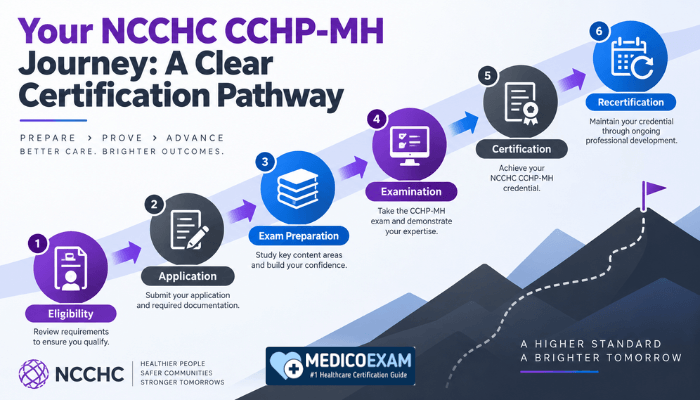
The NCCHC Certified Correctional Health Professional - Mental Health (CCHP-MH) certification, delivered by the National Commission on Correctional Health Care (NCCHC), validates the specialized knowledge and skills required for mental health professionals working within correctional facilities. This essential credential signifies a practitioner’s commitment to providing high-quality, ethical mental healthcare in the unique and often challenging correctional environment. Designed for psychiatrists, psychologists, social workers, counselors, and other mental health clinicians, pursuing the CCHP-MH certification demonstrates a dedication to advancing professional standards and ensuring appropriate care for an incarcerated population. This comprehensive toolkit offers curated insights into the certification process, eligibility, preparation strategies, and long-term career benefits to support your journey toward becoming an NCCHC CCHP Mental Health professional.
Realizing the Value of NCCHC CCHP Mental Health Certification
Achieving the NCCHC CCHP Mental Health Certification positions professionals at the forefront of correctional mental healthcare. This credential is more than just a title; it is a testament to an individual's specialized expertise in a field that demands both clinical excellence and an understanding of the complex legal and operational frameworks of correctional settings. Certification enhances professional credibility, often serving as a benchmark for employers seeking skilled and dedicated mental health practitioners. It underscores a clinician's ability to navigate the unique challenges of providing care to incarcerated individuals, addressing conditions ranging from acute psychiatric crises to chronic mental illnesses.
This certification showcases an individual's commitment to adhering to national standards of care, which are crucial for improving patient outcomes and mitigating institutional risks. By validating expertise in areas like assessment, treatment planning, crisis intervention, and ethical practice within correctional contexts, the CCHP-MH certification helps ensure that mental health services are delivered effectively and compassionately. It provides a structured framework for continuous professional development, ensuring that certified professionals remain current with best practices and evolving standards in correctional mental health. This pursuit of excellence ultimately benefits the patients who rely on these vital services.
Enhancing Professional Standing and Credibility
Earning your NCCHC CCHP Mental Health Certification provides a significant boost to your professional standing within the correctional healthcare community. Employers, colleagues, and regulatory bodies recognize this credential as a mark of specialized knowledge and dedication. It can open doors to leadership roles, advanced positions, and opportunities for contributing to policy development within correctional systems. The certification process itself demands a thorough understanding of the field, ensuring that those who achieve it are truly competent and committed practitioners. This enhanced credibility can lead to greater trust from patients and their families, knowing that their care is in the hands of a certified expert.
Driving Improved Patient Care Outcomes
At its core, the NCCHC CCHP Mental Health Certification is about fostering better patient care. The knowledge validated by the exam directly translates into practical skills that improve the assessment, diagnosis, and treatment of mental health conditions in correctional settings. Professionals with this certification are better equipped to identify unique challenges faced by incarcerated individuals, such as trauma, substance use disorders, and co-occurring mental and physical health issues. They understand how to implement evidence-based practices while respecting security concerns and patient rights. This specialized expertise helps to create more effective and humane mental health services, contributing to rehabilitation efforts and reducing recidivism through targeted interventions.
Who Pursues NCCHC CCHP Mental Health Credentialing?
The NCCHC CCHP-MH certification is specifically designed for a wide array of mental health professionals who deliver care within jails, prisons, and juvenile detention centers. This includes individuals whose primary role involves providing direct mental health services to incarcerated populations. The certification addresses the unique competencies required to practice effectively in a correctional environment, blending clinical expertise with an understanding of security, legal, and operational constraints. It is a valuable asset for any mental health clinician seeking to specialize or demonstrate mastery in this demanding field.
The credential is particularly relevant for those committed to upholding ethical standards and promoting humane treatment for individuals with mental health needs in custody. It provides a standardized measure of competence that assures both employers and the public of a professional's qualifications. Moreover, for those looking to advance their careers or take on leadership roles within correctional mental health programs, the CCHP-MH often serves as a foundational requirement or a highly preferred qualification.
Diverse Professional Roles
Many different types of mental health professionals seek the CCHP-MH certification. These roles are critical for comprehensive correctional mental health programs.
-
Psychiatrists: Medical doctors specializing in mental health, responsible for diagnosis, medication management, and complex treatment plans.
-
Psychologists: Professionals who diagnose and treat mental and behavioral disorders through psychotherapy, psychological testing, and behavioral interventions.
-
Licensed Clinical Social Workers (LCSW): Provide counseling, therapy, and case management services, often linking individuals to community resources upon release.
-
Professional Counselors: Offer individual and group counseling, focusing on rehabilitation, crisis intervention, and coping strategies.
-
Psychiatric Nurses: Registered nurses with specialized training in mental health, assisting with medication, patient monitoring, and therapeutic communication.
-
Correctional Mental Health Technicians: Support roles that assist with patient observation, group facilitation, and administrative tasks under supervision.
This broad spectrum reflects the multidisciplinary approach necessary to address the diverse mental health needs of the incarcerated population effectively.
Eligibility Criteria for the CCHP-MH Certification
Before embarking on the preparation journey, understanding the eligibility criteria for the NCCHC CCHP-MH certification is paramount. Meeting these prerequisites ensures that candidates possess the foundational education and practical experience necessary to perform effectively in a correctional mental health role and to successfully undertake the rigorous examination. The NCCHC sets specific standards to uphold the integrity and value of the certification, confirming that only qualified professionals earn this distinguished credential.
Candidates must typically hold a current, active license or certification in their specific mental health discipline, as required by their state or jurisdiction. This ensures a baseline of professional competence and adherence to broader healthcare standards. The NCCHC emphasizes the importance of direct experience within a correctional setting, recognizing the unique context and challenges of this environment. This practical exposure is critical for applying theoretical knowledge to real-world scenarios in a secure facility.
Education and Licensure Requirements
The core of CCHP-MH eligibility revolves around recognized professional qualifications. Candidates are generally expected to have:
-
A current, active, and unrestricted license or certification in a mental health field (e.g., licensed psychologist, licensed clinical social worker, licensed professional counselor, board-certified psychiatrist). This license must be issued by the appropriate regulatory board in the United States or Canada.
-
A master’s or doctoral degree in a mental health discipline from an accredited institution.
-
Some foundational certifications, such as the CCHP, may also be a prerequisite or alternative pathway, depending on the applicant's experience and role.
It is crucial for prospective candidates to verify the exact and most up-to-date requirements directly on the official NCCHC website, as these criteria can occasionally be updated or modified. For detailed information and specific requirements, visit the official NCCHC CCHP-MH page at the NCCHC website.
Required Clinical Experience in Correctional Settings
Beyond academic credentials, practical experience in a correctional environment is a non-negotiable component of eligibility. The NCCHC emphasizes this to ensure candidates are not only clinically proficient but also adept at navigating the unique operational aspects of jails, prisons, or juvenile detention centers. This experience typically involves:
-
Direct provision of mental health services to incarcerated individuals, including assessment, diagnosis, treatment planning, and crisis intervention.
-
Demonstrated understanding of correctional policies, security protocols, and the legal implications of mental health care in these settings.
-
A specified number of hours or years of experience, which can vary based on the educational background and specific mental health discipline of the applicant.
This hands-on experience is vital for preparing candidates for the real-world complexities and ethical considerations they will encounter as certified correctional mental health professionals.
Crafting Your NCCHC CCHP-MH Exam Preparation Strategy
A well-structured preparation strategy is the cornerstone of success for the NCCHC CCHP-MH exam. Given the specialized nature of correctional mental health, a targeted approach that covers both clinical knowledge and correctional context is essential. Candidates should not only focus on memorizing facts but also on understanding the application of principles within the unique environment of jails and prisons. Effective preparation involves a combination of official resources, study materials, and practical application.
The exam assesses a broad range of competencies, from mental health assessment and treatment to ethical considerations and legal mandates specific to correctional facilities. Therefore, a holistic study plan is critical. It should systematically address each core domain the certification aims to validate, ensuring no stone is left unturned. This strategic approach minimizes test anxiety and builds confidence, allowing candidates to perform at their best on exam day.
Leveraging Official NCCHC Resources and Guidelines
The most authoritative resources for CCHP-MH exam preparation come directly from the NCCHC itself. Their publications and guidelines are developed by experts in the field and align precisely with the content areas tested on the exam. Candidates should prioritize these official materials to ensure their study efforts are focused and accurate.
-
NCCHC Standards for Health Services: These standards provide the fundamental framework for correctional healthcare and are indispensable for understanding the operational and ethical context of the exam. They outline requirements for mental health services, patient rights, and administrative practices.
-
CCHP-MH Candidate Handbook: This guide offers comprehensive information about the exam, including eligibility requirements, application procedures, exam format, and content outline. It often includes sample questions or indicators of the types of questions to expect.
-
NCCHC Educational Programs: Attending NCCHC conferences, workshops, or online courses related to mental health in corrections can provide valuable insights and networking opportunities. These programs are specifically designed to align with the organization's standards and certification objectives. For more information on programs, explore NCCHC Mental Health Services.
Engaging with these resources directly from the source ensures that your preparation is aligned with the latest standards and expectations of the certification body.
Effective Study Techniques and Materials
Beyond official resources, a diverse set of study techniques and materials can significantly enhance your NCCHC CCHP-MH exam preparation. Integrating various methods can help reinforce learning and cater to different learning styles.
Developing a Comprehensive Study Plan
Start by creating a detailed study schedule that breaks down the exam content into manageable sections. Allocate specific time slots for each topic, ensuring adequate coverage of all domains. This plan should be realistic and allow for review periods and practice testing.
Utilizing Practice Questions and Mock Exams
Engaging with practice questions is vital for familiarizing yourself with the exam format, question types, and time constraints. MedicoExam offers relevant practice questions that can help you assess your understanding and identify areas needing further review. While practice questions don't guarantee success, they are an invaluable tool for reinforcing knowledge and building test-taking confidence. Focus on understanding the rationale behind correct and incorrect answers.
Forming Study Groups and Peer Support
Collaborating with other professionals also preparing for the CCHP-MH exam can be highly beneficial. Study groups provide a platform for discussing complex topics, sharing insights, and clarifying doubts. Explaining concepts to others can solidify your own understanding, and hearing different perspectives can broaden your grasp of the material.
Reviewing Key Clinical Mental Health Concepts
Even with a focus on correctional settings, a strong foundation in general clinical mental health principles is necessary. Revisit core concepts in:
-
Psychiatric diagnosis and symptomatology (e.g., DSM-5-TR relevant disorders)
-
Pharmacology for mental health conditions
-
Therapeutic modalities (e.g., CBT, DBT principles)
-
Crisis intervention and de-escalation techniques
-
Ethical guidelines in mental healthcare
Ensure you understand how these general principles are adapted and applied within the unique context of correctional facilities.
Navigating the NCCHC CCHP-MH Exam and Recertification
Successfully completing the NCCHC CCHP-MH exam is a significant milestone, but the journey towards sustained professional excellence doesn't end there. Understanding the exam day experience and the subsequent recertification process is crucial for maintaining your credential and demonstrating ongoing competence. The NCCHC structures both the initial examination and the recertification to ensure that certified professionals continuously uphold the highest standards in correctional mental health care. Preparing for these stages requires diligence and adherence to the NCCHC's guidelines.
The Examination Experience and Scoring
The NCCHC CCHP-MH exam is designed to rigorously assess a candidate's mastery of the specialized knowledge required for the role. The specific format, number of questions, and duration are detailed in the official candidate handbook. Candidates should arrive well-rested and prepared, bringing only approved materials. Familiarity with the testing environment, whether in-person or remote, can help reduce anxiety. The exam typically involves multiple-choice questions that evaluate both factual recall and the application of principles to case-based scenarios relevant to correctional mental health. A predefined passing score must be achieved to earn the certification. Official information regarding exam passing scores and exact structure is provided by NCCHC.
Maintaining Your NCCHC CCHP Mental Health Certification
Recertification is a mandatory process that ensures CCHP-MH professionals remain current with evolving best practices, new research, and updated standards in correctional mental health. This continuous professional development underscores the long-term value of the credential.
Requirements for Recertification
Typically, recertification involves accumulating a specific number of continuing education (CE) hours within a designated period, usually every two to three years. These CE hours must be relevant to correctional health care and mental health practice. The NCCHC provides detailed guidelines on acceptable CE activities, which may include:
-
Attending approved conferences, seminars, or workshops.
-
Completing online courses or webinars.
-
Engaging in peer-reviewed publications or presentations.
-
Participating in relevant academic coursework.
It is essential to meticulously track all CE activities and maintain documentation, as audits may occur.
Benefits of Ongoing Professional Development
Beyond the requirement, active participation in continuing education offers numerous benefits. It helps professionals:
-
Stay informed about the latest advancements in mental health treatment and correctional policy.
-
Refine existing skills and acquire new competencies.
-
Network with peers and experts in the field.
-
Reinforce their commitment to lifelong learning and ethical practice.
The recertification process for the NCCHC CCHP-MH ultimately strengthens the professional community and ensures that certified individuals continue to provide exceptional care.
Considering the Investment: Cost of NCCHC CCHP Mental Health Certification
Pursuing the NCCHC CCHP Mental Health Certification represents a valuable investment in your professional future. Like any specialized credential, there are associated costs that candidates should factor into their planning. These costs typically cover application fees, examination fees, and potential expenses related to preparation materials and continuing education. Understanding these financial aspects upfront allows for better budgeting and ensures a smooth progression through the certification process. The investment reflects the rigorous standards and the recognized value of the CCHP-MH designation within the correctional healthcare sector.
The primary costs often include a non-refundable application fee. This fee covers the administrative processing of your eligibility review. There is also a separate examination fee. This fee is required to take the actual test. These fees are set by the NCCHC and may change over time. Therefore, it is recommended to check the official NCCHC website for the latest fee schedule. Candidates should also budget for study resources. These may include textbooks, online courses, practice tests, or NCCHC-approved training events. NCCHC does not directly charge for these study materials as part of the certification fee. However, these resources can be important for effective exam preparation.
Breakdown of Fees and Related Expenses
While specific figures are subject to change and should be verified on the official NCCHC website, the general categories of expenses include:
-
Application Fee: A one-time fee to process your initial application and verify your eligibility.
-
Examination Fee: The cost associated with sitting for the CCHP-MH exam. This fee may vary for NCCHC members versus non-members.
-
Recertification Fees: Periodic fees required to maintain your certification through the recertification process, usually charged every few years.
-
Study Materials: Costs for books, online courses, and CCHP-MH practice exams to aid in preparation.
-
Continuing Education (CE) Credits: Expenses for workshops, conferences, or online modules to earn the required CE hours for recertification.
These costs collectively represent the financial commitment to earning and maintaining the NCCHC CCHP Mental Health Certification, an investment that typically yields significant professional returns.
The NCCHC CCHP Mental Health Certification's Impact on Career Trajectories
The NCCHC CCHP Mental Health Certification can significantly influence a professional's career trajectory within the specialized field of correctional mental health. This credential serves as a powerful differentiator, signaling advanced expertise and a commitment to best practices. For many, it opens doors to new opportunities, enhances earning potential, and solidifies a reputation as a leading expert in a niche yet critical area of healthcare. The impact extends beyond individual career growth, contributing to the overall improvement of mental health services for incarcerated populations.
Certified professionals are often sought after for senior clinical roles, supervisory positions, and program management roles where leadership in correctional mental health is paramount. The certification is increasingly becoming a preferred, and sometimes mandatory, qualification for employment within federal, state, and private correctional systems across the United States. This credential demonstrates not only technical proficiency but also an understanding of the complex ethical and operational landscape of correctional facilities, making certified individuals invaluable assets to any team.
Elevating Salary and Advancement Opportunities
While specific salary figures for "NCCHC Certified Correctional Health Professional mental health salary" vary based on location, experience, and employer, generally, professionals holding specialized certifications like the CCHP-MH often command higher salaries than their non-certified counterparts. The certification signifies a higher level of expertise and dedication, which is reflected in compensation packages. Moreover, it creates pathways for career advancement into roles such as:
-
Clinical Director of Mental Health Services: Overseeing comprehensive mental health programs within correctional facilities or entire systems.
-
Correctional Program Manager: Developing, implementing, and evaluating mental health interventions and policies.
-
Consultant in Correctional Mental Health: Providing expert advice to correctional facilities, legal entities, or government agencies.
-
Educator or Trainer: Instructing new professionals or continuing education for existing staff in correctional mental health.
These roles not only offer increased financial reward but also greater influence in shaping the quality and future of correctional mental healthcare.
Contributing to the Evolution of Correctional Mental Health
Beyond personal career gains, NCCHC CCHP Mental Health certified professionals help advance the field. They follow national standards and ethical practices. They also focus on ongoing professional development. These efforts help improve the standard of care across correctional systems. Certified professionals often advocate for policy changes. They may also implement innovative treatment models. Many help build a culture of compassion and evidence-based practice. By following NCCHC values, they help ensure that mental health services are compliant, effective, and humane. Their work can improve the lives of many individuals in custody.
The NCCHC CCHP Mental Health Certification is more than an individual achievement. It reflects a commitment to excellence in a challenging area of healthcare. This toolkit provides a comprehensive overview of the certification process. It guides aspiring and current professionals from initial eligibility to recertification and career growth. Earning this credential can advance your career. It also allows mental health professionals to support the well-being of a vulnerable population. The path to becoming NCCHC CCHP-MH certified is rigorous. However, the professional recognition and positive impact on patient care make it a valuable pursuit.
Embarking on the NCCHC CCHP Mental Health Certification journey is a strategic move for any mental health professional dedicated to making a profound difference in correctional settings. To ensure you are fully equipped for this important credential, explore our extensive resources, including detailed study guides and practice questions, designed to enhance your preparation. Visit our NCCHC CCHP-MH preparation guide to take the next step towards achieving your certification goals and solidifying your expertise in this vital field.
Frequently Asked Questions
1. What is the NCCHC CCHP Mental Health Certification for?
The NCCHC CCHP Mental Health Certification validates the specialized knowledge of mental health professionals. It also validates their skills in working within correctional facilities. The certification helps ensure that professionals can provide high-quality mental health care. It focuses on the unique needs and challenges of the correctional environment.
2. Who is eligible to take the CCHP-MH exam?
Eligibility typically requires a current, active license or certification in a mental health discipline, a master's or doctoral degree in a mental health field, and documented clinical experience within a correctional setting. Specific requirements should always be verified on the official NCCHC website.
3. How long does the NCCHC CCHP-MH certification remain valid?
The NCCHC CCHP-MH certification usually requires recertification every two to three years. This process involves accumulating a specific number of continuing education (CE) hours relevant to correctional mental health.
4. What kind of preparation materials are most effective for the CCHP-MH exam?
Effective preparation includes leveraging official NCCHC standards and guidelines, utilizing comprehensive study guides, practicing with relevant mock exams, and reviewing core clinical mental health concepts applied to correctional settings.
5. What are the career benefits of obtaining the NCCHC CCHP Mental Health Certification?
Benefits include enhanced professional credibility. It can increase eligibility for specialized roles and leadership positions. It may also lead to a higher salary. The certification provides an opportunity to improve mental health services for incarcerated populations.
- NCCHC CCHP-MH Question Bank |
- NCCHC CCHP-MH Eligibility & Requirements |
- NCCHC Correctional Health Professional - Mental Health Practice Test |
- NCCHC CCHP-MH Exam Cost |
- NCCHC CCHP-MH Registration Process |
- NCCHC Correctional Health Professional - Mental Health Study Guide |
- NCCHC CCHP-MH Recertification |
- NCCHC CCHP-MH Certification Overview |
- NCCHC Correctional Health Professional - Mental Health Syllabus |
- NCCHC CCHP-MH Preparation Time |
- NCCHC CCHP-MH Passing Score |
- NCCHC CCHP-MH Exam Format |
- NCCHC Correctional Health Professional - Mental Health Sample Questions |
- NCCHC CCHP-MH Career Opportunities |
- NCCHC CCHP-MH Exam Difficulty


