
Expert Analysis: The Strategic Value of AE-C Certification Today

The NBRC Asthma Educator Specialist (AE-C) certification distinguishes healthcare professionals who possess specialized knowledge and skills in educating and empowering individuals with asthma and their families. This credential, offered by the National Board for Respiratory Care (NBRC) under the exam code AE-C, signifies a practitioner's advanced competence in comprehensive asthma management and patient education strategies. Designed for respiratory therapists, nurses, pharmacists, and other allied health professionals, achieving AE-C certification validates a deep understanding of asthma pathophysiology, assessment techniques, treatment protocols, and crucial organizational issues impacting patient care. This in-depth guide offers an expert analysis of the strategic value of AE-C certification today, exploring its comprehensive exam structure, detailed syllabus, profound benefits for career advancement, and effective preparation methodologies to ensure exam readiness.
Defining the AE-C Credential and Its Purpose
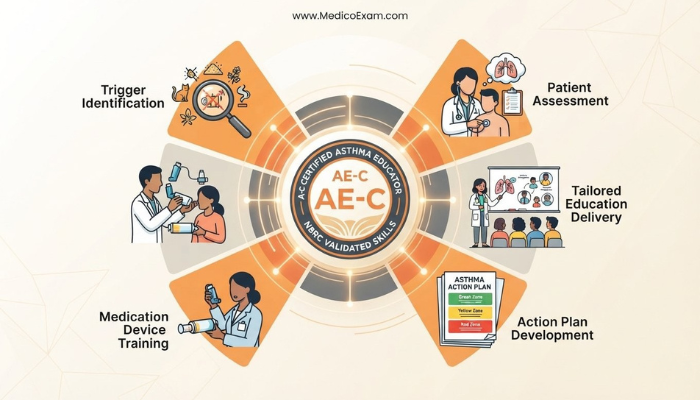
The AE-C certification is a nationally recognized credential that validates the specialized knowledge and skills of healthcare professionals in asthma education. It establishes a benchmark for excellence, ensuring that certified individuals are proficient in delivering comprehensive, evidence-based asthma education to patients of all ages. This specialization empowers educators to translate complex medical information into actionable strategies, fostering self-management skills crucial for improving patient outcomes.
What the AE-C Certification Validates
The AE-C credential specifically validates a professional's capacity to assess, educate, and support individuals with asthma. It confirms expertise in areas such as recognizing asthma triggers, understanding medication regimens, developing personalized asthma action plans, and utilizing appropriate devices. Professionals holding this certification are equipped to facilitate behavior change, manage acute exacerbations, and promote adherence to long-term control strategies, thereby significantly enhancing the quality of life for their patients.
Who Benefits from AE-C Credentialing
This certification is highly beneficial for a diverse group of healthcare practitioners who are actively involved in asthma care and education. While traditionally sought by respiratory therapists and registered nurses, the AE-C is also increasingly valuable for pharmacists, physical therapists, occupational therapists, physicians, physician assistants, and other allied health professionals. Anyone dedicated to improving the lives of individuals living with asthma through effective education will find the AE-C credential a powerful affirmation of their specialized abilities and commitment.
Evaluating the NBRC AE-C Exam Framework
Understanding the structure of the NBRC AE-C examination is fundamental for any candidate embarking on the certification journey. This rigorous assessment ensures that certified professionals possess the depth of knowledge required to excel as asthma educators. Familiarity with the format and logistics of the exam can significantly reduce test-day anxiety and improve performance.
Exam Structure and Logistics
The NBRC Asthma Educator Specialist (AE-C) exam is a comprehensive assessment designed to evaluate a candidate's mastery across key domains of asthma education. The exam, identified by the code AE-C, has a defined structure that candidates should review carefully.
-
Exam Name: NBRC Asthma Educator Specialist
-
Exam Code: AE-C
-
Exam Price: $350 for the first attempt; $250 for each repeat attempt
-
Duration: Candidates are allotted 210 minutes to complete the examination.
-
Number of Questions: The exam comprises 175 items. Of these, 150 questions are scored, while 25 are unscored pretest items used for future exam development.
This structure necessitates efficient time management and a broad understanding of the subject matter, as candidates must navigate a substantial number of questions within a limited timeframe. For further detailed insights into the exam, consider exploring this NBRC AE-C certification guide.
Demystifying the Scoring Process
The NBRC AE-C exam employs a pass/fail scoring mechanism. Candidates do not receive a numerical score but are informed whether they have met the required standard for certification. This outcome is determined by a criterion-referenced approach, meaning that a predefined standard of competence, rather than the performance of other candidates, dictates the passing threshold. This ensures that all certified individuals meet a consistent level of expertise in asthma education.
Exploring the Asthma Educator Specialist Syllabus Domains
The NBRC AE-C certification exam is structured around specific content domains, or syllabus topics, that reflect the multifaceted responsibilities of an asthma educator. A thorough understanding of these areas is paramount for comprehensive preparation. The NBRC's official NBRC page provides core details on these domains, ensuring candidates focus their study efforts effectively.
The Asthma Condition: Foundations of Knowledge
This foundational domain covers the core scientific and clinical understanding of asthma. It delves into the pathophysiology of the disease, including the inflammatory processes, airway hyperresponsiveness, and bronchoconstriction that characterize asthma. Educators must understand the various classifications of asthma, such as intermittent, mild persistent, moderate persistent, and severe persistent, along with their defining characteristics. Etiology, common triggers, and the genetic and environmental factors contributing to asthma development are also critical components.
Understanding Pathophysiology and Epidemiology
A deep grasp of how asthma affects the respiratory system at a cellular and systemic level, along with its prevalence and distribution within populations, informs effective education strategies. Educators must be able to explain these complex concepts clearly to patients and their families.
Assessment of an Individual with Asthma and Family: Comprehensive Evaluation
Effective asthma education begins with a thorough assessment. This domain focuses on the systematic collection and interpretation of data to understand a patient's asthma control, triggers, and readiness for self-management. It includes techniques for taking a comprehensive history, performing physical assessments, and interpreting diagnostic tests such as spirometry and peak flow monitoring. Crucially, it also encompasses assessing the patient’s health literacy, cultural background, and family dynamics, which all play a significant role in adherence and outcomes.
Implementing Diagnostic and Monitoring Tools
Proficiency in using and interpreting objective measures like peak expiratory flow rates (PEFR) and spirometry results is vital for gauging asthma control and treatment efficacy. Educators guide patients on proper technique and the significance of these tools.
Asthma Management: Interventions and Education
This is the practical core of asthma education, focusing on therapeutic interventions and educational strategies. It covers pharmacological treatments, including quick-relief medications (e.g., short-acting beta-agonists) and long-term control medications (e.g., inhaled corticosteroids, long-acting beta-agonists, leukotriene modifiers). Non-pharmacological interventions, such as environmental control, trigger avoidance, and exercise-induced asthma management, are also emphasized. A key aspect is the development and implementation of individualized asthma action plans, empowering patients to manage their condition proactively.
Pharmacological and Non-Pharmacological Strategies
Educators must be expert in explaining medication purposes, side effects, and correct device usage (inhalers, nebulizers). They also counsel on lifestyle modifications, allergen control, and managing comorbidities.
Organizational Issues: Systemic Impact on Care
The final domain acknowledges that asthma care does not occur in a vacuum. It addresses the broader organizational, ethical, and legal frameworks that influence asthma education and management. This includes understanding healthcare policies, quality improvement initiatives, reimbursement structures, and patient advocacy. Competence in this area ensures that educators can navigate healthcare systems, collaborate effectively with multidisciplinary teams, and contribute to systematic improvements in asthma care delivery. A more detailed content breakdown is available in the detailed content outline.
Navigating Healthcare Systems and Policy
An understanding of how healthcare policies, reimbursement, and ethical considerations impact patient access to care and education allows the AE-C to advocate effectively for patients and contribute to program development.
Strategic Advantages of AE-C Certification for Professionals
Attaining the AE-C certification offers numerous advantages that extend beyond personal professional development, significantly impacting patient care, career progression, and the overall quality of healthcare organizations. The strategic value of this credential is evident in its ability to foster advanced skills and promote a higher standard of practice in asthma education.
Elevating Patient Outcomes and Quality of Life
Certified Asthma Educators are equipped with specialized knowledge that directly translates into improved patient care. Their enhanced ability to assess individual needs, deliver tailored education, and empower patients for self-management leads to tangible health benefits. This includes a reduction in asthma exacerbations, fewer emergency department visits, and decreased hospitalizations. Ultimately, patients experience better asthma control, leading to an improved quality of life, increased participation in daily activities, and greater confidence in managing their chronic condition. The rigorous training behind the AE-C ensures educators are not just conveying information but facilitating genuine behavioral change.
Enhancing Professional Credibility and Career Trajectory
The AE-C credential serves as a powerful testament to a professional's specialized expertise and commitment within the field of respiratory care. For individuals seeking to advance their careers, this certification can open doors to new opportunities, leadership roles, and increased earning potential. Employers highly value certified professionals for their proven competency and dedication to patient education, often prioritizing them for specialized positions or program development roles. This recognition can lead to an NBRC AE-C certification salary increase and greater job satisfaction, positioning professionals as indispensable assets in multidisciplinary healthcare teams.
Driving Organizational Excellence in Asthma Care
Healthcare organizations benefit immensely from employing AE-C certified professionals. These individuals contribute to the development and implementation of evidence-based asthma education programs, ensuring that institutional practices align with national guidelines and best practices. Their expertise can lead to improved patient satisfaction scores, optimize resource utilization, and demonstrate a commitment to high-quality chronic disease management. Furthermore, certified educators can play a pivotal role in training other staff members, fostering a culture of continuous learning and excellence in asthma care across the organization.
Eligibility Requirements and Application Pathways
Before embarking on the NBRC AE-C certification journey, it is crucial for aspiring candidates to understand the specific eligibility criteria and navigate the application process effectively. Meeting these prerequisites is the first step towards validating your expertise as an asthma educator.
Prerequisites for Taking the AE-C Exam
The NBRC sets clear AE-C certification requirements and eligibility standards to ensure that candidates possess a foundational level of professional experience and education. While specific requirements can evolve, candidates typically must hold a valid license or credential as a healthcare professional (e.g., Registered Respiratory Therapist, Registered Nurse, Physician, Physician Assistant, Pharmacist, etc.). Additionally, a certain number of hours of asthma education experience are usually mandated, often gained through direct patient contact and educational activities related to asthma management. It is advisable to consult the official NBRC website for the most current and detailed eligibility guidelines before applying.
Navigating the Application Process
The application pathway generally involves submitting documentation that verifies your professional licensure, educational background, and relevant experience in asthma education. Candidates will need to complete an online application form, submit any required fees, and ensure all supporting documents are provided by the specified deadlines. Attention to detail during this phase is critical to avoid delays. Once the application is approved, candidates will receive authorization to schedule their exam at a designated testing center.
Crafting an Effective NBRC AE-C Exam Preparation Plan
Successful achievement of the AE-C certification hinges on a well-structured and comprehensive preparation strategy. Given the breadth of the NBRC Asthma Educator Specialist exam content, a disciplined approach to studying is essential for mastering the required knowledge domains.
Developing a Structured Study Schedule
A robust study schedule is the cornerstone of effective exam preparation. Candidates should allocate dedicated time slots for studying, treating them as non-negotiable appointments. Begin by reviewing the official NBRC AE-C exam domains and content outline to identify areas of strength and weakness. Prioritize topics that carry greater weight on the exam or those where your understanding is less solid. Break down the entire syllabus into manageable weekly or daily objectives, incorporating regular review sessions to reinforce learning. Consistency over intensity is key for long-term retention.
Identifying Premier Study Resources
Selecting the right study materials for NBRC AE-C is crucial. Beyond official NBRC documents, consider a variety of resources:
-
Textbooks: Comprehensive textbooks on respiratory care, asthma management, and patient education provide in-depth information.
-
Clinical Practice Guidelines: National and international asthma management guidelines (e.g., from NIH, GINA) offer current, evidence-based recommendations.
-
Online Courses and Webinars: Many professional organizations offer NBRC AE-C certification training course options designed specifically for asthma educators, often including interactive modules and expert instruction.
-
Peer Study Groups: Collaborating with other candidates can provide diverse perspectives, facilitate discussion, and offer mutual support.
Ensure your chosen resources are current and align with the latest clinical guidelines and NBRC content outline.
Utilizing Practice Questions for Mastery
Incorporating Asthma Educator Specialist certification practice questions into your study routine is indispensable for exam success. Practice questions help familiarize you with the exam format, question styles, and time constraints. They also serve as an excellent diagnostic tool, highlighting areas where further study is needed. Actively reviewing explanations for both correct and incorrect answers deepens understanding and reinforces critical concepts. For effective preparation, consider platforms that offer sample questions to simulate the actual exam experience. Engaging with realistic scenarios and applying theoretical knowledge to practical questions builds confidence and sharpens problem-solving skills. A comprehensive preparation guide can also integrate these resources effectively.
Mastering the NBRC AE-C Exam: Tips for Success
Beyond diligent study, success on the NBRC AE-C examination requires strategic planning for the exam day itself. Cultivating a calm, focused mindset and employing effective test-taking techniques can significantly influence your performance. Preparing to pass NBRC AE-C exam is not just about knowledge, but also about execution.
Exam Day Strategies
On the day of the exam, several NBRC AE-C certification exam tips can make a difference. Arrive at the testing center well in advance to avoid rushing. Ensure you have all required identification and adhere to all testing center rules. During the exam, read each question and all answer choices carefully before selecting the best response. If unsure, eliminate obviously incorrect options to increase your chances. Manage your time wisely, allocating roughly the same amount of time per question. If a question is particularly challenging, mark it for review and move on, returning to it if time permits. Avoid getting stuck on any single item.
Overcoming Test Anxiety
Test anxiety can be a significant barrier to performance. To combat this, practice relaxation techniques, such as deep breathing, in the weeks leading up to the exam. Ensure you get adequate sleep the night before and maintain a healthy diet. Visualize success and remind yourself of the extensive preparation you've undertaken. A positive mental attitude can help you remain focused and perform optimally under pressure. Trust in your preparation and your ability to apply your knowledge.
Sustaining Your Credential: AE-C Certification Renewal
Achieving the AE-C certification is a significant professional milestone, but maintaining its validity is equally important. The NBRC AE-C certification renewal process ensures that certified professionals remain current with the latest advancements in asthma education and clinical practice. This commitment to ongoing learning upholds the integrity and value of the credential.
Understanding Renewal Requirements
The NBRC typically requires certified individuals to renew their AE-C credential periodically, often every few years. This usually involves demonstrating continued competency through a combination of continuing education (CE) activities and, in some cases, re-examination. CE hours must be relevant to the domains of asthma education and can often be earned through accredited courses, conferences, workshops, or online modules. The NBRC provides specific guidelines on acceptable CE activities and the required number of hours. It is crucial for certified professionals to track their CE activities meticulously and submit documentation by the renewal deadline.
The Value of Continuous Professional Development
The renewal process underscores the dynamic nature of healthcare and the importance of lifelong learning. Engaging in continuous professional development ensures that asthma educators stay abreast of new research, emerging treatments, and evolving patient education strategies. This commitment not only secures the individual's certification but also guarantees that they continue to provide the highest standard of care and education to their patients, reinforcing the strategic value of AE-C certification.
Conclusion
The NBRC Asthma Educator Specialist (AE-C) certification is more than just a credential; it is a strategic investment in professional growth, enhanced patient outcomes, and a commitment to excellence in asthma care. Through its comprehensive examination covering the asthma condition, assessment, management, and organizational issues, the AE-C validates a unique and critical skill set. Professionals who achieve this certification not only elevate their own careers but also significantly contribute to improving the lives of individuals managing asthma, making a tangible difference in the healthcare landscape.
Embarking on the AE-C certification journey is a proactive step towards becoming a recognized expert in asthma education. We encourage all eligible healthcare professionals to pursue this valuable credential, utilizing the wealth of resources available to ensure thorough preparation. For comprehensive support, including practice questions and detailed study guides, explore the various NBRC certification resources to begin your path to becoming a Certified Asthma Educator Specialist.
FAQs
1. What is AE-C certification and why is it important for healthcare professionals?
The AE-C (Asthma Educator Specialist) certification is a credential offered by the National Board for Respiratory Care (NBRC) that validates a healthcare professional's expertise in educating and empowering individuals with asthma to manage their condition. It is important because it signifies specialized knowledge in asthma care, leading to improved patient outcomes, enhanced professional credibility, and career advancement opportunities.
2. What are the primary benefits of obtaining the NBRC AE-C certification?
Key benefits include elevated patient care through specialized education, leading to better asthma control and quality of life for patients. Professionals gain increased credibility, open doors to advanced career roles, potentially higher salaries, and become integral to their organization's commitment to quality asthma management programs.
3. What are the eligibility requirements for the AE-C certification exam?
Typically, candidates must hold a valid license or credential as a healthcare professional (e.g., RN, RRT, Pharmacist, Physician) and possess a specified number of hours of direct experience in asthma education. Specific criteria can vary, so consulting the official NBRC website for the most current requirements is always recommended.
4. How should I prepare for the NBRC Asthma Educator Specialist exam?
Effective preparation involves developing a structured study schedule, thoroughly reviewing the official NBRC AE-C exam domains, utilizing comprehensive textbooks and clinical guidelines, and engaging with practice questions. Participation in specialized training courses or study groups can also be highly beneficial.
5. What is the NBRC AE-C certification renewal process?
The renewal process for AE-C certification typically requires certified individuals to demonstrate ongoing competency through continuing education (CE) activities within a specific timeframe. These CE hours must be relevant to asthma education. In some cases, re-examination may be an option. Details should be confirmed via the official NBRC website.
- NBRC AE-C Question Bank |
- NBRC AE-C Eligibility & Requirements |
- NBRC Asthma Educator Practice Test |
- NBRC AE-C Exam Cost |
- NBRC AE-C Registration Process |
- NBRC Asthma Educator Study Guide |
- NBRC AE-C Recertification |
- NBRC AE-C Certification Overview |
- NBRC Asthma Educator Syllabus |
- NBRC AE-C Preparation Time |
- NBRC AE-C Passing Score |
- NBRC AE-C Exam Format |
- NBRC Asthma Educator Sample Questions |
- NBRC AE-C Career Opportunities |
- NBRC AE-C Exam Difficulty


