
Is NCC C-NNIC Your Next Big Career Leap?

The NCC Neonatal Neuro-Intensive Care (C-NNIC) certification represents a critical milestone for healthcare professionals dedicated to the complex and evolving field of neonatal neurocritical care. This advanced credential, offered by the National Certification Corporation (NCC), validates specialized knowledge and expertise in managing the neurological needs of high-risk newborns within the Neonatal Intensive Care Unit (NICU). It is designed for experienced registered nurses and advanced practice registered nurses who seek to elevate their practice, enhance patient outcomes, and demonstrate a profound commitment to this demanding specialty. This comprehensive guide will explore the C-NNIC exam's structure, content, benefits, and strategic preparation approaches, helping you determine if pursuing this certification aligns with your professional aspirations and career trajectory.
Advancing Expertise: The NCC C-NNIC Certification's Purpose
The NCC C-NNIC certification specifically targets the intricate demands of neonatal neuro-intensive care, a specialty focused on preventing and treating brain injury in fragile infants. This credential signifies a nurse's proven competency in assessing, planning, implementing, and evaluating care for neonates with neurological conditions. Achieving this certification underscores a commitment to the highest standards of evidence-based practice and a profound understanding of the unique challenges faced by these vulnerable patients. It's not merely an acknowledgment of experience but a testament to specialized skill and continuous learning.
For those considering this advanced step, understanding the depth of knowledge required is paramount. The C-NNIC exam ensures that certified professionals possess the skills to navigate complex cases, from early detection of neurological deficits to implementing neuroprotective strategies and supporting long-term neurodevelopmental outcomes. This level of expertise directly translates into improved care quality and safety within the NICU environment.
Professionals often pursue this certification to enhance their credibility, expand their career opportunities, and contribute more effectively to multidisciplinary care teams. It positions them as leaders in neonatal neurocritical care, capable of influencing practice, educating peers, and advocating for optimal patient care. To truly understand the scope, one should review comprehensive details about the NCC C-NNIC certification itself, including its requirements and benefits.
Examining the C-NNIC Structure: Key Assessment Components
Understanding the foundational structure of the NCC C-NNIC exam is essential for effective preparation. This certification assesses a candidate's mastery across several critical domains, ensuring a holistic understanding of neonatal neuro-intensive care. The examination is meticulously designed to evaluate both theoretical knowledge and its practical application in complex clinical scenarios. Candidates must demonstrate proficiency in various aspects, from initial assessment to ongoing management and discharge planning.
Delving into Exam Logistics and Fees
The NCC Neonatal Neuro-Intensive Care (C-NNIC) exam is a rigorous assessment designed to validate specialized knowledge. Key details for candidates include:
-
Exam Price: The total cost for the C-NNIC certification is $210 (USD). This fee is comprised of a $50 non-refundable application submission cost and a $160 testing fee.
-
Duration: Candidates are allotted 120 minutes (2 hours) to complete the examination.
-
Number of Questions: The exam consists of 125 questions in total. Out of these, 100 items are scored, while the remaining 25 questions are pretest items that do not count towards the final score but are used for future exam development.
-
Passing Score: The NCC C-NNIC exam is graded on a pass/fail basis, indicating that candidates must meet a predetermined standard of competence to earn the certification.
These details are crucial for candidates to plan their application and testing process accurately. For an in-depth review of official requirements and application steps, referring to the official exam information is highly recommended.
Outlining the C-NNIC Content: Syllabus Breakdown
The NCC C-NNIC exam's content outline provides a detailed roadmap of the knowledge areas assessed, broken down by weighted percentages to guide study efforts. Each domain represents a vital aspect of neonatal neuro-intensive care, reflecting the multifaceted nature of the specialty.
The primary domains and their respective weightings are:
-
Neurologic Development and Evaluation of the Fetus and Newborn - 21%: This section covers the normal and abnormal development of the fetal and neonatal nervous system, including comprehensive neurological assessment techniques and gestational age considerations.
-
Diagnostic Tools - 17%: Focuses on the various imaging modalities, laboratory tests, and monitoring techniques used to diagnose neurological conditions in neonates, along with their interpretation.
-
Pathologic States and Neuroprotection - 34%: As the largest section, it delves into the pathophysiology, clinical presentation, management, and neuroprotective strategies for a wide array of neurological disorders affecting neonates, such as hypoxic-ischemic encephalopathy, stroke, seizures, and congenital anomalies.
-
Neuro-sensory Development, Psychosocial, Behavioral States, Follow-up and Discharge - 23%: Explores the promotion of optimal neuro-sensory development, understanding infant behavioral states, addressing psychosocial needs of families, and planning for comprehensive follow-up care and discharge.
-
Professional Issues (e.g. Evidence-Based Practice, Professional, Legal, Ethical, and Safety) - 5%: This smaller but crucial section covers the principles of evidence-based practice, ethical dilemmas, legal considerations, and safety protocols relevant to neonatal neuro-intensive care.
A thorough understanding of these syllabus topics is fundamental for any candidate aspiring to pass the C-NNIC exam. Each percentage reflects the relative importance and prevalence of that content area within the clinical practice of neonatal neuro-intensive care, guiding where to allocate significant study time.
Evaluating Benefits: The Impact of C-NNIC Certification
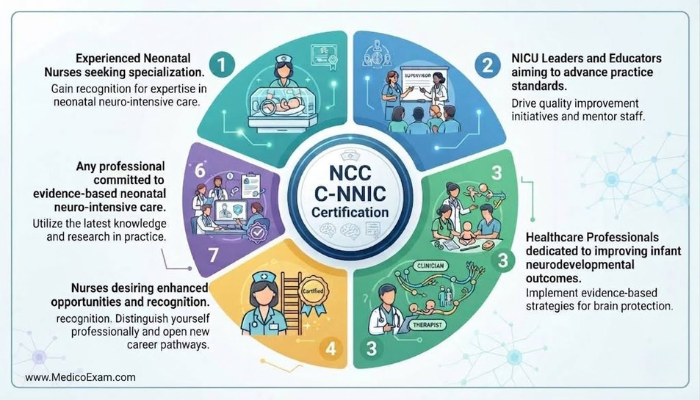
Achieving the NCC C-NNIC certification offers a multitude of benefits, extending beyond individual professional growth to significantly impact patient care and the broader healthcare community. This credential serves as a powerful testament to a nurse's advanced capabilities and dedication in a highly specialized field. The value derived from certification can be seen in several key areas, influencing both personal career trajectories and the quality of neonatal neuro-intensive care delivery.
Professional Recognition and Career Advancement
Certification by the NCC carries substantial weight within the nursing profession, signaling to colleagues, employers, and regulatory bodies a commitment to excellence. For C-NNIC certified professionals, this translates into:
-
Enhanced Credibility: Demonstrates a verified level of specialized knowledge in neonatal neuro-intensive care, distinguishing certified nurses as experts.
-
Career Opportunities: Opens doors to advanced roles, leadership positions, and specialized units within the NICU or neurocritical care settings.
-
Increased Earning Potential: Often correlates with higher salaries and benefits, reflecting the demand for highly skilled specialists.
-
Professional Respect: Fosters a greater sense of respect from peers and physicians, acknowledging the depth of expertise.
-
Self-Confidence: Provides personal validation of one's skills and knowledge, boosting confidence in complex clinical decision-making.
These tangible benefits highlight how the C-NNIC certification can be a pivotal step in a professional nursing career, providing pathways for growth and recognition within the neonatal neurocritical care community.
Elevating Patient Care and Safety Standards
The ultimate goal of any clinical certification is to improve patient outcomes, and the C-NNIC is no exception. Nurses certified in Neonatal Neuro-Intensive Care are equipped with advanced skills and knowledge that directly enhance the quality and safety of care for vulnerable neonates.
-
Optimized Assessment: Certified nurses possess a refined ability to conduct thorough neurological assessments, leading to earlier detection of subtle changes and potential complications in infant brain injury monitoring in the NICU.
-
Evidence-Based Interventions: They are proficient in applying the latest evidence-based practices for neuroprotection and managing pathologic states, ensuring the most effective and safest treatments.
-
Improved Clinical Judgment: The comprehensive knowledge base supports superior clinical judgment, enabling more precise and timely interventions for neonates with complex neurological needs.
-
Enhanced Patient Advocacy: Certified professionals are better positioned to advocate for appropriate resources, therapies, and long-term follow-up plans for their patients, promoting holistic care.
-
Reduced Complications: Through proactive and specialized care, C-NNIC nurses contribute to minimizing secondary brain injury and improving neurodevelopmental outcomes for neonates at risk.
This direct impact on patient care underscores the profound value of the NCC C-NNIC certification, making it a critical asset for any NICU dedicated to providing the highest standard of neuro-intensive care.
Grasping Core Knowledge: Navigating the C-NNIC Domains
The NCC C-NNIC examination delves deeply into several core domains, each representing a critical area of expertise for neonatal neuro-intensive care nurses. A comprehensive understanding of these areas is not only vital for passing the exam but also for excelling in clinical practice. The syllabus reflects the complex interplay of developmental neuroscience, diagnostic methodologies, and therapeutic interventions required for this specialized field.
Unpacking Neurologic Development and Evaluation
This foundational domain, accounting for 21% of the exam, focuses on the intricacies of neurological development from gestation through the newborn period. Candidates must demonstrate an in-depth understanding of:
-
Fetal and Neonatal Brain Development: Normal anatomical and physiological maturation, including critical periods of development and vulnerability.
-
Neurological Assessment: Advanced techniques for conducting comprehensive neonatal neurological assessment techniques, evaluating reflexes, tone, posture, and cranial nerve function in neonates of varying gestational ages.
-
Developmental Milestones: Recognizing deviations from typical neurodevelopmental trajectories and early signs of neurological impairment.
-
Risk Factors: Identifying maternal and neonatal risk factors that predispose infants to neurological injury or abnormal development.
Proficiency in this area ensures that nurses can accurately assess the neurological status of newborns, laying the groundwork for appropriate interventions and monitoring. It covers the earliest stages of brain health, from in utero development to post-natal adaptation.
Mastering Diagnostic Tools and Interpretation
Representing 17% of the exam, this section covers the various methods used to identify and characterize neurological conditions in neonates. Nurses must be adept at understanding:
-
Neuroimaging Techniques: Principles, indications, and interpretation of modalities such as cranial ultrasound, MRI, CT scans, and diffusion tensor imaging (DTI).
-
Electrophysiological Monitoring: Understanding EEG, amplitude-integrated EEG (aEEG), and evoked potentials (e.g., BAER, SSEP) for detecting seizure activity, assessing brain function, and prognostication.
-
Laboratory Diagnostics: Interpretation of cerebrospinal fluid (CSF) analysis, genetic testing, metabolic screenings, and blood markers indicative of neurological injury or disease.
-
Cerebral Oxygenation and Perfusion Monitoring: Techniques like Near-Infrared Spectroscopy (NIRS) and their role in advanced neonatal neuro-intensive care concepts, ensuring adequate blood flow and oxygen delivery to the brain.
A strong grasp of these diagnostic tools allows nurses to collaborate effectively with physicians and interpret findings, contributing significantly to accurate diagnosis and treatment planning.
Navigating Pathologic States and Neuroprotection
This is the largest domain on the C-NNIC exam, comprising 34% of the content, reflecting its critical importance in daily clinical practice. It directly addresses the prevention, recognition, and management of various brain injuries and disorders prevalent in the neonatal population. Nurses must possess an intricate understanding of both the disease processes and the protective measures designed to safeguard the developing brain.
Comprehensive Understanding of Neurological Conditions
This area demands a deep knowledge of specific pathological states, including:
-
Hypoxic-Ischemic Encephalopathy (HIE): Pathophysiology, clinical staging, therapeutic hypothermia management, and associated long-term outcomes.
-
Intraventricular Hemorrhage (IVH) and Periventricular Leukomalacia (PVL): Grading, monitoring, management strategies, and implications for neurodevelopment.
-
Neonatal Seizures: Recognition of subtle seizure types, pharmacological and non-pharmacological management, and monitoring techniques.
-
Stroke: Types of neonatal stroke, risk factors, diagnostic approaches, and acute management.
-
Congenital Brain Anomalies: Understanding common malformations, associated clinical presentations, and management principles.
-
Infections (e.g., Meningitis, Encephalitis): Diagnosis, treatment, and neurological sequelae.
Each condition requires a nuanced approach, combining immediate medical intervention with ongoing neurodevelopmental considerations. The ability to differentiate between these states and implement appropriate care is a core competency validated by the C-NNIC.
Implementing Neuroprotective Interventions
Beyond understanding specific pathologies, nurses must also be proficient in applying neuroprotective strategies, which aim to minimize brain injury and optimize recovery. This includes:
-
Therapeutic Hypothermia: Meticulous management protocols, physiological monitoring, and potential complications.
-
Glucose Homeostasis: Maintaining optimal glucose levels to prevent hypoglycemia-induced brain injury.
-
Ventilatory Management: Strategies to optimize gas exchange and avoid fluctuations in cerebral blood flow and pressure.
-
Fluid and Electrolyte Balance: Ensuring appropriate hydration and electrolyte levels to support cerebral function.
-
Pain Management: Implementing effective pain assessment and management strategies to reduce stress and its impact on the developing brain.
-
Minimizing Environmental Stress: Creating a neurodevelopmentally supportive NICU environment through noise reduction, light modulation, and clustered care.
These interventions are central to the role of a C-NNIC certified nurse, demonstrating a proactive approach to preserving neurological health in critical neonates. Professionals can gain further insight into these practices by reviewing the official candidate guide provided by NCC.
Promoting Holistic Care: Neuro-sensory Development and Follow-up
The C-NNIC exam also emphasizes the long-term well-being of neonates, dedicating 23% of its content to neuro-sensory development, psychosocial aspects, behavioral states, and critical follow-up and discharge planning. This section moves beyond acute care to encompass the broader spectrum of recovery and integration into family life, ensuring a comprehensive understanding of the infant's journey.
Addressing Psychosocial and Behavioral Considerations
Nurses in neonatal neuro-intensive care must recognize the profound impact of the NICU environment on both the infant and their family. Key areas include:
-
Neurodevelopmental Support: Implementing strategies to promote optimal neuro-sensory development for neonates, including appropriate positioning, handling, and sensory input.
-
Behavioral States: Understanding and interpreting infant behavioral states and cues as indicators of comfort, stress, and neurological integrity.
-
Family-Centered Care: Integrating families into the care plan, providing emotional support, education, and resources to cope with the stress of having an infant in the NICU.
-
Psychosocial Impact: Recognizing the long-term psychosocial impact of prematurity and neurological injury on infants and families, and identifying resources for support.
This holistic perspective ensures that the care provided extends beyond medical interventions to nurture the infant's overall development and support the family unit.
Ensuring Effective Follow-up and Discharge Planning
A critical component of successful neonatal neuro-intensive care is the seamless transition from hospital to home, supported by robust follow-up care. This domain covers:
-
Discharge Planning: Developing comprehensive discharge plans tailored to the specific neurodevelopmental needs of each infant, including medication management, feeding plans, and emergency protocols.
-
Neurodevelopmental Assessment for Neonates: Understanding the importance of structured neurodevelopmental assessment for neonates at key intervals post-discharge to identify and address developmental delays early.
-
Referrals and Resources: Connecting families with appropriate community resources, early intervention programs, and specialist follow-up appointments (e.g., neurology, ophthalmology, audiology, physical/occupational therapy).
-
Parental Education: Empowering parents with the knowledge and skills necessary to provide specialized care at home and recognize signs of concern.
Effective follow-up and discharge planning are crucial for maximizing neurodevelopmental outcomes and supporting families through the transition, solidifying the continuous care continuum.
Maintaining Professional Integrity: Evidence-Based Practice and Ethics
The final domain, accounting for 5% of the NCC C-NNIC exam, focuses on the professional responsibilities and ethical considerations inherent in neonatal neuro-intensive care. While a smaller percentage, its importance is paramount, underpinning all clinical decisions and interactions. This section ensures that certified nurses practice within a framework of ethical principles, legal guidelines, and evidence-based standards.
Upholding Ethical and Legal Frameworks
Nurses are routinely faced with complex decisions that require sound ethical judgment. This domain addresses:
-
Evidence-Based Practice: Integrating current research findings and best practices into clinical decision-making to optimize patient care. This includes critically appraising literature and applying findings appropriately.
-
Professional Accountability: Understanding the scope of practice, professional standards, and the importance of continuous learning and competency maintenance.
-
Ethical Principles: Applying ethical principles such as beneficence, non-maleficence, autonomy, and justice to complex situations in neonatal neuro-intensive care, particularly concerning end-of-life decisions, withdrawal of care, and parental rights.
-
Legal Considerations: Awareness of legal aspects such as informed consent, confidentiality, mandatory reporting, and professional liability.
-
Patient Safety: Implementing strategies to ensure a safe care environment, prevent medical errors, and adhere to institutional and national safety guidelines.
This section reinforces the role of the C-NNIC certified nurse as an ethical practitioner and a patient advocate, ensuring that specialized care is delivered with integrity and adherence to the highest professional standards.
Shaping Your C-NNIC Exam Preparation Strategy
A well-structured preparation strategy is indispensable for successfully navigating the NCC C-NNIC exam. Given the breadth and depth of the syllabus, a systematic approach will maximize your chances of success. Effective preparation involves not only dedicated study but also strategic resource utilization and self-assessment.
Developing a Comprehensive Study Guide
Crafting a personalized study guide is the cornerstone of effective preparation. This involves:
-
Content Outline Review: Thoroughly reviewing the official NCC C-NNIC exam content outline and weighting percentages to identify high-yield areas. Allocate study time proportionally.
-
Textbook Resources: Utilizing standard neonatal nursing textbooks and specialized neurocritical care texts as foundational resources. Focus on chapters aligned with the syllabus topics.
-
Journal Articles and Guidelines: Staying current with recent research, clinical practice guidelines, and position statements from professional organizations related to neonatal neuro-intensive care.
-
Note-Taking and Summarization: Actively engaging with material by taking detailed notes, creating flashcards for key terms, and summarizing complex concepts to reinforce understanding.
-
Study Groups: Collaborating with peers in a study group can provide diverse perspectives, facilitate discussion, and help clarify challenging topics.
A tailored study guide ensures that all critical areas are covered systematically, building a robust knowledge base for the exam.
Leveraging Practice Questions and Review Courses
Beyond passive study, active learning and self-assessment are vital. Incorporating practice questions and considering a review course can significantly enhance preparation.
-
NCC Neonatal Neuro-Intensive Care Practice Questions: Regularly engaging with practice questions helps familiarize you with the exam format, question types, and time management. It also identifies knowledge gaps that require further study.
-
C-NNIC Exam Study Guide: Many reputable resources offer comprehensive study guides specifically designed for the C-NNIC exam, providing focused content review and practice exercises.
-
NCC Neonatal Neuro-Intensive Care Exam Review Course: Participating in a specialized review course can offer structured learning, expert-led instruction, and targeted preparation strategies. These courses often include simulated exams and in-depth discussions of complex topics.
-
Simulation and Case Studies: Working through clinical case studies or simulated scenarios can help apply theoretical knowledge to practical situations, enhancing critical thinking skills.
When selecting resources, ensure they align with the official NCC C-NNIC exam content outline. For those seeking comprehensive preparation tools, exploring effective study materials can provide valuable practice questions and review content tailored for certification success.
Avoiding Common C-NNIC Preparation Pitfalls
While effective preparation is key, recognizing and avoiding common pitfalls can save valuable time and effort, increasing your likelihood of success on the NCC C-NNIC exam. Many candidates inadvertently stumble due to inefficient study habits or relying on unreliable resources. Being aware of these traps allows for a more focused and ethical study journey.
Navigating Study Materials Ethically
A significant pitfall in certification preparation involves the use of unethical study materials. It is critical for candidates to:
-
Shun Exam Dumps: Absolutely avoid "exam dumps" or "braindumps," which are collections of questions illegally obtained from past exams. Using such materials not only undermines the integrity of the certification process but can also lead to suspension or revocation of your credential if discovered.
-
Prioritize Official Resources: Always prioritize official NCC-recommended study materials, textbooks, and reputable review courses. These sources provide accurate, up-to-date content that genuinely reflects the exam's domains.
-
Focus on Understanding, Not Memorization: The C-NNIC exam assesses understanding and application, not rote memorization of specific questions. Relying on dumps encourages superficial memorization without true comprehension, which will not serve you well in clinical practice or on the exam.
-
Ethical Practice: Upholding professional ethics extends to your preparation process. Engaging in fair and honest study habits reinforces the values of the nursing profession.
Maintaining integrity throughout your preparation ensures that your certification genuinely reflects your expertise and commitment to neonatal neuro-intensive care.
Final Considerations: Is NCC C-NNIC Your Next Step?
Deciding whether the NCC C-NNIC certification is the right career leap involves careful reflection on your professional goals, current experience, and dedication to neonatal neuro-intensive care. This credential is a significant investment of time, effort, and resources, but its potential returns in career advancement, professional recognition, and enhanced patient outcomes are substantial. It validates a specialized skill set highly sought after in advanced NICU settings.
The journey to C-NNIC certification not only enhances your knowledge base but also solidifies your commitment to a field that demands continuous learning and exceptional clinical acumen. It's a pathway for nurses who aspire to be at the forefront of neurological care for the most fragile patient population. By understanding the exam’s rigorous content and committing to a diligent, ethical preparation strategy, you can confidently pursue this impactful credential.
Ultimately, the NCC C-NNIC certification is more than just a title; it is a declaration of your expertise, your dedication to neuroprotection, and your pivotal role in shaping the neurodevelopmental future of countless infants. It empowers you to provide the highest standard of care, advocate for your patients, and lead within your specialty.
The NCC C-NNIC certification offers a pathway to recognized specialization and leadership in neonatal neuro-intensive care. If you are an experienced neonatal nurse seeking to formalize your expertise and elevate your impact, this credential warrants serious consideration. Begin by thoroughly reviewing the official NCC guidelines and the comprehensive syllabus to align your experience with the exam's demands. To explore comprehensive exam resources and begin your preparation journey, consider utilizing trusted platforms that provide structured study materials and practice tests. This commitment could be the defining moment in your career, positioning you as an indispensable expert in an increasingly vital field.
FAQs
1. What specific skills does the NCC C-NNIC certification validate?
The NCC C-NNIC certification validates a nurse's advanced skills in neonatal neurological assessment, interpretation of diagnostic tools, management of pathologic brain states, implementation of neuroprotective strategies, and comprehensive neuro-sensory developmental care, including effective follow-up and discharge planning.
2. What are the general requirements to be eligible for the NCC C-NNIC exam?
Eligibility for the NCC C-NNIC exam typically requires current licensure as a registered nurse (RN) or advanced practice registered nurse (APRN) and a certain number of hours of direct patient care experience in neonatal neuro-intensive care, as specified in the official NCC candidate guide. Specific hour requirements vary, so candidates should consult the NCC website for the most current details.
3. How long does the NCC C-NNIC certification remain valid, and what is required for renewal?
NCC certifications, including C-NNIC, typically have a validity period of three years. Renewal generally requires ongoing professional development, which may include continuing education units (CEUs), practice hours, or re-examination, depending on NCC's current policies. Candidates should refer to the NCC website for specific renewal criteria to maintain their credential.
4. Does achieving C-NNIC certification open doors to specific advanced roles or responsibilities?
Yes, achieving C-NNIC certification often qualifies nurses for specialized advanced roles in neonatal neuro-intensive care, such as clinical nurse specialists, charge nurses, educators, or researchers focused on neonatal neurology. It enhances credibility and demonstrates a high level of expertise, making certified professionals highly sought after for complex care coordination and leadership positions within the NICU.
5. Are there any recommended study materials or preparation resources for the NCC C-NNIC exam?
Recommended study materials for the NCC C-NNIC exam typically include comprehensive neonatal nursing textbooks, specialized neurocritical care references, professional journal articles, and official NCC practice resources. Many candidates also benefit from structured review courses and C-NNIC specific study guides, which help consolidate knowledge and offer practice questions. Always refer to the official NCC candidate guide for a list of suggested resources.
- NCC C-NNIC Question Bank |
- NCC C-NNIC Eligibility & Requirements |
- NCC Neonatal Neuro-Intensive Care Practice Test |
- NCC C-NNIC Exam Cost |
- NCC C-NNIC Registration Process |
- NCC Neonatal Neuro-Intensive Care Study Guide |
- NCC C-NNIC Recertification |
- NCC C-NNIC Certification Overview |
- NCC Neonatal Neuro-Intensive Care Syllabus |
- NCC C-NNIC Preparation Time |
- NCC C-NNIC Passing Score |
- NCC C-NNIC Exam Format |
- NCC C-NNIC Exam Difficulty |
- NCC C-NNIC Career Opportunities |
- NCC Neonatal Neuro-Intensive Care Sample Questions


