
Struggling with NBRC ACCS? Find Your Winning Strategy Here
The NBRC Adult Critical Care Specialty (ACCS) credential validates the advanced knowledge and skills of respiratory therapists working in critical care environments. This specialization, offered by the NBRC, is designed for experienced Registered Respiratory Therapists (RRTs) who deliver complex respiratory care to critically ill adult patients. Earning the ACCS certification demonstrates a commitment to excellence and a deep understanding of the specialized practices required in high-acuity settings. This comprehensive guide will outline eligibility, strategic preparation methods, essential study resources, and practical tips to help you navigate the NBRC ACCS examination and achieve certification success.
Understanding the NBRC ACCS Credential
The NBRC ACCS certification signifies a respiratory therapist's expertise in providing advanced critical care services to adult patients. It assesses a professional's ability to apply specialized knowledge in areas like advanced ventilation strategies, hemodynamic monitoring, critical care pharmacology, and emergency procedures. This credential not only enhances a respiratory therapist's professional standing but also reinforces their crucial role within the multidisciplinary critical care team, contributing to improved patient outcomes in intensive care units and emergency departments.
Role of the Adult Critical Care Specialist
An Adult Critical Care Specialist, often a Registered Respiratory Therapist (RRT) holding the NBRC ACCS, performs a wide array of advanced functions essential for managing critically ill adults. Their responsibilities extend beyond conventional respiratory care, encompassing intricate ventilator management, non-invasive ventilation techniques, advanced airway management, and the ability to respond swiftly to acute cardiopulmonary crises. These specialists are integral to patient assessment, implementation of life support, and ongoing evaluation of treatment efficacy, making crucial decisions that impact patient survival and recovery.
Why Earn the ACCS?
Pursuing the ACCS certification offers numerous professional and personal benefits for respiratory therapists. Beyond bolstering clinical confidence, it signals to employers and peers a superior level of competence and dedication to specialized care. This can translate into expanded career opportunities, eligibility for advanced practice roles, and often, increased earning potential. Furthermore, the rigorous preparation required for the ACCS deepens a therapist's understanding of critical care principles, directly enhancing the quality and safety of patient care they provide daily.
Eligibility Requirements for ACCS Certification
Before embarking on your NBRC ACCS preparation journey, it is crucial to confirm your eligibility. The NBRC sets specific criteria to ensure that candidates possess the foundational knowledge and clinical experience necessary for this advanced specialty examination. Typically, candidates must hold the Registered Respiratory Therapist (RRT) credential and have accumulated a specified amount of clinical experience working with critically ill adult patients. Verification of current RRT status and detailed clinical experience are prerequisites for applying.
Assessing Your Qualification
Evaluating your readiness involves more than just meeting the minimum experience; it requires an honest assessment of your current practice and comfort level with advanced critical care concepts. Prospective candidates should review the NBRC's official eligibility requirements on their website to ensure full compliance. This often includes specific clinical practice hours accumulated within adult critical care settings, demonstrating direct involvement in advanced respiratory interventions and patient management. Confirming these details early prevents potential delays in the application process. You can find comprehensive details about eligibility on the NBRC official examination page.
Application Process Steps
The application for the NBRC ACCS exam is a structured process designed to verify your credentials and experience. It typically involves submitting an online application, providing proof of your RRT credential, and documenting your critical care clinical experience. Attention to detail is paramount during this stage, as any discrepancies or missing information can lead to processing delays. Once your application is approved, you will receive authorization to schedule your examination at an approved testing center, marking a significant step toward your certification.
Crafting Your NBRC ACCS Study Plan
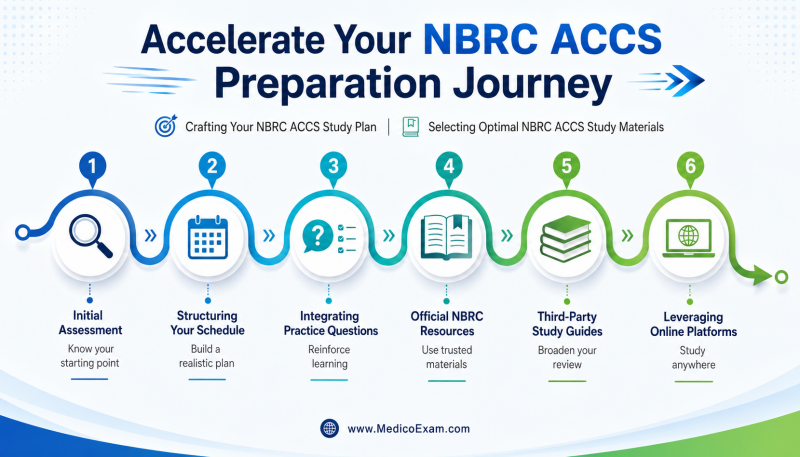
A well-structured study plan is the cornerstone of successful NBRC ACCS preparation. Given the breadth and depth of critical care topics, a haphazard approach can quickly become overwhelming. Start by assessing your current knowledge base and identifying areas that require more attention. Then, create a realistic schedule that integrates various study methods, ensuring you cover all essential domains without burnout.
Initial Assessment and Gap Analysis
Begin your study journey with a thorough self-assessment to pinpoint your strengths and weaknesses. Utilize diagnostic tests from reputable study materials to get a baseline understanding of your knowledge across critical care domains. This initial analysis will reveal specific areas where you need to focus your efforts, allowing you to allocate study time efficiently and create a targeted learning path rather than reviewing every topic equally.
Structuring Your Study Schedule
Develop a detailed study schedule that breaks down the vast ACCS syllabus into manageable daily or weekly segments. Allocate dedicated time slots for active learning, review, and practice questions. Consistency is key; even short, focused study sessions can accumulate significant progress over time. Remember to incorporate regular breaks to prevent fatigue and enhance retention, ensuring your brain remains fresh and receptive to new information.
Integrating Practice Questions
Regularly integrating practice questions into your study routine is vital for solidifying knowledge and improving test-taking skills. These questions help reinforce concepts, identify persistent weak areas, and familiarize you with the exam's format and question style. Treat practice sessions as real exam simulations to build stamina and reduce anxiety, preparing you for the pressure of the actual NBRC ACCS examination.
Selecting Optimal NBRC ACCS Study Materials
Choosing the right study materials is pivotal for effective NBRC ACCS preparation. With numerous resources available, discerning which ones align best with the exam blueprint and your learning style can significantly impact your success. A combination of official NBRC resources, trusted third-party guides, and interactive online platforms often provides the most comprehensive approach.
Official NBRC Resources
The NBRC itself provides invaluable resources that should form the foundation of your study. These often include the exam content outline or blueprint, which details the specific domains and their respective weightages on the exam. Reviewing these official documents ensures your study efforts are aligned with the actual test content, maximizing your efficiency and focus. Utilizing these direct sources provides clarity on what the NBRC expects candidates to know and understand.
Third-Party Study Guides and Question Banks
Complementing official resources with high-quality third-party study guides and extensive question banks is a common strategy for many successful candidates. Look for materials that offer detailed explanations, realistic practice questions, and comprehensive coverage of advanced critical care topics. These resources often provide different perspectives and teaching methods that can clarify complex concepts, offering a robust foundation for your learning. For comprehensive study resources and practice questions, consider exploring dedicated platforms like ACCS exam preparation to enhance your understanding.
Leveraging Online Platforms
The digital age offers a wealth of online platforms, webinars, and forums dedicated to NBRC ACCS preparation. These can provide interactive learning experiences, peer support, and access to mock exams that simulate the real testing environment. Engaging with online communities can also offer valuable insights, study tips, and motivation from others on a similar journey, enriching your overall preparation strategy. Selecting a platform that offers detailed explanations for correct and incorrect answers can significantly boost your learning.
Maximizing Your NBRC ACCS Exam Day Experience
The journey to NBRC ACCS certification culminates on exam day. Effective preparation extends beyond mastering the content to include strategic planning for the day itself. Ensuring you are well-rested, mentally prepared, and equipped with a clear understanding of the logistics can significantly enhance your performance and reduce test-day anxiety.
Pre-Exam Logistics and Preparation
In the days leading up to the exam, finalize all logistical arrangements. Confirm your testing center location, travel route, and arrival time. Gather all required identification documents and familiarize yourself with the testing center's rules and procedures. A good night's sleep and a nutritious meal before the exam are non-negotiable for optimal cognitive function. Avoid last-minute cramming, as this can increase stress and impair recall.
Strategies for Test-Taking Success
During the NBRC ACCS exam, employ strategic test-taking techniques. Read each question carefully, paying close attention to keywords and exclusionary terms. Eliminate obviously incorrect answer choices first to improve your odds. If unsure, make an educated guess rather than leaving a question unanswered, as there's typically no penalty for incorrect answers. Manage your time effectively, ensuring you allocate sufficient time to complex questions without dwelling excessively on any single item.
Managing Exam Anxiety
It's natural to feel some anxiety on exam day, but excessive stress can hinder performance. Practice relaxation techniques such as deep breathing or mindfulness to calm your nerves. Remind yourself of the extensive preparation you've undertaken and trust in your knowledge. Focusing on the present moment and each question can help keep anxiety at bay, allowing you to concentrate fully on demonstrating your expertise.
The Power of Practice Tests for ACCS Success
Practice tests are indispensable tools in your NBRC ACCS preparation arsenal. They offer a realistic simulation of the actual examination, allowing you to gauge your readiness and refine your test-taking strategies. Engaging with a variety of practice questions not only reinforces learned concepts but also exposes you to different question styles, enhancing your adaptability on exam day.
Benefits of Simulated Exams
Taking simulated NBRC ACCS exams provides multiple advantages. They help you become accustomed to the exam format, question types, and time constraints. This familiarity reduces anxiety and builds confidence, making the actual test feel less daunting. Furthermore, practice tests offer an opportunity to identify patterns in your errors, revealing areas that consistently challenge you and require further review.
Analyzing Practice Test Results
Simply completing practice tests is not enough; the true value lies in the detailed analysis of your results. Review every question, especially those you answered incorrectly or struggled with. Understand the rationale behind the correct answers and why your chosen answer was wrong. This process of deep review solidifies your understanding, transforms mistakes into learning opportunities, and allows you to refine your study approach.
Choosing Effective Practice Tools
When selecting practice tests, prioritize quality over quantity. Opt for resources that closely mirror the NBRC ACCS exam blueprint in terms of content, difficulty, and question style. Look for platforms that offer detailed explanations for both correct and incorrect answers, allowing you to learn from every attempt. Diverse question banks ensure comprehensive coverage and prevent memorization of specific questions, fostering a deeper understanding of the underlying critical care principles. For a valuable resource offering practice questions and further insights, visit the ACCS FAQs and preparation guide.
Interpreting Your NBRC ACCS Score
Upon completing the NBRC ACCS examination, understanding how your score is interpreted is crucial, regardless of the outcome. The NBRC employs a robust scoring methodology to ensure fairness and accuracy, assessing your mastery across the various domains of adult critical care. Knowing what your score signifies can help you evaluate your performance and plan your next steps effectively.
Understanding Scoring Mechanics
The NBRC ACCS exam utilizes a scaled scoring system rather than a simple raw score. This means your raw number of correct answers is converted to a standardized scale, accounting for potential variations in exam difficulty across different versions. A predetermined passing score on this scale ensures all certified individuals meet the same competency standard. The official NBRC website provides general information regarding their scoring practices for their certifications.
What Your Score Means for Your Career
Achieving a passing score on the NBRC ACCS exam confirms your advanced competence in adult critical care respiratory therapy, opening doors to enhanced career opportunities and professional recognition. If you do not pass, the score report often provides feedback on your performance in different content areas, offering valuable guidance for future re-attempts. Regardless of the initial outcome, the pursuit of this certification itself demonstrates a strong commitment to professional growth.
Realizing the Long-Term Value of ACCS Certification
Earning the NBRC ACCS credential is more than just passing an exam; it's an investment in your professional future and a commitment to higher standards of patient care. The long-term benefits extend far beyond immediate recognition, profoundly impacting your career trajectory and contributions to the healthcare field.
Career Advancement and Recognition
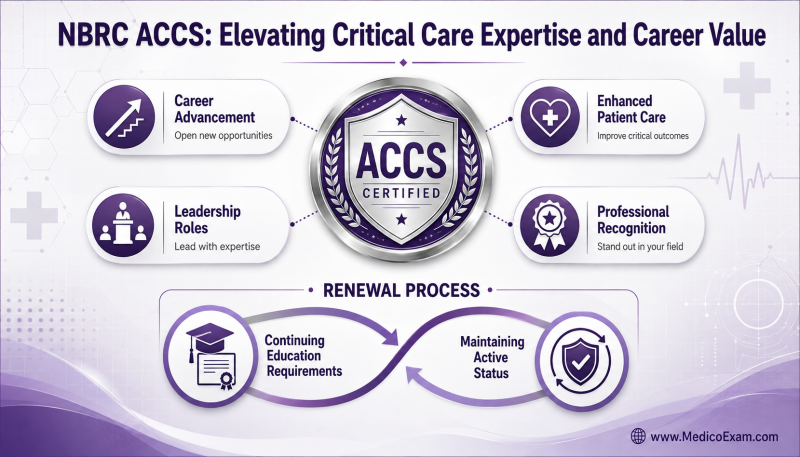
The ACCS credential significantly elevates your professional profile, making you a highly sought-after expert in adult critical care. This specialization can lead to opportunities for leadership roles, clinical educator positions, or involvement in advanced practice initiatives within hospitals and healthcare systems. It provides tangible evidence of your advanced capabilities, setting you apart in a competitive field and signaling a commitment to continuous professional development.
Enhanced Patient Care Outcomes
At its core, the NBRC ACCS certification is about enhancing the quality and safety of patient care. Respiratory therapists with this credential possess a deeper, more nuanced understanding of complex critical care interventions and patient physiology. This specialized knowledge directly translates into more effective clinical decision-making, proactive management of acute conditions, and ultimately, improved outcomes for critically ill adult patients.
Sustaining Your ACCS Credential Through Renewal
Maintaining your NBRC ACCS certification is an ongoing commitment that ensures your knowledge and skills remain current within the rapidly evolving field of critical care. The NBRC has a renewal process designed to encourage continuous learning and professional development, safeguarding the integrity and relevance of the credential.
Continuing Education Requirements
To renew your ACCS credential, you must typically meet specific continuing education (CE) requirements within a designated timeframe. These requirements often involve accumulating a certain number of continuing education units (CEUs) through approved programs relevant to respiratory care and adult critical care. Staying proactive in your professional development ensures you remain at the forefront of clinical practice and research.
Maintaining Active Status
Beyond CEUs, the renewal process usually involves re-affirming your commitment to the NBRC's code of ethics and professional standards. Ensuring timely submission of all required documentation and fees is essential to avoid any lapse in your certification. Maintaining active ACCS status demonstrates your unwavering dedication to specialized critical care and its critical role in patient management. For official information about the NBRC and its various examinations, including renewal, you can visit the NBRC website.
Avoiding Common NBRC ACCS Preparation Pitfalls
While the NBRC ACCS exam is challenging, many common mistakes can hinder even the most dedicated candidates. Recognizing and actively avoiding these pitfalls can significantly streamline your preparation and increase your chances of success. A proactive approach to managing your study habits and mindset is crucial.
Over-Reliance on Rote Memorization
The NBRC ACCS exam emphasizes critical thinking, clinical reasoning, and the application of knowledge, not just rote memorization. Simply memorizing facts without understanding the underlying physiological principles and clinical implications will likely prove insufficient. Focus on grasping concepts, understanding "why" interventions are chosen, and how they impact patient outcomes in various scenarios.
Neglecting Time Management
Effective time management is paramount during your preparation. Procrastination or an inconsistent study schedule can lead to overwhelming stress closer to the exam date. Create a realistic study timeline and stick to it, allocating sufficient time for each content area and integrating regular reviews. Poor time management during the actual exam can also prevent you from completing all questions, so practice pacing yourself during mock tests.
Ignoring Self-Care
The intensity of ACCS preparation can be demanding, making self-care an often-overlooked yet critical component of success. Neglecting adequate sleep, nutrition, and stress relief can lead to burnout, reduced cognitive function, and decreased motivation. Prioritize your well-being throughout the study process to ensure you arrive at the exam mentally and physically sharp.
Final Steps to NBRC Adult Critical Care Specialty Achievement
As you approach the final stages of your NBRC ACCS preparation, a focused and confident mindset is crucial. This is the time to consolidate your knowledge, refine your strategies, and ensure all logistical elements are in place. These last steps are designed to build your confidence and ensure you are fully prepared to demonstrate your expertise on exam day.
Reviewing Core Concepts
In the weeks leading up to the exam, concentrate on reviewing high-yield core concepts and your identified weak areas. Utilize flashcards, summary notes, and quick reference guides to efficiently revisit key information. Focus on understanding the relationships between different physiological systems and how various interventions impact the critically ill patient. This comprehensive review reinforces your learning and addresses any lingering uncertainties.
Building Confidence for Exam Day
Confidence is a powerful asset on exam day. Trust in the extensive preparation you have undertaken. Visualize yourself successfully navigating the exam, applying your knowledge, and making informed decisions. Engage in positive self-talk and remind yourself that you are capable and prepared. A calm and self-assured demeanor will allow you to access your knowledge more effectively during the test.
The NBRC ACCS certification represents a significant achievement for respiratory therapists dedicated to adult critical care. By systematically approaching your preparation, utilizing effective study strategies, and maintaining a positive mindset, you can confidently pursue this advanced credential. This journey not only enhances your professional standing but also reinforces your vital role in delivering exceptional care to the most vulnerable patients.
Achieving your NBRC ACCS certification is a testament to your expertise and dedication. To further support your preparation, explore comprehensive resources and practice opportunities that can provide the edge you need. Visit detailed ACCS exam information to find additional insights and tools tailored for your success.
Frequently Asked Questions
1. What is the NBRC ACCS certification?
The NBRC Adult Critical Care Specialty (ACCS) certification is an advanced credential for Registered Respiratory Therapists (RRTs) who demonstrate specialized knowledge and skills in managing critically ill adult patients. It signifies expertise in complex respiratory care within intensive care and emergency settings.
2. Who is eligible to take the NBRC ACCS exam?
Typically, candidates must hold the Registered Respiratory Therapist (RRT) credential and have accumulated a specified amount of clinical experience working directly with critically ill adult patients. Specific requirements can be found on the official NBRC website.
3. How long does NBRC ACCS certification last?
NBRC ACCS certification typically requires periodic renewal, often every five years. This renewal usually involves meeting continuing education requirements and submitting an application to ensure ongoing competency in the field.
4. What kind of topics are covered on the NBRC ACCS exam?
The NBRC ACCS exam covers advanced critical care topics including, but not limited to, advanced ventilation strategies, hemodynamic monitoring, critical care pharmacology, emergency procedures, patient assessment in critical illness, and various life support techniques specific to adult critical care.
5. What are the benefits of NBRC ACCS certification?
Earning the NBRC ACCS certification can lead to enhanced career opportunities, eligibility for advanced practice roles, increased earning potential, and greater professional recognition. It also validates a higher level of competence, contributing to improved patient care outcomes in critical settings.
- NBRC Adult Critical Care Specialty Syllabus |
- NBRC ACCS Eligibility & Requirements |
- NBRC ACCS Preparation Time |
- NBRC ACCS Passing Score |
- NBRC ACCS Registration Process |
- NBRC Adult Critical Care Specialty Study Guide |
- NBRC ACCS Exam Format |
- NBRC ACCS Certification Overview |
- NBRC ACCS Question Bank |
- NBRC Adult Critical Care Specialty Practice Test |
- NBRC ACCS Exam Cost |
- NBRC ACCS Recertification |
- NBRC Adult Critical Care Specialty Sample Questions |
- NBRC ACCS Career Opportunities


