
Unlock 2026's Top EHR Role: NHA CEHRS Pathway

The NHA Certified Electronic Health Records Specialist (NHA CEHRS) certification stands as a pivotal credential for professionals aiming to excel in the intricate world of healthcare data management. This certification, offered by the National Healthcareer Association (NHA), validates a professional's competency in maintaining accuracy, integrity, and security of electronic health records. Individuals aspiring to uphold the highest standards in health information technology, ensuring patient data is both protected and accessible, should consider pursuing this specialized credential. This comprehensive article delves into the significance of the NHA CEHRS role, outlines its professional advantages, guides prospective candidates through preparation strategies, and explores the rewarding career prospects that await certified specialists.
Validating Expertise in Health Records Technology
The NHA CEHRS certification defines the core competencies required to manage and utilize electronic health records effectively within a clinical environment. Certified specialists are instrumental in ensuring compliance with regulatory standards such as HIPAA, performing vital data entry and retrieval tasks, and maintaining the accuracy of patient information. Their expertise supports efficient healthcare delivery and plays a critical role in enhancing patient safety and privacy. Pursuing this certification demonstrates a commitment to professional excellence and a deep understanding of the technological backbone supporting modern healthcare.
Professionals with the NHA CEHRS credential are equipped to tackle the daily challenges of EHR systems, from troubleshooting common issues to optimizing workflows. They serve as essential links between clinical staff, IT departments, and patients, facilitating seamless information exchange. The rigorous certification process ensures that only those with a validated skill set are entrusted with such sensitive and important data.
Shaping EHR Management Standards
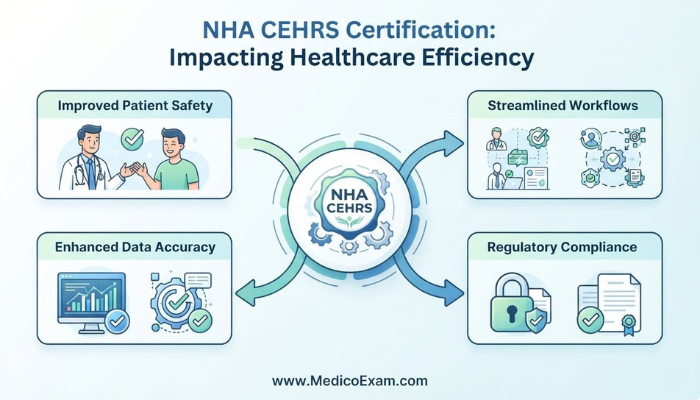
Certified Electronic Health Records Specialists are at the forefront of implementing and managing digital health information systems. Their responsibilities extend beyond mere data entry, encompassing the integrity and security of the entire EHR lifecycle. These professionals play a crucial part in standardizing documentation, training staff on system usage, and adhering to strict legal and ethical guidelines governing patient data.
Key areas of responsibility include:
-
Data Stewardship: Ensuring the accuracy, completeness, and consistency of health records across various platforms.
-
System Optimization: Collaborating with IT to enhance EHR system functionality and user experience for clinical and administrative staff.
-
Compliance Assurance: Upholding stringent regulatory requirements, particularly HIPAA, to safeguard patient privacy and data security.
-
Workflow Integration: Facilitating the smooth integration of EHR systems into daily clinical operations, improving efficiency and reducing errors.
-
User Support: Providing essential training and support to healthcare providers and administrative personnel on effective EHR utilization.
The role demands a keen eye for detail, strong organizational skills, and a foundational understanding of both clinical processes and information technology. CEHRS professionals contribute significantly to the overall quality and efficiency of healthcare services, proving indispensable in today's digital clinics and hospitals.
Advancing Your Career Trajectory
Obtaining the NHA CEHRS certification provides a tangible boost to career progression in healthcare administration and health information management. It distinguishes professionals in a competitive job market, signaling to employers a verified proficiency in a high-demand skill set. The certification opens doors to specialized roles and increased earning potential, reflecting the critical value these specialists bring to healthcare organizations.
Benefits of holding this credential include:
-
Enhanced Employability: Certified individuals often have a distinct advantage in securing positions that require specialized EHR knowledge and compliance expertise.
-
Increased Earning Potential: NHA Certified Electronic Health Records Specialist salary expectations are typically higher than for uncertified professionals in similar roles, reflecting the demand for their specialized skills.
-
Professional Credibility: The certification serves as official recognition of expertise, building trust with employers, colleagues, and patients regarding data handling capabilities.
-
Career Mobility: Opens pathways to various roles, including medical office specialist, health information technician, EHR implementation specialist, and compliance assistant.
-
Continuous Learning: Encourages ongoing professional development, ensuring specialists remain current with evolving healthcare technologies and regulations.
Moreover, the NHA CEHRS certification helps professionals adapt to the dynamic landscape of healthcare technology, ensuring they remain relevant and valuable contributors to the industry. For a deeper understanding of the career possibilities and industry insights, consider visiting the NHA official certification page.
Charting a Course for Exam Success
Successful preparation for the NHA CEHRS exam requires a structured and dedicated approach, focusing on key domains and practical application. Candidates should familiarize themselves with the exam's content structure, allocate sufficient study time, and utilize high-quality resources to build a solid foundation of knowledge. Effective preparation strategies not only aim for passing the exam but also ensure a comprehensive understanding of real-world EHR management.
A comprehensive study plan should typically incorporate:
-
Understanding the Content Areas: Focus on all core domains covered by the NHA CEHRS exam, which encompass patient demographics, clinical documentation, legal and ethical considerations, and administrative aspects of EHRs.
-
Utilizing Official Study Materials: Leverage resources provided or recommended by NHA, such as study guides, online practice assessments, and review courses, to align your preparation with exam objectives.
-
Hands-on Practice: Seek opportunities to interact with EHR systems, even if simulated, to gain practical experience in data entry, retrieval, and system navigation.
-
Time Management: Develop a realistic study schedule, breaking down complex topics into manageable segments, and dedicating consistent time each week for review.
• Practice Examinations: Regularly take NHA CEHRS practice test simulations to identify areas of weakness, gauge your readiness, and become familiar with the exam format and timing. It's crucial to understand why specific answers are correct or incorrect to deepen your knowledge. You can find useful resources for official NHA test plan to guide your study.
Effective preparation for the NHA CEHRS exam is about building a robust knowledge base and confidence in applying that knowledge. Candidates are encouraged to explore various learning methods to find what best suits their individual learning style and maximizes their retention of complex information.
Evaluating Your Path to Certification
Embarking on the journey to NHA CEHRS certification involves understanding the requirements and committing to the process. This credential signifies a professional's capability in managing electronic health records and adhering to the stringent demands of healthcare information. Prospective candidates should carefully assess their eligibility and dedication before beginning their study regimen, ensuring they meet all necessary NHA CEHRS certification requirements for examination.
Consider the following aspects when evaluating your readiness:
-
Educational Background: Most candidates have a high school diploma or GED, alongside completing an NHA-approved training program or possessing relevant work experience in a healthcare setting.
-
Experience Level: While not always mandatory, prior exposure to medical office administration or health information management can significantly aid in understanding the practical applications covered in the exam.
-
Time Commitment: Preparing for the NHA CEHRS exam demands a significant investment of time and effort for studying and practicing the material.
-
Financial Investment: Be aware of the NHA CEHRS exam cost, which typically includes the examination fee and any associated costs for study materials or training courses.
-
Personal Drive: A strong desire to contribute positively to healthcare data integrity and patient care will serve as a powerful motivator throughout the certification process.
The NHA CEHRS pathway is designed for individuals who are serious about establishing a career in health information technology. By meticulously evaluating their circumstances and aligning them with the certification's demands, candidates can set themselves up for a successful and fulfilling professional journey.
Operationalizing Health Information Skills
The NHA CEHRS certification validates a comprehensive skill set essential for the operational management of electronic health records within various healthcare settings. These skills extend across multiple domains, ensuring that certified professionals can handle diverse tasks from data entry to compliance and security. Mastery of these operational skills is crucial for maintaining the efficiency and integrity of patient information systems.
The NHA Certified Electronic Health Records Specialist domains typically include:
-
Regulatory Compliance: Adhering to federal and state laws, including HIPAA, concerning patient privacy and data security.
-
Record Management: Competently managing patient information, including accurate documentation, storage, and retrieval of electronic health records.
-
Data Integrity: Ensuring the quality, accuracy, and completeness of health data to support optimal patient care and billing processes.
-
EHR System Application: Demonstrating proficiency in using various EHR software applications for scheduling, coding, and clinical documentation.
-
Ethical Responsibilities: Understanding and applying ethical principles in handling sensitive patient information and maintaining confidentiality.
These domains highlight the multifaceted nature of the CEHRS role, requiring both technical acumen and a strong understanding of healthcare ethics and regulations. Candidates can enhance their preparation by engaging with NHA CEHRS sample questions to apply theoretical knowledge to practical scenarios, thereby reinforcing their operational skills.
Defining Professional Credibility and Growth
Achieving NHA CEHRS certification significantly elevates a professional's standing, offering a clear career path within the health information management sector. This credential is a testament to an individual's validated knowledge and commitment to maintaining the highest standards in electronic health record keeping. It defines a specialist’s capability to perform crucial functions that safeguard patient data and streamline healthcare operations, contributing to a robust NHA CEHRS career path.
The credibility gained from certification translates into several professional advantages:
-
Employer Recognition: Many healthcare employers prioritize or require NHA CEHRS certification, viewing it as a benchmark for quality and competence in EHR management roles.
-
Adaptability to Industry Changes: The foundational knowledge acquired through certification equips professionals to adapt quickly to new EHR technologies and evolving regulatory landscapes.
-
Networking Opportunities: Being part of a certified professional community can lead to valuable networking and mentorship opportunities within the healthcare industry.
-
Contribution to Patient Care: CEHRS professionals indirectly improve patient care by ensuring accurate, accessible, and secure health records, which are vital for informed clinical decisions.
The NHA CEHRS certification is not just a stepping stone; it's a launchpad for sustained professional growth and influence in the digital age of healthcare. By demonstrating proficiency in managing complex health data, certified specialists are poised to become leaders in their field, driving improvements in health information technology. Further details on the certification can be explored via the NHA official certification page.
Navigating the Evolving Healthcare Landscape
The healthcare industry continues its rapid digital transformation, making the role of a Certified Electronic Health Records Specialist more vital than ever. As technologies advance and regulatory frameworks evolve, NHA CEHRS professionals are essential in ensuring that healthcare organizations remain compliant, efficient, and secure in their data handling practices. The future outlook for this specialization remains strong, driven by the ongoing shift towards paperless systems and the increasing complexity of health data.
Anticipated trends and impacts on the CEHRS role include:
-
Increased Interoperability Demands: As healthcare systems strive for seamless data exchange, CEHRS professionals will be key in managing interfaces and ensuring data flows accurately between different platforms.
-
Focus on Data Analytics: Specialists may increasingly be involved in helping interpret EHR data to identify trends, improve public health initiatives, and support clinical research.
-
Cybersecurity Enhancements: With growing cyber threats, CEHRS professionals will play a front-line role in implementing and monitoring security protocols to protect sensitive patient information.
-
Telehealth Expansion: The rise of telehealth services necessitates robust EHR management to support remote patient care, from appointment scheduling to secure documentation of virtual consultations.
-
Personalized Medicine: EHRs will be central to the development of personalized treatment plans, requiring CEHRS professionals to manage more granular and diverse data sets.
Professionals who earn the NHA CEHRS certification are not only securing a role for today but also positioning themselves as indispensable assets for the future of healthcare. Their expertise in maintaining the integrity and accessibility of electronic health records will continue to be a cornerstone of modern, patient-centered care.
The NHA CEHRS certification represents more than just a credential; it signifies a professional's dedication to excellence in managing the vital backbone of modern healthcare—electronic health records. By acquiring this certification, individuals not only enhance their immediate career prospects but also solidify their position as essential contributors to a healthcare system increasingly reliant on digital data. The pathway to becoming an NHA CEHRS certified professional is a strategic investment in a stable, impactful, and evolving career.
Take the definitive step towards mastering EHR management and securing a pivotal role in healthcare. Begin your journey today by exploring the comprehensive NHA CEHRS certification resources and leveraging specialized study tools. For detailed information on preparing effectively and navigating common challenges, consider our extensive NHA CEHRS preparation guide to empower your success.
FAQs
1. What is the NHA CEHRS certification?
The NHA CEHRS (Certified Electronic Health Records Specialist) certification validates a professional's competency in managing electronic health records, ensuring accuracy, integrity, and security within healthcare settings.
2. Who should pursue the NHA CEHRS certification?
This certification is ideal for healthcare professionals, administrative staff, and individuals seeking entry into health information management roles who wish to specialize in electronic health records.
3. What are the primary benefits of NHA CEHRS certification?
Benefits include enhanced employability, increased earning potential, greater professional credibility, and expanded career opportunities within the rapidly evolving field of health information technology.
4. How long is NHA CEHRS certification valid?
NHA certifications typically require renewal every two years through continuing education credits, ensuring professionals remain current with industry standards and practices.
5. What kind of roles can an NHA CEHRS certified professional hold?
Certified professionals can work as Electronic Health Records Specialists, Health Information Technicians, Medical Office Specialists, Clinical Documentation Specialists, and Compliance Assistants, among other roles.
- NHA CEHRS Question Bank |
- NHA CEHRS Eligibility & Requirements |
- NHA Electronic Health Records Specialist Practice Test |
- NHA CEHRS Exam Cost |
- NHA CEHRS Registration Process |
- NHA Electronic Health Records Specialist Study Guide |
- NHA CEHRS Recertification |
- NHA CEHRS Certification Overview |
- NHA Electronic Health Records Specialist Syllabus |
- NHA CEHRS Preparation Time |
- NHA CEHRS Passing Score |
- NHA CEHRS Exam Format |
- NHA Electronic Health Records Specialist Sample Questions |
- NHA CEHRS Career Opportunities |
- NHA CEHRS Exam Difficulty


