
Unlock CIRCC: The Uncommon Strategies of High Scorers
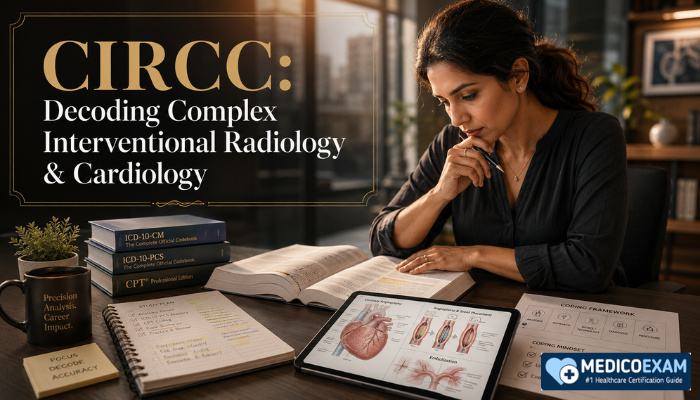 The Certified Interventional Radiology Cardiovascular Coder (CIRCC) credential, offered by AAPC, validates a coder's proficiency in the complex and highly specialized domain of interventional radiology and cardiovascular coding. This certification is designed for professionals who manage the intricate coding challenges associated with procedures like cardiac catheterization, angiography, and vascular interventions. Earning the CIRCC credential signals a deep understanding of CPT codes, modifiers, and guidelines specific to these high-stakes procedures, making it a valuable asset for coders aiming to excel in cardiology and interventional radiology settings. This comprehensive guide outlines the uncommon strategies that distinguish high scorers and will prepare you to approach the CIRCC exam with confidence.
Grasping the CIRCC Credential's Strategic Importance
Achieving the CIRCC credential is more than just adding another certificate to your resume; it's a strategic move that significantly enhances your professional standing and earning potential within a specialized and demanding field. This certification demonstrates an advanced skill set, separating you from generalist coders and positioning you as an expert in cardiovascular and interventional radiology coding. The intricate nature of these procedures requires meticulous attention to detail and a profound understanding of anatomical, physiological, and procedural nuances.
The CIRCC credential directly addresses the growing demand for specialized coding professionals who can accurately interpret complex medical documentation and apply the correct codes, ensuring proper reimbursement and compliance. It validates a coder’s ability to navigate challenging scenarios, such as multiple procedures, bundled services, and correct modifier application, which are common in interventional and cardiovascular services. This expertise translates into fewer claim denials, improved revenue cycles, and enhanced compliance for healthcare organizations. Understanding these benefits motivates candidates to delve deeper into preparation, fostering a commitment beyond mere rote memorization.
Cultivating a Strategic Study Mindset for CIRCC Success
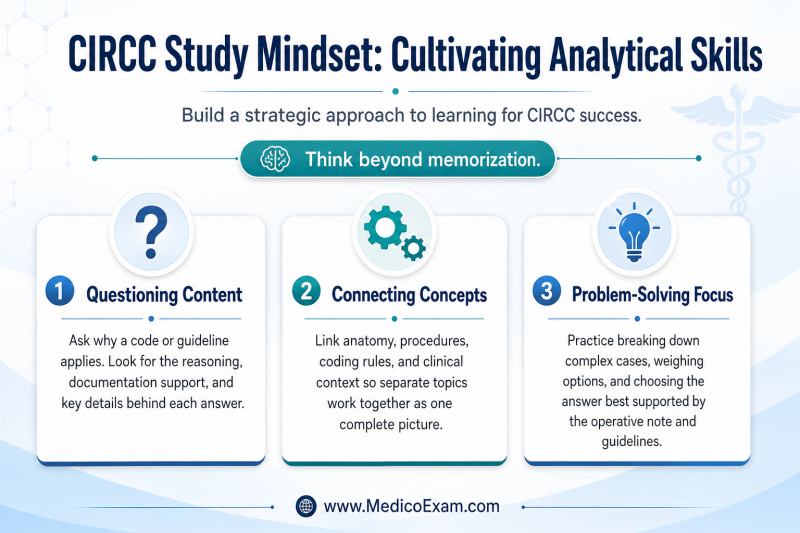 Approaching the CIRCC exam requires more than just dedicated study hours; it demands a strategic shift in your mindset. High scorers don't just review material; they actively engage with it, questioning, analyzing, and connecting concepts. This proactive mindset transforms passive learning into a dynamic process that builds lasting knowledge and critical thinking skills essential for the exam. Embracing challenges as learning opportunities and maintaining a resilient attitude are foundational elements.
Adopting an Analytical Learning Approach
Instead of simply reading through textbooks, top candidates dissect information. They ask "why" codes are applied in certain situations, "how" different procedures interact, and "what" impact specific modifiers have. This analytical approach helps to solidify understanding rather than relying on temporary recall. It's about building a robust framework of knowledge that can withstand the pressure of diverse exam questions.
To foster this analytical mindset, consider these practices:
-
Questioning Content: As you review guidelines, ask yourself challenging questions about their application. Why is this code appropriate here and not there?
-
Connecting Concepts: Draw diagrams or create flowcharts that illustrate the relationships between different coding guidelines, anatomical structures, and procedural steps.
-
Problem-Solving Focus: Treat every study session as an opportunity to solve coding puzzles, not just memorize answers.
Embracing Continuous Improvement
The path to CIRCC success involves acknowledging weaknesses and actively working to improve them. This means critically evaluating your performance on practice questions and identifying recurring patterns of error. High scorers don't shy away from difficult topics; they lean into them, understanding that these are often the areas that differentiate top performance.
Mastering Complex Cardiovascular and Interventional Radiology Codes
The core of the CIRCC exam revolves around a deep mastery of codes for cardiovascular and interventional radiology procedures. These are some of the most intricate and rapidly evolving areas in medical coding, requiring coders to stay updated with the latest CPT guidelines, payer policies, and anatomical specifics. Success hinges on a comprehensive understanding of procedural intent, documentation nuances, and correct code sequencing.
Deconstructing Cardiovascular Procedures
Cardiovascular coding involves understanding procedures like cardiac catheterization, coronary artery bypass grafting (CABG), pacemaker insertions, and electrophysiology studies. Each procedure has distinct components that dictate code selection, including access sites, vessel involved, diagnostic versus interventional intent, and the use of imaging guidance. A common pitfall is incorrectly assigning codes based solely on the procedure name without analyzing the full report.
Key areas to focus on include:
-
Cardiac Catheterization: Distinguish between diagnostic and interventional caths, understanding selective vs. non-selective catheter placement, and associated codes for interventions like angioplasty or stenting.
-
Pacemakers and ICDs: Understand component coding for generator, leads, and associated services (e.g., programming, testing, revisions).
-
Electrophysiology Studies: Differentiate between diagnostic EP studies and ablations, knowing the correct codes for various mapping techniques and lesion creations.
Navigating Interventional Radiology Coding
Interventional radiology (IR) covers a vast array of minimally invasive procedures performed across various organ systems, often involving radiological guidance. These procedures frequently involve complex vascular access, selective catheterization, and a combination of diagnostic and therapeutic interventions. For a more detailed look at the certification requirements, candidates can visit the detailed certification requirements page. The challenge lies in accurately capturing all services rendered, including multiple interventions in different vascular families, and correctly applying modifiers for laterality, bilateral procedures, or distinct procedural services.
Critical IR coding areas include:
-
Angiography and Angioplasty/Stenting: Differentiate between diagnostic angiograms and therapeutic interventions. Master selective catheterization rules across different vascular families.
-
Embolization Procedures: Understand the indications, types of embolization, and correct coding for various organ systems (e.g., uterine fibroid embolization, tumor embolization).
-
Biopsies and Drainage Procedures: Correctly code image-guided biopsies, fluid drainages, and aspirations, paying close attention to the imaging modality used.
Effective Preparation Beyond Basic Review
High scorers go beyond simply reviewing textbooks; they integrate a variety of dynamic learning methods to solidify their understanding and apply knowledge effectively. This includes immersing themselves in real-world documentation, dissecting complex case studies, and actively participating in coding communities. Such multifaceted preparation builds the practical skills needed to interpret difficult scenarios on the exam.
Analyzing Actual Medical Documentation
One of the most effective strategies involves regularly reviewing redacted operative reports, procedure notes, and imaging reports for interventional radiology and cardiology cases. This practice hones your ability to extract critical information, identify key anatomical structures, recognize procedural steps, and differentiate between documented services. This real-world exposure bridges the gap between theoretical knowledge and practical application, a skill heavily tested in the CIRCC exam.
Leveraging Practice Tests for CIRCC Mastery
Practice tests are an indispensable tool for CIRCC preparation, but their effectiveness depends on how they are utilized. High scorers don't just take practice tests; they analyze their performance meticulously. Each incorrect answer is an opportunity for learning, revealing gaps in knowledge or misunderstandings of coding guidelines. Engaging with challenging practice questions prepares you for the rigor of the actual exam. To explore sample questions and gauge your readiness, you can visit sample questions online.
Effective practice test utilization includes:
-
Timed Simulations: Replicate exam conditions by taking practice tests within the allotted time frame. This helps improve time management and reduces exam day anxiety.
-
Error Analysis: For every question missed, determine not just the correct answer, but why your initial choice was wrong. Was it a guideline misunderstanding, a misinterpretation of the scenario, or a lack of attention to detail?
-
Targeted Review: Use performance feedback to identify weak areas and focus your subsequent study on those specific topics or coding chapters.
Simulating Exam Conditions for Peak Performance
The CIRCC exam is not just a test of knowledge, but also a test of endurance, time management, and ability to perform under pressure. High scorers meticulously simulate exam conditions during their preparation to build stamina and identify potential issues before the actual test day. This practice reduces anxiety and allows candidates to approach the exam with a familiar rhythm and heightened focus.
Mimicking the Exam Environment
Create a testing environment that closely mirrors what you will experience on exam day. This includes using only approved coding manuals, setting a timer, and minimizing distractions. Practicing in this way helps your brain adapt to the stress of timed assessment and allows you to experiment with different strategies for navigating the questions and managing your time. This deliberate practice is crucial for optimizing your performance.
Consider these aspects for simulation:
-
Code Manuals: Only use the coding manuals you will bring to the exam. Familiarize yourself with their layout and how to quickly locate information.
-
Distraction-Free Zone: Choose a quiet location where you will not be interrupted, just as you would expect during the actual exam.
-
Breaks: Plan and practice short breaks, similar to what might be allowed during the actual exam, to reset your focus.
Developing a Strategic Approach to Time Management
Time is a critical factor in the CIRCC exam. Many candidates possess the knowledge but struggle to complete all questions within the given timeframe. High scorers develop a precise strategy for allocating time per question, knowing when to move on from a difficult question and how to efficiently use their coding manuals. This proactive approach prevents falling behind and ensures all questions receive appropriate attention. For more insights on the official exam structure and guidelines, refer to AAPC's official page.
Key time management tactics include:
-
Pacing Practice: During simulations, practice spending an average amount of time on each question. If a question is taking too long, mark it and return later.
-
Code Manual Familiarity: Practice quickly navigating your code manuals. Use tabs, highlights, and notes (within AAPC guidelines) to speed up code lookup.
-
Review Strategy: Allocate a few minutes at the end of each section to review marked questions or those you were unsure about.
Decoding Difficult CIRCC Questions
The CIRCC exam is renowned for its challenging scenarios, often presenting complex clinical documentation that requires astute interpretation. High scorers excel at systematically breaking down these difficult questions, identifying critical keywords, and eliminating distractor answers. This systematic approach helps to cut through ambiguity and arrive at the most accurate coding solution, even when faced with dense or confusing information.
Implementing a Structured Question Analysis
When faced with a complex question, avoid the temptation to jump immediately to the answer choices. Instead, adopt a structured method to analyze the question stem and scenario. This involves identifying the core procedure, any associated diagnoses, anatomical specifics, and the intent of the intervention. A clear understanding of the clinical narrative is paramount before attempting to select a code.
A structured analysis might involve:
-
Read the Question First: Understand what the question is asking before diving into the detailed scenario.
-
Highlight Key Information: Underline or mentally note critical data points such as anatomical sites, instruments used, diagnostic findings, and the outcome of the procedure.
-
Identify the Procedure and Approach: Determine the primary procedure performed and the method of access (e.g., femoral, radial).
-
Evaluate Imaging Guidance: Note if imaging guidance was used and how it was documented.
Applying Strategic Elimination Techniques
Once you have analyzed the question, approach the answer choices strategically. Many multiple-choice questions include distractor answers that are plausible but incorrect based on subtle details or specific coding rules. By systematically eliminating answers that are clearly wrong or less appropriate, you increase your chances of selecting the correct option. This method is particularly effective for questions where multiple codes might seem applicable.
Strategies for elimination include:
-
Rule Out Based on Specificity: Eliminate generic codes when a more specific code is available for the documented service.
-
Check for Bundling Issues: Remove answers that bundle services that should be reported separately, or separate services that are inherently bundled.
-
Verify Modifier Usage: Ensure that any included modifiers are correctly applied to the procedure and scenario.
-
Cross-Reference with Guidelines: If unsure, quickly reference your coding manuals to confirm the rules for specific codes or scenarios.
Sustaining Focus and Preventing Burnout
The extensive nature of CIRCC preparation can lead to mental fatigue and burnout if not managed effectively. High scorers understand the importance of balancing intense study with self-care, maintaining motivation, and creating a sustainable study schedule. This holistic approach ensures that mental acuity remains sharp throughout the preparation period and on exam day.
Structuring a Balanced Study Schedule
A well-structured study schedule incorporates regular breaks, adequate rest, and time for personal activities. Avoid cramming, which leads to superficial learning and increased stress. Instead, divide your study material into manageable chunks and allocate specific times for review, practice questions, and active recall exercises. Consistency over intensity is key to long-term retention.
Prioritizing Mental and Physical Well-being
Taking care of your mental and physical health is non-negotiable for optimal exam performance. This includes getting sufficient sleep, maintaining a healthy diet, and engaging in physical activity. Stress-reduction techniques, such as mindfulness or short relaxation exercises, can also be highly beneficial in managing pre-exam anxiety and maintaining focus.
The Professional Impact of CIRCC Credentialing
Earning the CIRCC certification transcends personal achievement; it significantly elevates your professional trajectory within the healthcare coding industry. This specialized credential demonstrates expertise in a complex and high-demand area, opening doors to advanced roles, increased responsibilities, and greater earning potential. It solidifies your position as a credible authority in interventional radiology and cardiovascular coding, making you an invaluable asset to any healthcare organization.
The demand for coders proficient in interventional and cardiovascular procedures continues to grow as these services expand. The CIRCC credential signals to employers that you possess the advanced knowledge required to accurately code these procedures, minimizing compliance risks and optimizing revenue cycles. This makes certified professionals highly sought after for roles in hospitals, specialized clinics, and third-party billing companies. Beyond the immediate career benefits, the CIRCC fosters a commitment to continuous learning and professional development, ensuring you remain at the forefront of coding changes and advancements.
Navigating the complexities of the CIRCC exam requires a blend of deep knowledge, strategic preparation, and a resilient mindset. By adopting the uncommon strategies of high scorers—from cultivating an analytical learning approach and mastering intricate codes to simulating exam conditions and prioritizing well-being—you empower yourself to not only pass but to excel. This journey is an investment in your expertise and future career growth, positioning you as an indispensable professional in the dynamic world of medical coding.
To further enhance your preparation and access comprehensive resources tailored for the CIRCC exam, including detailed practice questions and study materials, consider exploring professional exam preparation platforms. These resources can provide the structured guidance and challenging content needed to master the material and build confidence for exam day. Visit exam preparation resources to begin your path to CIRCC success.
Frequently Asked Questions
1. What is the CIRCC certification?
The CIRCC (Certified Interventional Radiology Cardiovascular Coder) is an AAPC credential that validates a coder's expertise in the complex coding for cardiovascular and interventional radiology procedures, including CPT codes, modifiers, and guidelines.
2. Who should pursue the CIRCC certification?
The CIRCC certification is ideal for medical coders specializing in or looking to specialize in cardiology and interventional radiology. It's also beneficial for auditors, billers, and healthcare professionals who need a deep understanding of these specific coding areas.
3. How does the CIRCC credential benefit my career?
Earning the CIRCC credential can significantly boost your career by demonstrating specialized expertise in a high-demand field. It can lead to advanced coding roles, increased earning potential, and enhanced job security in hospitals, specialty clinics, and billing companies.
4. What kind of knowledge is tested in the CIRCC exam?
The CIRCC exam tests comprehensive knowledge of CPT, HCPCS Level II, and ICD-10-CM coding for diagnostic and interventional cardiovascular, peripheral vascular, and non-cardiac interventional radiology procedures, including anatomy, medical terminology, and compliance issues.
5. Are there any prerequisites for taking the CIRCC exam?
While AAPC recommends at least two years of experience in interventional radiology and cardiovascular coding, there are no strict prerequisites to sit for the exam. However, substantial experience or formal training in these specific areas is highly advisable for success.
- AAPC CIRCC Question Bank |
- AAPC CIRCC Eligibility & Requirements |
- AAPC Interventional Radiology Cardiovascular Coder Practice Test |
- AAPC CIRCC Exam Cost |
- AAPC CIRCC Registration Process |
- AAPC Interventional Radiology Cardiovascular Coder Study Guide |
- AAPC CIRCC Recertification |
- AAPC CIRCC Certification Overview |
- AAPC Interventional Radiology Cardiovascular Coder Syllabus |
- AAPC CIRCC Preparation Time |
- AAPC CIRCC Passing Score |
- AAPC CIRCC Exam Format |
- AAPC Interventional Radiology Cardiovascular Coder Sample Questions |
- AAPC CIRCC Career Opportunities |
- AAPC CIRCC Exam Difficulty


