
Why Your CPHIMS Certification Isn't What You Think
The HIMSS CPHIMS Certification isn't merely another credential to add to a resume; it's a profound declaration of expertise in the intricate world of healthcare information and management systems. This HIMSS CPHIMS exam validates a professional's deep understanding of critical healthcare IT competencies, encompassing areas from systems analysis and design to implementation, support, and security. Individuals aspiring to lead or significantly contribute within healthcare IT roles, such as clinical informaticists, IT project managers, or system administrators, should consider this certification. This comprehensive guide will explore the true value, requirements, and effective preparation strategies for the CPHIMS certification, helping you understand its distinct impact on your career trajectory and the healthcare industry.
Deciphering the CPHIMS Credential Purpose
The HIMSS Certified Professional in Healthcare Information and Management Systems (CPHIMS) certification serves as a global benchmark for professionals demonstrating competence and experience in health information and management systems. It's designed to validate a broad spectrum of knowledge required to effectively navigate the complexities of healthcare technology. Unlike general IT certifications, the CPHIMS specifically targets the unique challenges and opportunities within healthcare, ensuring certified individuals possess the nuanced understanding necessary to drive innovation and efficiency. The credential signifies a commitment to excellence and ongoing professional development in a rapidly evolving sector.
Validating Healthcare IT Proficiency
Achieving the CPHIMS credential signifies a robust understanding of the critical functions and strategic implications of information technology within healthcare. It moves beyond theoretical knowledge to confirm practical application across various domains. This validation is essential for employers seeking qualified professionals who can manage complex projects, ensure data integrity, and lead digital transformations. Professionals with this certification are recognized for their ability to merge clinical, business, and technological requirements seamlessly, contributing to safer, more efficient patient care systems.
Key Areas of Focus
The CPHIMS exam covers three main domains, each essential for comprehensive healthcare IT management. These areas ensure a holistic understanding of the field, from foundational concepts to advanced strategic implementation. Successful candidates demonstrate proficiency in:
-
Systems: This domain emphasizes the principles of information systems within healthcare, including system analysis, design, selection, implementation, support, maintenance, and security.
-
Management: Focuses on effective leadership, strategic planning, project management, and human resources aspects crucial for managing IT initiatives in a healthcare context.
-
Healthcare Environment: Covers the intricate regulatory, ethical, and organizational aspects of healthcare, including clinical and business processes, privacy, and policy implications.
Understanding these core areas is vital not just for passing the exam but for excelling in real-world healthcare IT roles.
Advancing Your Career with HIMSS CPHIMS
Pursuing and attaining the HIMSS CPHIMS certification offers substantial advantages for healthcare IT professionals looking to elevate their careers. It’s more than just a certificate; it’s a career catalyst, signaling advanced knowledge and dedication to a specialized field. The credential can open doors to leadership roles, increased responsibilities, and significant professional growth within healthcare organizations grappling with digital transformation. It directly addresses the industry's need for skilled professionals who can manage and optimize information systems effectively.
Elevating Professional Standing
The CPHIMS certification instantly distinguishes professionals in a competitive job market. Employers increasingly seek individuals who can demonstrate a certified level of expertise specifically tailored to the healthcare environment. This credential showcases an individual's commitment to mastering the unique challenges of healthcare information systems, including patient data security, regulatory compliance, and clinical workflow optimization. It signals readiness for greater responsibilities and strategic contributions. For more details on how certifications can boost your professional profile, explore our resources on healthcare IT certification.
Opportunities in Healthcare Information Management
CPHIMS-certified professionals are uniquely positioned for a variety of high-demand roles within healthcare. Their expertise is crucial for healthcare providers, public health organizations, and technology vendors alike. Common career paths and opportunities include:
-
Clinical Informatics Specialist: Bridging the gap between clinical practice and information technology to improve patient care.
-
IT Project Manager: Leading complex IT projects, ensuring they are completed on time, within budget, and meet healthcare-specific objectives.
-
System Analyst/Administrator: Designing, implementing, and maintaining healthcare information systems to ensure optimal performance and security.
-
Consultant: Providing expert advice to healthcare organizations on IT strategy, system selection, and implementation.
-
Compliance Officer: Ensuring that healthcare IT systems adhere to regulations such as HIPAA and other industry standards.
These roles are critical for ensuring that healthcare organizations leverage technology effectively to enhance operations and patient outcomes.
Achieving CPHIMS Certification: A Roadmap
Embarking on the journey to CPHIMS certification requires a structured approach, beginning with understanding the fundamental eligibility criteria set by HIMSS. This initial step is crucial to ensure that candidates meet the necessary academic and professional experience requirements before investing time and resources into preparation. A clear roadmap helps navigate the process efficiently, from application to exam day, ensuring all prerequisites are met and a solid foundation is established.
Meeting Eligibility Criteria
HIMSS outlines specific eligibility requirements to ensure that CPHIMS candidates possess a foundational understanding and practical experience in healthcare information and management systems. These criteria typically combine educational qualifications with relevant professional experience. While specific requirements can vary, they generally involve:
-
Education: A bachelor's degree or higher from an accredited institution.
-
Experience: A certain number of years of full-time professional experience in information and management systems in a healthcare setting. This experience often needs to be recent to reflect current industry practices.
-
Alternative Paths: HIMSS may offer alternative eligibility paths for those with more extensive experience but without a specific degree.
It is essential to consult the official HIMSS website for the most current and detailed eligibility guidelines before submitting an application.
Strategizing Your Study Plan
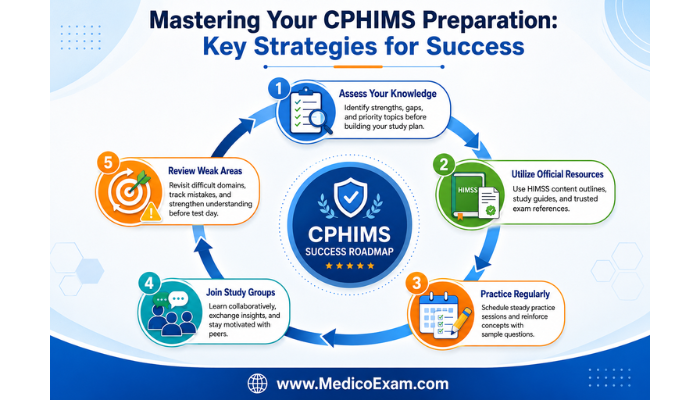
A well-structured study plan is indispensable for successful CPHIMS exam preparation. Given the breadth of topics covered, a haphazard approach can prove inefficient. Candidates should begin by conducting a thorough self-assessment to identify areas of strength and weakness across the exam's domains. This self-assessment informs the allocation of study time, allowing for more intensive focus on challenging subjects. Creating a realistic study schedule that integrates various learning methods, such as reading, practice questions, and peer discussions, is crucial. Consistency and regular review sessions are key to retaining information and building confidence.
Preparing for the HIMSS CPHIMS Exam Effectively
Effective preparation for the HIMSS CPHIMS exam demands more than just rote memorization; it requires a deep understanding of the core concepts and their application within healthcare settings. A strategic approach to studying, focusing on the validated domains, significantly enhances a candidate's chances of success. It's about building a comprehensive knowledge base that aligns with the exam's objectives and prepares you for real-world challenges.
Understanding Key Subject Domains
The CPHIMS examination is meticulously structured around specific domains that reflect the diverse responsibilities of a healthcare information professional. A thorough grasp of these areas is fundamental. While specific weightings are published by HIMSS, candidates should prioritize understanding the interconnections between:
-
Healthcare Information Systems: Delving into the lifecycle of systems, from requirements gathering and design to implementation, testing, and maintenance. This includes understanding various system types like EHRs, PACS, and LIS.
-
Management and Leadership: Covering project management methodologies, budgeting, change management, and leadership principles in an IT context within healthcare. This also includes team building and conflict resolution.
-
Healthcare Environment and Regulatory Issues: Exploring the legal, ethical, and regulatory frameworks impacting healthcare IT, such as HIPAA, HITECH, and other compliance standards. Knowledge of clinical workflows and patient safety initiatives is also paramount.
Each domain contributes to a holistic understanding, ensuring professionals can tackle complex scenarios. Reviewing official HIMSS resources, such as the CPHIMS candidate handbook, can provide an invaluable outline of these domains, clarifying their scope and expected level of understanding. You can download specific outlines from the official HIMSS document library.
Leveraging Study Resources
To effectively prepare for the CPHIMS exam, candidates should utilize a variety of high-quality study resources. Relying on a single source might leave gaps in knowledge or understanding. A balanced approach typically involves:
-
Official HIMSS Content: The HIMSS body of knowledge, practice exams, and recommended readings are paramount. These resources directly align with the exam's content outline.
-
Study Guides and Textbooks: Comprehensive CPHIMS study guides and relevant textbooks provide in-depth explanations and examples for each domain.
-
Online Courses and Bootcamps: Structured online courses or intensive bootcamps can offer guided learning, expert instruction, and interactive sessions, which can be particularly beneficial for complex topics.
-
Practice Questions: Regularly working through CPHIMS practice questions helps solidify understanding, identify weak areas, and familiarize candidates with the exam format and question types. This is critical for time management during the actual exam.
-
Study Groups: Collaborating with peers in a study group can offer diverse perspectives, reinforce learning through discussion, and provide motivation.
MedicoExam also offers specialized resources designed to support your CPHIMS preparation, providing structured content and practice opportunities to enhance your readiness. Consider these options to complement your primary study materials.
Benefits Beyond the Credential: Real-World Impact
While the CPHIMS certification undoubtedly enhances individual career prospects, its true value extends into the operational efficiency and patient safety of healthcare organizations. Certified professionals bring a higher level of competence and strategic thinking, enabling them to implement and manage information systems that genuinely make a difference. This translates into tangible improvements in healthcare delivery, demonstrating the profound real-world impact of the credential.
Driving Operational Excellence
CPHIMS-certified individuals are instrumental in optimizing healthcare operations through strategic IT implementation and management. They possess the skills to streamline workflows, reduce administrative burden, and enhance data accuracy. By understanding the intersection of clinical processes and technological capabilities, these professionals can identify inefficiencies and propose solutions that improve resource utilization and overall productivity. This includes expertise in areas such as:
-
Workflow Optimization: Designing and implementing systems that automate tasks and eliminate redundant steps.
-
Resource Allocation: Using data-driven insights to better manage staffing, equipment, and facility usage.
-
Cost Reduction: Identifying opportunities to reduce operational costs through technology, such as paperless systems or efficient supply chain management.
-
Performance Measurement: Implementing metrics and dashboards to monitor system performance and identify areas for continuous improvement.
Their contributions directly lead to more agile and responsive healthcare environments.
Enhancing Patient Care Through Technology
Perhaps the most significant impact of CPHIMS-certified professionals is their role in improving patient care. By ensuring the effective deployment and utilization of health information systems, they contribute to better clinical decision-making, enhanced communication among care teams, and improved patient safety. This includes:
-
Supporting Clinical Decision Support Systems: Implementing tools that provide clinicians with evidence-based recommendations at the point of care.
-
Improving Data Accessibility: Ensuring that patient information is readily available, accurate, and secure for authorized personnel, leading to more informed treatment plans.
-
Facilitating Interoperability: Working towards seamless data exchange between different healthcare systems and organizations, which is crucial for coordinated care.
-
Promoting Patient Engagement: Implementing patient portals and other technologies that empower individuals to take a more active role in their health management.
Ultimately, their work helps healthcare organizations deliver higher quality, safer, and more patient-centric care.
Sustaining Your Professional Edge: CPHIMS Renewal
Earning the CPHIMS certification is a significant accomplishment, but maintaining its validity requires ongoing commitment to professional development. The healthcare IT landscape is constantly evolving, with new technologies, regulations, and best practices emerging regularly. HIMSS mandates a renewal process to ensure that certified professionals remain current and continue to meet the highest standards of the industry. This continuous learning aspect is crucial for sustaining the value of the credential and one’s professional edge.
Continuing Education Requirements
To maintain active CPHIMS certification status, professionals must adhere to HIMSS’s continuing education requirements. This typically involves earning a specific number of continuing education hours (CE hours) within a designated renewal cycle, usually three years. These hours can be accumulated through a variety of professional development activities, including:
-
Attending Conferences and Workshops: Participating in industry events focused on healthcare IT trends, innovations, and challenges.
-
Taking Relevant Courses: Enrolling in academic or professional development courses related to health informatics, management, or technology.
-
Publishing or Presenting: Contributing to the body of knowledge through articles, research papers, or presentations at industry events.
-
Volunteering: Engaging in professional service related to healthcare IT for recognized organizations.
-
Professional Practice: Engaging in relevant work activities can also count towards renewal, often requiring detailed documentation.
It is imperative for certified individuals to track their CE hours meticulously and submit renewal applications in accordance with HIMSS guidelines to avoid lapsing.
Maintaining Relevance in a Dynamic Field
The structured renewal process for CPHIMS certification underscores the importance of continuous learning in a dynamic field like healthcare IT. As technology advances and regulatory landscapes shift, professionals must adapt and acquire new skills to remain effective. The renewal requirements encourage active engagement with new information and practices, ensuring that certified professionals are not only knowledgeable but also agile and forward-thinking. This commitment to ongoing learning benefits both the individual, by enhancing their career resilience, and the healthcare organizations they serve, by ensuring a workforce equipped with the latest expertise. Maintaining the credential signifies a dedication to lifelong learning and professional excellence.
Evaluating the CPHIMS Investment
Deciding to pursue the CPHIMS certification involves a significant investment of time, effort, and financial resources. Therefore, thoroughly evaluating its potential return on investment (ROI) is crucial for any professional. This assessment goes beyond immediate salary increases, considering the broader impact on career trajectory, professional credibility, and long-term opportunities within the specialized and critical field of healthcare IT. Understanding these multifaceted returns helps justify the initial commitment.
Return on Investment in Healthcare IT
The ROI for CPHIMS certification is often substantial, though it may manifest in various forms beyond a simple pay raise. While salary potential typically increases for certified professionals, the benefits also include enhanced job security, greater career mobility, and access to more challenging and rewarding roles. In an industry where technological proficiency directly impacts patient outcomes and organizational efficiency, a certification like CPHIMS becomes a vital asset. It equips professionals with the specialized knowledge to drive impactful initiatives, leading to increased recognition and value within their organizations. The investment in the CPHIMS exam cost and preparation materials can pay dividends through accelerated career growth and leadership opportunities.
Long-Term Career Growth
Beyond immediate benefits, the CPHIMS certification serves as a foundational element for sustained long-term career growth in healthcare IT. It opens pathways to advanced positions, such as Chief Information Officer (CIO) or Chief Medical Information Officer (CMIO) roles, where strategic leadership and a deep understanding of health information systems are paramount. The continuous learning required for renewal also ensures that professionals remain at the forefront of industry trends, adapting to new technologies like AI, telehealth, and cybersecurity threats. This commitment positions CPHIMS holders as thought leaders and indispensable assets in their organizations, fostering a resilient and evolving career path. The network of HIMSS professionals also provides invaluable opportunities for mentorship and collaboration.
The CPHIMS Certification offers more than just a title; it represents a commitment to excellence and a deep understanding of the vital role information systems play in modern healthcare. It challenges professionals to elevate their expertise, ensuring they are well-equipped to navigate the complexities of healthcare IT and contribute meaningfully to improving patient care and operational efficiency. By carefully evaluating its requirements and committing to thorough preparation, individuals can unlock significant career growth and become indispensable assets in the ever-evolving healthcare landscape.
If you're ready to solidify your expertise and advance your career in healthcare information and management systems, exploring comprehensive preparation options is your next step. Begin your journey toward CPHIMS certification today and transform your professional future. Visit our platform for structured study resources and practice questions to guide your success in this critical field, offering targeted support to help you achieve your goals and excel in healthcare IT.
Frequently Asked Questions
1. What does CPHIMS certification truly validate?
The CPHIMS certification validates a professional's competency and experience in healthcare information and management systems. It covers critical areas such as systems analysis, design, implementation, management, and the unique healthcare environment, demonstrating a holistic understanding of how technology impacts patient care and operational efficiency.
2. Who is the ideal candidate for the HIMSS CPHIMS exam?
The ideal candidate is a healthcare IT professional with a combination of relevant education and practical experience. This includes clinical informaticists, IT project managers, system analysts, and administrators who are looking to formalize their expertise and advance into leadership or specialized roles within the healthcare information sector.
3. What are the general prerequisites for CPHIMS certification?
Generally, candidates need a bachelor's degree with a specified number of years of experience in healthcare information and management systems, or a higher degree with fewer years of experience. Exact criteria vary, so consulting the official HIMSS website for the most current eligibility requirements is always recommended.
4. How often must the CPHIMS certification be renewed?
The CPHIMS certification typically requires renewal every three years. This process involves earning a designated number of continuing education (CE) hours through various professional development activities, ensuring certified professionals remain current with the latest trends and advancements in healthcare IT.
5. Is the CPHIMS certification valuable for career advancement?
Yes, the CPHIMS certification is highly valuable for career advancement. It enhances professional credibility, opens doors to leadership positions, and can lead to increased earning potential. It signifies a specialized skill set in a growing field, making certified individuals highly sought after by healthcare organizations.
- HIMSS CPHIMS Question Bank |
- HIMSS CPHIMS Eligibility & Requirements |
- HIMSS Healthcare Information and Management Systems Professional Practice Test |
- HIMSS CPHIMS Exam Cost |
- HIMSS CPHIMS Registration Process |
- HIMSS Healthcare Information and Management Systems Professional Study Guide |
- HIMSS CPHIMS Recertification |
- HIMSS CPHIMS Certification Overview |
- HIMSS Healthcare Information and Management Systems Professional Syllabus |
- HIMSS CPHIMS Preparation Time |
- HIMSS CPHIMS Passing Score |
- HIMSS CPHIMS Exam Format |
- HIMSS Healthcare Information and Management Systems Professional Sample Questions |
- HIMSS CPHIMS Career Opportunities |
- HIMSS CPHIMS Exam Difficulty


