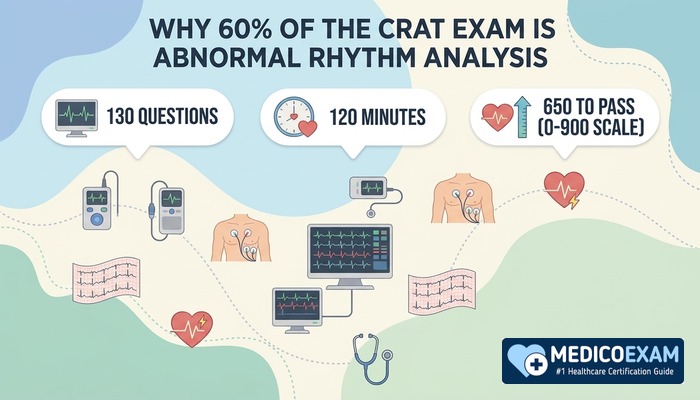
The CCI Certified Rhythm Analysis Technician (CRAT) exam has 130 questions, a two-hour limit and a passing score of 650 on a scale of 0-900. Abnormal rhythm analysis makes up 60% of it, so most of your preparation should go there. Below, the exam is taken apart area by area, and the study order follows the weightings.
Curious where you stand today? Sit the CRAT practice test cold and keep the result. Everything after this point helps you read that result.
What does the CRAT credential cover, and who is it for?
A rhythm analysis technician sits between the patient and the clinician who makes decisions. A monitoring device records the heart's electrical activity, and someone has to check that the recording is usable, recognise what it shows, and make sure the important findings reach the right person quickly. The CRAT credential is built around that job. Cardiovascular Credentialing International (CCI) awards it, and an employer reading it knows you cleared a common examination in cardiac rhythm analysis.
CCI describes the exam on its own page as one for professionals who use specialized monitoring equipment to analyze cardiac rhythms. You can read that description on CCI's Certified Rhythm Analysis Technician page, which is also where to confirm anything that can change, such as eligibility routes and fees.