
90% Pass Rate? Harness the AHIMA RHIT Practice Exam.
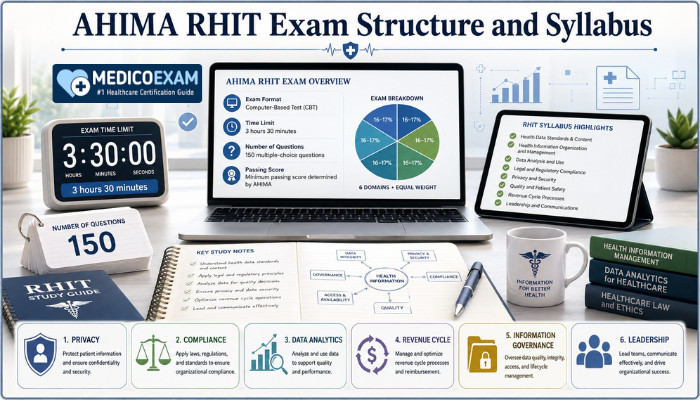 The AHIMA Registered Health Information Technician (RHIT) credential validates a professional’s expertise in managing patient health information and medical records, critical for efficient healthcare operations. This certification is designed for individuals adept at data quality, privacy, security, and compliance within healthcare settings. Achieving the RHIT designation signifies a strong foundation in health information management, opening doors to diverse career opportunities across the healthcare ecosystem. This comprehensive guide delves into the exam’s structure, content, and the pivotal role of effective preparation, including how an AHIMA RHIT practice exam can significantly boost your readiness and confidence.
Understanding the AHIMA RHIT Certification Journey
The AHIMA Registered Health Information Technician (RHIT) credential signifies a mastery of health information management principles, ensuring data integrity and patient privacy. Earning this certification empowers professionals to manage health information systems, apply data analysis, and uphold compliance standards in various healthcare environments. It's a testament to one's commitment to excellence and ethical practice within the health information field.
RHIT Exam Structure and Administration
The AHIMA RHIT exam is a comprehensive assessment designed to evaluate a candidate's readiness for the complex responsibilities of a health information technician. Understanding its framework is the first step towards successful preparation. The exam is structured to test a broad range of knowledge areas crucial for the role.
| Exam Detail | Information |
|---|---|
| Exam Name | AHIMA Registered Health Information Technician |
| Exam Code | RHIT |
| Exam Price |
AHIMA members - $229 (USD) AHIMA non-members - $299 (USD) |
| Duration | 210 minutes (3 hours 30 minutes) |
| Number of Questions |
150 total questions 130 Scored Items 20 Pretest Items (unscored) |
| Passing Score | 300 (on a scale of 100-400) |
This detailed overview provides candidates with a clear understanding of what to expect on exam day. For a deeper dive into preparation and registration, exploring comprehensive resources like the extensive AHIMA RHIT exam preparation materials available can be highly beneficial.
Deciphering the RHIT Exam Syllabus Topics
The AHIMA RHIT exam covers a wide array of domains, reflecting the multi-faceted nature of health information management. Each domain carries a specific weight, guiding candidates on where to focus their study efforts. A thorough grasp of these areas is paramount for successful certification.
- Data Content, Structure, and Information Governance (19-25%): This domain emphasizes the foundational elements of health records, including data standards, record integrity, and the overarching principles of information governance. Professionals must understand how data is organized, maintained, and secured throughout its lifecycle.
- Access, Disclosure, Privacy, and Security (14-18%): A critical area focusing on legal and ethical requirements for protecting patient health information. It covers HIPAA regulations, consent for disclosure, privacy practices, and security measures to prevent unauthorized access or breaches.
- Data Analytics and Use (12-18%): This section assesses the ability to interpret and utilize health data for various purposes, such as quality improvement, public health reporting, and financial analysis. It involves understanding different data types and analytical methods.
- Revenue Cycle Management (19-25%): Essential for the financial health of healthcare organizations, this domain covers processes from patient registration and insurance verification to coding, billing, and claims management. Accurate coding and documentation are key components.
- Compliance (13-17%): Health information professionals must ensure adherence to a myriad of healthcare laws, regulations, and standards. This includes audits, risk management, and ethical guidelines, preventing penalties and maintaining organizational integrity.
- Leadership (9-12%): Even at the technician level, understanding leadership principles, team dynamics, project management basics, and professional development is vital. This domain prepares candidates for growth and effective contribution within their teams.
Candidates preparing for the exam should thoroughly review the detailed exam content blueprint provided by AHIMA to align their study plan with the latest requirements.
Empowering Your Healthcare Career with RHIT Certification
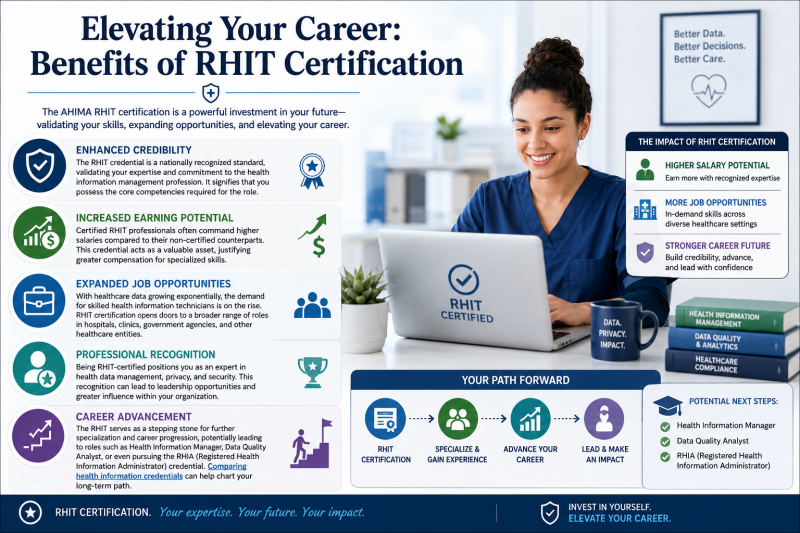
Earning the AHIMA RHIT certification offers a multitude of professional advantages, solidifying one's position in the dynamic field of health information. It signals to employers a commitment to excellence and a verified skill set, distinguishing certified professionals in a competitive market. The benefits extend beyond immediate employment, fostering long-term career growth and stability.
- Enhanced Credibility: The RHIT credential is a nationally recognized standard, validating your expertise and commitment to the health information management profession. It signifies that you possess the core competencies required for the role.
- Increased Earning Potential: Certified RHIT professionals often command higher salaries compared to their non-certified counterparts. This credential acts as a valuable asset, justifying greater compensation for specialized skills.
- Expanded Job Opportunities: With healthcare data growing exponentially, the demand for skilled health information technicians is on the rise. RHIT certification opens doors to a broader range of roles in hospitals, clinics, government agencies, and other healthcare entities.
- Professional Recognition: Being RHIT-certified positions you as an expert in health data management, privacy, and security. This recognition can lead to leadership opportunities and greater influence within your organization.
- Career Advancement: The RHIT serves as a stepping stone for further specialization and career progression, potentially leading to roles such as Health Information Manager, Data Quality Analyst, or even pursuing the RHIA (Registered Health Information Administrator) credential. Comparing health information credentials can help chart your long-term path.
These benefits collectively underscore the value of the RHIT certification as a strategic investment in one's professional future.
Charting Your Course: AHIMA Registered Health Information Technician Career Paths
The AHIMA Registered Health Information Technician certification unlocks a diverse range of career paths within the rapidly evolving healthcare landscape. RHIT professionals are integral to the efficient and ethical management of patient data, fulfilling roles that are both vital and in high demand. Their expertise supports clinical, operational, and financial functions across various healthcare settings.
In-Demand Roles for RHIT Professionals
RHIT-certified individuals can pursue numerous positions that leverage their skills in data integrity, compliance, and information governance. These roles are foundational to the robust operation of any healthcare facility.
- Health Information Technician: The most direct path, focusing on organizing, analyzing, and managing patient health records.
- Medical Coder: Assigning standardized codes to diagnoses and procedures for billing and statistical purposes.
- Data Quality Analyst: Ensuring the accuracy, completeness, and consistency of health data.
- Records Abstractor: Extracting specific information from patient records for research, auditing, or other uses.
- Privacy Officer Assistant: Supporting the implementation and enforcement of patient privacy policies.
- Clinical Documentation Specialist: Working with clinicians to improve the quality and completeness of medical record documentation.
Diverse Work Environments
The skills validated by the RHIT certification are highly transferable, allowing professionals to work in a variety of environments beyond traditional hospitals. This adaptability makes the RHIT credential particularly valuable.
- Hospitals and Acute Care Facilities: Managing extensive patient records, ensuring compliance with complex regulations.
- Physician Offices and Clinics: Handling patient data for smaller-scale operations, often focusing on electronic health records (EHR).
- Long-Term Care Facilities: Maintaining records for residents, supporting continuity of care and regulatory reporting.
- Government Agencies: Contributing to public health initiatives, research, and policy implementation through data management.
- Insurance Companies: Reviewing medical records for claims processing and fraud detection.
- Software Vendors: Assisting in the development and implementation of health information technology systems.
The breadth of opportunities demonstrates the lasting value and adaptability of the AHIMA RHIT credential.
Mastering Readiness: Harness the AHIMA RHIT Practice Exam
Achieving a high pass rate on the AHIMA RHIT exam often correlates directly with the quality and frequency of practice. An AHIMA RHIT practice exam serves as an indispensable tool, replicating the real test environment and identifying areas requiring further study. It's not merely about memorizing answers, but about understanding the question structure, managing time effectively, and building confidence under pressure. This strategic approach transforms preparation from passive learning into active readiness.
Strategic Advantages of Practice Exams
Utilizing practice exams offers several profound benefits that significantly enhance a candidate's likelihood of success. These tools are designed to do more than just test knowledge; they refine exam-taking skills.
- Familiarization with Exam Format: Practice exams mimic the actual RHIT exam's structure, question types (multiple-choice, multiple-response), and navigation, reducing anxiety on test day.
- Identification of Knowledge Gaps: By simulating the exam, candidates can pinpoint specific syllabus topics where their understanding is weak, allowing for targeted review.
- Time Management Skills: The RHIT exam is timed, and practice exams help candidates develop pacing strategies to ensure all questions are addressed within the allotted duration.
- Reduced Test Anxiety: Repeated exposure to exam-like conditions builds confidence and helps calm nerves, fostering a more focused and effective performance.
- Performance Benchmark: Practice exams provide a measurable indicator of readiness, allowing candidates to track progress and adjust their study plan accordingly. Consistent improvement signals a strong trajectory towards passing.
Optimizing Your Practice Exam Experience
To truly leverage the power of an AHIMA RHIT practice exam, candidates should adopt specific strategies that maximize learning and retention. It's about smart practice, not just more practice.
- Simulate Real Conditions: Take practice exams in a quiet environment, free from distractions, and adhere strictly to the time limit. This builds stamina and focus.
- Analyze Performance Thoroughly: After each practice test, meticulously review both correct and incorrect answers. Understand why an answer was right or wrong, rather than just noting the outcome.
- Review Explanations: Effective practice exams provide detailed explanations for each answer. Study these explanations to deepen your understanding of the underlying concepts.
- Focus on Weak Areas: Dedicate extra study time to the domains or topics consistently identified as weak through practice exam results.
- Track Progress: Maintain a log of your scores and the areas you struggled with. This visual representation can be highly motivating and help in refining your study plan.
By integrating AHIMA RHIT practice questions into your study routine, you transform abstract knowledge into tangible exam readiness, setting yourself up for success.
Building Your Knowledge Base: Essential AHIMA RHIT Study Materials
Successful preparation for the AHIMA RHIT exam requires a well-curated collection of study materials. Relying on diverse resources ensures a comprehensive understanding of all syllabus domains and helps reinforce learning through different approaches. From structured review books to interactive online platforms, each material plays a unique role in your journey toward certification.
Top Review Books and Official Resources
Foundationally, official and reputable review books provide structured content aligned with the exam blueprint. These resources are often the backbone of an effective study plan.
- AHIMA Study Guides: Leveraging official AHIMA publications is paramount as they are designed specifically to cover the RHIT exam content outline. These often include practice questions and detailed explanations.
- Comprehensive Textbooks on HIM: Textbooks on Health Information Management provide a deeper dive into the theoretical and practical aspects of the field, offering a foundational understanding that goes beyond exam-specific content.
- Medical Terminology and Anatomy/Physiology Books: A strong grasp of these subjects is indirectly tested throughout the RHIT exam, particularly in coding and data content sections. Complementary resources can solidify this knowledge.
- Legal and Regulatory Compliance Guides: Given the emphasis on privacy, security, and compliance, specialized guides on HIPAA, HITECH, and other relevant healthcare laws are invaluable.
Online Prep Courses and Interactive Tools
Beyond traditional texts, digital resources offer dynamic learning experiences, adapting to individual learning styles and providing immediate feedback.
- AHIMA Online Courses: The vendor often provides structured online courses that mirror the exam domains, offering lectures, quizzes, and simulated exam environments.
- Reputable Third-Party Prep Courses: Many educational providers offer comprehensive online courses with video lessons, study modules, and extensive question banks. When selecting, verify their alignment with the official AHIMA content outline.
- Flashcard Apps and Glossary Tools: For memorizing key terms, acronyms, and definitions across the HIM domains, digital flashcards offer convenience and efficient repetition.
- Medical Coding Software Simulators: Practicing with simulated coding software can enhance understanding of the Revenue Cycle Management domain, particularly for coding exercises.
Combining these varied resources creates a robust study environment, ensuring all facets of the AHIMA RHIT exam syllabus are adequately covered and understood.
Crafting Your Strategic RHIT Exam Preparation Guide
A well-structured preparation guide is the cornerstone of passing the AHIMA RHIT exam. It transforms the daunting task of mastering extensive material into manageable, actionable steps. A strategic approach involves not just what you study, but how you organize your learning, manage your time, and understand the nuances of the exam itself.
Deconstructing the Exam Content Outline
The official content outline is your roadmap to success. Every study decision should be informed by its structure and weighting.
- Review Domain Percentages: Pay close attention to the percentage weight allocated to each domain. Allocate study time proportionally, dedicating more effort to areas with higher representation on the exam.
- Break Down Subdomains: Within each major domain, the outline details specific tasks and knowledge areas. Systematically go through each subdomain to ensure comprehensive coverage.
- Identify Key Concepts: For every point in the outline, identify the core concepts, definitions, and applications you need to master. Create summaries or mind maps for complex topics.
Developing a Focused Study Schedule
Consistency and discipline are vital. A realistic study schedule ensures that you cover all material without burnout.
- Assess Your Baseline: Start with a diagnostic test to understand your current knowledge level and pinpoint initial weak areas.
- Set Clear Milestones: Divide the syllabus into smaller, manageable chunks. Assign specific topics to study sessions, with mini-quizzes at the end of each module.
- Allocate Dedicated Time: Schedule regular, uninterrupted study blocks. Even short, consistent sessions are more effective than sporadic cramming.
- Incorporate Review Days: Designate specific days for reviewing previously covered material to reinforce memory and connect concepts.
- Build in Flexibility: Life happens. Be prepared to adjust your schedule as needed, but always strive to make up for missed study time.
Mastering Time Management for the Exam
Performance on exam day isn't just about knowledge; it's also about managing your time under pressure.
- Practice Pacing: During your AHIMA RHIT practice exam sessions, consciously work on answering questions within an average time limit per question (210 minutes for 150 questions means roughly 1 minute 24 seconds per question).
- Strategic Skipping: Learn to quickly identify questions that will consume too much time. Mark them and return later if time permits.
- Avoid Overthinking: Trust your initial instincts on multiple-choice questions. Excessive deliberation often leads to second-guessing and incorrect changes.
- Review Remaining Time: Periodically check the clock during the exam to ensure you are on track. Adjust your pace if you are falling behind.
This systematic approach to preparation, from understanding the content to managing your time, is crucial for maximizing your chances of passing the RHIT exam.
Navigating the AHIMA RHIT Exam Registration Process
The journey to becoming an AHIMA Registered Health Information Technician culminates in a structured registration and examination process. Understanding each step, from meeting eligibility requirements to scheduling your exam, is vital for a smooth experience. Proactive planning helps avoid last-minute hurdles and ensures you can focus solely on your preparation. The official AHIMA website is the definitive source for up-to-date information.
Eligibility Requirements for RHIT Certification
Before even considering registration, candidates must meet specific academic and experiential criteria set by AHIMA. These requirements ensure that certified professionals possess the necessary foundational knowledge. To be eligible for the RHIT exam, candidates must achieve an associate degree from a college/university program accredited by the Commission on Accreditation for Health Informatics and Information Management Education (CAHIIM) or a relevant associate's degree combined with professional experience. Candidates should always verify the most current eligibility criteria directly on the official AHIMA certification portal.
Streamlined Application and Scheduling Steps
Once eligibility is confirmed, the application and scheduling process is straightforward, but attention to detail is essential.
- Create an AHIMA Account: If you don't already have one, establish an account on the AHIMA website.
- Submit Your Application: Complete the RHIT certification application form, providing all required personal, educational, and professional details. Be prepared to upload transcripts or other supporting documents as requested.
- Pay Exam Fees: Remit the applicable exam fee. Remember that fees differ for AHIMA members and non-members, so consider membership if it's cost-effective for your situation.
- Receive Authorization to Test (ATT): After your application is approved and fees are processed, AHIMA will issue an Authorization to Test (ATT) letter, typically via email. This letter contains crucial information, including your eligibility window and instructions for scheduling.
- Schedule Your Exam: Use the information in your ATT letter to schedule your exam appointment at a Pearson VUE testing center. You'll select a convenient date, time, and location. It's advisable to schedule well in advance to secure your preferred slot.
- Prepare for Exam Day: Review the Pearson VUE candidate rules and arrive at the testing center with valid identification as specified in your ATT.
Following these steps diligently will ensure a seamless transition from preparation to examination.
Realizing Professional Value: Understanding RHIT Salary Expectations and ROI
Investing in the AHIMA RHIT certification is a significant career move, and understanding the potential return on investment (ROI) is crucial. RHIT certification can lead to competitive salary expectations and long-term financial stability, reflecting the specialized skills and critical responsibilities health information technicians undertake. The value extends beyond a paycheck, encompassing job security and opportunities for professional advancement.
Average Earnings and Influencing Factors
Salary for RHIT-certified professionals varies based on several key factors, providing a range of earning potential across the industry.
- Geographic Location: Salaries can differ significantly by region, with metropolitan areas or states with higher healthcare costs often offering higher compensation.
- Years of Experience: Entry-level RHITs typically start at a lower range, while experienced professionals with several years under their belt command higher salaries.
- Employer Type: Working for a large hospital system, a specialized clinic, a government agency, or a private consulting firm can impact salary levels.
- Additional Skills: Proficiency in specific EHR systems, data analytics tools, or specialized coding (e.g., CPT, ICD-10) can also boost earning potential.
- Job Responsibilities: Roles with greater leadership, supervisory duties, or complex data management tasks will typically be compensated more.
While exact figures fluctuate, an RHIT certification generally positions individuals for salaries above those of non-certified health information roles.
Calculating Your Return on Investment (ROI)
The ROI of an RHIT certification isn't just about increased salary; it's a holistic view of career growth and stability.
- Initial Investment: Factor in exam fees, study materials, and potentially the cost of an associate degree or prep courses.
- Increased Earning Potential: Compare the average salary for RHIT-certified roles against non-certified roles you might otherwise qualify for. The difference represents your potential gain.
- Job Security and Demand: The healthcare industry's reliance on data ensures a consistent demand for skilled HIM professionals, offering greater job security.
- Career Mobility: The RHIT opens doors to advanced roles and further certifications, contributing to long-term career growth and increased lifetime earnings.
- Professional Credibility: The intangible value of being a recognized, certified professional enhances your reputation and opens networking opportunities.
By considering these factors, aspiring RHITs can confidently assess the substantial professional and financial benefits of earning their certification.
Forging Ahead: AHIMA Registered Health Information Technician Career Path Progression
The AHIMA RHIT certification is not merely a destination but a foundational stepping stone in a dynamic and expanding career journey within health information management. It equips professionals with the core competencies to excel in entry to mid-level roles, while simultaneously preparing them for upward mobility and specialization. Continuous learning and strategic professional development are key to unlocking the full potential of an RHIT career.
Advancing Your Expertise and Role
With experience and further education, RHIT professionals can transition into more senior, specialized, or leadership positions.
- Senior Health Information Technician: Taking on more complex tasks, mentoring junior staff, and managing specific projects.
- Health Information Manager: Overseeing HIM department operations, staff, budgets, and strategic planning. This often requires further education or the RHIA certification.
- Data Integrity/Quality Manager: Specializing in ensuring the accuracy and consistency of all health data, crucial for regulatory compliance and quality reporting.
- Clinical Informatics Specialist: Bridging the gap between clinical practice and information technology, often involved in EHR implementation and optimization.
- Compliance Officer/Auditor: Focusing on ensuring adherence to healthcare laws and regulations, conducting internal audits, and developing compliance programs.
Lifelong Learning and Continued Education
The healthcare landscape is constantly evolving, making continued professional development critical for RHITs.
- Specialty Certifications: AHIMA offers various specialty certifications (e.g., CCS for coding specialists, CHPS for privacy and security) that allow RHITs to deepen their expertise in specific areas.
- Bachelor's or Master's Degrees: Pursuing higher education in Health Information Management, Health Informatics, or related fields can significantly enhance career prospects and qualify individuals for senior leadership roles.
- Professional Associations: Active involvement with organizations like AHIMA provides access to valuable resources, networking opportunities, and current industry trends.
- Workshops and Webinars: Regularly attending educational sessions on emerging technologies, updated regulations, and best practices keeps skills sharp and knowledge current.
The RHIT certification serves as an excellent launchpad, empowering professionals to build a rewarding and impactful career in health information management.
Securing Success: Maximizing Your Chances to Pass the AHIMA RHIT Exam
Passing the AHIMA RHIT exam is a significant achievement that requires more than just studying; it demands a comprehensive, disciplined, and strategic approach. With the right mindset and preparation tactics, candidates can significantly increase their likelihood of success. It's about combining diligent study with effective exam-taking strategies, all geared towards demonstrating mastery of health information principles.
Key Strategies for RHIT Exam Success
A multi-faceted approach to preparation ensures that you are not only knowledgeable but also agile and confident on exam day.
- Early and Consistent Preparation: Begin your studies well in advance to avoid last-minute cramming. Consistency in daily or weekly study sessions is more effective than infrequent, long bursts.
- Understand the "Why": Don't just memorize facts. Strive to understand the underlying principles and rationale behind each concept, especially in domains like compliance and information governance.
- Leverage Practice Questions Extensively: The AHIMA RHIT practice exam is invaluable. Use it to understand question styles, identify weak areas, and refine your test-taking speed and accuracy. Focus on detailed explanations.
- Create a Study Group: Collaborating with peers can provide different perspectives, clarify difficult concepts, and offer mutual support and accountability.
- Prioritize Self-Care: Ensure you get adequate sleep, maintain a healthy diet, and manage stress throughout your preparation. A fresh mind performs best.
- Review Ethical Guidelines: AHIMA places a strong emphasis on professional ethics. Understand the ethical dilemmas and best practices relevant to health information management.
Avoiding Common Pitfalls
Being aware of common mistakes can help you navigate your preparation more effectively.
- Underestimating the Exam's Breadth: The RHIT covers a wide array of topics. Do not focus too heavily on one domain while neglecting others, even if they seem less complex.
- Relying Solely on Memory: While memorization is part of it, the exam often tests application and critical thinking. Understand how concepts are applied in real-world scenarios.
- Ignoring Weak Areas: It's tempting to stick to what you know. Actively confront and dedicate extra time to areas where you consistently perform poorly.
- Last-Minute Cramming: This often leads to superficial understanding and increased anxiety. Spaced repetition and consistent review are far more effective.
- Not Practicing Under Timed Conditions: Time management is a crucial skill. Without timed practice, you risk running out of time on the actual exam.
By embracing these strategies and avoiding common pitfalls, you can build a robust foundation for passing the RHIT exam and confidently stepping into your role as a certified health information technician.
Frequently Asked Questions
1. What does the AHIMA RHIT certification validate?
The AHIMA RHIT certification validates an individual's technical knowledge and skills in managing patient health information, ensuring data quality, privacy, security, and compliance within healthcare settings.
2. Who should consider taking the AHIMA RHIT exam?
Individuals with an associate degree from a CAHIIM-accredited program or a related associate's degree with relevant professional experience, who aspire to work in health information management roles focusing on data integrity, coding, and compliance, should consider the RHIT exam.
3. How long is the AHIMA RHIT certification valid?
The AHIMA RHIT certification is valid for a specific period, typically two years. Professionals must complete continuing education units (CEUs) and pay a renewal fee to maintain their credential and stay current with industry changes.
4. Are there any prerequisites for the AHIMA RHIT exam?
Yes, candidates must possess an associate degree from a college/university program accredited by CAHIIM, or a related associate's degree combined with professional experience, to be eligible for the RHIT exam.
5. What kind of job roles can I pursue with an AHIMA RHIT certification?
With an AHIMA RHIT certification, you can pursue various roles such as Health Information Technician, Medical Coder, Data Quality Analyst, Records Abstractor, and Privacy Officer Assistant across hospitals, clinics, and other healthcare organizations.
The AHIMA RHIT certification offers a clear pathway to a rewarding career in health information management, providing both immediate professional recognition and opportunities for long-term growth. By committing to a structured preparation plan, leveraging a robust AHIMA RHIT practice exam, and embracing continuous learning, aspiring professionals can confidently achieve this esteemed credential. The journey is rigorous, but the destination — a vital role in healthcare's data-driven future — is immensely valuable.
Ready to validate your expertise and advance your career in health information? Explore comprehensive study materials and practice exams tailored to the AHIMA RHIT curriculum to ensure you’re fully prepared. For further insights into credentialing decisions and to compare RHIT with RHIA, delve into our specialized resources. Your future in health information management starts now.
- AHIMA RHIT Question Bank |
- AHIMA RHIT Eligibility & Requirements |
- AHIMA Health Information Technician Practice Test |
- AHIMA RHIT Exam Cost |
- AHIMA RHIT Registration Process |
- AHIMA Health Information Technician Study Guide |
- AHIMA RHIT Recertification |
- AHIMA RHIT Certification Overview |
- AHIMA Health Information Technician Syllabus |
- AHIMA RHIT Preparation Time |
- AHIMA RHIT Passing Score |
- AHIMA RHIT Exam Format |
- AHIMA Health Information Technician Sample Questions |
- AHIMA RHIT Career Opportunities |
- AHIMA RHIT Exam Difficulty


