
C-EFM Exam Anxiety? Expert Tips to Build Confidence and Pass Easily
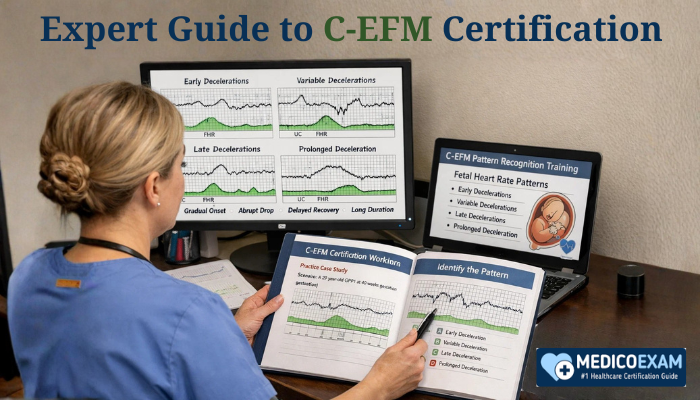 A racing heart, self-doubt, and fear of failure these are common emotions when preparing for the C-EFM Exam. But here’s the truth: anxiety doesn’t define your success your preparation does.
Whether you're a nurse, healthcare professional, or aspiring specialist in fetal monitoring, this guide will help you transform anxiety into confidence. With expert-backed strategies, real-world insights, and actionable tips, you’ll learn how to master the C-EFM certification and pass with ease.
What Is the C-EFM Exam?
The C-EFM Exam is a certification offered by the National Certification Corporation (NCC) that validates expertise in electronic fetal monitoring, focusing on fetal heart rate interpretation, clinical interventions, and patient safety during labor.
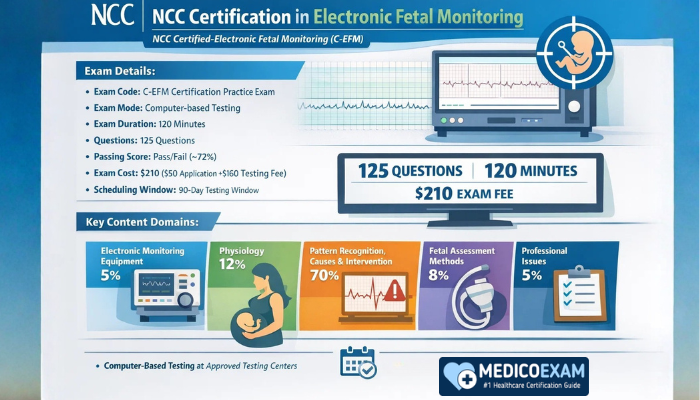
C-EFM Certification Overview: What You Must Know
Before diving into preparation, understanding the exam structure reduces uncertainty a major source of anxiety.
-
Exam Name: NCC Certification in Electronic Fetal Monitoring
-
Credential: NCC Certified-EFM (C-EFM)
-
Exam Code: C-EFM
-
Duration: 120 minutes
-
Questions: 125
-
Passing Score: Approx. 72%
-
Exam Fee: $210
-
Validity Window: 90 days
Why Does the C-EFM Exam Feel So Stressful?
The C-EFM Exam feels stressful because it tests real-time clinical decision-making, especially fetal heart rate interpretation, which directly impacts patient outcomes.
Common Stress Triggers:
-
Fear of misinterpreting fetal heart rate patterns
-
Time pressure (125 questions in 120 minutes)
-
High stakes for career advancement
-
Complex clinical scenarios
According to clinical guidelines from sources like the American College of Obstetricians and Gynecologists (ACOG) and NIH, fetal monitoring interpretation requires both theoretical knowledge and practical judgment making it naturally challenging.
C-EFM Exam Content Breakdown (Know What to Study)
The C-EFM Exam heavily focuses on pattern recognition and interventions, which account for 70% of the exam.
Key Domains:
-
Pattern Recognition & Intervention – 70%
-
Physiology – 12%
-
Fetal Assessment Methods – 8%
-
Monitoring Equipment – 5%
-
Professional Issues – 5%
Expert Tips to Overcome C-EFM Exam Anxiety
1. Build Conceptual Clarity First
Memorization won’t help in interpreting fetal heart rate tracings.
Focus on:
-
Baseline variability
-
Accelerations vs decelerations
-
Uterine activity
2. Practice with Realistic C-EFM Exam Questions
Practicing with realistic C-EFM exam questions improves pattern recognition and reduces exam anxiety.
Use high-quality practice resources like:
This helps you:
-
Understand exam patterns
-
Improve clinical judgment
-
Reduce surprises on exam day
3. Follow a Structured C-EFM Exam Prep Study Guide
Create a focused plan instead of random studying.
Sample Study Plan:
-
Week 1–2: Physiology & basics
-
Week 3–4: Pattern recognition
-
Week 5: Practice tests
-
Week 6: Revision & weak areas
4. Simulate Real Exam Conditions
Practice under:
-
Time limits (120 mins)
-
No interruptions
-
Realistic question formats
Using a C-EFM certification practice test helps condition your brain for performance under pressure.
5. Master Pattern Recognition Through Repetition
-
Since 70% of the exam focuses on this:
-
Analyze multiple fetal strips daily
-
Identify patterns quickly
-
Associate patterns with interventions
Harvard Medical School publications emphasize repetition as key for clinical mastery.
6. Address Emotional Stress Directly
Managing exam anxiety requires both preparation and emotional regulation techniques
Try:
-
Deep breathing exercises
-
Visualization techniques
-
Short breaks during study
According to Mayo Clinic, stress management improves cognitive performance significantly.
7. Focus on Clinical Application, Not Just Theory
Think like a clinician:
-
What does this pattern mean?
-
What action is required?
Real-world thinking improves retention and confidence.
8. Use Free NCC Practice Tests Strategically
A Free NCC practice test can:
-
Identify weak areas
-
Improve time management
-
Boost confidence
But avoid over-reliance focus on understanding, not guessing.
Real-World Insight: What Successful Candidates Do Differently
Experienced candidates:
-
Practice daily with C-EFM quiz formats
-
Focus on clinical reasoning
-
Review errors deeply
They don’t just study, they simulate real-life decision-making.
How C-EFM Certification Boosts Your Career
The C-EFM certification enhances clinical credibility and opens advanced roles in obstetrics and maternal care.
Career Benefits:
-
Higher salary potential
-
Specialized roles in labor & delivery
-
Recognition in clinical settings
According to the U.S. Bureau of Labor Statistics, specialized nursing certifications often lead to better job prospects and pay.
FAQs
1. Is the C-EFM Exam difficult?
-
The C-EFM Exam is considered moderately challenging because it focuses heavily on clinical interpretation and decision-making. Candidates with strong practice in fetal monitoring patterns and real-life scenarios generally find it manageable. Difficulty often depends on preparation quality and familiarity with question formats.
2. How long should I prepare for the C-EFM Exam?
-
Preparation time varies, but most candidates spend 4 to 8 weeks studying consistently. Those with prior experience in labor and delivery may require less time, while new learners may need longer. Structured study plans and practice tests can significantly improve efficiency.
3. Are C-EFM certification questions similar to real scenarios?
-
Yes, C-EFM certification questions are designed to reflect real clinical situations. They test your ability to interpret fetal heart rate patterns and make appropriate interventions, mirroring decisions made in actual healthcare settings.
4. What is the best way to practice for the C-EFM Exam?
-
The most effective method is using high-quality practice tests combined with concept review. Simulating timed exams and reviewing incorrect answers helps reinforce learning and improve accuracy in pattern recognition and clinical judgment.
5. Can I take the C-EFM certification online?
-
Typically, the C-EFM Exam is delivered through computer-based testing at approved centers. Availability of remote testing may vary depending on the provider’s policies, so it’s best to check the official NCC website for current options.
6. What score do I need to pass the NCC C-EFM exam?
-
The exam follows a pass/fail format, with a passing threshold generally around 72%. Exact scoring criteria may vary slightly, and NCC does not always publicly disclose detailed scoring breakdowns.
7. Are free NCC practice tests useful?
-
Free NCC practice tests can be helpful for initial assessment and familiarization with question formats. However, they should be combined with comprehensive study materials and detailed practice exams for better preparation.
8. How many times can I retake the C-EFM Exam?
-
Retake policies typically allow multiple attempts, but candidates must reapply and pay the exam fee again. Specific waiting periods and limits may apply, so checking NCC’s official guidelines is recommended.
9. Is C-EFM certification worth it for career growth?
-
Yes, C-EFM certification is valuable for healthcare professionals in obstetrics and labor care. It demonstrates specialized knowledge, enhances credibility, and may improve job opportunities and advancement potential.
10. What topics are most important for the C-EFM Exam?
-
Pattern recognition, causes, and interventions are the most critical topics, making up about 70% of the exam. Candidates should prioritize mastering fetal heart rate interpretation and clinical decision-making.
Final Thoughts: You’re Closer Than You Think
The C-EFM Exam is not designed to trick you, it’s designed to validate your ability to make life-saving decisions.
-
Anxiety is natural, but preparation transforms fear into confidence.
-
Stay consistent. Practice smart. Think clinically.
You’ve got this.
- NCC Electronic Fetal Monitoring Practice Test |
- NCC C-EFM Exam Difficulty |
- NCC C-EFM Exam Cost |
- NCC C-EFM Passing Score |
- NCC C-EFM Career Opportunities |
- NCC Electronic Fetal Monitoring Study Guide |
- NCC C-EFM Recertification |
- NCC C-EFM Exam Format |
- NCC C-EFM Certification Overview |
- NCC C-EFM Question Bank |
- NCC C-EFM Eligibility & Requirements |
- NCC C-EFM Registration Process |
- NCC Electronic Fetal Monitoring Syllabus |
- NCC C-EFM Preparation Time |
- NCC Electronic Fetal Monitoring Sample Questions


