
NREMT Paramedic Certification: Clarity for Beginners
The NREMT Paramedic certification validates a high level of pre-hospital emergency medical proficiency, distinguishing highly skilled professionals capable of independent critical decision-making and advanced patient care. This guide helps beginners understand what the NREMT Paramedic exam entails, including its structure, content, and the essential steps toward achieving this critical credential. It serves as a foundational resource for those considering a career as a Nationally Registered Paramedic, outlining the journey from initial inquiry to becoming certified.
Establishing Paramedic Proficiency with NREMT Certification
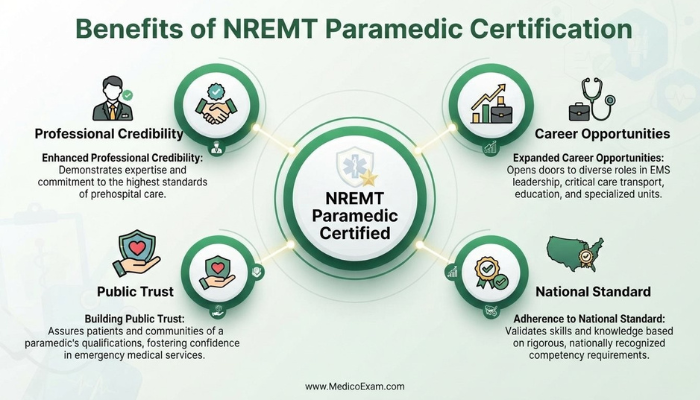
Achieving NREMT Paramedic certification signifies a professional's adherence to national standards for emergency medical services. This credential ensures that paramedics across different jurisdictions possess a consistent and robust skill set, essential for delivering high-quality pre-hospital care. The NREMT, or National Registry of Emergency Medical Technicians, is the vendor responsible for maintaining these standards and administering the Paramedic certification exam. This rigorous evaluation ensures competence in a wide range of emergency medical situations, from trauma response to complex medical emergencies. Pursuing this certification is a critical step for individuals dedicated to a demanding and rewarding career in emergency medicine.
Why Pursue NREMT Paramedic Certification?
Earning the NREMT Paramedic certification is often a prerequisite for employment in many EMS agencies and fire departments across the United States. Beyond employment, it provides a recognized standard of excellence, fostering public trust and professional credibility. The certification process itself demands a comprehensive understanding of advanced life support, patient assessment, and critical thinking under pressure, honing skills that are vital in real-world scenarios. It represents a commitment to lifelong learning and continuous improvement in the dynamic field of emergency medical services, enabling professionals to serve their communities effectively.
Understanding the NREMT Paramedic Exam Components
The NREMT Paramedic exam is designed to comprehensively assess a candidate's readiness for the demanding role of a paramedic. The examination process consists of two main parts: a cognitive exam and a psychomotor exam. Each component tests different facets of a paramedic's required knowledge and practical skills, ensuring a holistic evaluation of competence. Successfully navigating both parts is essential for certification, validating both theoretical understanding and hands-on capability in critical situations.
Cognitive Exam Structure and Details
The NREMT Paramedic cognitive exam is a computer-adaptive test (CAT) that evaluates a candidate's knowledge across various emergency medical domains. This format adjusts the difficulty of questions based on a candidate's responses, aiming to accurately determine their competency level. The exam, coded as Paramedic, is a crucial hurdle for aspiring professionals.
Here are the key details for the cognitive exam:
-
Examination Fee: $175 per examination attempt, which covers the cost of administering this high-stakes assessment.
-
Duration: Candidates are allotted 210 minutes to complete the exam, providing ample time to consider each question carefully without excessive time pressure.
-
Number of Questions: The test comprises between 110-150 questions, varying based on the adaptive nature of the exam and the candidate's performance.
-
Passing Score: To pass, candidates must achieve a score of 950 on a scale of 100 to 1500, indicating a strong grasp of the material.
This structured assessment ensures that only candidates who meet stringent national standards are eligible for certification. For detailed information regarding the official NREMT certification guidelines, candidates should consult the official NREMT page directly.
Evaluating Psychomotor Skills for Certification
The psychomotor exam evaluates a candidate's practical skills through a series of stations designed to simulate real-life emergency scenarios. While specific details of the psychomotor exam's structure and scoring are not provided here, generally, candidates are assessed on their ability to perform critical patient care tasks. These tasks typically include patient assessment, managing medical and trauma emergencies, and demonstrating proficiency in advanced airway management and intravenous therapy. Success in this portion requires not only technical skill but also the ability to prioritize and make rapid, sound decisions under pressure.
Navigating the NREMT Paramedic Exam Content
The NREMT Paramedic exam rigorously covers a broad spectrum of medical and trauma emergencies, reflecting the diverse challenges paramedics face daily. A thorough understanding of the syllabus topics is paramount for successful preparation, as it outlines the specific knowledge domains and their respective weightings within the cognitive examination. Candidates should familiarize themselves with these categories to prioritize their study efforts effectively.
The cognitive exam content outline includes the following domains and their approximate weightings:
-
Airway, Respiration & Ventilation: This critical area accounts for 8% – 12% of the exam, focusing on assessment and management of respiratory emergencies.
-
Cardiology & Resuscitation: Representing 10% – 14%, this section covers cardiovascular assessment, cardiac arrest management, and advanced resuscitation techniques.
-
Trauma: With a weighting of 6% – 10%, this domain assesses knowledge of managing various traumatic injuries and associated complications.
-
Medical/Obstetrics/Gynecology: The largest section, at 24% – 28%, covers a wide array of medical conditions, as well as obstetric and gynecological emergencies.
-
EMS Operations: This category, comprising 8% – 12%, focuses on incident management, scene safety, legal and ethical considerations, and communication protocols.
-
Clinical Judgment: The most heavily weighted section, at 34% – 38%, assesses the candidate's ability to integrate knowledge, make critical decisions, and apply patient care principles in complex scenarios.
Understanding this distribution helps candidates focus their study plans on high-impact areas, especially clinical judgment, which is central to a paramedic's role. For a more comprehensive overview, refer to the detailed NREMT Paramedic test plan to ensure full alignment with the current exam blueprint.
Crafting an Effective NREMT Paramedic Study Plan
A successful approach to the NREMT Paramedic exam requires a well-structured study plan that integrates diverse learning methods. Given the breadth of topics and the complexity of clinical judgment, a holistic strategy is more effective than rote memorization. Candidates should focus on understanding underlying principles and applying knowledge to various simulated scenarios, preparing for the adaptive nature of the cognitive exam and the practical demands of the psychomotor evaluation.
Leveraging NREMT Paramedic Study Guides and Resources
Effective study hinges on utilizing reliable and comprehensive resources. High-quality NREMT Paramedic study guide materials are invaluable for condensing complex information and highlighting key concepts. Look for guides that align with the official NREMT content outline and offer clear explanations, diagrams, and case studies. Supplementing these with textbooks, online courses, and peer study groups can reinforce learning and provide different perspectives on challenging topics.
Consider these resources for a robust study regimen:
-
Comprehensive Textbooks: Core paramedic textbooks provide in-depth information for each syllabus domain.
-
Online Learning Platforms: Many platforms offer structured courses, video lectures, and interactive modules.
-
Official NREMT Resources: The NREMT website often provides guides, candidate handbooks, and eligibility requirements that are essential for accurate preparation.
-
Peer Study Groups: Collaborating with peers can help clarify difficult concepts and offer different problem-solving approaches.
Avoid any materials that claim to be "dumps" or "leaked questions," as these resources are unreliable and often promote unethical preparation practices, which can jeopardize your certification. Focus on genuine learning and understanding the material.
Mastering NREMT Paramedic Practice Test Questions
Regularly engaging with NREMT Paramedic practice test questions is fundamental to exam readiness. These questions help candidates become familiar with the exam format, question styles, and time constraints. Analyzing performance on practice tests can reveal areas of weakness, allowing for targeted review and improved understanding. It also builds confidence and reduces test-day anxiety, crucial elements for optimal performance. You can find comprehensive NREMT Paramedic practice questions to aid in this critical phase of your preparation.
When utilizing practice exams, aim to:
-
Simulate Exam Conditions: Take practice tests in a quiet environment, adhering to the actual exam's time limits.
-
Review Explanations: Understand why an answer is correct or incorrect, not just the answer itself.
-
Track Progress: Monitor scores and identify recurring mistakes to adjust your study focus.
This iterative process of practice and review is a cornerstone of effective preparation for the NREMT cognitive exam.
Succeeding on the NREMT Paramedic Examination
Passing the NREMT Paramedic exam requires more than just knowing the material; it demands strategic test-taking skills and mental preparedness. The cognitive and psychomotor components each present unique challenges that candidates must be ready to overcome. Approaching the exam with a clear mind and a well-practiced strategy can significantly enhance your chances of success and alleviate undue stress.
Effective Strategies for the Cognitive Exam
Given the computer-adaptive nature of the NREMT Paramedic cognitive exam, specific strategies can maximize performance. Since the exam adapts to your responses, it's crucial to answer each question carefully and thoughtfully. Do not rush, and manage your time effectively across the potentially 150 questions. If a question seems exceptionally difficult, it often indicates you are performing well, as the system provides more challenging items. Conversely, a series of easier questions might signal areas where more focus is needed. Always aim to select the best answer based on national standards and protocols.
Consider these tactical approaches:
-
Read Carefully: Understand every word of the question and all answer choices before selecting.
-
Eliminate Distractors: Rule out obviously incorrect options to increase your chances of choosing the right answer.
-
Trust Your Knowledge: Avoid overthinking. Often, your first instinct, if well-informed, is correct.
-
Maintain Pace: Don't dwell too long on a single question. If you're stuck, make your best educated guess and move on.
These tips, combined with solid preparation, contribute to a stronger performance.
Mastering Psychomotor Exam Skills
The psychomotor exam is a hands-on assessment where meticulous practice and adherence to established protocols are paramount. Each skill station requires candidates to demonstrate specific competencies in a controlled environment. Attention to detail, clear verbalization of actions, and strict adherence to patient care guidelines are continuously evaluated. It is not enough to simply perform a skill; you must perform it safely, efficiently, and according to NREMT standards.
Key elements for psychomotor success include:
-
Repetitive Practice: Regularly practice all psychomotor skills until they become second nature.
-
Verbalize Actions: Clearly state what you are doing and why, demonstrating your thought process to the evaluators.
-
Critical Steps: Identify and prioritize the critical components of each skill station, as failure to complete these can result in immediate failure.
-
Scenario Management: Practice managing the entire scenario, from patient assessment to handover, ensuring a cohesive and comprehensive approach.
Consistent, focused practice is the only way to achieve the precision and confidence required for this crucial part of the certification.
Charting Your Path to Recertification
NREMT Paramedic certification is not a one-time achievement; it requires ongoing commitment to professional development and recertification. This ensures that certified paramedics remain current with evolving medical practices, technologies, and national standards. Understanding the recertification requirements from the outset helps in planning continuous education and maintaining an active, valid credential throughout your career.
Understanding NREMT Paramedic Recertification Requirements
To maintain NREMT Paramedic certification, professionals must meet specific recertification requirements set by the NREMT. These typically involve completing a certain number of continuing education (CE) hours, which are categorized into various topics such as medical, trauma, operations, and pediatric emergencies. The exact number of hours and specific categories can vary, so it's essential to consult the official NREMT website for the most current guidelines.
Generally, recertification involves:
-
Continuing Education (CE) Hours: Accumulating approved CE hours through courses, conferences, or online modules.
-
Skills Verification: Demonstrating continued competency in practical skills, often through employer verification or educational programs.
-
Affiliation with an EMS Agency: Maintaining an active affiliation may be required to validate practical experience.
-
Attestation: Signing an attestation of compliance with NREMT policies and procedures.
Proactive planning for these requirements is vital to avoid lapses in certification, which can impact employment and professional standing.
NREMT Paramedic Career Trajectory and Benefits
Achieving NREMT Paramedic certification opens doors to a dynamic and impactful career in emergency medicine, offering diverse opportunities beyond traditional ambulance services. The credential significantly enhances professional standing, earning potential, and career progression, reflecting a specialized skill set highly valued across various healthcare settings. Understanding these long-term benefits can motivate and guide aspiring paramedics in their professional journey.
Salary Expectations and Career Growth
While specific paramedic NREMT salary expectations can vary widely based on location, experience, and employer type (e.g., private ambulance service, fire department, hospital-based EMS), certified paramedics generally command competitive wages due to their advanced skills and responsibilities. Entry-level paramedics might start with a foundational salary, which typically increases with years of experience, additional certifications, and specialized roles. Career growth paths for NREMT Paramedics are extensive.
Possible career advancements include:
-
Field Training Officer (FTO): Mentoring and training new paramedics.
-
EMS Educator: Teaching in paramedic programs or continuing education courses.
-
Supervisor/Manager: Overseeing EMS operations and personnel.
-
Special Operations Paramedic: Working in tactical EMS, flight medicine, or critical care transport.
-
Emergency Department Technician: Applying pre-hospital skills in a hospital setting.
The NREMT Paramedic certification provides a solid foundation for these diverse and rewarding career progressions, underscoring its long-term value.
Registration Process for the NREMT Paramedic Exam
The NREMT Paramedic exam registration process involves several crucial steps, starting with meeting eligibility criteria. Candidates must typically complete an accredited paramedic education program and hold current CPR certification. Once eligible, they apply through the NREMT's online portal, pay the examination fee, and then schedule their cognitive exam at a Pearson VUE testing center. The psychomotor exam scheduling is often coordinated through the candidate's educational program. Adhering to each step meticulously ensures a smooth transition from program completion to examination.
Conclusion: Your Foundation for Paramedic Excellence
Embarking on the journey to NREMT Paramedic certification is a significant undertaking, marking a commitment to advanced patient care and professional excellence. This credential not only validates your expertise but also serves as a gateway to a fulfilling and impactful career in emergency medical services. By understanding the exam's structure, thoroughly preparing with appropriate resources, and mastering both cognitive and psychomotor skills, you establish a strong foundation for success. The dedication invested in this process directly translates into the ability to save lives and provide critical care when it matters most, making you an invaluable asset to any emergency response team.
Your success as a Nationally Registered Paramedic begins with comprehensive and ethical preparation. To further enhance your readiness and explore additional resources, delve into our comprehensive NREMT Paramedic exam preparation guide. This essential guide and our detailed practice questions will equip you with the knowledge and confidence needed to excel on your paramedic certification journey.
FAQs
1. What does NREMT Paramedic certification signify for emergency medical professionals?
NREMT Paramedic certification signifies that an emergency medical professional has met national standards for competency in advanced pre-hospital patient care, critical thinking, and independent decision-making. It validates their ability to provide comprehensive emergency medical services.
2. How hard is the NREMT Paramedic exam for new candidates?
The NREMT Paramedic exam is challenging and rigorous, designed to ensure a high level of competency. Its difficulty stems from its comprehensive content (cognitive exam) and demanding practical skill assessments (psychomotor exam), requiring thorough preparation and a deep understanding of emergency medicine.
3. What are the key differences between the cognitive and psychomotor NREMT Paramedic exams?
The cognitive exam is a computer-adaptive test assessing theoretical knowledge across various medical domains, while the psychomotor exam is a hands-on assessment of practical patient care skills in simulated scenarios. Both must be passed for full certification.
4. How often do NREMT Paramedics need to recertify, and what are the general requirements?
NREMT Paramedics typically need to recertify every two years. General requirements include completing a specified number of continuing education hours, demonstrating ongoing competency in practical skills, and maintaining an active affiliation with an EMS agency.
5. What kind of career opportunities open up with NREMT Paramedic certification?
NREMT Paramedic certification opens a wide range of career opportunities, including roles in ground ambulance services, fire departments, critical care transport, flight medicine, tactical EMS, and emergency departments. It also serves as a foundation for supervisory, educational, or specialized medical roles.
- NREMT Paramedic Question Bank |
- NREMT Paramedic Eligibility & Requirements |
- NREMT Paramedic Practice Test |
- NREMT Paramedic Exam Cost |
- NREMT Paramedic Registration Process |
- NREMT Paramedic Study Guide |
- NREMT Paramedic Recertification |
- NREMT Paramedic Certification Overview |
- NREMT Paramedic Syllabus |
- NREMT Paramedic Preparation Time |
- NREMT Paramedic Passing Score |
- NREMT Paramedic Exam Format |
- NREMT Paramedic Sample Questions |
- NREMT Paramedic Career Opportunities |
- NREMT Paramedic Exam Difficulty


