To help you prepare effectively for the AAPC CRC, MedicoExam provides a structured, simulation-based Practice Exam aligned with the AAPC Certified Risk Adjustment Coder (CRC) credential offered by American Academy of Professional Coders (AAPC). Our practice exams follow the official exam framework and emphasize applied skills such as ICD-10-CM diagnosis coding, risk adjustment models, clinical documentation review, helping you build familiarity, confidence, and stronger readiness through realistic, scenario-based practice rather than relying on rote memorization. You can review the detailed AAPC CRC syllabus to understand the scope of this certification.
Experience our exam interface and question style with an online demo practice exam. The demo includes introductory-level questions to help you first understand how the AAPC CRC exam is structured, and then how MedicoExam simulations support your preparation.
Try Sample Exam »
The demo introduces core concepts, while full-length premium simulations provide deeper, scenario-based coverage that more closely reflects the actual cognitive demands of the AAPC Certified Risk Adjustment Coder exam. You can also review sample questions for the AAPC CRC exam to see how scenarios, answer choices, and clinical reasoning are presented.

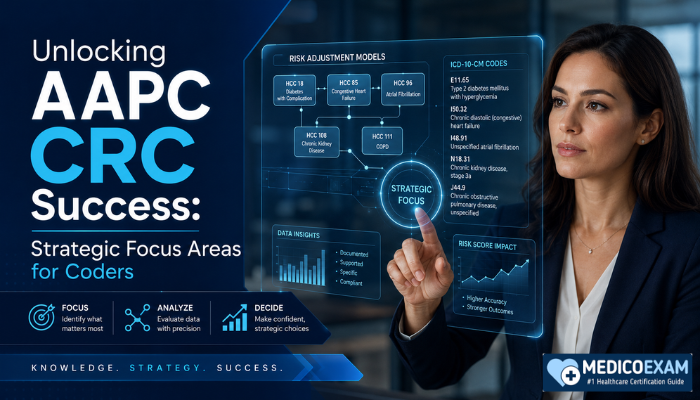 The AAPC Certified Risk Adjustment Coder (CRC) certification is a pivotal credential for professionals specializing in risk adjustment documentation and coding. This certification, identified by its exam code CRC, validates expertise in reviewing medical documentation to assign accurate ICD-10-CM codes, which directly impact healthcare reimbursement models like Hierarchical Condition Categories (HCCs). Candidates pursuing the CRC exam are often focused on refining their coding skills and understanding complex risk adjustment methodologies to ensure compliance and financial integrity within healthcare systems. This comprehensive article aims to bust common CRC exam myths, guiding you to focus on the most effective preparation strategies and essential knowledge areas for success.