
CRC Exam Myths Busted: Focus on This, Not That
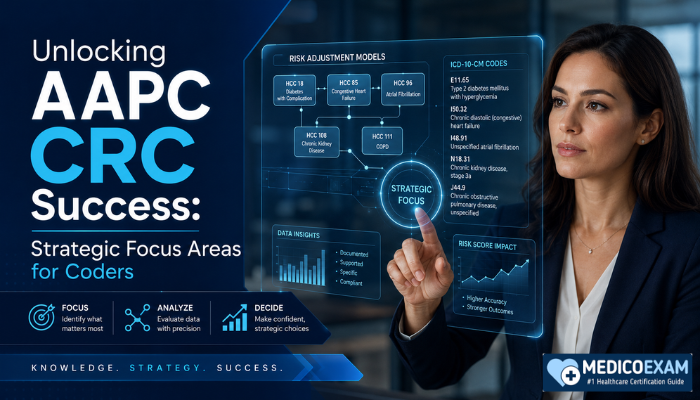 The AAPC Certified Risk Adjustment Coder (CRC) certification is a pivotal credential for professionals specializing in risk adjustment documentation and coding. This certification, identified by its exam code CRC, validates expertise in reviewing medical documentation to assign accurate ICD-10-CM codes, which directly impact healthcare reimbursement models like Hierarchical Condition Categories (HCCs). Candidates pursuing the CRC exam are often focused on refining their coding skills and understanding complex risk adjustment methodologies to ensure compliance and financial integrity within healthcare systems. This comprehensive article aims to bust common CRC exam myths, guiding you to focus on the most effective preparation strategies and essential knowledge areas for success.
Defining the AAPC CRC Certification's Mandate
The AAPC CRC certification establishes a coder's proficiency in the intricate world of risk adjustment. It is designed for medical coders who specialize in reviewing clinical documentation to assign appropriate diagnosis codes for conditions that affect patient risk scores, which in turn influence reimbursement from Medicare Advantage and other health plans. Professionals who achieve this certification demonstrate a deep understanding of how diagnosis coding translates into patient risk profiles and financial outcomes for healthcare organizations. Understanding these core responsibilities is crucial for anyone considering the exam.
The CRC credential is ideal for experienced coders, auditors, or healthcare professionals aiming to enhance their skills in risk adjustment coding. It provides the necessary validation to work efficiently with Hierarchical Condition Categories (HCCs) and other risk adjustment models, ensuring the accuracy and integrity of data submitted to payers. For an official overview of the certification, prospective candidates can visit the official AAPC certification page. This commitment to precision directly impacts patient care quality and financial stability within the healthcare industry.
Essential Role of Risk Adjustment Coders
Risk adjustment coders are instrumental in capturing a complete and accurate picture of a patient's health status. Their work ensures that healthcare plans receive appropriate funding to manage the care of their member populations, particularly those with chronic conditions. This role extends beyond mere code assignment; it involves a critical analysis of clinical documentation, payer guidelines, and federal regulations to paint a true reflection of patient complexity. It requires a keen eye for detail and a comprehensive understanding of medical necessity and documentation requirements.
Examining the CRC Test Structure and Administration
The AAPC CRC exam assesses a candidate's practical knowledge and analytical abilities in risk adjustment coding. Understanding its structure is a critical first step in demystifying the examination process. The exam is administered by AAPC and is designed to ensure that certified professionals are competent in applying risk adjustment guidelines in real-world scenarios.
The CRC exam consists of 100 multiple-choice questions and candidates are allotted 240 minutes to complete it. A passing score of 70% is required, demonstrating a solid grasp of the subject matter. The cost for the exam is $425 for one attempt, or candidates can opt for a two-attempt package at $499, providing flexibility and peace of mind. This structured approach ensures a standardized evaluation of coding proficiency. Further details on the exam process can be found on the AAPC certification exam process page.
Key Exam Logistics
| Exam Detail | Information |
|---|---|
| Exam Name | AAPC Certified Risk Adjustment Coder |
| Exam Code | CRC |
| Exam Price | $425 for one attempt; $499 for two exam attempts |
| Duration | 240 minutes |
| Number of Questions | 100 |
| Passing Score | 70% |
These logistics highlight the commitment required to earn this valuable credential. Success hinges not just on knowledge, but also on effective time management during the exam.
Mastering Core Domains: The CRC Syllabus Deep Dive
Achieving AAPC CRC certification requires a thorough understanding of the exam's syllabus, which outlines the weighted domains of knowledge. This section breaks down these critical areas, emphasizing where your study efforts should be concentrated to maximize efficiency and comprehension. A common myth is that only coding knowledge is tested; however, the exam covers a broader spectrum of compliance, documentation, and model understanding.
Syllabus Topics and Weightage
The CRC exam syllabus is meticulously designed to cover all facets of risk adjustment coding. Each topic contributes a specific percentage to the overall exam, indicating its importance and the depth of knowledge expected.
| Syllabus Topic | Weightage | Focus Area |
|---|---|---|
| Compliance | 15% | Focuses on regulatory guidelines, fraud prevention, and ethical coding practices relevant to risk adjustment. |
| Diagnosis coding | 30% | This is the largest section, requiring profound expertise in ICD-10-CM coding, particularly for chronic conditions and comorbidity. |
| Documentation improvement | 12% | Covers the importance of clear, concise, and complete medical record documentation for accurate risk adjustment. |
| Pathophysiology/medical terminology/anatomy | 5% | Tests foundational medical knowledge essential for understanding diagnoses and treatment plans. |
| Purpose and use of risk adjustment models | 10% | Explores how various risk adjustment models operate and their impact on healthcare funding. |
| Quality of care | 3% | Addresses how risk adjustment coding impacts quality measures and patient outcomes. |
| Risk adjustment models | 15% | Delves into the specifics of different risk adjustment methodologies, including HCCs. |
| Cases | 10% | This section tests the ability to apply coding guidelines to real-world patient scenarios, often involving complex documentation. |
These percentages clearly delineate where candidates must allocate their study time, with diagnosis coding and compliance forming the backbone of the exam.
Debunking Common CRC Exam Preparation Myths
Many aspiring AAPC Certified Risk Adjustment Coders fall prey to common misconceptions that can derail their study efforts. Dispelling these myths is crucial for adopting a practical and effective preparation strategy. One pervasive myth is that memorizing codes is sufficient; however, the exam emphasizes understanding coding principles and applying them contextually, especially within complex cases.
Myth 1: Focus Only on ICD-10-CM Codes
While diagnosis coding constitutes 30% of the exam, it's a significant portion, but not the only one. Candidates often spend disproportionate time memorizing specific codes, neglecting the broader principles of risk adjustment, compliance, and documentation. The exam tests your ability to interpret clinical scenarios and apply coding guidelines accurately, not just recall codes. A deep understanding of medical necessity and the impact of codes on HCCs is far more valuable than rote memorization.
Myth 2: "Cramming" Before the Exam is Effective
Risk adjustment coding is a complex field that requires conceptual understanding, not just short-term recall. Cramming leads to superficial knowledge and poor retention. Consistent, spaced repetition, coupled with active recall and practice, is far more effective for long-term learning and application. Begin your preparation well in advance, setting a structured study schedule that allows for thorough review of all syllabus domains.
Myth 3: You Don't Need to Understand Risk Adjustment Models
The exam dedicates 25% of its content to the "Purpose and use of risk adjustment models" and "Risk adjustment models" sections. Ignoring these areas is a critical mistake. A risk adjustment coder must comprehend how their assigned codes influence risk scores and payment methodologies. This goes beyond coding rules and into the strategic financial and clinical impact of accurate documentation.
Cultivating Effective Study Strategies for the CRC Exam
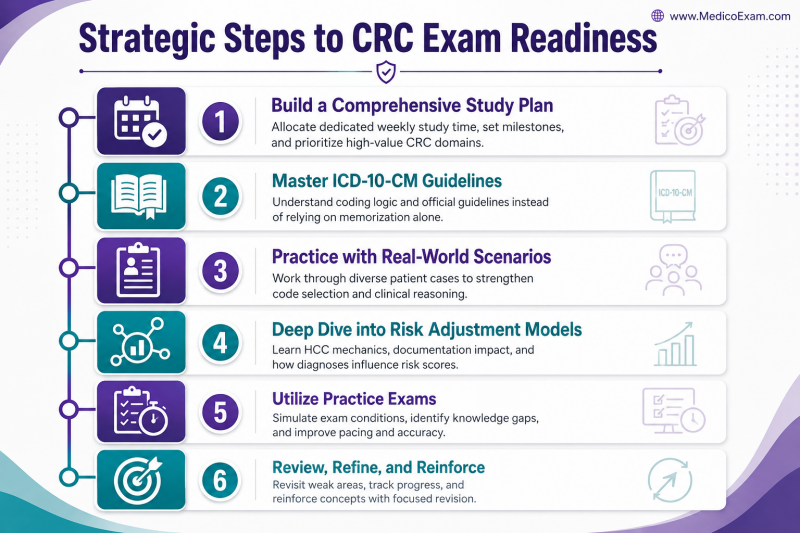
Effective preparation for the AAPC CRC certification hinges on strategic, disciplined study practices rather than just passive reading. This section outlines actionable approaches to optimize your learning and build the confidence needed for exam day success. The key is to blend theoretical knowledge with practical application, focusing on critical thinking.
Building a Comprehensive Study Plan
A well-structured study plan is your roadmap to success. Allocate specific time blocks for each syllabus domain, giving extra attention to areas where you feel less confident or those with higher weightage, such as Diagnosis Coding and Compliance. Incorporate regular review sessions to reinforce learning and prevent information decay.
- Master ICD-10-CM Guidelines: Beyond memorization, understand the rationale behind coding rules, conventions, and official guidelines.
- Practice with Real-World Scenarios: Focus heavily on the "Cases" section of the syllabus by working through diverse clinical examples. This builds critical application skills.
- Deep Dive into Risk Adjustment Models: Understand the mechanics and implications of HCCs and other models. This contextual knowledge is crucial for higher-level questions.
- Review Compliance and Documentation: Familiarize yourself with fraud, abuse, and ethical coding standards, as well as best practices for documentation improvement.
- Utilize Practice Exams: Regularly challenge yourself with practice questions to identify knowledge gaps and simulate exam conditions. MedicoExam offers realistic practice questions to help prepare you.
Consistency and focused effort in each of these areas will significantly enhance your readiness.
Developing Strong Test-Taking Skills
Beyond subject matter expertise, effective test-taking strategies are vital. The 240-minute duration for 100 questions means you have approximately 2.4 minutes per question.
- Time Management: Practice pacing yourself during mock exams. Don't dwell too long on a single question; mark it and return if time permits.
- Process of Elimination: Systematically eliminate incorrect answer choices to increase your odds of selecting the correct one.
- Read Carefully: Pay close attention to keywords and details in the question and answer options to avoid misinterpretations.
- Highlighting and Annotating: Utilize allowable reference materials effectively by highlighting key guidelines and making concise notes before the exam.
These strategies can significantly improve your performance on exam day.
Realizing the Career Advantages of CRC Certification
The AAPC Certified Risk Adjustment Coder credential offers substantial professional advantages, solidifying your expertise and opening doors to enhanced career opportunities. This certification is not merely a piece of paper; it’s a tangible asset that boosts your credibility and earning potential within the growing field of risk adjustment. It signals to employers that you possess specialized skills critical for navigating complex healthcare finance.
Expanded Job Outlook and Salary Potential
The demand for skilled risk adjustment coders is steadily increasing as healthcare systems continue to emphasize value-based care and accurate risk stratification. Holding the CRC certification makes you a highly sought-after professional, providing a competitive edge in the job market. Certified professionals typically command higher salaries compared to their non-certified counterparts, reflecting the specialized knowledge and value they bring to an organization. Organizations rely on CRC-certified coders to ensure compliance and optimize revenue cycle management, directly impacting their bottom line. A comprehensive overview of the certification and its benefits can be found on this detailed CRC certification overview.
Enhanced Professional Credibility
The CRC certification validates a specialized skill set that is critical for financial and regulatory compliance in healthcare. Employers trust AAPC-certified individuals to uphold the highest standards of accuracy and ethical coding. This credential demonstrates your commitment to continuous learning and professional development, setting you apart as an expert in the intricate world of risk adjustment. It underscores your ability to handle the complexities of HCC coding and its implications.
Sustaining Your CRC Credential: Renewal and Beyond
Earning your AAPC CRC certification is a significant achievement, but maintaining it requires ongoing commitment to professional development. Understanding the renewal requirements and how the certification fits into your broader career trajectory is essential for long-term success as a risk adjustment coder. This ensures your skills remain current and relevant in an evolving healthcare landscape.
Certification Renewal Requirements
To maintain active CRC certification, AAPC requires credentialed professionals to complete continuing education units (CEUs). Typically, AAPC certifications require 36 CEUs every two years. These CEUs can be earned through various approved activities, including attending workshops, webinars, and educational courses, or participating in professional coding forums. Staying updated with the latest coding guidelines, compliance regulations, and risk adjustment model changes is paramount to retaining your credential and competence. Regular engagement with industry developments is key.
Advancing Your Risk Adjustment Coding Career
The CRC certification serves as a robust foundation for a career focused on risk adjustment. With experience, certified professionals can pursue advanced roles such as risk adjustment auditors, educators, or consultants. These positions often involve deeper analytical work, policy development, or training other coding professionals. Continuous learning, networking, and staying abreast of industry changes are vital for upward mobility and expanding your influence within the healthcare coding sector. The CRC opens pathways to leadership and specialized expertise.
Achieving the AAPC Certified Risk Adjustment Coder (CRC) certification is a testament to your dedication and expertise in a critical area of healthcare. By debunking common myths and focusing on comprehensive, strategic preparation, you can confidently approach the exam and secure this valuable credential. Remember that success stems from understanding the exam's structure, mastering the syllabus, and adopting effective study techniques that go beyond mere memorization. This credential empowers you to contribute significantly to accurate healthcare funding and quality patient care.
For those ready to solidify their knowledge and assess their readiness, utilizing comprehensive study resources is a strategic next step. Explore various learning tools, including comprehensive study resources, to enhance your understanding and practice your skills before the official exam. Your journey to becoming a certified risk adjustment coder is an investment in a rewarding and impactful career.
Frequently Asked Questions
1. What is the AAPC CRC certification for?
The AAPC CRC certification validates a medical coder's expertise in risk adjustment documentation and coding, specifically for reviewing medical records to assign accurate ICD-10-CM codes that impact healthcare reimbursement models like HCCs.
2. How many questions are on the CRC exam and what is the passing score?
The CRC exam consists of 100 multiple-choice questions, and candidates are given 240 minutes to complete it. A passing score of 70% is required to earn the certification.
3. What are the most heavily weighted topics on the CRC exam?
The most heavily weighted topics on the CRC exam are Diagnosis coding (30%) and Compliance (15%), followed by Risk adjustment models (15%). These areas require significant focus during preparation.
4. How much does the AAPC CRC exam cost?
The AAPC CRC exam costs $425 for a single attempt. A package offering two exam attempts is also available for $499, providing a backup option for candidates.
5. What are the benefits of obtaining CRC certification?
Obtaining CRC certification enhances professional credibility, expands job opportunities in risk adjustment coding, and can lead to higher earning potential. It demonstrates specialized expertise vital for compliance and financial integrity in healthcare.
- AAPC CRC Question Bank |
- AAPC CRC Eligibility & Requirements |
- AAPC Risk Adjustment Coder Practice Test |
- AAPC CRC Exam Cost |
- AAPC CRC Registration Process |
- AAPC Risk Adjustment Coder Study Guide |
- AAPC CRC Recertification |
- AAPC CRC Certification Overview |
- AAPC Risk Adjustment Coder Syllabus |
- AAPC CRC Preparation Time |
- AAPC CRC Passing Score |
- AAPC CRC Exam Format |
- AAPC CRC Exam Difficulty |
- AAPC CRC Career Opportunities |
- AAPC Risk Adjustment Coder Sample Questions


