 A stronger clinical record can change the way a patient story is understood, coded, measured, reimbursed, and improved. That is the real power behind the CDIP credential. For healthcare professionals who already understand documentation, coding, compliance, clinical terminology, or patient care workflows, the AHIMA Certified Documentation Integrity Practitioner certification can become a meaningful career step.
CDIP stands for Certified Documentation Integrity Practitioner, a professional credential offered by AHIMA for individuals who work with clinical documentation integrity, coding accuracy, provider communication, compliance, and health record quality. The AHIMA CDIP exam evaluates whether candidates can apply CDI knowledge in real healthcare scenarios, not simply memorize definitions.
For nurses, HIM professionals, coders, documentation specialists, revenue cycle professionals, medical educators, and allied health students, CDIP preparation can feel intense at first. The exam connects clinical reasoning, coding rules, provider queries, metrics, leadership, and compliance. But with a structured plan, domain-based study, and realistic practice, the AHIMA CDIP exam becomes manageable.
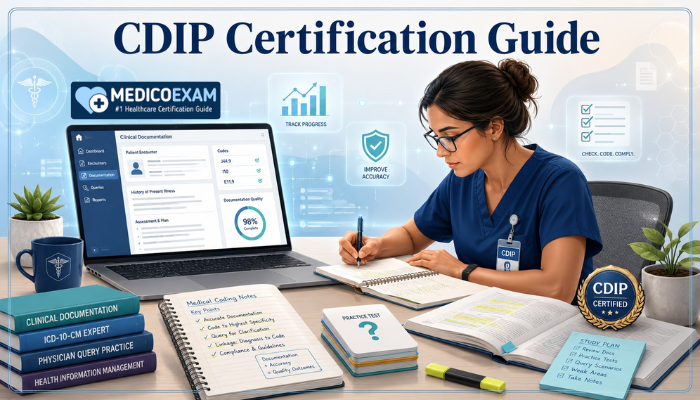
This guide explains the CDIP certification, exam structure, content domains, career value, study strategy, common mistakes, and preparation steps in a practical, professional way.