admin's blog

AHIMA CCA Exam: What It Is, How to Prepare, and Why It Matters

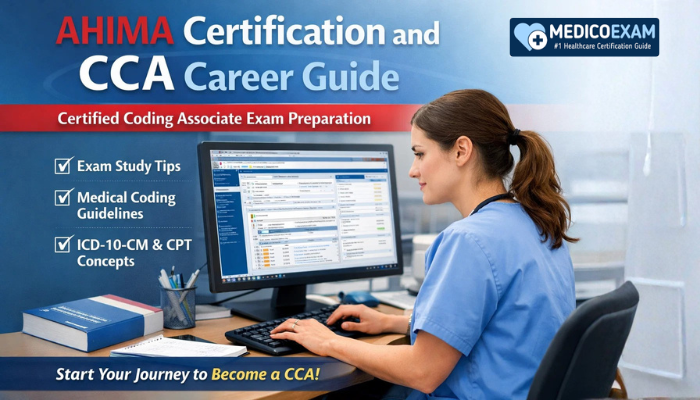
CCA certification overview infographic showing eligibility, exam details, costs, and pass rate trends.Medical coding is one of the few healthcare careers where skill, certification, and accuracy directly translate into employability. If you are considering entering healthcare without years of clinical training, the AHIMA certification, specifically the Certified Coding Associate (CCA), offers a globally recognized entry point.

As someone who has guided professionals through compliance-driven certifications, I can say this clearly: coding credentials succeed when they combine technical precision with real-world healthcare workflows. That’s exactly where AHIMA’s CCA stands out.

This guide explains what the CCA certification is, how to earn it, how to prepare strategically, and whether it’s worth your time and investment especially if you’re aiming for long-term growth in health information management.

What Is AHIMA Certified Coding Associate (CCA) Certification?

The AHIMA Certified Coding Associate (CCA) certification validates foundational competency in medical coding across inpatient and outpatient healthcare settings using ICD-10-CM, CPT, and HCPCS systems.

10 Key Facts About NCC Certification and the C-RHI Reproductive Health Exam

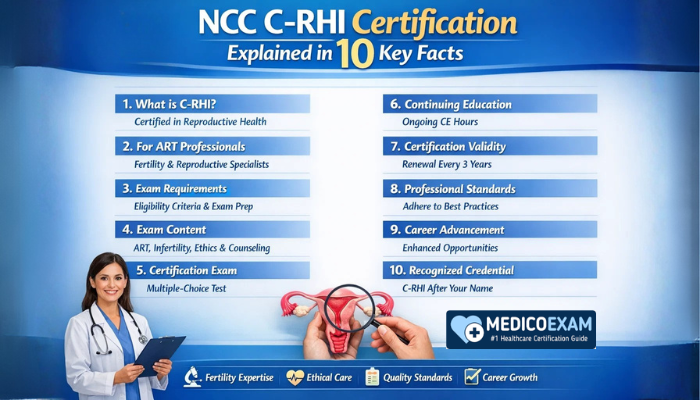
NCC C-RHI Certification explained in 10 key facts infographic.Expert Career Guidance and Practical Exam Insights for Reproductive Health Professionals

Few credentials carry as much quiet authority in reproductive healthcare as NCC Certification. For clinicians working in fertility clinics, reproductive endocrinology units, and women’s health settings, the C-RHI credential signals something deeper than exam success it reflects clinical judgment, evidence-based practice, and commitment to patient-centered reproductive care.

This guide breaks down 10 essential facts about NCC Certification and the C-RHI Reproductive Health and Infertility exam, blending exam mechanics with real-world professional insight to help you decide whether this credential fits your career path and how to prepare strategically if it does.

What Is NCC Certification and Why It Matters in Reproductive Healthcare

NCC Certification is a nationally recognized professional credential awarded by the National Certification Corporation for healthcare professionals specializing in obstetric, gynecologic, and neonatal care. In reproductive healthcare, it validates advanced clinical knowledge, ethical practice, and specialty-level competence.

What Is ANCC Certification? A Beginner’s Guide to FNP-BC Certification

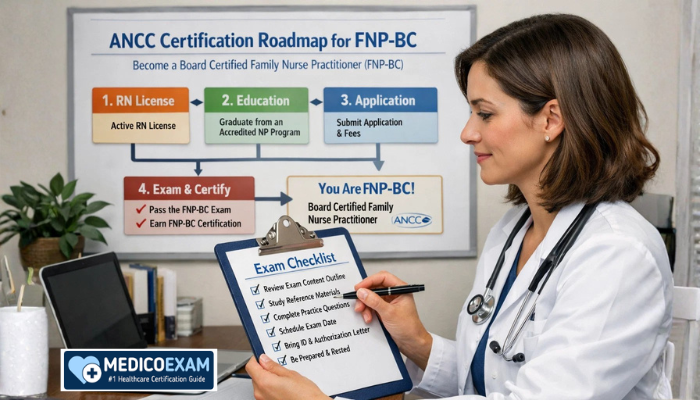
Illustration showing career opportunities with FNP-BC, including primary care clinics, family practice hospitals, community health centers, telehealth, and leadership roles.Earning professional credibility is no longer optional in high-responsibility healthcare roles it’s expected. For nurse practitioners aiming to validate clinical competence and advance globally, ANCC Certification stands as a defining credential. Among its most sought-after credentials is the FNP-BC, a certification that formally recognizes advanced clinical expertise in family-focused primary care.

This guide breaks down what ANCC Certification is, how the ANCC Family Nurse Practitioner Certification (FNP-BC) works, who qualifies, what the exam looks like, and how it impacts long-term career growth. Whether you’re a student, career changer, or experienced practitioner seeking advancement, this article provides clear, exam-aligned, and career-oriented insight.

For a broader perspective beyond fundamentals, visit study guide on the ANCC certification exam and career crossroads explains what comes next after certification.

ACRP Certification Explained: A Career Roadmap to Becoming a Certified CCRA

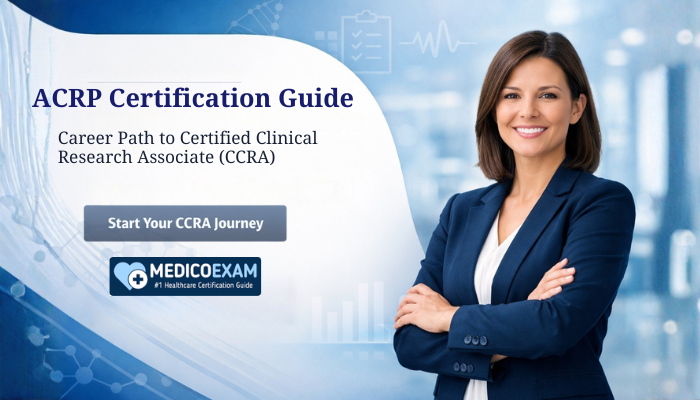
ACRP Certification Guide banner showing a confident clinical research professional with the text “Career Path to Certified Clinical Research Associate (CCRA)” and a call-to-action button to start the CCRA journey, representing career growth in clinical research.Clinical research is no longer a niche career hidden inside pharmaceutical companies. It has become a global, compliance-driven profession where accuracy, ethics, and regulatory knowledge directly affect patient safety and trial outcomes. For professionals aiming to stand out in this regulated environment, ACRP Certification has emerged as a defining credential particularly the CCRA certification for Clinical Research Associates.

This guide walks you through what ACRP certification is, how the CCRA credential works, what the exam actually tests, and whether it’s worth your time and investment. If you are transitioning from healthcare, compliance, quality assurance, or audit-focused roles or planning a long-term career in clinical trials this roadmap is built for you.

Why AAPC Certification Is the Gold Standard in Medical Coding Careers

Book cover titled “Why AAPC Certification Matters” featuring a professional woman in glasses inside a circular frame, with a clean blue-and-white design representing healthcare certification and career growth.

Healthcare organizations do not guess when it comes to compliance, reimbursement accuracy, or audit readiness. They rely on professionals who understand medical documentation, coding regulations, and payer requirements at a granular level. That trust is precisely why AAPC Certification has become the benchmark credential for medical coding professionals worldwide.

For professionals seeking credibility, career stability, and measurable return on effort, AAPC Certification is not just another credential, it is a professional signal of competence, ethics, and job readiness.

What Is AAPC Certification and Why It Matters

AAPC Certification validates a professional’s ability to accurately translate medical services into standardized codes used for billing, compliance, and reimbursement. It matters because healthcare providers, insurers, and auditors rely on certified coders to reduce claim denials, maintain regulatory compliance, and protect revenue integrity.

Syndicate content