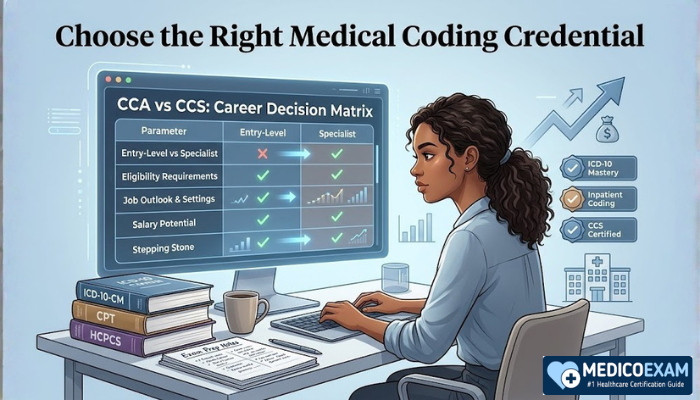
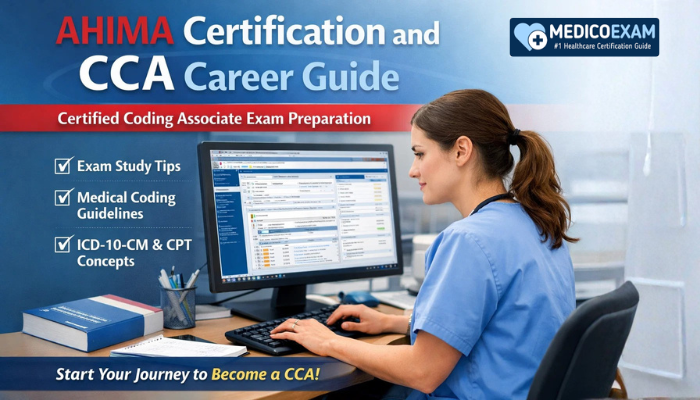
 Medical coding is one of the few healthcare careers where skill, certification, and accuracy directly translate into employability. If you are considering entering healthcare without years of clinical training, the AHIMA certification, specifically the Certified Coding Associate (CCA), offers a globally recognized entry point.
As someone who has guided professionals through compliance-driven certifications, I can say this clearly: coding credentials succeed when they combine technical precision with real-world healthcare workflows. That’s exactly where AHIMA’s CCA stands out.
This guide explains what the CCA certification is, how to earn it, how to prepare strategically, and whether it’s worth your time and investment especially if you’re aiming for long-term growth in health information management.
What Is AHIMA Certified Coding Associate (CCA) Certification?
The AHIMA Certified Coding Associate (CCA) certification validates foundational competency in medical coding across inpatient and outpatient healthcare settings using ICD-10-CM, CPT, and HCPCS systems.