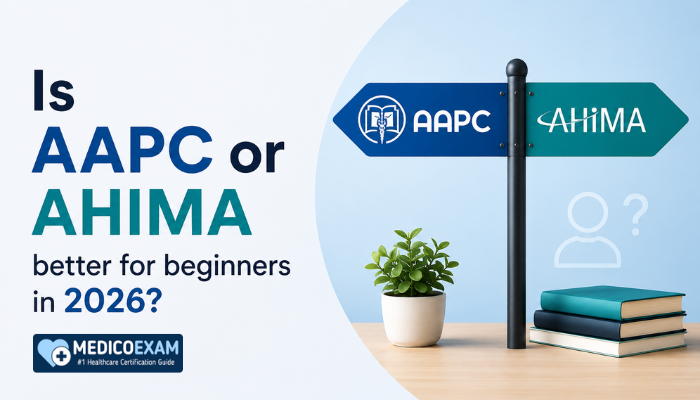
 AAPC and AHIMA are the two dominant certification bodies in medical coding, but they serve different career paths. AAPC focuses on physician-office and outpatient coding with credentials like the CPC, while AHIMA covers the full spectrum of health information management — from entry-level coding (CCA) through hospital administration (RHIA). Choosing between them depends on whether you want to specialize in outpatient revenue cycle work or build a broader career in health information management.
This guide compares every credential from both organizations side by side — exam formats, costs, salary outcomes, and career paths — so you can make a confident decision in 2026.
How Do AAPC and AHIMA Compare as Organizations?
AAPC and AHIMA differ in origin, membership size, and professional focus. AAPC was founded in 1988 as the American Academy of Professional Coders, focusing on physician-based coding and revenue cycle management. It has grown to approximately 250,000 members worldwide across 41 countries. AHIMA traces its roots to 1928, making it nearly a century old, and represents over 67,000 health information professionals with more than 100,000 active credentials.

 Passing a healthcare certification exam is often the final, daunting hurdle between you and your new career. Textbooks and study guides are essential, but there is no substitute for the lived experience of professionals who have actually sat in the testing center and earned their credentials.


