
 The AAPC Certified Value-Based Administrator (CVBA) credential establishes proficiency in the rapidly evolving landscape of value-based healthcare. This certification is specifically designed for professionals aiming to demonstrate their expertise in managing and optimizing value-based care models, a critical skill set for the modern healthcare environment. Earning the CVBA signifies a deep understanding of the frameworks, data analytics, and collaborative strategies essential for improving patient outcomes while controlling costs. This comprehensive playbook offers a detailed guide, breaking down the exam's intricacies and outlining a strategic preparation pathway for successful certification.
Certifying Value-Based Administrator Expertise
Achieving the AAPC CVBA certification underscores a professional's capacity to navigate complex healthcare payment and delivery systems focused on value. This credential validates an individual's skills in core value-based care principles, including data-driven decision-making, risk adjustment methodologies, and effective performance measurement. Professionals holding the CVBA are equipped to drive initiatives that enhance quality, reduce waste, and foster robust partnerships between payers and providers. It positions individuals as key contributors to organizational success in a value-based ecosystem.
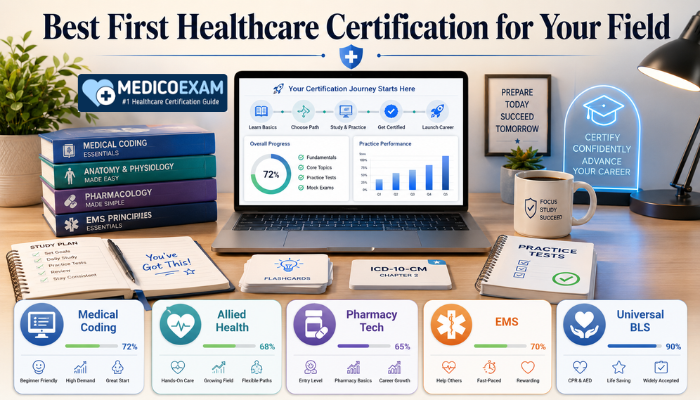 The right healthcare certification depends on your career stage, professional field, budget, and available study time. This decision framework walks you through a five-step process to identify the certification that delivers the highest return on investment for your situation.
 A stronger clinical record can change the way a patient story is understood, coded, measured, reimbursed, and improved. That is the real power behind the CDIP credential. For healthcare professionals who already understand documentation, coding, compliance, clinical terminology, or patient care workflows, the AHIMA Certified Documentation Integrity Practitioner certification can become a meaningful career step.
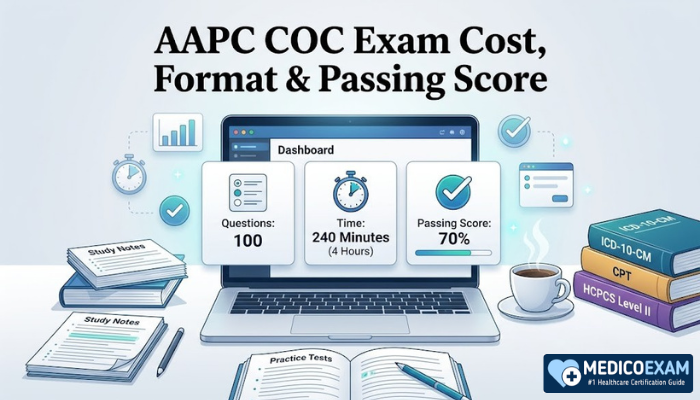 Healthcare coding continues to evolve as outpatient services become more complex and reimbursement models demand greater accuracy. For professionals seeking to validate their outpatient coding expertise, the coc aapc certification is one of the most respected credentials in the healthcare industry.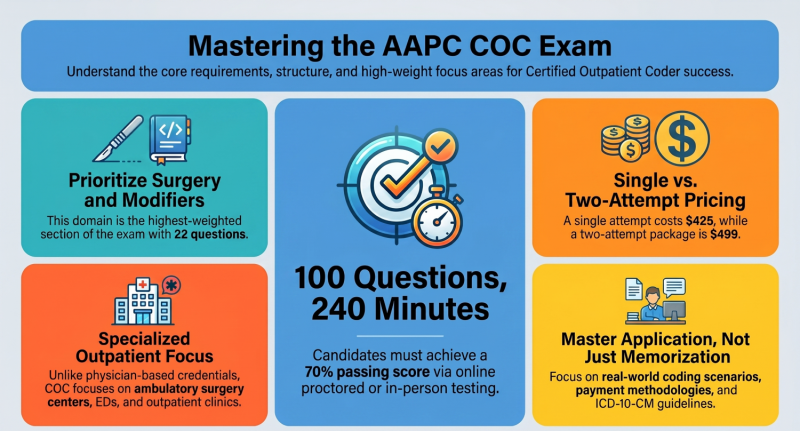
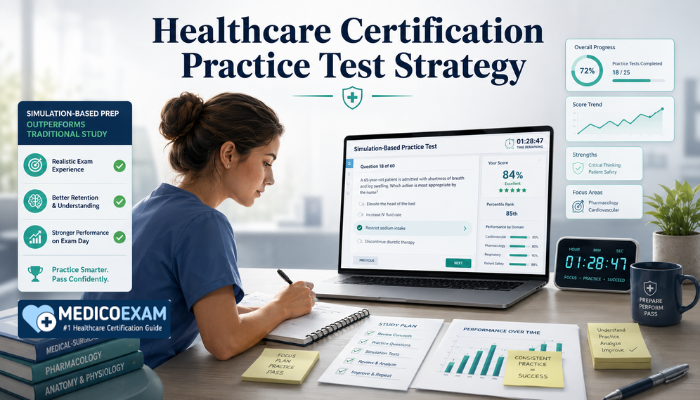 Practice testing is the single most effective study strategy for healthcare certification exams, according to over a century of cognitive science research. Retrieval practice — the act of pulling information from memory rather than passively reviewing it — improves long-term retention by more than 150% compared to repeated studying, and simulation-based practice exams let you apply that science in a format that mirrors your actual test day.
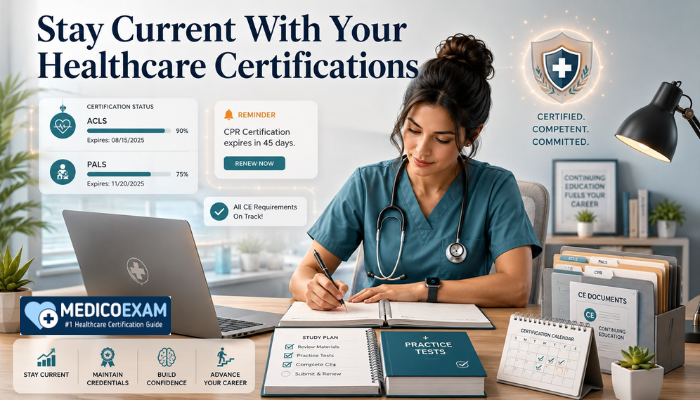 Healthcare certifications are not permanent — every credential from CPC to CEN to FNP-BC requires periodic renewal through continuing education (CE), and missing a deadline can cost you hundreds of dollars in reinstatement fees or force you to retake an exam entirely. This guide covers the renewal requirements for all eight major healthcare certification bodies in 2026, including CE hour minimums, renewal fees, cycle lengths, and strategies for staying current without breaking the bank.
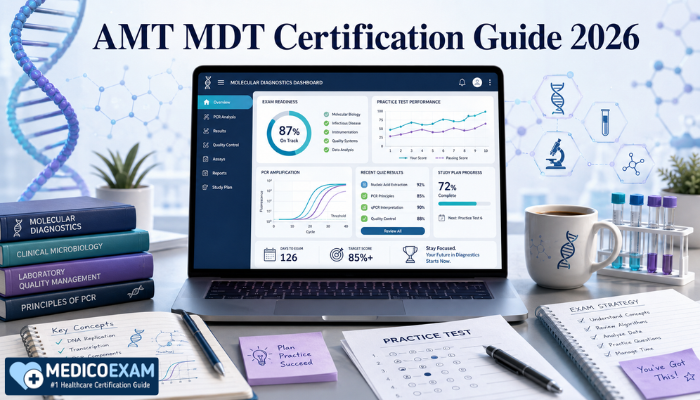 The molecular diagnostics laboratory is where genomics, infectious disease, oncology, and pharmacogenomics intersect — and the AMT MDT (Molecular Diagnostics Technologist) credential certifies the professionals who work at that intersection.
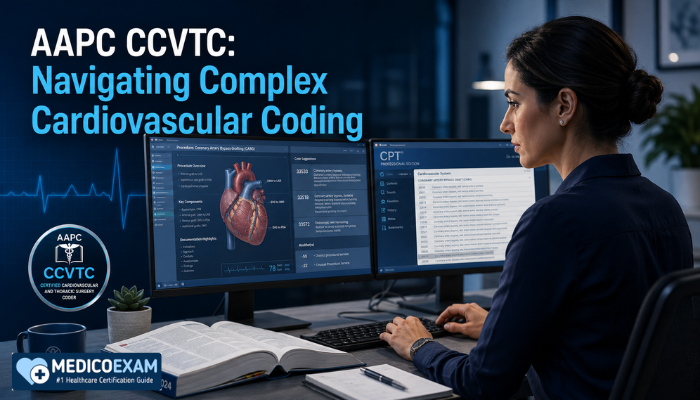 The AAPC Certified Cardiovascular and Thoracic Surgery Coder (CCVTC) certification validates a medical coder's specialized expertise in the intricate coding practices for cardiovascular and thoracic surgical procedures. This credential is designed for professionals who manage the complex documentation and billing of heart, blood vessel, and chest cavity surgeries. Aspiring coders looking to specialize in high-demand, high-acuity surgical areas will find this guide invaluable. It covers the essential aspects of the CCVTC exam, its benefits, and how to effectively prepare to earn this esteemed certification.
 A Registered Health Information Administrator (RHIA) credential, offered by AHIMA, signifies a professional's expertise in managing and securing patient health information. This certification validates critical skills in data integrity, privacy, and healthcare informatics, essential for modern healthcare operations. Professionals aiming to lead health information departments, ensure data accuracy, and maintain regulatory compliance should strongly consider pursuing this credential. This comprehensive article will delve into the RHIA certification's purpose, exam structure, syllabus, benefits, and effective preparation strategies, guiding aspiring candidates toward success and a future-proof career.
 The ANCC Psychiatric-Mental Health Nursing Certification (PMH-BC) credential signifies a robust commitment to specialized mental health care, validating a nurse's advanced knowledge and clinical skills. This certification is designed for registered nurses who provide comprehensive psychiatric and mental health services across various settings, impacting patient care significantly. This comprehensive guide outlines the certification's purpose, details the examination structure (PMH-BC exam code), outlines the core syllabus topics, and offers practical, step-by-step strategies for effective preparation to ensure you study smarter, not harder, for your ANCC PMH-BC exam prep. Here, we clarify who should pursue this credential and what essential steps are involved in earning this distinguished recognition.


