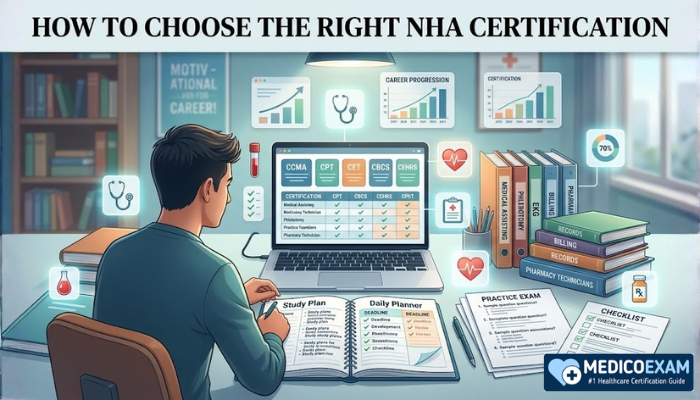
 The National Healthcareer Association (NHA) offers eight NCCA-accredited certifications spanning clinical, administrative, and pharmacy careers in allied health. NHA has awarded over 1 million certifications since its founding in 1989 and remains the largest allied health certification agency in the United States. This guide compares every NHA exam — CCMA, CET, CPCT/A, CPT, CBCS, CEHRS, CMAA, and CPhT — across cost, format, domains, eligibility, salary, and career trajectory so you can choose the right credential for your goals.
|
Founded |
1989, headquartered in Leawood, Kansas |
|---|---|
|
Total certifications awarded |
Over 1 million |
|
Number of credentials |
8 NCCA-accredited exams |
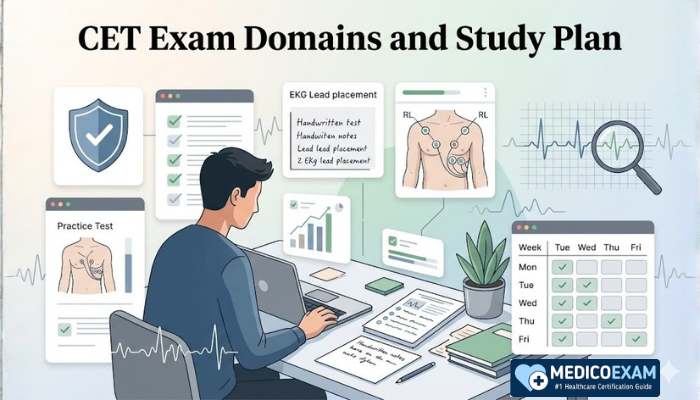 The NHA Certified EKG Technician (CET) exam is a 100-scored-item, multiple-choice certification test administered by the National Healthcareer Association). It costs $129, lasts 2 hours, and requires a scaled score of 390 out of 500 to pass. In 2024, NHA administered 19,241 CET exams with an overall pass rate of 69.66%, meaning roughly 3 in 10 candidates did not pass on their attempt. This guide breaks down every domain, eligibility rule, and study strategy you need to earn your CET credential and launch your career as an EKG technician.
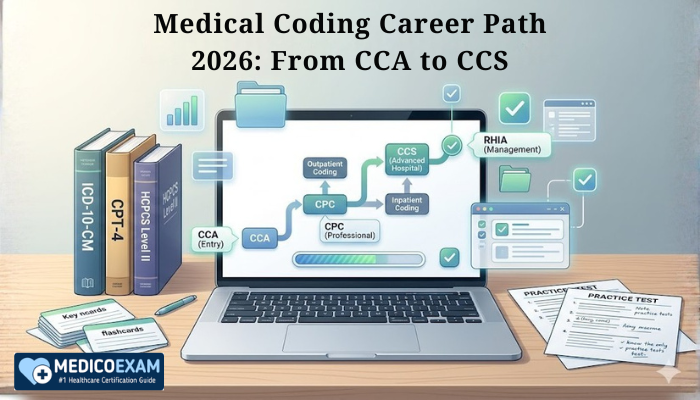 The medical coding profession offers one of the most clearly defined career ladders in all of healthcare. For 2026, the Bureau of Labor Statistics projects employment of health information technologists and medical registrars to grow 15% from 2024 to 2034 — much faster than the national average for all occupations (Bureau of Labor Statistics). The U.S. medical coding market is projected to reach $60.42 billion by 2035 (Nova One Advisor), and certified coders earn approximately 20.7% more than non-certified counterparts.
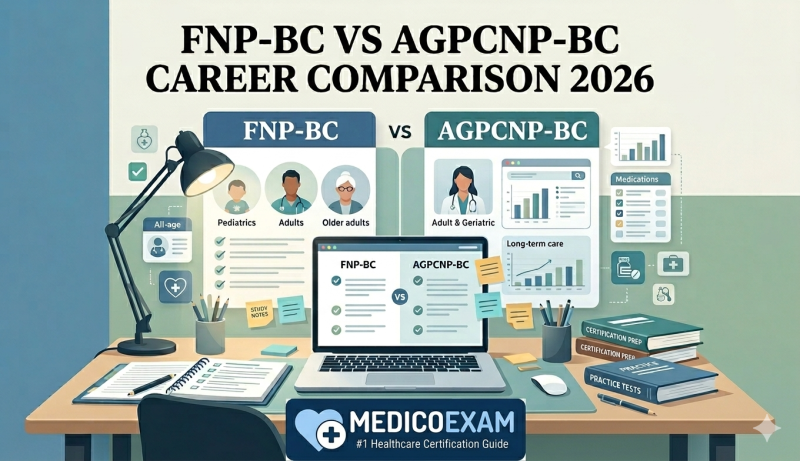 The single most important differentiator between the FNP-BC and AGPCNP-BC is patient population. Family Nurse Practitioners (FNP-BC) are trained to treat patients across the entire lifespan from newborns to elderly adults. Adult-Gerontology Primary Care Nurse Practitionners (AGPCNP-BC) specialize exclusively in adolescents, adults, and older adults. This one distinction shapes your clinical settings, job options, and career trajectory for decades. Both credentials are administered by the American Nurses Credentialing Center (ANCC), both share a projected 40% job growth rate through 2034, and both offer a median salary of $132,050. The right choice depends entirely on who you want to treat.
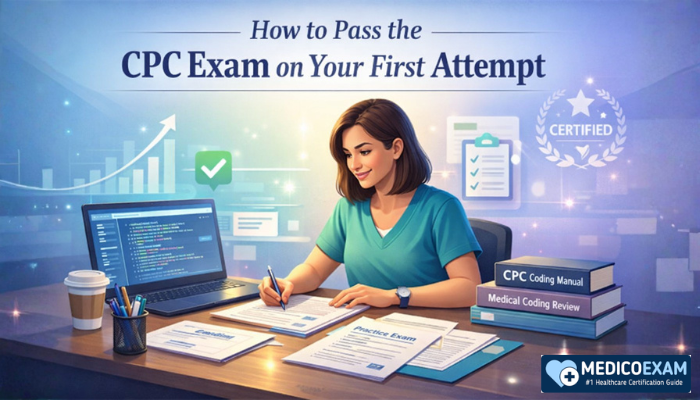
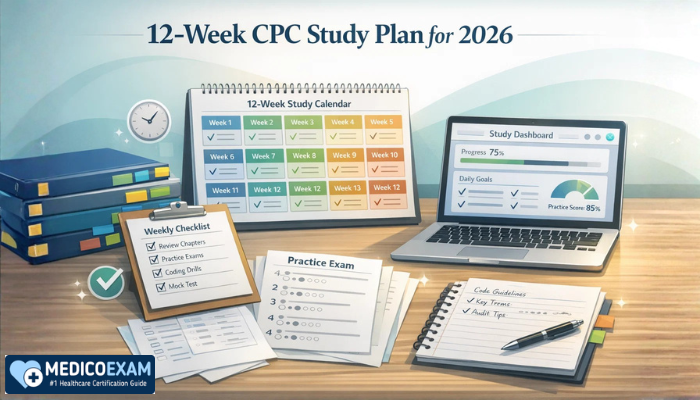 The AAPC Certified Professional Coder (CPC) exam has an estimated first-time pass rate of only 50–60%, meaning roughly 4 to 5 out of every 10 first-time test-takers fail. The exam costs $425 for a single attempt (or $499 for two attempts) plus $222 for mandatory AAPC membership, making a first-attempt pass worth over $600 in avoided retake costs. This guide provides a detailed, week-by-week study plan, daily schedule template, proven strategies, and the specific mistakes you need to avoid to join the successful half on exam day.
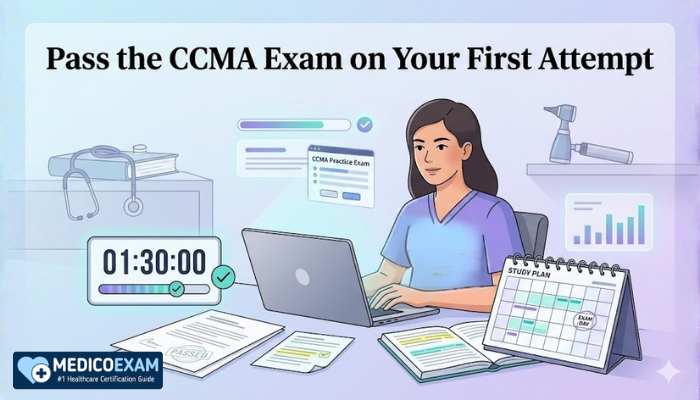 Passing the National Healthcareer Association (NHA) Certified Clinical Medical Assistant (CCMA) exam requires focused study of its seven content domains, with Clinical Patient Care accounting for 56% of the scored exam. The exam consists of 150 scored questions plus 30 unscored pilot items, has a 3-hour time limit, and requires a scaled score of at least 390 out of 500 to pass — the equivalent of correctly answering approximately 78% of scored questions.
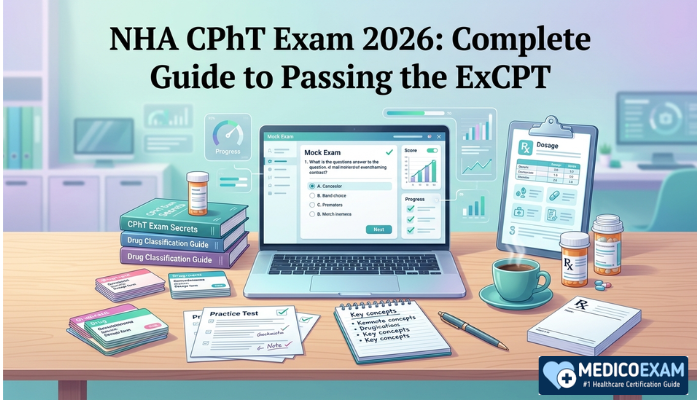 Becoming a Certified Pharmacy Technician (CPhT) through the National Healthcareer Association (NHA) is one of the fastest routes to a stable, well-paying career in healthcare. The NHA ExCPT exam consists of 120 multiple-choice questions, must be completed in 2 hours and 10 minutes, costs $129 to register, and requires a scaled score of 390 out of 500 to pass (NHA). Certification boosts annual salary by an average of $3,000 to $7,000 per year.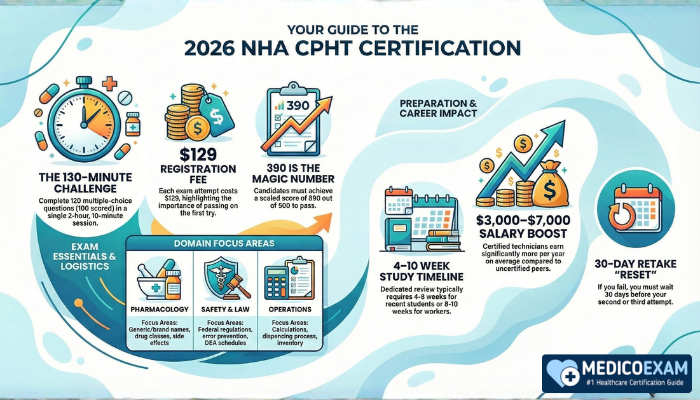
 Passing a healthcare certification exam requires more than reading a textbook cover to cover. Whether you are preparing for the